

Ikeda Sensei visited the U.S. 27 times. This year marks 30 years since his final visit in 1996. The following pages recount Sensei’s last trip to America, along with reflections from members on how their encounters with him transformed their lives and have continued to inspire them toward 2028 and beyond.
America is vast. It is a majestic land. For that reason, American kosen-rufu is something you must move forward steadily, firmly and sincerely, one step at a time, while gazing into the distant future, hundreds or even thousands of years ahead.
It is with this in mind that I have made every possible effort to prepare the way.
(My Dear Friends in America, fourth edition, p. xiv)
Los Angeles
Advance With Courage and Joy
Ikeda Sensei began his visit to Los Angeles on June 1, 1996. He attended a planning committee meeting to discuss the future Soka University of America campus in Aliso Viejo, California. Later in the day, the first SGI-USA executive conference was held. On June 4, Sensei gave a lecture at the Simon Wiesenthal Center on tolerance and the life of the first Soka Gakkai President Tsunesaburo Makiguchi. After attending an executive conference on June 5, he departed for his next destination—Denver.
A month later, Sensei returned to Los Angeles on June 29. On July 3, he attended an executive conference to commemorate the Day of Mentor and Disciple. At his final meeting of the trip on July 5, he encouraged the members to create the most harmonious organization, then departed to Japan the following day.
July 5, 1996
I would like each of you to enjoy your life to the fullest. In light of the Buddhist principle that earthly desires are enlightenment, all our hardships, efforts and challenges are causes for rejoicing. (My Dear Friends in America, fourth edition, p. 496)
So That My Voice Does the Buddha’s Work
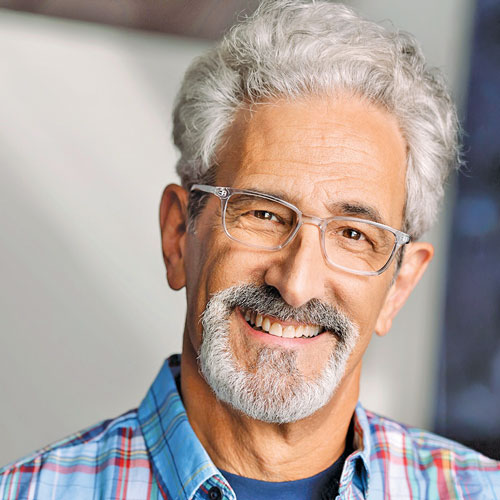
Name: Jay Lutsky City: Los Angeles
I’ve had the opportunity to support several of Ikeda Sensei’s visits to Los Angeles behind the scenes, including his final visit in 1996. From Sensei I’ve learned the importance of caring for and encouraging everyone, especially those working out of the spotlight. I can recall many stories of Sensei going out of his way to encourage the behind-the-scenes group members. One memory I especially treasure is from February 1990. On a cold, snowy night while supporting Sensei’s movement outside, one of his staff members approached me with a gift from him. It was a gesture I have never forgotten.
When Sensei visited Los Angeles in 1996, I was again able to support the movement as a member of the young men’s division before graduating to the men’s division. At that time, I asked a staff member close to Sensei, “How can I continue to support him?” He responded that I could support Sensei in three ways: through physical efforts (as a behind-the-scenes group member), with daimoku and through financial contributions. Since then, I have continued to increase my contributions each year.
The mentor-disciple relationship is not about physical proximity—it’s about the heart. Although I was physically close to Sensei on many occasions, it was through studying his guidance that I developed a deeper connection with him. By striving to put his words into action, supporting members, taking leadership and sharing Buddhism, I have come to better understand Sensei with my life.
Through making causes for kosen-rufu, I’ve experienced great benefit, including a wonderful family—a wife of 32 years who supports my practice wholeheartedly and two kids who are healthy and doing well. Sensei has taught me how to care for my family and friends and foster true heart-to-heart connections.
Going forward, I’m determined to introduce many youth to our Buddhist practice. I’ve found there’s nothing like the joy of sharing Buddhism with others. I retired from my career as a dentist last year and am now pursuing acting. I just got my first acting job! I will use my life as an actor for the Mystic Law with the prayer that my voice does the Buddha’s work.
Denver
A Gold Rush of Capable People
On June 6, Sensei arrived for his first and only visit to Denver. There, he was met by snow-capped mountains, bright green slopes and the radiant smiles of the SGI members who had long awaited his arrival. On June 8, he received an honorary doctorate from the University of Denver, his first from an American institution of higher learning.
The following day, he attended the Rocky Mountain Joint Territory Cherry Blossom General Meeting—greeting members from the eight states that made up the joint territory. On June 10, he encouraged the participants at the Rocky Mountain Joint Territory Executive Conference to live in accord with Nichiren Daishonin’s writings, to respect others and to be courageous at crucial moments. He then departed for New York on June 11, concluding his six-day visit that remains a prime point for the members to this day.
June 9, 1996
The purpose of life is to be happy. We should not be pessimistic. Let us always be optimistic—joyful, strong and bright. That is why we practice Nichiren Buddhism. (My Dear Friends in America, fourth edition, pp. 440–41)
Replying to My Mentor Through Victories
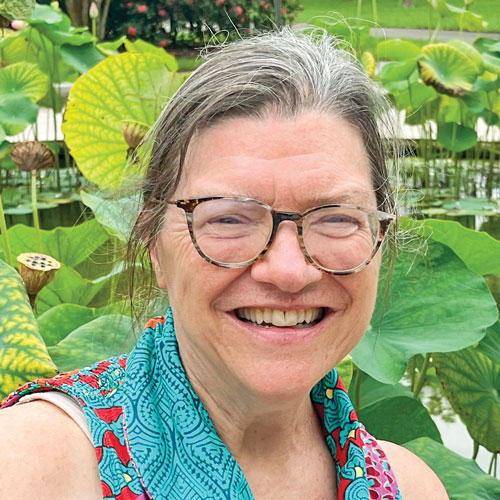
Name: Mary Catherine Rutledge City: Payson, Utah
Ikeda Sensei’s 1996 visit to Denver completely changed the direction of the SGI organization in Utah, which was experiencing confusion and disharmony.
For Sensei’s visit, I traveled from Utah to Colorado to provide behind the scenes support. I was also able to attend two meetings where he spoke. I learned from him a different view of leadership than what I witnessed at the time; it was warm, embracing and broad-minded.
During the meetings and when interacting with the behind-the-scenes group members, Sensei would often spontaneously encourage them. Many times, they were struggling within the organization, and it was clear to me that he sensed their suffering. Through him I saw that treasuring each individual comes first and why the mentor-disciple relationship is so crucial in providing a clear direction for kosen-rufu.
At the Cherry Blossom General Meeting, one thing Sensei focused on was Denver’s history of gold mining and how now was “the start of a ‘gold rush’ of capable people for kosen-rufu” (My Dear Friends in America, fourth edition, p. 443). As for the One Youth. Infinite Hope. campaign that we are currently engaging in, I take that guidance to heart to find and polish the gold of capable youth today.
I spent my youth deepening my relationship with Sensei and that effort still continues today. The central focus of my life is to reply to my mentor with a spirit of gratitude. This means to be victorious in my personal life, in my environment and in society. A quote from Sensei’s mentor, second Soka Gakkai President Josei Toda says: “Just becoming happy oneself—there’s nothing difficult to that. It’s easy. Helping others become happy is the foundation of our faith” (The Wisdom of the Lotus Sutra, vol. 5, p. 37).
I have many personal goals, but I am confident that encouraging and supporting others to practice Buddhism is the greatest cause to win in my life.
NEW YORK
Standing Up With Courage
From Denver, Sensei traveled to New York, where he spent the next nine days. On June 13, he lectured at Columbia University’s Teachers College (see pp. 28–33). The following day, Sensei visited the United Nations Headquarters. On June 15, he attended a meeting at the New York Culture Center, where he spoke about the four sufferings (birth, aging, sickness and death) and the importance of creating harmony.
On June 17, Sensei met with former U.S. Secretary of State Henry Kissinger, their eighth encounter. On the 18th, he attended the World Peace Youth Culture Festival at Carnegie Hall and departed for Florida the following day.
June 15, 1996
From the moment we begin to pray, things start moving. The darker the night, the closer the dawn. From the moment we chant daimoku with a deep and powerful resolve, the sun begins to rise in our hearts. (My Dear Friends in America, fourth edition, p. 470)
Replacing Worry With Prayer
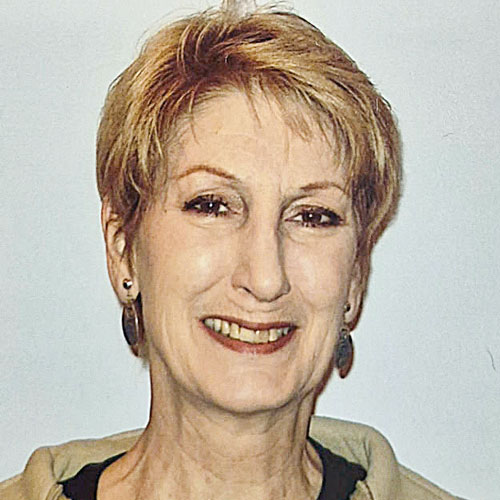
Name: Michon Peacock City: Stamford, Connecticut
I first saw Ikeda Sensei in 1972, only six months after I began my Buddhist practice. That year, I danced in a parade in Los Angeles with other dancers from New York. At the end of the parade, we did a short performance. My feet were in pain, but I was smiling! I remember bowing, and when I looked up, there was Sensei putting a lei around my neck. His eyes were saying to me, “Don’t worry, you are doing great.” At the time I was struggling to believe in myself. Sensei’s encouragement was exactly what my life needed.
When Sensei visited New York in 1996, I was assisting the choreographer, my comrade in faith and dance, with the dance piece for the culture festival at Carnegie Hall. I remember seeing Sensei and Mrs. Ikeda so happy during and after the festival. I still go back to the beautiful poem Sensei wrote to all the participants at that time.
We had also been working on creating performance workshops for junior high and high school division members. At that time, they didn’t have many activities to participate in. With the support of many members and youth leaders, we were able to hold a variety of workshops that many future division members attended and brought their friends to. Eventually, they began performing at the New York Culture Center. We felt this was a way we could repay our debt of gratitude to Sensei—supporting the development of the youth division.
Shortly after, when I was looking for a job, I was asked to work as a conservatory director for a musical theatre program associated with New York University. At first, I was surprised as it was a huge responsibility. However, I recognized it as a great opportunity and a direct benefit from supporting the future division in 1996.
I truly feel like I’ve received my life education from Sensei especially through what he has written. Sensei’s guidance continues to help me replace worry with prayer—to see the next step I need to take. I have deep appreciation for my eternal mentor. I also have tremendous appreciation for all the members I have practiced with in New York, Denver and now Connecticut.
Bahamas, Cuba, El Paso, texas
‘An Advocate for Peace’
On June 24, Sensei had a stopover in Nassau, Bahamas. There he met with and encouraged the only two SGI members living on the island at the time. He told them to correctly uphold their faith to the end and that they were guaranteed to become kings and queens of victory and happiness.
Following the Bahamas, Sensei arrived in Havana, Cuba. There he gave an address at the University of Havana and met with then-President Fidel Castro. Castro typically donned a military uniform but instead wore a Western-style suit and tie—a gesture to welcome Sensei, “an advocate for peace.”
Sensei then traveled to Costa Rica and Mexico before making a stopover in El Paso, Texas, on June 29. In El Paso, he met briefly with the local SGI members and thanked them for their tireless efforts. Sensei also dedicated a poem to the members there, titled “To the Great Pioneers of Kosen-rufu of El Paso.”
June 29, 1996
Along that path
we are traveling!
In accord with the unchanging
and indestructible Law
encouraging friends who are suffering
guiding those who feel sad
we proceed
one step and then another
along the great path of hope
(My Dear Friends in America, fourth edition, p. 489)
From Sensei’s essay on his visit to Cuba:
Everything begins with meeting one person and forming a friendship with that person. No matter what political or economic differences people may have, they can understand each other on the levels of culture and education. (August 5, 2016, World Tribune, p. 2)
You are reading {{ meterCount }} of {{ meterMax }} free premium articles