
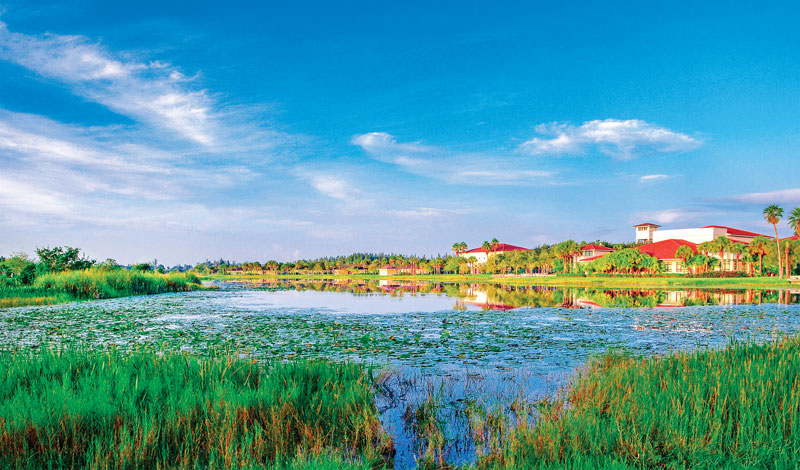
On June 18, 1996, Ikeda Sensei, together with his wife, Kaneko, attended the opening ceremony of the SGI-USA Florida Nature and Culture Center. This year marks the 30th anniversary of its opening. This month, we will learn the background of its opening.
How and why did the Florida Nature and Culture Center (FNCC) come into being? Whenever Ikeda Sensei visited the U.S. in the 1980s, he went to training centers in Miami and Los Angeles. Some members were able to be with Sensei at meetings and events held at both facilities.
In June 1981, when Sensei visited New York for the first time in six years, he wrote his enduring poem “To My Beloved Young American Friends—Youthful Bodhisattvas of the Earth.” His visit there was at a time of confusion for the local organization amid the first priesthood issue, and many of the youth were not able to see Sensei on that visit.
They were, however, invited to the U.S.–Japan Goodwill Exchange Meeting at Public School 44 on the west side of Manhattan, where, together with members from Japan, they heard the poem that Sensei had worked on through the night.
In the poem, Sensei encourages the youth to become the very essence of conviction as they work for the sake of the Mystic Law and for the happiness of the people, defining the power source for accomplishing this mission with the single word faith. Sensei writes:
Faith is—
to fear nothing
to stand unswayed
the power to surmount any obstacle.
Faith is the source from which
all solutions flow.
(The Sun of Youth, pp. 65–75)
Sensei’s visit also saw the reestablishment of the youth division in the U.S. (It had been disbanded after the 1976 New York Convention).
Though they may not have been able to meet Sensei directly in 1981, many youth encountered his heart in this poem. It became a compass in faith, as they challenged themselves together to transform their lives, expand the SGI’s membership and reply to their mentor’s deep hopes for the American youth.
In 1991, a group of SGI-USA youth representatives were invited to Trets—an SGI training center in France serving all of Europe—to mark the 10th anniversary of Sensei’s poem. While there, they saw Sensei walk the grounds and were deeply moved by how the youth of France naturally interacted with their mentor.
During that trip, these American representatives met with Shigeo Hasegawa, Sensei’s chief secretary, and expressed their wish to have a training center in America where they could freely interact with their mentor. Mr. Hasegawa reported that request to Sensei, who replied: “OK, let’s make a similar training center in America!”
Two years later, in February 1993, Sensei visited Miami. On his last evening there, he invited those who worked behind the scenes to a dinner, where he announced that a beautiful training center would be built in Florida where members could gather from around the country and world, and engage in dialogue together and refresh their faith. This was announced after thorough discussions and planning with the SGI-USA leadership. He said at the time: “You should consider it your own home.”
During Sensei’s 27th and final visit to the U.S., he attended the opening ceremony for the Florida Nature and Culture Center in June 1996, and held a meeting with representatives from around the world as promised.
At a dinner meeting in November 2025, Hasegawa, now the Soka Gakkai general director, shared with SGI-USA representatives how, during Sensei’s visit to the FNCC, he drove to every corner of the grounds and interacted with the members to create this new history in America.
In that sense, the FNCC embodies both Sensei’s great love of youth and the members in America. And since it came into being based on the profound wish of the youth to seek their mentor, when members travel there, they can powerfully refresh and deepen their faith and reignite the vow they share with Sensei to advance kosen-rufu to bring about an age of humanity and peace.
In 2016, a celebration of the 20th anniversary of the FNCC opening was held by Florida Zone. Responding to an article about the celebration that appeared in the Seikyo Shimbun, the Soka Gakkai’s daily newspaper, Sensei sent the following message:
This brings back fond memories.
I am sending daimoku to everyone.
Please convey my utmost appreciation to those who are protecting the FNCC.
I have not forgotten about all of you who were (supporting) staff and in the future division back then.
Please give my warmest regards.
Thirty years have passed since the opening of the FNCC—three decades, in a sense, representing one generation. There could be no greater time than now to enable a new generation to awaken to their vow and to ensure that the Law long endures.
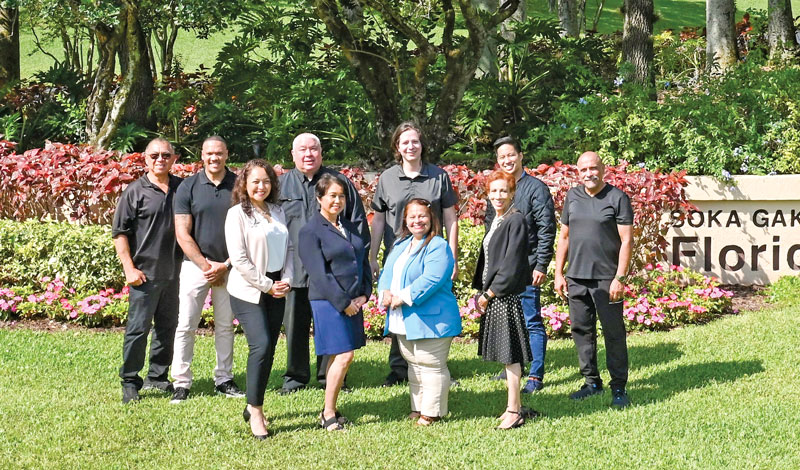
The Florida Nature and Culture Center is marking the 30th anniversary of its opening in June 1996. We spoke with the center’s Executive Director Jimbo Littlefield about the efforts being made by the staff to continue welcoming members from across the SGI-USA and what they have learned from the members.
Living Buddhism: Thank you for speaking with us, Jimbo! To begin, could you tell us how you started practicing Buddhism?
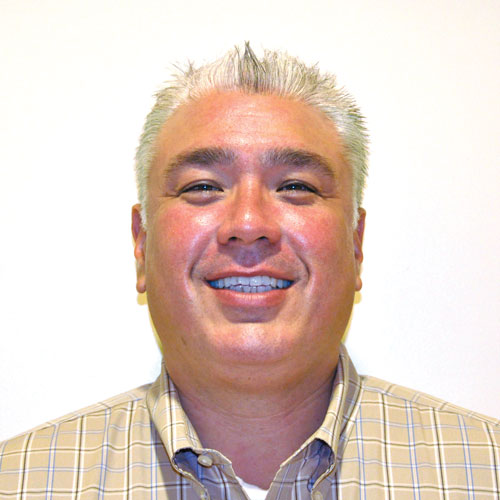
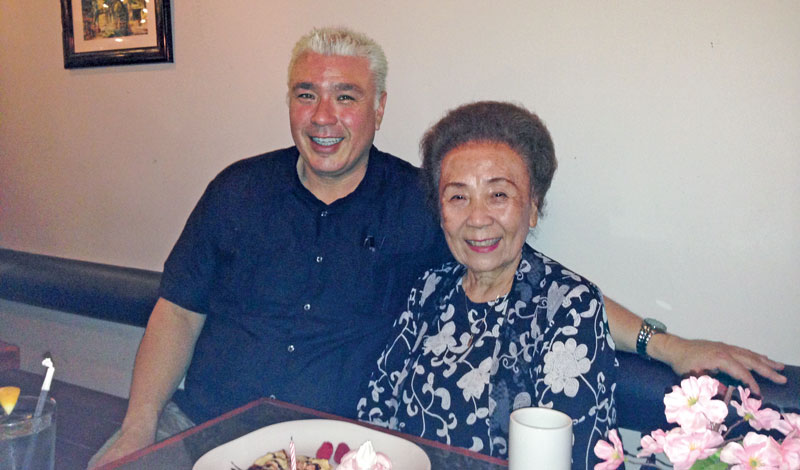
Jimbo Littlefield: My mother received the Gohonzon in 1954 in Bunkyo Ward, Tokyo. It was one year after Ikeda Sensei led the Bunkyo campaign. My dad was a Navy officer, and they moved to the U.S. where I was born.
I participated in SGI activities growing up with my mother, but it was not until I was 19 years old that I started chanting for myself. At 19, I felt that everything was falling apart. It started when I lost a football scholarship after I withdrew from one class. I was also struggling with asthma. I had to go to the doctor’s office several times a week to get a shot. I was miserable. After chanting abundantly,
I finally overcame that health condition.
Could you tell us about your experience when Ikeda Sensei visited Florida in 1996? What were you going through at the time?
Jimbo: I was practicing in Jacksonville, Florida, as a young men’s division member. Many pioneer members had talked about Sensei, but some of their insights felt unfamiliar to me. This sparked a sincere desire to understand him for myself. After driving six hours the day before, I was deeply moved to finally see Sensei in person.
During this time, my life was being tested as my father had just been diagnosed with a serious illness. The chance of him getting effective treatment was close to winning the lottery two times. However, I took it as my responsibility to win over my father’s illness. Seeing Sensei’s high life condition, I felt a surge of conviction to turn this obstacle into a shared victory for my family. When I came back, my father got the necessary treatment. He was the oldest person ever to receive that treatment which was highlighted in medical journals.
Incredible! What highlight of Sensei’s visit to FNCC do you remember?
Jimbo: During the meeting I attended, there was a moment of technical trouble with the audio-visual equipment. Everyone in the room was nervous. Sensei was different. He joyfully began tapping his desk like a drum, lightening the mood and making everyone feel comfortable. Sensei had a way of taking the heaviness out of the room.
I saw him as a person who was winning in his own human revolution. His life condition was so expansive that it seemed larger than the entire auditorium. I realized that I, too, can have that same state of life. Sensei later came to the aisle where I was sitting and said, “Do your best.” This encounter helped me decide to follow Sensei as my mentor. I wanted to learn how to win in life from him.
Many members come to FNCC every year with both victories and struggles. What are some things you have learned from the members who come to FNCC?
Jimbo: We can often see the stages of human revolution in the members. They may not be very energized when they arrive, but by Sunday we can see the transformation in their brighter faces. Some members come with victories they’re ready to share with others and there are others who are deeply struggling in life.
There was one young man who came to FNCC who said that he didn’t want to live anymore. I told him, “I will see you next year and hear you share how you won this year. Please determine to come back.” I was a little worried, but I saw him the next year! He had a victorious year and made it back!
We don’t know what condition members are in when they come to FNCC, so we have to greet every person as a Buddha. In the Lotus Sutra, it says, “If you see a person who accepts and upholds [the Lotus Sutra], you should rise and greet him from afar, showing the same respect you would a Buddha” (The Lotus Sutra and Its Opening and Closing Sutras, p. 365).
Many members leave FNCC with fresh determinations, feeling Sensei’s heart. What efforts have the FNCC staff been making to ensure that the members can have such an experience?
Jimbo: We treat every conference as if it’s a Superbowl, making sure everything is perfect for the members, and we strive to be bright and inspiring as a team. We fully focus on the conference in front of us, giving our all to make it the greatest. Each conference has to be as great as any other. For example, we align all the tables and chairs with lasers so that everything is perfectly straight in the meeting rooms. The little details can mean a lot.
What is your determination going forward?
Jimbo: My mission now is to continue supporting the youth and the vision of kosen-rufu in America. I’m determined to ensure that we advance without fail. The youth in Florida Zone are planning the 30th anniversary celebration of the FNCC. We are excited that they are leading the effort. With deep gratitude for my health, my family, and the honor of working at the FNCC, I stand with a renewed vow to win alongside my mentor, every single day.
You are reading {{ meterCount }} of {{ meterMax }} free premium articles