
We’ve all been there. You’re staring out the window, nursing a lukewarm cup of coffee, thinking, When things calm down, I’m going to take some classes and look for a new job. Or maybe it’s, I’ll start my new diet and exercise program as soon as the holidays are over.
We live in a culture that idolizes self-improvement, beauty and wealth. But the images that deluge us can feel so out of reach that they leave many people discouraged. We convince ourselves that transformation requires the perfect alignment of the stars, a massive overhaul of our circumstances or a sudden stroke of luck. We wait for the universe to give us a sign.
But what if the universe is actually waiting for a sign from us?
Buddhism teaches a radical, empowering truth: The potential to transform absolutely everything exists within us at this very moment. The moment something shifts within our heart and mind—within our life—our destiny begins to change. The instant we resolve deeply to win, change or grow, the gears of our reality start to turn.
Our lives are not a slow, unchanging trudge from birth to death; they are made up of countless fleeting, dynamic moments. In any one of these moments, we have the power to redirect the course of our lives.
This idea is crystallized in the Buddhist principle known as “three thousand realms in a single moment of life.” It may sound complex and highly theoretical, but it is also a practical blueprint for living. It teaches that each moment of life contains a vast range of possibilities, including the potential for Buddhahood. By focusing and directing our inner resolve and our actions in any given moment, we can take responsibility for and profoundly influence the course of our lives.
Let’s unpack this ancient wisdom and talk about how its practical application can completely revolutionize our daily lives.
The Blueprint for Reality
To understand what it means for a single moment to hold “three thousand realms,” it helps to travel back to 6th-century China to meet the Great Teacher T’ien-t’ai.
T’ien-t’ai was a visionary Buddhist scholar who deeply studied the Lotus Sutra. The sutra teaches that all people, within the ordinary reality of their lives, possess the potential for Buddhahood. Rather than presenting Buddhahood as a remote state separated from ordinary people, it reveals that the highest life state is inherent within the lives of all living beings.
Based on the Lotus Sutra’s teaching of the “true aspect of all phenomena,”[1] T’ien-t’ai systematized the doctrine of three thousand realms in a single moment of life in his landmark work Great Concentration and Insight. He clarified the inner structure of the meditative practice of observing the mind that seeks to perceive that the three thousand realms are inherently present in a single moment of one’s own consciousness.
Three thousand isn’t a random number. It is a description of how life functions from moment to moment.
Buddhism explains that our life state—the quality of our inner condition—fluctuates constantly through ten realms or worlds. These are the worlds of hell, hunger, animality, asuras, humanity, heaven, voice-hearers, cause-awakened ones, bodhisattvas and Buddhas. In everyday terms, we might associate these, respectively, with despair, craving, impulsive reactions, competitiveness, calm humanity, joy, the desire to learn, awakening through observation, compassionate commitment to others, and the wisdom and compassion of Buddhahood.
Because each of these Ten Worlds contains the potential for the other nine—a principle called “the mutual possession of the Ten Worlds”—we get 10 × 10, or 100, possibilities.
Multiply that by the “ten factors of life,” which describe how cause and effect function in each realm, and we reach 1,000. The ten factors are: appearance, nature, entity, power, influence, internal cause, relation or external condition, latent effect, manifest effect and consistency from beginning to end.
Finally, multiply all of that by the “three realms of existence”—the realm of the five components (the constituents that form an individual), the realm of living beings and the realm of the environment—and you arrive at the grand total of 3,000.
As Ikeda Sensei explains, “The heart of this principle [three thousand realms in a single moment of life] in fact lies in the mutual possession of the Ten Worlds,”[2] meaning that Buddhahood can be found within the ordinary states of life we experience every day.
In simple terms, “three thousand realms” means that our lives, our relationships and our environment are dynamically interconnected. A change in one’s inner life does not magically replace reality, but it can transform how we perceive, respond to and influence the world around us.
From Difficult Meditation to Daily Action
T’ien-t’ai’s mapping of the mind was a brilliant philosophical achievement. It arose as a contemplative practice for perceiving the true aspect of life, requiring sustained discipline and deep concentration. For most ordinary people, however, such rigorous meditative practice is difficult to carry out amid the demands of daily life.
For the average person—someone dealing with an overbearing boss, a crying toddler or a stack of bills—sitting in silent meditation for hours a day to grasp the mechanics of how life interacts with the universe simply isn’t realistic.
Enter Nichiren Daishonin in 13th-century Japan. He understood that a philosophy is only as valuable as its ability to relieve suffering. If a teaching could not relieve the suffering of ordinary, hardworking people amid their chaotic lives, what good was it?
Nichiren took the profound theory of three thousand realms in a single moment of life and revealed its practical significance for people in the Latter Day of the Law. He identified the ultimate Law that enables all people to manifest Buddhahood as Nam-myoho-renge-kyo and established the practice of chanting this phrase with faith in the Gohonzon, a concrete expression of three thousand realms in a single moment of life.
Sensei describes this breakthrough in practical terms, saying that three thousand realms in a single moment of life “clarifies that the pure and limitless life force of eternal Buddhahood can function dynamically within the lives of ordinary people wracked by earthly desires, karma and suffering.”[3]
By chanting Nam-myoho-renge-kyo, we do not need to master the full philosophical structure of three thousand realms in a single moment of life through isolated meditation. Nichiren taught that this profound principle is encompassed within the five characters of Myoho-renge-kyo and that, by embracing and chanting Nam-myoho-renge-kyo to the Gohonzon, ordinary people can bring forth the power of Buddhahood in the here and now.
The Myth of ‘Someday’ Creating the Time
Because we possess this incredible tool, the question shifts from how we change to when we change.
We often fall into the trap of thinking that time is a river that carries us along to some inevitable destination. We think that “someday” our ship may come in. We wait for the economy to improve, for our partner to change or for our confidence to miraculously appear.
But Buddhism flips this narrative. If you are waiting for the perfect time to fulfill your dreams or stand up for your own happiness, you may be waiting forever. Five, 10 or 20 years may pass, and “that time” may never arrive.
Why? Because time is not something we wait for; it is something we create right now. The only moment that exists is right now. Only what we think, say, resolve and do at this moment has the power to affect the future.
Our determination, specifically to achieve happiness for ourselves and others, is what actually generates “the right time.” Sensei writes:
“Our single-minded determination for kosen-rufu, and that alone, creates the ‘time.’ ‘That time’ is when we set our lives in motion, when we stand up of our own volition and by our own will and strength.
“Goethe writes, ‘The moment alone is decisive; Fixes the life of man, and his future destiny settles.’[4] ‘That time’ is the moment you resolve from the depths of your heart, ‘Now I will stand up and fight!’ From that instant, your destiny changes. Your life develops. History begins.
“This is the spirit of the mystic principle of the true cause. This is the principle of three thousand realms in a single moment of life. The moment you autonomously determine to accomplish something—not when you do it because you are told to—is ‘that time,’ the time of mission.”[5]
The Ripple Effect: Shifting the Universe
When we finally grasp the concept of three thousand realms in a single moment of life, we realize something incredibly liberating: we are not limited or defined by our circumstances. We possess far more power than we realize.
Often, when we are suffering, we point our fingers away from ourselves and outward toward the person or thing we think is causing that suffering. However, because the three thousand realms include the realm of the environment, Buddhism teaches that our life and our surroundings are inseparable.
This principle is known as the “oneness of life and its environment.”[6] It does not mean that every circumstance is a simple mirror of our mood; rather, it means that life and environment form one dynamic reality and that transforming our life state changes how we perceive, engage with and influence our environment.
Nichiren illustrates this point vividly:
Hungry spirits perceive the Ganges River as fire, human beings perceive it as water, and heavenly beings perceive it as amrita. Though the water is the same, it appears differently according to one’s karmic reward from the past.[7]
In other words, the same reality is experienced differently, and we interact with it differently, depending on our life condition.
Imagine a room filled with tuning forks. If you strike one, the others tuned to the same frequency begin to hum. When our inner life state is steeped in complaint, powerlessness or anger, we tend to perceive and respond to the world through those tendencies. But when we strike the tuning fork of Buddhahood—when we chant Nam-myoho-renge-kyo and elevate our inner state to one of wisdom, courage and compassion—our words and actions change, and our environment and those around us begin to respond differently.
We don’t have to force the people around us to change. When we change our inner focus or determination in a particular moment, our actions naturally shift. We speak with more confidence, treat others with more empathy and tackle problems with creativity instead of dread.
When we change our hearts, we begin to transform our world—our “three thousand realms”—through the concrete interaction of prayer, inner resolve and action.
Living With the Same Vow as the Mentor
The principle of three thousand realms in a single moment of life is empowering and easy to appreciate in theory. The real challenge is continuing to believe in this principle when life gets hard. When facing setbacks and suffering, we can lose sight of our vast potential and become overwhelmed by our circumstances.
This is why Nichiren Buddhism emphasizes the importance of having a mentor in faith. The mentor provides a living example of someone who continues to believe in the limitless potential of life even amid the greatest obstacles.
What does it mean to live with the mentor’s heart?
Nichiren vowed to lead all people to enlightenment, and the three eternal mentors of the Soka Gakkai[8] strove to realize that same vow. When we base our faith on this shared commitment to the happiness of ourselves and others, we can bring forth the same life force as the Buddha. In this sense, the oneness of mentor and disciple is a practical source of strength for our human revolution. Sensei reminds us:
The moment that the sun of the oneness of mentor and disciple rises in our hearts, a great transformation begins. There is no karma that we cannot surmount, no struggle that we cannot win.
The oneness of mentor and disciple is, for all practical purposes, an indispensable component in the causality for achieving the fundamental transformation of our life state as taught in Buddhism.[9]
When we unite our hearts with the mentor’s vow, the world of Buddhahood shines more strongly within us. We begin to live not only for our own concerns but also for the happiness of others. In doing so, we expand our lives beyond the limits of our lesser selves and strengthen our resolve to keep moving forward.
One of the clearest and most powerful expressions of this spirit is sharing Buddhism with others. When we encourage another person, we are not only helping them awaken to their inherent worth; we are also strengthening our own conviction in the limitless potential of life. In this way, helping others bring forth their Buddhahood becomes a way of continually bringing forth our own.
The Mystic Principle of the True Cause
The principle of three thousand realms in a single moment of life is entirely forward-looking. This forward-looking perspective is expressed in the “mystic principle of true cause”: Regardless of what happened yesterday, last year, or a decade ago, the cause for our future happiness can be made right now. The present moment is not just the result of the past; it is the starting line for the future.
Sensei says: “In each moment, we begin anew our practice of the eternal bodhisattva way. As such, we are always standing at the fundamental starting point of everything. Drawing forth the boundless life force of our inherent Buddhahood, we can dynamically transform ourselves and our lives where we are right now.”[10]
Every time we sit in front of the Gohonzon and chant Nam-myoho-renge-kyo, we make a fresh determination and create the true cause to break through our limitations. We spark the momentum necessary to transform our life, our family, our community and, ultimately, the world.
This is why Sensei stresses the power of resolve, stating: “When your determination changes, everything else will begin to move in the direction you desire. The moment you resolve to be victorious, every nerve and fiber in your being will immediately orient itself toward your success.”[11]
We are not background characters in someone else’s movie, helplessly watching the plot unfold. We are the protagonists. We are the directors.
There is no need to wait for a better day. Everything we need to achieve absolute victory is already inside us, waiting to be activated. By chanting, making a fresh determination and acting for the happiness of ourselves and others, we bring forth our highest self right now.
The universe is not going to decide our future. It responds to the determination we make in this moment.
Pray to Develop Doubt-Free Faith
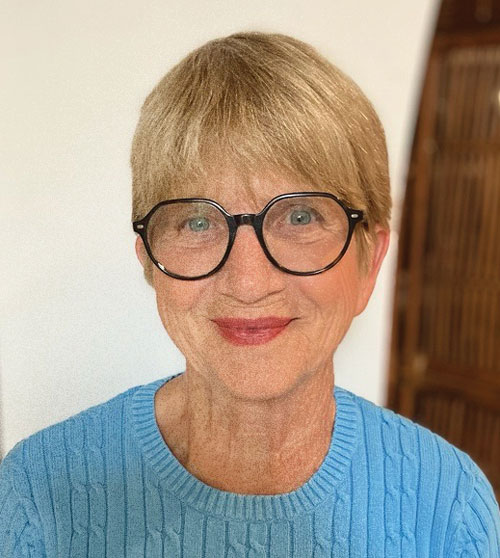
Betsy Eppsteiner / Naples, Florida
Living Buddhism: Thank you for speaking with us, Betsy. Could you begin by sharing how you encountered Nichiren Buddhism?
Betsy Eppsteiner: I started practicing in 1971. At the time, I was walking through Harvard Square when a student I had never met approached me and invited me to a Buddhist meeting.
At the time, I was teaching children with psychiatric challenges, and I was ready to quit because I felt like a complete failure. I couldn’t connect with my students, and I didn’t feel capable of reaching them.
At my first meeting I was encouraged to establish a “test case”—to chant about a specific situation and see the power of Nam-myoho-renge-kyo. My test case was a student named Corey. I had taught him for two years without making any progress. No matter what I did, I could not reach him.
When I began chanting about Corey, something changed within me. I started to feel his isolation, pain and loneliness. My desire to reach him was no longer coming from my ego or from wanting to prove that I was a good teacher. It came from a sincere wish to understand and be with him.
One morning, I could tell that he had withdrawn deeply into his own world. He had certain movements and rituals he would go through. Before I started chanting, I would immediately try to pull him back into what I thought he should be doing. This time, without thinking, I simply joined him to be with him in his world. He turned to me and started to engage with me, telling me how I should hold my body while we moved. Then we began moving together through the classroom and I asked him, “Where do I take my mind?” In that instant, he took me there, and we connected. I initially thought it might have been a coincidence, but I continued chanting.
One month later, Corey’s parents came to the school for his exit interview since he was graduating, and they asked me, “What have you been doing? Our son is transforming in front of our eyes.” I told them, “I’m chanting Nam-myoho-renge-kyo.” They said, “Whatever you’re doing, we want to do it!”
Corey’s parents eventually received the Gohonzon. Later, the school principal, the school psychologist, another teacher and some of my student teachers also began practicing Buddhism. They had seen how much I struggled as a teacher, and then they witnessed everything begin to change. I became capable of reaching my students! Instead of leaving teaching after three years, I had a 48-year career. That was my human revolution. It was the beginning of changing my karma.
Incredible. At what point did you develop the conviction that you could also transform something that seemed impossible in your personal life through your single-minded determination?
Betsy: It was through my struggle with infertility. More than anything, I wanted to have children, but my doctor told me it was impossible. I was still fairly new to practicing, but I understood that the purpose of Buddhism was to enable us to transform our karma. So I simply assumed that my karma would change. I thought, No problem. I will chant, and it will happen.
But one year became five years, and five years became nine. By that point, I had begun to doubt deeply. I had the opportunity to receive guidance while on a training course in Japan. I explained my situation to a leader, and she gave me very simple guidance. She said: “Pray for your faith. Pray to develop doubt-free faith. Pray to believe in the Gohonzon with your whole heart.”
I did not like that guidance at all! I returned home and proceeded to ignore it. But emotionally, I continued to decline. Eventually, I thought, Maybe I better actually follow the guidance I received. I began praying for my faith, to develop doubt-free faith and to believe in the Gohonzon with my whole heart.
Two weeks later, I was pregnant! That experience taught me that I didn’t have an infertility issue, I had a faith issue. Now whenever I feel stuck or consumed by doubt, I can pray to strengthen my belief. I chant to bring forth the conviction that I can transform the situation.
One day, after having our first child, my husband was walking through the house and said, “Maybe we should think about having another child.” That very day, I became pregnant with our second child. The doctor had told me there was no possibility of having children. Through chanting, I made the impossible possible… twice!
How has that conviction helped you when facing challenges?
Betsy: I’ve had many different experiences, but every one of them has reaffirmed the power of faith and my deep resolve.
There is always a way forward. Even when the circumstances appear impossible and we cannot see a solution, we can continue praying with the determination to create one. This is the power of our determination.
You have also encouraged many people to write down their goals repeatedly. How did you begin doing that?
Betsy: I came across guidance from Ikeda Sensei that says:
Buddhism teaches us that the individual writes and performs the script for their own life. … You are the author and the hero. To perform your play well, it is important to pound the script into your head so thoroughly that you can see it vividly before your eyes. … Sometimes it helps to write down your goals … copying them over and over until they are burned into your heart. (My Dear Friends in America, fourth edition, p. 267)
I found this guidance while traveling to encourage some youth division members in Miami. When I met with them, I said, “Why don’t we put it into practice for one year and see what happens? I’ll return in a year, and we can compare notes.” I asked them to make two or three goals that they felt were difficult to achieve. I chose three goals—two things that seemed very difficult and one that seemed impossible.
Every day, I wrote down my goals three times each. I repeated this every day in a little notebook. Then, I would face the Gohonzon and chant. Because the goals were being burned into my heart, I was able to fuse my life with the Gohonzon. The prayers were not vague or coming only from my head.
Writing the goals forced me to establish my priorities and keep moving toward them until I saw a victory. In the past, I might chant about something and then become distracted. I might move on to another concern, forget what I had determined, become discouraged because the situation was painful or find one of a hundred million reasons to stop. But writing my determinations every day prevented me from abandoning them. After a few weeks, the first difficult goal was accomplished. A few months later, the second difficult goal was accomplished.
Then a full year passed, and nothing had happened regarding the “impossible” goal. I returned to Miami and joked, “Well, two out of three isn’t bad, right?” The youth responded, “What about the third goal?” I told them: “Tomorrow, I will be back at it. One of two things will happen: Either I will die, or I will win, but I will not quit!” Four months later I achieved my impossible goal.

You have a lot of determination. What is the foundation of that life force?
Betsy: For me, it is all about my vow.
I had the opportunity to meet Sensei in Japan in 1979. That was the year he stepped down as the third Soka Gakkai president to shield the members from the corrupt machinations of the priesthood. But during that time, he did many many home visits.
I had traveled to Japan hoping to see Sensei, but I understood that it would probably be impossible. During the trip, two friends and I were invited to a member’s garden party. It just so happened that Sensei came to visit that member’s home while we were there.
He walked into the garden, came directly toward me and my friends and asked me one question: “Do you think that within one year, you can introduce one person to the practice to receive the Gohonzon?” With my entire life, I responded, “Yes.”
Since 1979, I have done my best to help at least one person begin practicing each year. Because of that vow to my mentor, my life overflows with fortune and benefit. Sharing Buddhism has become like breathing for me. Just as I do gongyo each day, I introduce others to Buddhism. Both are part of my personal Buddhist practice.
Every day, I make an effort to meet young people and begin conversations. I listen to them, learn about their lives and, when the opportunity arises, invite them to a Buddhist activity.
Recently, I met a student from Nepal at the University of Massachusetts. I told him about my Buddhist practice and now he’s been learning gongyo, attending discussion and study meetings and connecting with local members. The women’s and men’s leaders are supporting him, and the young men are reaching out to build friendships with him. This is how we will accomplish 10,000 new youth joining the SGI by January 2, 2028, because everyone is doing whatever they can to support the youth.
That’s incredible. What’s your determination now?
Betsy: It is to help one youth start practicing Buddhism this year and every year after. I consider myself the most fortunate person in the world because I have the Gohonzon, my mentor and the SGI community. Through this Buddhist practice, not only can I transform my own suffering, but I can help others discover the power to transform theirs.
When the SGI-USA youth shared their peace pledge and encouraged each person to introduce one youth this year, I felt Sensei speaking through them. It was the same guidance I received from Sensei in 1979.
I remember the tremendous student movement that arose during the Vietnam War. I witnessed the power of young people united around a shared purpose. When young people embrace a philosophy of hope, respect and the dignity of life, they can change the trajectory of society. I believe the solution to the current situation is 10,000 youth joining our movement toward 2028 and bringing hope to the world.
From the September 2026 Living Buddhism
References
- True aspect of all phenomena: The ultimate truth or reality that permeates all phenomena and is in no way separate from them. In“The True Aspect of All Phenomena,” Nichiren Daishonin defined “all phenomena” as all living beings and their environments in the Ten Worlds, and “the true aspect” as the Law of Myoho-renge-kyo, the ultimate reality permeating all phenomena. This principle is expressed in “Expedient Means,” the Lotus Sutra’s second chapter, which clarifies that all people inherently possess the potential for Buddhahood, and can tap and manifest this potential. ↩︎
- The Opening of the Eyes: SGI President Ikeda’s Lecture Series, p. 26. ↩︎
- Ibid., pp. 26–27. ↩︎
- Johann Wolfgang von Goethe, Hermann and Dorothea, trans. Ellen Frothingham, vol. XIX, Part 4, The Harvard Classics (New York: P.F. Collier & Son, 1909–14); Bartleby. ↩︎
- The Heart of the Lotus Sutra, pp. 25–26. ↩︎
- See July 2026 Living Buddhism, pp. 14–15. ↩︎
- “Reply to the Lay Priest Soya,” The Writings of Nichiren Daishonin, vol. 1, p. 486. ↩︎
- Three eternal mentors: Tsunesaburo Makiguchi, Josei Toda and Daisaku Ikeda, who are the three founding presidents of the Soka Gakkai. They are enduring examples of how to practice and disseminate the teachings of Buddhism for the sake of peace. ↩︎
- May 15, 2009, World Tribune, p. 5. ↩︎
- October 2019 Living Buddhism, p. 60. ↩︎
- November 8, 2019, World Tribune, p. 6. ↩︎
You are reading {{ meterCount }} of {{ meterMax }} free premium articles