
On September 8, 1957, second Soka Gakkai President Josei Toda issued his historic Declaration for the Abolition of Nuclear Weapons, condemning nuclear arms as a manifestation of absolute evil.
Inheriting this vow, Ikeda Sensei dedicated his life to making nuclear abolition a reality, authoring over 40 annual peace proposals that offered concrete, pragmatic solutions for disarmament and other pressing global challenges.
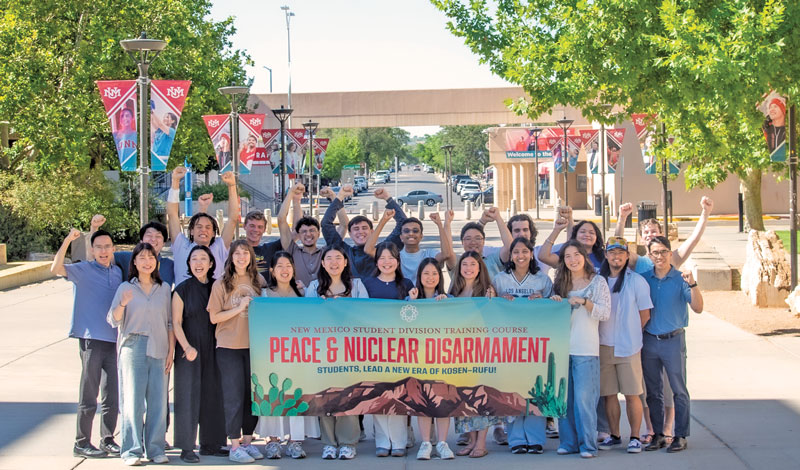
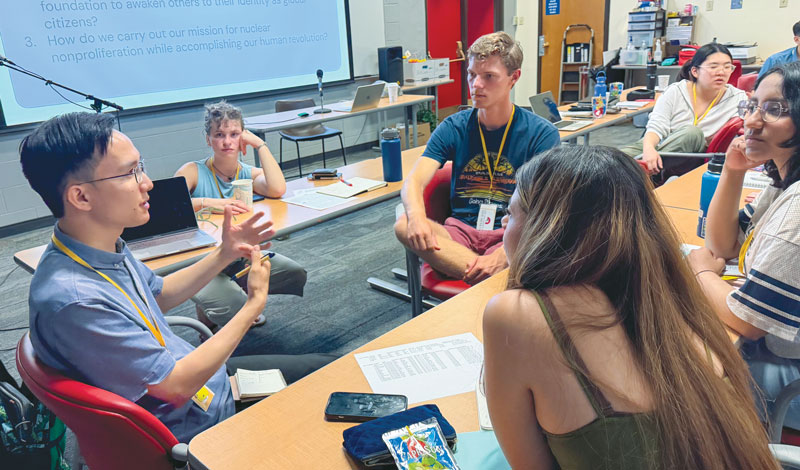
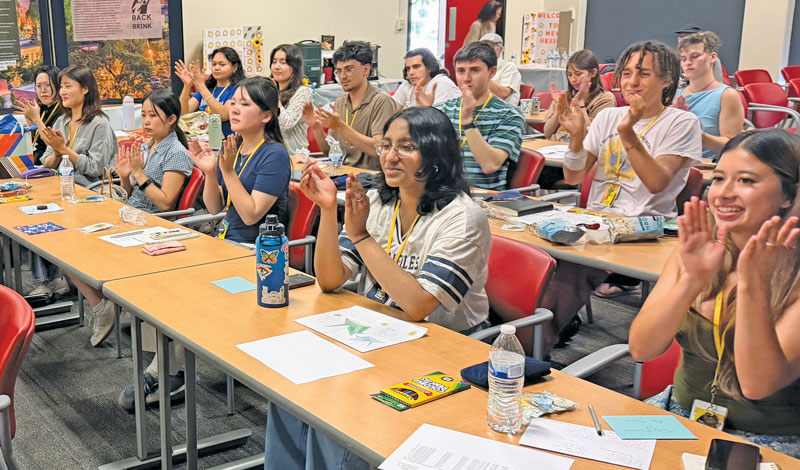
Carrying forward this profound legacy of mentor and disciple, 24 SGI-USA student division leaders gathered at the University of New Mexico in Albuquerque from July 10 to 13, 2026, for the first SGI-USA student division training course on peace and nuclear disarmament.
New Mexico holds special significance as the birthplace of the nuclear age. On July 16, 1945—the same month that President Toda was released from prison during World War II—the world’s first nuclear weapon was detonated at the Trinity Site in the New Mexico desert. The resulting radioactive fallout has affected generations of local indigenous communities and “Downwinders.”[1]
Amid today’s rising global nuclear tensions, the students deepened their understanding of these historical legacies, centered on the horrific bombings of Hiroshima and Nagasaki in August 1945, and strengthened their determination to make progress toward nuclear abolition and uphold the dignity of life through the lens of Buddhist humanism.
On the following pages, we reprint Sensei’s address commemorating the 50th anniversary of President Toda’s Declaration for the Abolition of Nuclear Weapons, which the students studied and took deeply to heart on the training course. We also present reflections from four student division representatives who attended.
For a more detailed report on the training course, see the August 7, 2026, World Tribune.
Ikeda Sensei
Nothing Is More Precious Than Life
On the 50th anniversary of second Soka Gakkai President Josei Toda’s Declaration for the Abolition of Nuclear Weapons, SGI members cosponsored the Civil Society Peace Forum at The Cooper Union in New York, on September 8, 2007. The following is Ikeda Sensei’s message to this event, where he emphasized key points in the campaign to abolish nuclear weapons and create a peaceful world. This message was originally printed in the September 28, 2007, World Tribune.
On September 8, 1957, Josei Toda, the second president of the Soka Gakkai and the man I look to as my mentor in life, issued a declaration calling for the complete abolition of nuclear weapons. This was just months before his death; he poured his entire being into making this declaration.
This was at the height of the Cold War, and the competition to develop and deploy nuclear weapons was heating up. Yet Toda condemned—in powerful, even strident, language—the destructive human impulses that underlie these weapons. Rooted in the perspective of Buddhism, which seeks to shed light on the inner workings of life itself, Toda denounced anyone who would use these weapons to jeopardize people’s fundamental right to live as a “devil incarnate, a fiend, a monster” (see A Quest for Global Peace, p. 124). Toda had the insight to understand that the logic that justifies the possession of nuclear weapons grows from the most extreme form of human desire—the desire to dominate and bend others to our will, the readiness to annihilate them, destroying their lives and livelihoods, should they resist. Toda solemnly entrusted the mission of achieving the abolition of nuclear weapons to the 50,000 young people who had gathered in Yokohama, Japan, to hear him on that day.
Fifty years have passed since Toda issued this declaration. While humanity managed to avert the global cataclysm that was an immediate danger throughout the Cold War, efforts toward nuclear disarmament are now stalled, and the threat posed by the continued spread of nuclear weapons has become critical. Now is the time, in the midst of this deepening crisis, for ordinary citizens to raise our voices in a united call for nuclear abolition. Now is the time to forge a new culture of peace in which the human dignity of all can truly shine.
In the teachings of Buddhism we find these words: “Life is the foremost of all treasures. Even the treasures that fill the entire universe are no substitute for life” (see “The Gift of Rice,” The Writings of Nichiren Daishonin, vol. 1, p. 1125).
From this perspective, the life of each individual is an inestimable treasure filled with infinite possibilities. Nothing is more precious or of greater value. No one has the right to rob others of this most precious treasure of life. The injunction against killing, present in all spiritual traditions, must be the eternal guiding principle for humankind.
Nuclear weapons can instantly and brutally slaughter vast numbers of people. The survivors are condemned to a lifetime of suffering from the aftereffects of radiation—a lasting burden of misery that will be visited on subsequent generations. What are nuclear weapons, if not a barbarous and unmitigated evil that denies and tramples on the inherent dignity of life itself?
It is vital that humankind develop a shared consciousness that nuclear weapons are an absolute evil whose existence can never be justified—for any reason or under any circumstance. We must free ourselves of the notion that they somehow serve as a necessary evil deterring conflict or war. We must promote the understanding that it is impossible to construct one’s own happiness and security on the fear and suffering of others; and this understanding must be coupled with the compassion, empathy and courage to resist all attempts to do so. This same outlook is fundamental to efforts to resolve the global issues of poverty, ecological degradation and grave abuses of human rights.
Today, many people have given up on the possibility of nuclear abolition. But peace is always a competition between resignation and hope. Indifference and acquiescence in the face of evil must be recognized as negative, destructive functions of life; to submit to such impulses is, ultimately, to side with the forces of destruction.
It was human beings who gave rise to nuclear weapons. It cannot therefore be beyond the power of human wisdom to eliminate them. Buddhism asserts that human life holds within it sources of wisdom and compassion powerful enough to rise above any temptation or threat. I believe that humankind’s continued survival hinges on the success of our efforts to bring forth these positive, creative capacities in all people and forge from them a new solidarity. This is a challenge of epic significance in human history. The greatest single force to achieve this on a global scale is the power of dialogue—dialogue among individual human beings and through expanding friendship and exchange among the world’s peoples.
Dialogue starts from the courageous willingness to know and be known by others. It is the painstaking and persistent effort to remove all obstacles that obscure our common humanity.
Genuine dialogue is a ceaseless and profound spiritual exertion that seeks to effect a fundamental human transformation in both ourselves and others. Dialogue challenges us to confront and transform the destructive impulses inherent in human life. I earnestly believe that the energy generated by this courageous effort can break the chains of resignation and apathy that bind the human heart, unleashing renewed confidence and vision for the future.
The hope-filled leaders at the forefront of this great struggle are always young people. “The new era will be created by the power and passion of youth”—this was the unchanging, lifelong conviction of Josei Toda, who waged an uncompromising struggle of resistance against Japanese militarism during World War II. Deeply partaking of my mentor’s conviction, I am determined to dedicate my life, alongside the youth of the world and together with our distinguished friends gathered here today, to the cause of nuclear abolition and the peaceful coexistence of humankind.
It is my hope that we will make today, September 8, a day of reaffirming our shared vow, as people living into the 21st century, to create a society in which all people may fully and consistently experience the joys of human dignity.
In closing, I would like to recall these words of Abraham Lincoln, spoken here at The Cooper Union in 1860, as an expression of my best wishes for the continued health and well-being of all our friends gathered here today: “Let us have faith that right makes might, and in that faith, let us, to the end, dare to do our duty as we understand it.”
Building a Life Grounded in Hope
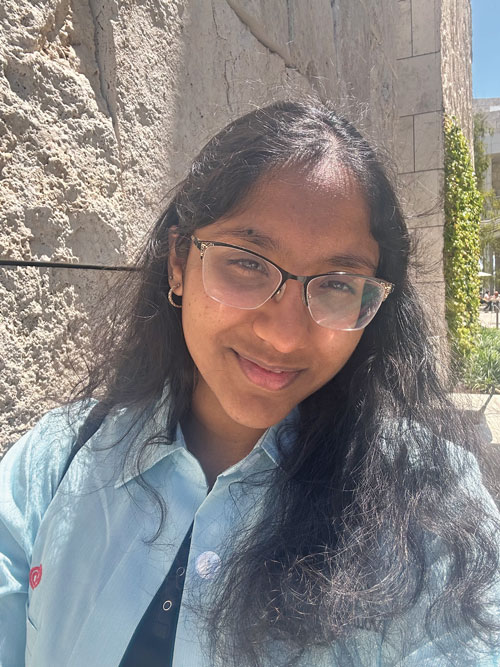
Name: Adrija Nayak // City: Los Angeles // School: University of California, Los Angeles
Living Buddhism: Hi Adrija. Before attending the training course, what was your understanding of nuclear weapons?
Adrija Nayak: I knew, of course, about Hiroshima and Nagasaki, and I realized that nuclear weapons were very dangerous. But to me, it was mainly a piece of history. I didn’t realize that it was so easily replicable or understand the pace at which nuclear weapons are being developed around the world.
I also had no idea how much time, effort and resources are being put into creating these weapons, especially in the United States. I didn’t realize the gravity of the situation or how important it is to take action now.
What impacted you most during the course?
Adrija: We watched an animated video showing the effects of a nuclear bomb and how the destruction radiates throughout a city. You either die instantly or, if you manage to survive, you experience a slow death. Before, I understood that many people would die if a nuclear weapon was detonated, but I had never thought deeply about what that actually meant.
The people affected are common people—normal people who are simply trying to get by in their lives. They are suffering because of political issues that have nothing to do with them. No one deserves to lose their life like that.
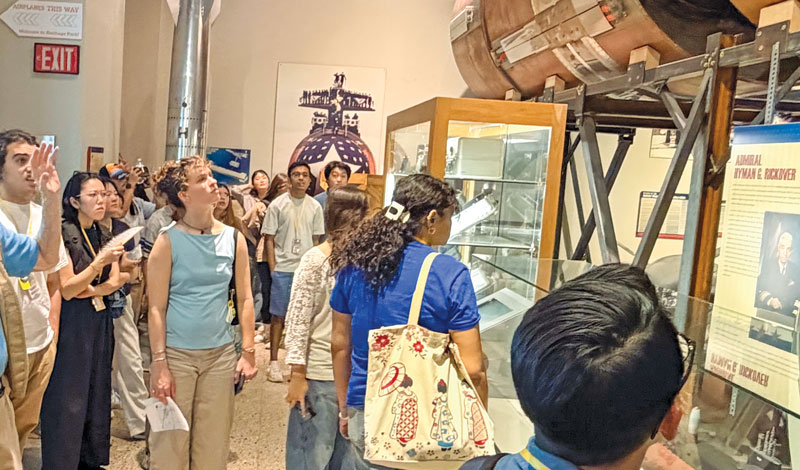
We also visited the National Museum of Nuclear Science and History. The tour guide spoke very passionately about the development of the missiles and weapons, but the entire time I kept thinking: We are doing all this as a field of study dedicated to the destruction of humanity.
People may believe that these weapons are needed to defend their country. But what is there to defend if there are no people left to enjoy life after the war?
I came away feeling frightened and discouraged by the scale of the destruction. But then we began discussing what we could actually do to counter that negativity and violence.
What did you realize you could do?
Adrija: My main takeaway was dialogue—having meaningful dialogue, sharing Buddhism and talking about the necessity of world peace.
It can also mean simply being encouraging and compassionate toward other people. If all of us did that, we could build a positive community capable of combating the negativity and violence that create the perceived need for these weapons.
Since returning, I’ve talked to my friends about the training course and shared about Buddhism. I’ve also spoken with patients at the hospital where I volunteer. They are suffering through things that I can’t even imagine, and I’ve felt encouraged to share the practice without having so much doubt in my mind.
I used to think too much about how people would react. Of course, not everyone will be receptive, but now I want to do it anyway. Even if someone doesn’t begin practicing Buddhism, perhaps I can encourage them to develop a more positive perspective toward life and then inspire them to do the same for others.
How did the training course affect you personally?
Adrija: The spirit of the other student division members was so positive. It wasn’t like they were just acting joyful—they were genuinely happy. Being around them brought me so much joy and hope. I could feel a difference between talking to these student division members and talking to students at my school. It was so refreshing.
Before the course, I had a lot of doubt about whether I could lead our UCLA campus club successfully or organize activities that would bring people together. But meeting others who were battling similar doubts was the kind of uplifting experience I needed. It gave me hope that I would be able to do it.
I’ve been dealing with some health challenges, and at times I’ve felt caught in a vicious cycle of worry and self-pity. I realized that I don’t have to let those struggles keep me from living my life. No matter what happens, I can put aside my worries, enjoy myself and continue pursuing my goals. Feeling that way was unimaginable to me before.
What is your determination now?
Adrija: UCLA has a very activist culture, so this year I’m determined to collaborate with at least two other campus organizations to raise awareness about nuclear disarmament.
I also want to hold a campus club meeting about having faith in yourself. Especially in a competitive field like pre-med, it is so easy to lose faith in yourself and what you are doing.
As students, we are learning how to navigate life and learning so much about ourselves. This is when we are really building our lives. I want to create a strong foundation for my life, grounded in this practice, and help my peers do the same.
Real Human Security Is Built Through Trust
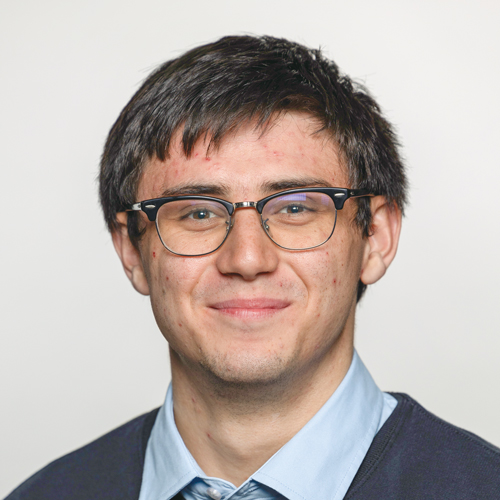
Name: Devin Weber // City: New York // School: Teachers College, Columbia University
Living Buddhism: Hi Devin. Before attending the training course, how did you view nuclear disarmament?
Devin Weber: As a disciple of Ikeda Sensei, I supported nuclear disarmament as a stance, but I didn’t feel very involved in it. I think I had subconsciously viewed it as a Cold War-era issue. Every once in a while, a world leader might threaten to use nuclear weapons, but it didn’t feel like an immediate problem. Somehow, it became normal that humanity possesses enough weapons to obliterate itself many times over. I didn’t realize how desensitized I had become.
What made the issue feel real to you?
Devin: A speaker from Nuclear Watch New Mexico explained that nuclear weapons production is continuing and that enormous financial and human resources are being directed toward modernizing them. For example, the budget allocated toward the Los Alamos National Laboratory was greater than the state of New Mexico’s entire operating budget by about a billion.
At the same time, many communities in New Mexico struggle with inadequate education, health care and social services. I also learned about the “downwinders”—ordinary people who suffered from radiation exposure caused by nuclear testing.
It reinforced for me that it is always ordinary people who suffer the most in conflict. The people harmed by the Trinity Test were victims of nuclear weapons, even though the bomb was not intentionally used against them.
That’s when something began to click. The problem is not only that nuclear weapons could destroy the world. It is that so much human energy—physical energy, political will, money and scientific ability—is being directed toward war, and the people are being left behind.
Even though we haven’t destroyed the world, we are already incapacitating communities just to maintain the ability to do so. It isn’t enough simply not to use nuclear weapons. All the energy we are pouring into creating them is already causing harm.
How did this connect to your own life?
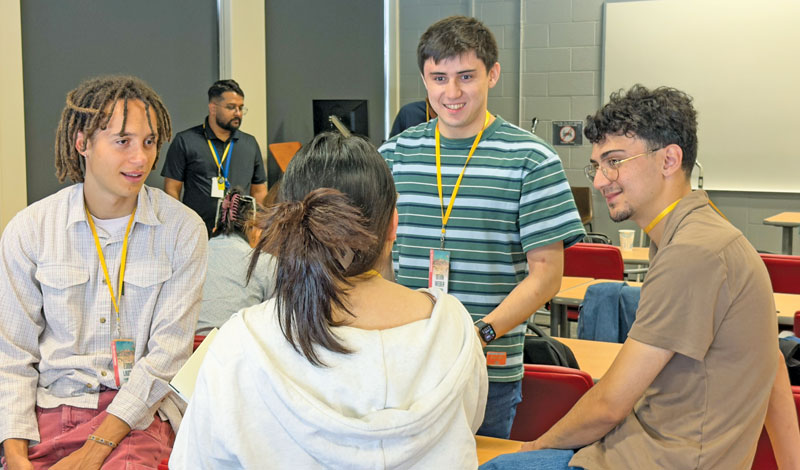
Devin: The course made me think deeply about the mindset in American society that treats military power as impressive or believes weapons create genuine safety.
That popular mindset is something I can challenge. I may not study national security, but I can talk with people about war, weapons and what truly constitutes security. That is somewhere I can make a difference.
What do you believe true security looks like?
Devin: Nuclear deterrence begins from mistrust: If another country does something, we feel we need the power to protect ourselves.
But true human security is built when you can trust your community members, when you feel totally comfortable leaving your kids with your neighbor if you need to do something, for example.
What if we created an era of trust by opening our hearts to people who are suffering, become better friends and family members, and create communities where people can depend on one another? That’s something that anyone can do.
How did the training course deepen your vow?
Devin: One thing that stayed with me was the idea of choosing one’s vow over one’s ego.
I realized that to navigate a problem this enormous, I have to make my vow the center of my prayer and everything I do. I want to fight in my heart, 24/7, for kosen-rufu.
This is not abstract. We are talking about nuclear weapons, war and people’s lives. We are fighting for the future of humanity.
What is your determination?
Devin: Personally, I want to overcome my fear of judgment and sincerely chant Nam-myoho-renge-kyo for the people in my life, to become their No. 1 supporter and build bonds of trust. Recently, a friend from back home told me honestly what he was going through and I opened my heart to him. It was a huge step in our friendship.
I live in Harlem, where I see people who have been neglected and abandoned by society. I chant for my community a lot because I feel empowered to help transform the suffering it faces.
My determination is to establish a strong student division core in my region, introduce people to Buddhism and create a community rooted in trust. This is how I can create true security where I am.
‘Never Believe You Are Powerless’
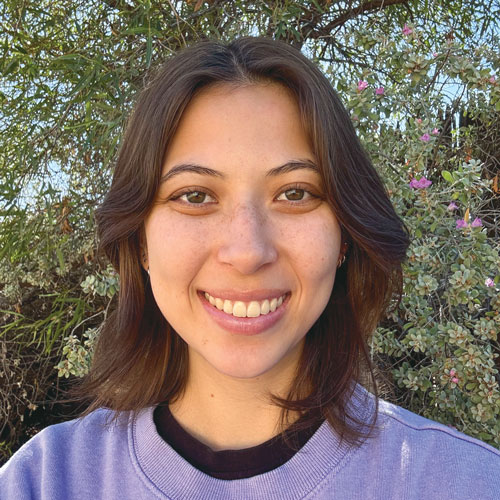
Name: Hana Peck // City: Tucson, Arizona // School: University of Arizona
Living Buddhism: Hi Hana. Thanks for talking to us! Before the training course, what were your thoughts about nuclear disarmament?
Hana Peck: Honestly, I didn’t really have many thoughts about it. It was kind of in the background, and it never really felt like it applied to me personally. I thought of nuclear disarmament almost as a secondary goal of the SGI—it was there, but we didn’t talk about it much.
Even while preparing for the course, I kept asking myself: How does this apply to our Buddhist practice? How does this apply to me?
What did you learn through preparing for and attending this training course?
Hana: I learned that it takes a lot of effort and education to care about problems like this. At least in our school system and in this country, caring about nuclear disarmament doesn’t necessarily come naturally. We spent two full days learning about nuclear weapons, studying Nichiren Daishonin’s writings and discussing how to connect this issue back to the individual to really understand it.
Something that surprised me was how few people knew about the Trinity nuclear test in New Mexico. Low-key, I didn’t know much about it either. I grew up in Arizona, and New Mexico is right next door, but it was never mentioned enough in school for me to remember it. I was surprised to realize how little we know about our own history.
What did you share in your presentation?
Hana: Eddie Laiche and I presented on the history and legacy of the nuclear bomb. We discussed the Trinity Test and the bombing of Hiroshima and Nagasaki.
We also studied second Soka Gakkai President Josei Toda’s Declaration Calling for the Abolition of Nuclear Weapons and watched a video of it together. We then presented on Ikeda Sensei’s diplomatic efforts as President Toda’s disciple and connected that back to what we can do.
Sensei was able to meet with many leaders of nations. We don’t necessarily have to do that, but we talked about what we can specifically contribute through our own fields of study and our own lives.
We also discussed how the decision to use a nuclear weapon is never simply a yes-or-no question. There are so many pressures and circumstances involved. Ultimately, society must reach an elevated life state in which it truly values human life. Until that happens, I feel that the only way to ensure nuclear weapons are not used is to not have them at all. But even eliminating them requires that we elevate the life state of society as a whole.
What role does dialogue play in that process?
Hana: In his declaration, President Toda said that we must disseminate the idea that everyone has an inviolable right to live and that nuclear weapons are an absolute evil.
The only way to communicate those ideas is through one-to-one dialogue. You can announce or post anything you want on social media, for example, but many people don’t have strong feelings about nuclear weapons or even the value of life because they haven’t had the opportunity to think deeply about them. Some people simply need someone to talk with so they can widen their horizons.
Why was it significant that this was a student division course?
Hana: College campuses are concentrated spaces of diversity. We meet professors, international students and people from many countries, cultures and backgrounds.
My mom made the point that when you personally know someone from another country, it becomes unthinkable to want to destroy the place they come from. Knowing people expands your life and changes the way you see the world.
Students therefore have a tremendous opportunity. By forming friendships and engaging with different perspectives, we can help spread a truly global idea of peace.
What is your determination moving forward?
Hana: My determination is to not be afraid to talk about these things. Nuclear disarmament may seem completely beyond our influence, but there is always something an individual can do. Our lives and our continuation as a species depend on which direction humanity chooses. So never believe that you are powerless. Once we believe we are powerless, we won’t be able to act or initiate change.
A Few Words of Dialogue Can Change the World

Name: Olive Wang // City: Champaign, Illinois // School: University of Illinois Urbana-Champaign
Living Buddhism: Hi Olive. Before attending this training course, how did you view nuclear disarmament?
Olive Wang: I understood that nuclear weapons were destructive, but my knowledge was limited, and the topic sat in the back of my mind. It felt distant from my daily life.
When I was introduced to Buddhism, I was focused primarily on transforming my own suffering and finding joy. I knew that peace and nuclear disarmament were important to the SGI, but I didn’t understand how they related to my Buddhist practice or what I could personally do.
When I was invited to the training course, I saw it as an opportunity to deepen my faith and learn about a subject I had never seriously explored.
What stood out to you during the course?
Olive: We read Ikeda Sensei’s speech, “Nothing Is More Precious Than Life” every day. We studied the writings of Nichiren Daishonin and learned the Buddhist perspective on how to view nuclear weapons, learned about the history and complexity of them and discussed what ordinary people can do.
One powerful moment came when we visited the National Museum of Nuclear Science and History. I have friends who work in defense-related industries, and I understand the engineering and expertise required to develop this technology. It was the point of most internal conflict within. I could admire the human ingenuity involved while also recognizing that these weapons could destroy countless lives and hurt so many people.
Through dialogue with the other participants, I realized that the problem is not people’s skills or intelligence. The deeper issue is whether society truly values life. In a world without war, all that engineering power could be put to use to support life and humanity, not to build weapons.
What is one thing that you learned?
Olive: I think I started to understand how much difference we can make as a single individual through our efforts to dialogue with others and do shakubuku. No matter how gradual that process is, it makes a difference in the end. Nuclear disarmament is an issue that has lasted decades now, and it won’t transform in one year. It’s a much more gradual change, but because of that, we have to have a strong never give up spirit.
That was something else I felt—I may not be alive to see the results of what I’m fighting for, but I have to believe that I’m planting seeds for a better future. That is faith.
A professional in the field came to speak to us about the enormous amount of money being invested in nuclear weapons. I asked how she engages in dialogue with people who work in the defense industry. Her response made me realize that, even among people working for disarmament, direct dialogue with those who hold different perspectives may not always be emphasized.
What do you want others to know?
Olive: Even a few minutes of sincere dialogue can contribute to world peace. Nuclear disarmament can feel like an enormous, almost impossible problem. When we view it only from a doomsday perspective, it becomes difficult to take action.
But we don’t have to do something dramatic or make the news to make an impact. Through introducing someone to Nam-myoho-renge-kyo, encouraging a friend or simply treating the people we encounter with dignity, we can help others recognize the value of their own lives and see that value in humanity.
What is your determination moving forward?
Olive: I want to bring these discussions back to our campus club. I also want us to be unafraid to have deep discussions about the major problems in the world, starting with this topic of nuclear disarmament. Also, we’ve welcomed many guests to our activities, and my determination is to help at least one person receive the Gohonzon this academic year.
There is suffering everywhere, and I cannot personally be in every community. But I am in Champaign, Illinois, right now. This is where my mission is.
I trust that the other participants will fight for peace in their communities, and I will take full responsibility for creating kosen-rufu where I am.
From the September 2026 Living Buddhism
References
- Downwinders: Individuals and communities exposed to radioactive fallout from atmospheric nuclear weapons testing and Manhattan Project operations. ↩︎
You are reading {{ meterCount }} of {{ meterMax }} free premium articles