

What does it take for a person to realize their full potential? Often, it begins with one person believing in them.
The Harvard Center on the Developing Child[1] found that for children who thrive despite experiencing serious adversity, a common protective factor is the presence of at least one stable, committed relationship with a supportive adult. Such relationships help young people develop resilience, confidence and a sense that they have the power to shape their lives.
Before a young person can fully recognize their own strength, someone else may first need to recognize it.
This principle lies at the heart of fostering capable people in the SGI. Ikeda Sensei says: “To raise and nurture people younger in faith or experience so that they can surpass even your own achievements—that is the prayer of a senior in faith, the most heartfelt desire of a mentor.”[2]
Believing in someone is easy when they are thriving. It becomes more challenging when they are struggling or unable to believe in themselves.
The Lotus Sutra presents a wonderful example in Bodhisattva Never Disparaging, who refused to give up on anyone because he was convinced that every person possesses a Buddha nature.
‘I Have Profound Reverence for You’
We’ve probably all experienced a relationship in which we question whether it’s worth continuing to invest our time and energy.
When that person is someone we’re trying to support in their Buddhist practice, doubts may arise. We might think: Am I pushing too hard? Am I expecting too much? Maybe I don’t have what it takes to encourage them.
The Lotus Sutra teaches that every person possesses the Buddha nature—the limitless capacity for courage, wisdom, compassion and transformation. Sensei explains: “Each person’s life is an infinitely precious and respectworthy treasure tower. From the view of the Lotus Sutra, everyone, without exception, possesses innate dignity and worth.”[3]
Understanding this principle in theory may be easy. But believing it when the person in front of us disappoints us, rejects our efforts or seems unwilling to change is another.
Bodhisattva Never Disparaging, who appears in the Lotus Sutra’s 20th chapter, embodies unwavering faith in the Buddha nature of all people. Whenever he encountered another person, he would bow in reverence and say:
I have profound reverence for you, I would never dare treat you with disparagement or arrogance. Why? Because you will all practice the bodhisattva way and will then be able to attain buddhahood.[4]
His conviction, however, was not always welcomed. Some people criticized him, beat him with sticks or threw stones and tiles at him.
Yet, he refused to abandon his conviction that they, too, would attain Buddhahood. When necessary, he moved out of harm’s way but continued declaring respect for them, encouraging them from a distance.
Nichiren Daishonin writes:
The heart of the Buddha’s lifetime of teachings is the Lotus Sutra, and the heart of the practice of the Lotus Sutra is found in the ‘Never Disparaging’ chapter. What does Bodhisattva Never Disparaging’s profound respect for people signify? The purpose of the appearance in this world of Shakyamuni Buddha, the lord of teachings, lies in his behavior as a human being.[5]
As Buddhist practitioners, Never Disparaging teaches us that respect for others does not depend on how they respond to us. This may be easier said than done when it feels like people are disparaging us!
Never giving up on someone does not mean tolerating harmful behavior or ignoring healthy boundaries. Rather, it means refusing to define others by their present demeanor or circumstances and continuing to trust in their immense potential.
This spirit lies at the heart of the SGI’s efforts to foster many capable people as we strive to advance kosen-rufu. And it is core to the SGI-USA’s “One Youth. Infinite Hope” movement: developing the conviction to always place great hope in another person’s potential.
The challenge is not whether others will change, but whether we can continue to believe in their Buddha nature.
How do we develop such unwavering conviction in another person’s Buddha nature? Nichiren Buddhism offers some concrete approaches:
• chanting for them;
• encouraging and praising them; and
• patiently supporting their growth
Let’s take a deeper look at each of these points.
Prayer Changes Our Life
In volume 27 of The New Human Revolution, second Soka Gakkai President Josei Toda shares the following with the young Daisaku Ikeda:
“If we can’t appreciate or accept people, we won’t be able to identify their positive qualities, strengths and talents. A cloudy or distorted mirror cannot reflect things correctly. In the same way, a clouded or distorted mind cannot accurately discern someone’s unique traits or abilities.
“That’s why leaders must always strive to grow, to cultivate the ability to see things impartially and to expand their state of life.”[6]
In other words, fostering others begins with expanding our own state of life. Through chanting Nam-myoho-renge-kyo, we expand our state of life and find the wisdom to see the strengths of those around us. Sensei also says:
First of all, you must find capable people. Just as a miner searches for gold ore in ordinary rocks, you have to look for members who possess great potential and then work to develop their ability with your heart and soul.
Prayer is most fundamental in raising capable people. You should pray earnestly to the Gohonzon that the person you have found will become an able person important to the SGI-USA. Then, with this prayer, you take the utmost care to help that person develop.[7]
Suppose there is someone we find particularly difficult to encourage or get along with. As we chant, our prayer can shift from frustration to a deep determination to see that person win and become happy. Through chanting, we can transform frustration into compassion, impatience into wisdom and resignation into fresh determination.
Chanting brings the wisdom and compassion necessary to view ourselves and others correctly and take the most effective action. Fostering another person begins with strengthening our own faith.
Genuine Praise Inspires Growth
When we genuinely believe in another person’s strengths, it changes what we notice in them. Rather than focusing on what they are not good at, we begin to discover their unique qualities and skills.
Sensei emphasized the importance of recognizing and encouraging a person’s efforts. In The New Human Revolution, he writes:
“This is an era for praise and encouragement. It’s necessary to accurately assess young people’s wide variety of efforts and praise and commend them. That will give them courage and foster in them the aspiration to do better. We should praise each of their specific actions concretely.”[8]
Such encouragement is most effective when it is rooted in genuinely knowing the person. When we take the time to understand someone, we often discover strengths that may not be immediately apparent.
For instance, someone who struggles with organizational skills may have an ability to make people feel welcome. Someone with many struggles who lacks confidence might find that those very experiences allow them to reach others in ways that no one else can.
This is why meeting with people and listening to them matters. In an age when we can communicate instantly, it is easy to mistake contact for connection. Yet trust is built through sincere dialogue and a willingness to understand another person’s hopes, concerns and struggles.
Sensei says:
Meeting others face to face is the only way. Meeting in person forges bonds of trust and brings people together. It also plays a vital role in fostering capable people. Our organization has achieved the global development that it has today precisely because we have persistently carried out such one-to-one dialogue. This is the unwavering formula by which the development of our movement unfolds.[9]
The purpose of such efforts is not simply to help someone take on greater responsibilities. It is to forge a bond of trust through which they can become stronger and overcome challenges and discover their own unique mission.
A person who leaves our texts unanswered today may someday open their heart tomorrow. By continuing to make causes for that person’s happiness, we can create a relationship through which genuine growth and happiness become possible.
Growth Has Its Own Timing
Perhaps one of the hardest lessons in helping another person is accepting that their transformation or growth may not happen according to our timeline. We may chant for someone for months without seeing any visible change. A friend may decline our invitations to chant together or attend meetings. Someone who once practiced enthusiastically may step away. But Buddhism takes the long view.
Even when our prayers and efforts seem to have no immediate effect, we can trust that our efforts to support another person are never wasted. A seed planted today may become significant at a crucial moment years from now.
Sensei himself took this long view in fostering people. He writes of his own determination to foster successors in The New Human Revolution:
Shin’ichi was determined to personally foster genuinely capable people so that the 21st century would be a century of peace and life. … Fostering people meant inspiring them and enabling the seed of mission to germinate in their hearts. And the only way to do so was to devote himself to that task patiently and earnestly for two or three decades.[10]
This perspective changes the way we think about supporting others. Rather than passively waiting for others to change, we must continue chanting and challenging ourselves, expanding our capacity to appreciate and encourage those around us.
Ultimately, fostering someone does not mean simply helping them improve in doing certain tasks. It’s about supporting them in awakening to their mission and the unique contributions that they can make.
As we dedicate our time, prayer and effort to one person, the hope is that they will become someone who will do the same for someone else. Sensei says:
The “body and mind” of a single individual can create waves of change that ripple out to their family members and friends, their workplace, their community, their country and the entire world.
Everything starts with one person. Change starts with one person. The way forward opens with one person. That’s why it’s important to start by meeting and speaking with one person and taking action together with them.[11]
The Practice of Never Disparaging Today
Sensei explains his own spirit in supporting others:
When I meet someone, I do my best to encourage the person to the very end. Even if that person were to move to the remotest parts of the earth or take a little break from faith, I will do whatever I can to support him or her. And for those considering giving up their faith altogether, I want them to enjoy once again the amazing benefits of practicing the Mystic Law. I want to encourage them as if carrying them on my back or in my arms or pulling them along. I want them to feel deeply just how wonderful is the benefit gained from exerting oneself in faith. If others can sense our sincerity in wanting them to be truly happy, they will stand up on their own without a lot of pressure or prodding. The important thing is to pray so that our sincerity will reach them.[12]
This spirit represents the heart of SGI members and the spirit of Bodhisattva Never Disparaging. He never judged people based on who they were at the moment. He bowed to the potential of who they could become. We share that same challenge today.
By continuing to pray for, get to know and patiently support those around us—even when they cannot yet see it themselves—we help awaken them to the Buddha nature they each possess.
Kosen-rufu advances in this way from one human life to another.
Our goal toward January 2, 2028, is for each of us to have infinite hope for one young person, and to stick with them for however long it takes them to start having limitless hope for and confidence in themselves.
When we take this as our mission, we will surely transform our communities and societies and at the same time, polish our own lives, becoming modern-day Bodhisattvas Never Disparaging.
Supporting Others Means Building Genuine Friendships

Ericka Jones / Chicago
Living Buddhism: Hi Ericka, how did you begin practicing Nichiren Buddhism?
Ericka Jones: In 2007, I was at a seminar when someone handed me a copy of The Winning Life and said, “I think you might find this interesting.”
I read it from front to back, and when I encountered the concept of the Ten Worlds, it completely blew me away. I thought, This is what I’ve been looking for.
I had been searching for something spiritual for a long time. I was raised Christian, but as I got older, I had questions and was looking for something that made sense to me. When I encountered Nichiren Buddhism, it felt like home. I connected with my local district almost immediately and received the Gohonzon in 2007.
What’s so interesting is that my dad began practicing Buddhism around the same time in Grand Rapids, Michigan! One day I told him that I had become a Buddhist and he said, “Me too!” I couldn’t believe it. We practiced Buddhism together until the end of his life.
Was there anyone who especially supported you in developing your faith?
Ericka: Over the years, I’ve received so much encouragement from seniors and fellow members. I’ve also been encouraged simply by watching other members face tremendous challenges—financial struggles, health problems, family difficulties—and refuse to be defeated. Seeing people continue to fight has strengthened my own faith.

In supporting others, have you ever reached out to someone who didn’t respond the way you hoped?
Ericka: Definitely. There’s a young woman I became friends with who has been battling serious health challenges. I’ve been sharing Buddhism with her and sometimes she’s very responsive, and other times she won’t get back to me for a while.
I chant for her victory. I encourage her to chant, send her encouragement based on Buddhism and share passages from Ikeda Sensei. Sometimes she’ll respond, “This is so cool!” or ask where something came from, and then I may not hear from her for some time.
But it taught me patience. Part of my nature is to be impatient, so learning patience is part of my human revolution. I have to remind myself that she is dealing with what she needs to deal with.
I also have to remember that everyone moves at a different pace. When I discovered Buddhism, I was ready immediately. But someone else may need more time. I don’t want anyone to feel, Ericka talked me into this. I want the people I introduce to Buddhism to choose Nam-myoho-renge-kyo for themselves, for their own life and happiness.
What is our role when supporting another person?
Ericka: I think it’s important to build bonds of friendship and be as authentic as possible.
Sometimes, whether I meet with a member or a friend I’m trying to introduce to Buddhism, it’s simply: How is your life? How is your family? Or, What are you passionate about? What matters to you?
Of course, we talk about Buddhism—something from Living Buddhism, the World Tribune or Sensei’s encouragement. But I also want to know them as a whole person.
Recently, I visited a member who has been struggling. I noticed a book on her table, one of my favorite books, and we began talking about it. We can find commonalities to deepen our friendship.
I think those moments matter. If every time someone sees me they think, Here comes Ericka—all she wants to do is talk about Buddhism, but she doesn’t know anything else about me, then I haven’t really deepened our friendship.
For me, supporting someone means taking a genuine interest in their entire life and building bonds of trust.

How has your Buddhist practice deepened your ability to care for others?
Ericka: I think I’ve always cared about people, but Buddhism has expanded my heart, perspective and sense of gratitude for others.
It has also strengthened my conviction that we have to recognize one another’s humanity. If I refuse to see your humanity, how can I expect you to recognize mine?
Through my Buddhist practice, I’ve also come to appreciate the idea of transforming karma into mission. Things I once disliked about myself or experiences I struggled with in childhood and young adulthood have taken on a different meaning.
For example, as a child I decided that I wasn’t creative because of something I interpreted from an art teacher’s criticism. For years, I believed I was not a creative person.
Through chanting, I eventually realized that creativity doesn’t exist only in painting or drawing. My creativity comes out through writing and creating presentations. Chanting helped me see where I had placed limitations on my own life.
I realized: If I was the source of that limitation, I could also remove it. If I was the source of that pain, I could become the source of joy. Experiences like this make me want to help other people recognize the possibilities within their own lives, too.
What is your determination as you continue supporting others?
Ericka: I’m determined to encourage and empower at least one young person to receive the Gohonzon this year, and to encourage as many people as I can.
I began practicing at 39, so I also know that people of every age are searching for a way to become happy. Young people especially are searching for purpose and hope. They may be carrying beliefs about themselves or their circumstances that make them think certain doors are permanently closed. I want to help them see that they have everything within them. They have unlimited potential.
School can prepare someone for a career, but where do we learn how not to be defeated when life brings something we never expected—a health diagnosis, losing a job, or a loved one becoming seriously ill?
Through chanting Nam-myoho-renge-kyo, I’ve learned that no matter what happens, I can continue moving forward. I want young people—and everyone I encounter—to know they have that same power within their lives.
That’s why I want to keep opening the door for others, building genuine friendships and supporting each person patiently, at their own pace.
The Power of Unconditional Support

Jamie Miller / Upland, Calif.
Living Buddhism: Hi Jamie, can you tell us how you encountered Nichiren Buddhism?
Jamie Miller: I first learned about Nichiren Buddhism through a co-worker. I went to his house, saw his Buddhist altar and asked, “What’s that?” He told me about his Buddhist practice and chanted with me. I immediately felt, This is what I’ve been looking for.
I had grown up in a very dysfunctional environment, and for a long time I was searching for peace and a sense of belonging. At my first SGI meeting, someone shared very openly about a painful experience from his past. What struck me was that nobody judged him. Everyone simply thanked him for sharing. I had never experienced that kind of acceptance before.
I received the Gohonzon in February 2020, right before the pandemic. The following month, everything shut down, and I had no choice but to look inward. Looking back, that timing was incredibly significant because chanting helped me begin understanding myself and transforming my life.
A few years later, though, you began distancing yourself from the SGI. What happened?
Jamie: When I experience difficult emotions, my instinct is to isolate myself. That goes back to how I grew up. I learned that when something was wrong, I needed to handle it myself before coming back around other people.
Toward the end of last year, I was going through several painful situations at once. I also had an interaction with someone in the community that left me feeling judged rather than encouraged. Eventually, I thought, If this is what Buddhism looks like, I don’t want it. So I stopped coming out to meetings.
For the first time since receiving the Gohonzon, I stopped chanting consistently. At first, things seemed fine. But little by little, I noticed my life condition changing. I became less grateful. The world seemed less beautiful. For example, when I first started chanting, even the plants seemed prettier. But when I stopped, it was almost like life was turning black and white again.

How did you reconnect?
Jamie: After a couple months, my SGI friends and leaders began reaching out to me. I ignored most of them. But when one senior in faith contacted me, I couldn’t ignore them.
There was something about this person’s sincerity. We went to a late birthday dinner, I shared what I was going through and never felt judged. Later, my young men’s leader invited me to this person’s house to chant. Afterward, we had a really deep conversation about what I wanted for my life.
I realized I had no idea. I had spent most of my life in fight-or-flight mode. When they asked where I saw myself in five years, I couldn’t answer. I was always thinking, Can I make it through this moment?
Then this senior in faith said, “We’re going to chant together every week.” Normally, I would have found an excuse. But I agreed.
What made this person’s support different?
Jamie: Consistency. I think we’ve missed chanting maybe one Monday since we started.
We chant for about 30 minutes, study Buddhism and talk. Everything comes back to Buddhist practice. Even when something I need to change is pointed out, it is done with so much compassion that I don’t feel attacked.
This person’s attitude was essentially, We’re going to work through this together. That persistence, conviction and compassion changed me.
Through our dialogues, I realized that I had never really allowed myself to have faith. Deep down, I was always waiting for something bad to happen. I always expected the other shoe to drop. Gradually, through chanting and studying consistently, I began believing that good things could happen to me and that I was worthy of happiness.
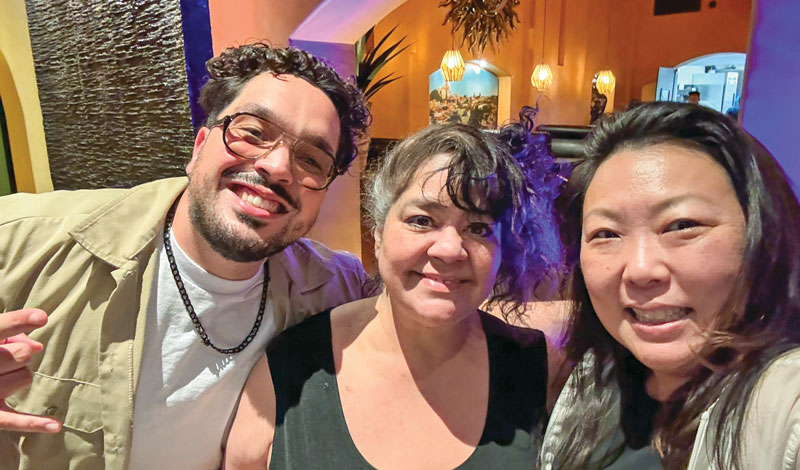
How has that inner change shown up in your life?
Jamie: This consistent support helped me find my voice. For years, I unconsciously covered my mouth with my hands when I chanted. One day, I shared that I had difficulty expressing my voice. I was encouraged to start by not covering my mouth when chanting.
Soon after, I had difficult situations at work where I needed to advocate for myself. In the past, I might have shut down or exploded. Instead, I could calmly say, “You can’t speak to me that way,” and step away when necessary.
I also began looking differently at painful circumstances within my family. Instead of seeing them as proof that I wasn’t loved, I began recognizing my own value. I began to believe, I am worthy of love. That was huge for me.
And now you’re supporting others?
Jamie: I started visiting, sharing Buddhism and supporting other young men. One of my friends even received the Gohonzon.
I’ve realized that so many young people struggle with lack of confidence and self-worth. Because I know what that feels like, I want them to understand that they don’t have to hate themselves and having emotions is part of being human. They can transform everything.
This senior in faith’s constant support showed me what it means to believe in someone before they fully believe in themselves. Now I want to do that for others.
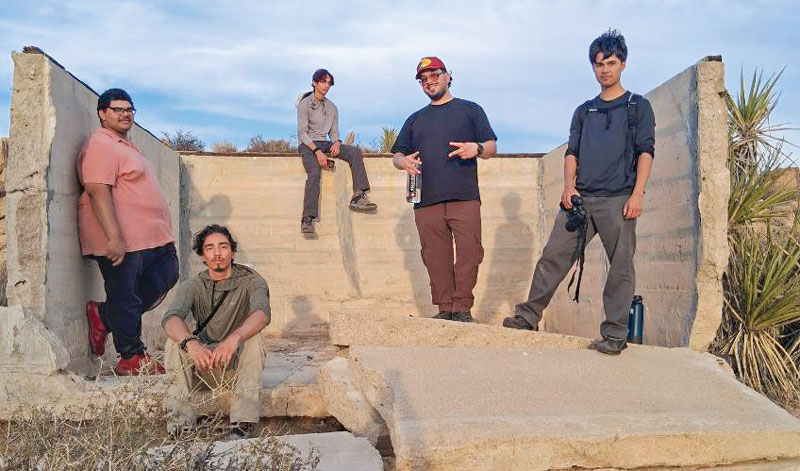
What does faith mean to you today?
Jamie: Faith means believing that good things can happen.
Sometimes, when life is going smoothly, I still catch myself thinking, Something bad must be coming. Then I stop and tell myself that the other shoe doesn’t have to drop. I am worthy of good things. For me, faith is continuing to chant, take action and make causes with an unwavering belief that things can work out.
And because someone supported me without giving up on me, I want to become the kind of person who never gives up on anyone else.
Pouring Our ‘Heart and Soul’ Into Fostering the Next Generation
The following excerpts are from Ikeda Sensei’s guidance on raising capable people.
Enabling One Person to Stand Up
When my mentor, second Soka Gakkai President Josei Toda, spoke with young people, he would often share his insights on various events and developments in history and stress how important it is to foster capable people for the future of kosen-rufu. He noted how in some periods of history the absence of capable individuals led to the collapse of a country or civilization, while in others, the presence of many capable individuals produced an age of flourishing. He also pointed out specific crises that had been overcome because of capable and talented figures.
“The great undertaking of kosen-rufu,” he emphasized, “requires fresh passion and energy appropriate to a new age! It is essential, therefore, for youth to rise into action. We need to believe in the power of youth.”
It was 60 years ago that Mr. Toda appointed me, then 25 years old, as the leader of the young men’s division First Corps in early January 1953. That was the real start to actualizing my mentor’s membership goal of 750,000 households.
“My mentor is praying and waiting for a steady stream of genuine disciples to appear,” I told myself. And I vowed, “I will rally a great multitude of such youthful disciples and assemble them in front of President Toda!”
The young men’s division First Corps that I led started out with just 337 members. By the end of the year, it had tripled in size, reaching more than a thousand. From the moment of my appointment, I focused intently on finding capable people within the organization who could play a leading role in our movement. Or rather, in my eyes, all the members shone as individuals with such immense potential. That’s why, in an effort to get to know each young man, I made time not only to talk with them before and after meetings but also to visit or meet with them personally and listen to what they had to say.
The better I got to know them, the more deeply I prayed that I would be able to help them grow into capable people for kosen-rufu and forge solid connections with their mentor, President Toda. I sometimes went to the communal bathhouse with them, invited them to my home, listened to records with them, and enjoyed conversations with them over meals. Those days remain with me today as fond memories.
I always gave my all. I put my heart and soul into sincerely encouraging the person right in front of me. We shared our problems and chanted together. We spread the Daishonin’s teachings together and struggled side by side for kosen-rufu.
The possibility of realizing a harmonious family, kosen-rufu in the local community, and world peace all start from one person standing up with hope and courage. This is an unchanging and immutable formula. Successful development and prosperity will be found where capable people have been fostered—this is an eternal principle. (The Teachings for Victory, vol. 6, pp. 46–47)
Deepening Our Understanding of Others
By visiting people at their homes, we can form a better understanding of their lifestyles, their circumstances, and the challenges they are facing. Such visits are an important means for deepening our understanding of others. Moreover, in the task of developing capable individuals, it is valuable to visit people at their homes and speak with them one to one.
It is impossible to provide others inspiration or sympathy if our communications are merely limited to sending activity schedules or other organizational information. Of course, we need to take a person’s circumstances into account. Sometimes just a friendly greeting at the front door is the best way to pay a visit. The key is to put ourselves in the other person’s position and, based on that, make a sincere effort to find the wisest and most appropriate way to forge genuine heart-to-heart bonds. (The New Human Revolution, vol. 21, p. 249)
Guidance, Education, Training and Support
From Mr. Toda, I learned four vital cornerstones of fostering capable people—guidance, education, training and support. These can be defined roughly as follows: 1) guidance is helping people challenge and overcome their weaknesses and fear so that they can become happy; 2) education is setting an example and taking action together; 3) training is trusting, entrusting and giving people opportunities to practice what they have learned; and 4) support is recognizing people’s efforts, whether successful or not, and praising and looking out for each individual.
Let us assume, for example, that there are young people in our district or local area who feel overwhelmed by real problems and challenges. We can talk to them about the benefits of practicing Nichiren Buddhism so that they can break through their lack of self-confidence and do their human revolution. We can tell them that they can draw forth the same power of the Buddha we all have within us, helping
them summon up courage. This is guidance.
We can join them in talking about Buddhism with their friends and other activities for kosen-rufu and use these as opportunities to set a concrete example for them to follow. This is education.
In addition, it’s important for young people to gain a clear idea of how to carry out activities, feel they can do them too, and actually set out to do so. If they feel that it’s beyond their ability, they’ll hesitate to even try. To take one step forward and begin engaging in such activities of their own initiative—that is the start of training.
Finally, believing in the inherent capabilities of young people and encouraging them sincerely so that they can develop without constraint—that is support.
Only when all four of these cornerstones are solidly in place can we truly foster capable people for kosen-rufu. The effectiveness of these four cornerstones will also ultimately depend on the extent to which those doing the fostering can develop their own lives and progress in their own human revolution.
We don’t need special abilities to provide guidance and training. An attitude of striving for mutual growth is what matters. Or, rather, through chanting for others’ growth and regularly engaging in dialogue with them, both we and they can grow.
In Buddhism, fostering capable people does not entail pressing individuals into a mold, forcing them to fit some preconceived notion of an ideal capable person. The aim is to enable each person’s individuality to shine its brightest. The foundation of the SGI’s efforts to foster capable people is to enable all people to demonstrate their unique inner potential to the fullest. Then, harmonizing the individuality of each person in the spirit of “many in body, one in mind,” we advance kosen-rufu. Aiming for the happiness of ourselves and others, we each manifest our noble mission as Bodhisattvas of the Earth. (The Teachings for Victory, vol. 6, pp. 49–50)
From the October 2026 Living Buddhism
References
- National Scientific Council on the Developing Child (2015). Supportive Relationships and Active Skill-Building Strengthen the Foundations of Resilience: Working Paper No. 13. Retrieved from www.developingchild.harvard.edu. ↩︎
- My Dear Friends in America, fourth edition, p. 432. ↩︎
- August 2021 Living Buddhism, p. 60. ↩︎
- The Lotus Sutra and Its Opening and Closing Sutras, p. 308. ↩︎
- “The Three Kinds of Treasure,” The Writings of Nichiren Daishonin, vol. 1, pp. 851–52. ↩︎
- The New Human Revolution, vol. 27, p. 350. ↩︎
- My Dear Friends in America, fourth edition, p. 7. ↩︎
- NHR-25, 138. ↩︎
- Embracing Compassion, p. 18. ↩︎
- NHR-14, revised edition, 268. ↩︎
- May 2018 Living Buddhism, p. 20. ↩︎
- The Wisdom of the Lotus Sutra, vol. 6, p. 223 ↩︎
You are reading {{ meterCount }} of {{ meterMax }} free premium articles