
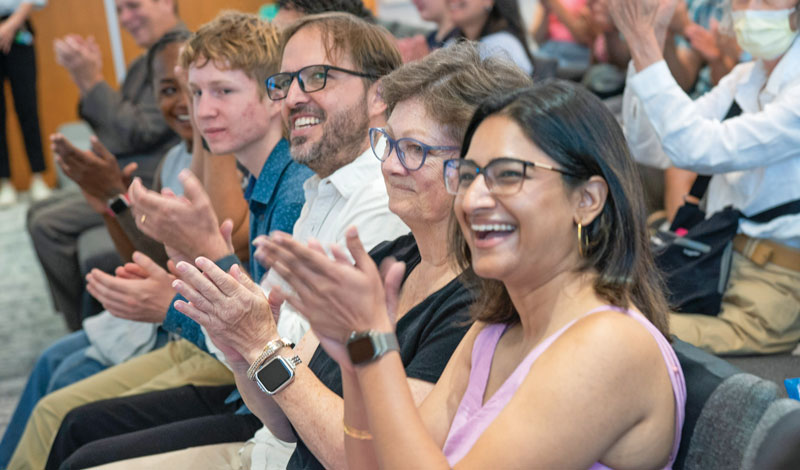
The Sustaining Contribution program provides steady financial support to the SGI-USA and enables participants to financially protect and expand our kosen-rufu movement far into the future. Amelia Gonzalez Tesch, SGI-USA young women’s leader, Kenichi Hackman, SGI-USA young men’s leader, and Monica Soto Ouchi, SGI-USA women’s leader, discuss how they began participating in Sustaining Contribution and why they feel it’s important.
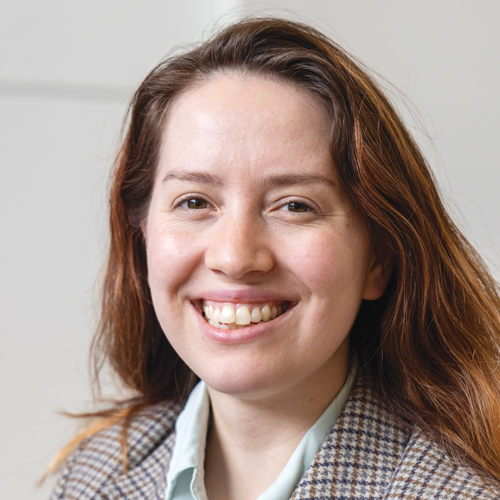

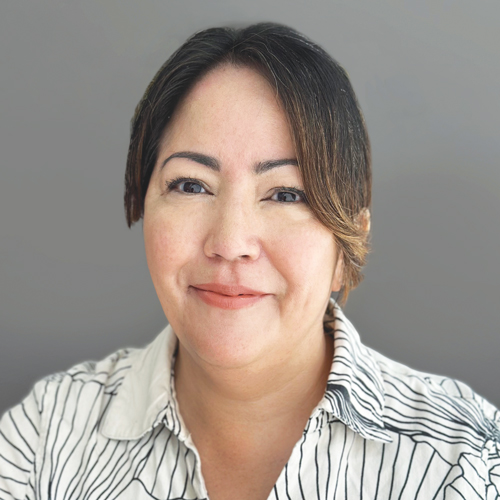
Living Buddhism: Thank you for talking to us about Sustaining Contribution. To begin, when did you start making monthly contributions, and why did you start?
Amelia Gonzalez Tesch: I started in 2013, when I was a freshman in college. I had learned that I could contribute every month, and my thought was simple: I experience so much benefit from challenging May Contribution, why wouldn’t I want to make that kind of cause every month?
At the time, I didn’t have much money. In fact, every month when my Sustaining Contribution came out of my bank account, my heart would sink a little! But it helped me become more responsible with money because I always wanted to make sure I had enough in my account.
Kenichi Hackman: My reason was probably more practical at first. I began around 2018. My leaders visited me, and we talked about everything that goes into maintaining an SGI center—the lights, supplies and all the things that allow members to gather there.
I was regularly supporting activities behind the scenes, and I really valued the center. The thought that I could contribute to ensure that it would always be there for the members, moved me. I’m also a sports person, so I thought about doing my part on the team.
The idea of accumulating fortune was more abstract to me then. Initially, it was simply: I want to support keeping the centers open.
Thanks for sharing. Why have you continued?
Kenichi: Actually, there was a period when I seriously considered stopping. For a couple of years, I was living paycheck to paycheck and carrying debt. I was going through all my monthly bills thinking, What can I eliminate? I really grappled with whether I should cancel my monthly contribution.
But studying about Ikeda Sensei’s youth, I decided to continue no matter what. Sensei writes about three people he encountered when the businesses of his mentor, second Soka Gakkai President Josei Toda, were in dire straits. The first person told Sensei to stop working for President Toda; the second encouraged Sensei to leave President Toda’s company and work for him; and the third said: “This is the very time that you should support Mr. Toda. You must never harbor doubts about the Gohonzon” (My Dear Friends in America, fourth edition, p. 18). The third person dedicated himself to the cause of kosen-rufu and became happy in all aspects of his life. This really moved me. Sustaining Contribution was a way for me to stick with Sensei.
I decided that no matter what happens, I’m going to make Sustaining Contribution non-negotiable for me.
Eventually, the day my monthly contribution came out of my account stopped being a day of anxiety. Instead, I began appreciating those days as another day I could make a cause for kosen-rufu.
Monica Soto Ouchi: For me, Sustaining Contribution is an opportunity to build a foundation of fortune for my life and my family. I also picked a day of the month that’s meaningful to my Buddhist practice, so when that amount is subtracted, I can refresh my spirit for kosen-rufu.
The biggest change for me has been transforming from a taker to a giver—and I don’t mean financially. I mean spiritually. There was a time in my life when I always clinged to others for support, taking from them what I needed without considering their circumstances or feelings. Through my Buddhist practice, and through contributing, I have developed the capacity to support others without conditions.
You’ve all mentioned “fortune.” What does fortune mean to you?
Amelia: In The New Human Revolution, Sensei talks about the Buddhist viewpoint of fortune. He wrote:
Many people do their best to become happy. But just trying hard doesn’t guarantee they’ll succeed in doing so. Why is it, then, that though people make the same kind of efforts, some become happy and some don’t? It comes down to good fortune. If we have good fortune, our efforts will be rewarded and we will enjoy the fruits of happiness. (vol. 27, p. 220)
That really stayed with me.
People sometimes think of good fortune as luck—something you either have or you don’t. Buddhism teaches something different. Through the causes we make for the happiness of others and for kosen-rufu, we can create fortune to enjoy the life we want, while helping others do the same.
Kenichi: That’s a great quote. When I think about fortune, I also think about appreciation.
I don’t think fortune means having no problems. Rather, it includes having the appreciation to recognize what we already possess and what we’ve already accomplished, and the fighting spirit to create value out of everything. In other words, living without fear.
We often say, “I appreciate this” or “I appreciate you.” But appreciation becomes much more powerful when we express it through action. To me, a life of fortune is one in which I express my appreciation through actions to support others.
Monica: I think of this quote by Nichiren Daishonin: “Gold can be neither burned by fire nor corroded or swept away by water” (“The Heritage of the Ultimate Law of Life,” The Writings of Nichiren Daishonin, vol. 1, p. 217). It’s something that no one can take away from you. It can’t be destroyed. Ultimately, it’s a life state we develop through contributing with gratitude.
For me, the greatest fortune I have developed is the conviction that I can turn anything around with the Gohonzon. For me, money isn’t the issue. The issue is whether I believe that I have the ability to transform everything in front of the Gohonzon.
That’s powerful. Some people may wonder: If I participate in May Contribution, why should I also consider Sustaining Contribution? How do you view the two?
Amelia: To me, both are opportunities to make causes for my human revolution and for kosen-rufu.
May Contribution is a time when my husband and I intentionally challenge ourselves. We plan for it and connect it to goals we are determined to accomplish.
This year, for example, we were trying to purchase an apartment in New York City. The process involved tremendous uncertainty, and May Contribution became an opportunity for me to confront my own fear and attachment to money.
Near the end of the May Contribution period this year, I remember thinking, I want to challenge myself a little more. It wasn’t, If I contribute this amount, then I’ll get the apartment. It was about winning over my fear, and at the end of that period, I felt like I won. We also were able to move into our kosen-rufu home this summer with our 1-year-old daughter, Harper.
Sustaining Contribution feels like this steady cause that continues month after month.
Kenichi: I keep thinking about baseball. It’s nice to hit home runs, especially a dramatic one in the bottom of the ninth. But the reality is, to win games, you just have to keep getting on base, hitting singles and moving forward.
That’s how I view it. May Contribution can be this tremendous moment of challenging ourselves, while Sustaining Contribution is a steady rhythm of making causes month after month. It’s become an integral part of my Buddhist practice. I still challenge myself to increase yearly, but not by a large amount. Its greatest meaning is its consistency.
Monica: That’s a great analogy. I think Sustaining Contribution is about continually building a foundation of fortune, while May Contribution gives me an opportunity to challenge myself and cut my karma. For youth, especially, to do Sustaining Contribution is to assure your future. All contribution is so noble, but when you have nothing and still give something, that’s when you transform your life.
When my eldest child was born 17 years ago, we were told they would likely be born with a significant developmental delay. We truly challenged ourselves through prayer, and when our baby was born healthy, we had so much appreciation that we made a significant contribution when May came around. Afterward, we received a gift, but I actually felt ashamed to receive it, because I thought what we contributed was a fluke, a one-time event. But through challenging May Contribution and Sustaining Contribution over time, we’ve built the fortune to now be able to give that same amount every year. It might not be big by others’ standards, but this is our greatest pride—that we are able to protect kosen-rufu financially, steadily and consistently.
What would you say to someone who is experiencing financial difficulties or is unsure about beginning Sustaining Contribution?
Amelia: I would tell them fortune is worth more than money! Then I would share my own experience.
My mother began practicing when our family was on welfare. Pioneer women’s division members encouraged her that by making financial contributions to the SGI she could protect her children, which was the most important thing for her. What stayed with me was the seriousness with which she approached every aspect of her Buddhist practice, especially making contributions.
Over the years, I watched her completely change the trajectory of our family. We went from struggling financially to all four of her daughters at one point going to private school.
That’s why I wanted to begin making causes for kosen-rufu when I was young. Seeing my mother’s life taught me it was more than an offering; she transformed her karma into mission.
Kenichi: That’s so great. I really empathize with anyone who is struggling financially. Both of my parents were single parents and at different points had their own challenges. But through their actions they taught me the importance of our kosen-rufu movement and making whatever causes I could to support it.
When we are struggling with something, there is often a gap between where we are and where we want to be.
Buddhism taught me that I can fill that gap by developing fortune through making causes—chanting, encouraging another person, taking courageous action and contributing to kosen-rufu in whatever way I can.
For me, the key is expanding my prayer beyond just solving the problem. I try to connect my personal goals to the larger vow for the happiness of others. That changes everything.
Monica: Hearing Amelia and Kenichi makes me want to start Sustaining Contributions right now, what do you think?
I’m a little farther down the road, so I would say, especially for young people, that when you don’t do Sustaining Contributions, you are leaving fortune on the table.
Speaking to the women, I hope we have the conviction to enable the young people around us to make Sustaining Contributions by sharing our own experiences with them. An SGI women’s leader said that when you contribute based on faith, you receive boundless benefit. To not enable another member to receive benefit is the opposite of compassion.
I get really excited when I hear that a youth hasn’t started taking part in Sustaining Contribution yet, because that means we can encourage them to build their fortune! If they make this cause starting now, their future is going to be brighter than they can possibly imagine.
Having Conviction in the Causes I Make
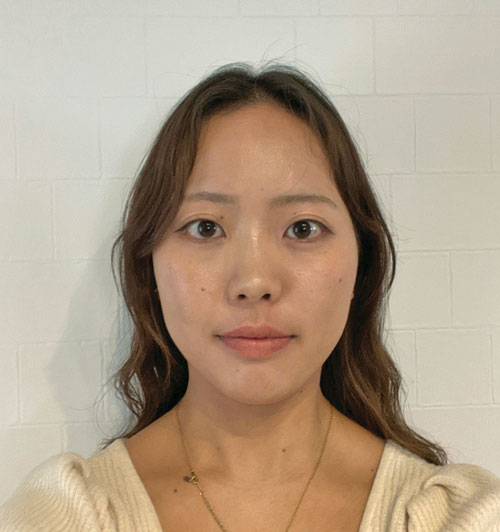
Name: Risa Koizumi // City: Washington, D.C.
Growing up in Japan as a third-generation SGI member, I naturally chanted Nam-myoho-renge-kyo with my family, attended meetings and participated in Future Division activities. But for many years, my Buddhist practice was something I had been surrounded by rather than something I had made my own.
That began to change after I came to the United States in 2024 when I moved to Charleston, South Carolina, for an internship.
Since childhood, I had dreamed of becoming a pastry chef. After graduating from Soka University in Japan, where I studied economics, I attended culinary school and trained in pastry and baking in Europe. My journey eventually brought me to Charleston for a one-year internship at a hotel.
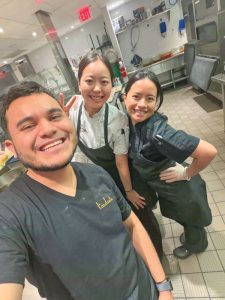
Living in the United States for the first time brought unexpected challenges. My internship would end, my future in the country was uncertain and I was struggling in a difficult relationship.
Amid these uncertainties, the SGI members in Charleston became like my second family. They were so welcoming. Members invited me to dinner, encouraged me and I was appointed as young women’s district leader there. For the first time, I began to genuinely enjoy introducing Buddhism to friends, giving presentations at meetings and taking responsibility for kosen-rufu. That’s when I started deepening my faith.
In May 2024, I made my first financial contribution to the SGI, and that October I started my Sustaining Contribution. A women’s leader had encouraged me to view contribution as a way to make causes for my life. I had so much appreciation for the SGI and the members that supported me wherever I went—Bulgaria, England and now in the U.S. I never felt lonely or fearful because of the SGI, so it felt natural to give back. I first thought, “Why not?” But over time, my understanding of making causes like Sustaining Contribution changed.
In the summer of 2025, I decided to enroll in an MBA program in Virginia and took a job in Washington, D.C., as a pastry cook. Between work, school, tuition and the cost of living, I had almost no personal time and was under constant financial pressure. Around that time, I began chanting weekly with an SGI leader. I told her that I had given myself a year to transform my situation and find a job with better pay and an apartment of my own. She encouraged me to achieve my goals sooner, reminding me that if we only set goals that seem reasonable within our own thinking, then there is no meaning. As soon as I made a determination, things began to move.
I started looking for jobs while giving my all at my current place of work. I also searched for a new apartment, put my name on waiting lists and toured potential places. In between that, my Byakuren shifts and SGI activities accelerated my progress. The transition was financially daunting. Between tuition and the high cost of living, even a $20 monthly contribution sometimes felt difficult, but I continued.
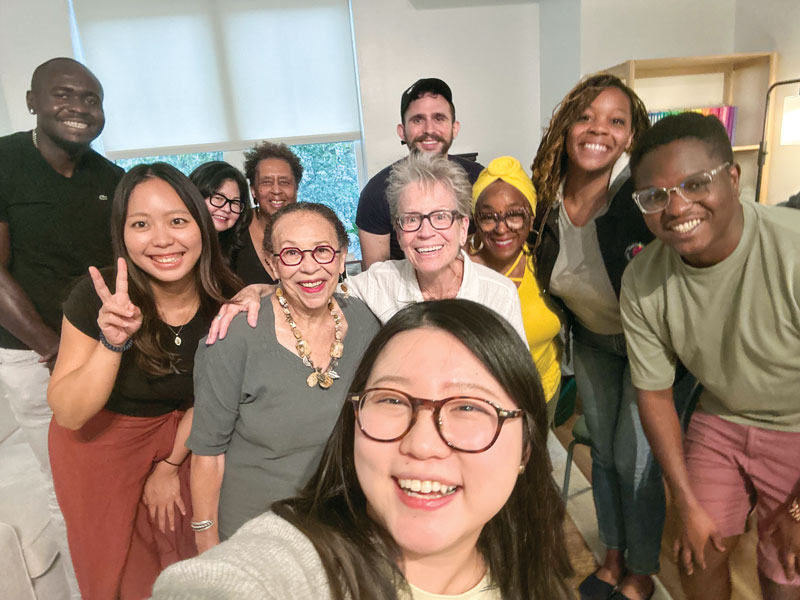
Because I was chanting and making efforts, I had this conviction: I’m not going to be broke. I’m going to find a way to break through. At the same time, I took practical action—tracking every expense, cooking at home and becoming more thoughtful about how I used money.
Within a few months, everything changed! I was promoted as a junior pastry sous chef with the exact salary I was chanting for at my current place of work, just six months after starting. Because of the promotion, I was able to afford an apartment on my own while continuing school and SGI activities.
My journey taught me not to compare my path with others. At times, I wondered whether I was taking too long to reach my goals. Now, I see it differently. In the end, all the dots connected into one line. All of the causes I made were leading me to the place I needed to be.
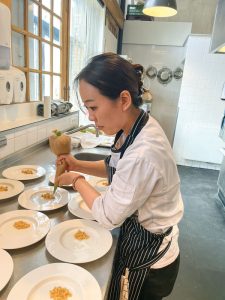
For me, Sustaining Contribution has become an expression of the spirit to continue making causes with conviction while taking concrete action in daily life to achieve my goals and dreams.
I’m determined to continue growing at my workplace so I can be promoted to sous chef and executive pastry chef in the next two years, and I will share the benefits of my Buddhist practice with as many people as possible so that more people can experience the power of the Mystic Law.
Advancing Kosen-rufu Means Advancing My Life

Name: Vansh Shrivastava // City: Fairfield, Calif.
My family began practicing Nichiren Buddhism with the SGI in 2004 in India. At the time I was 2 years old. In 2018 my dad was offered work in San Francisco and shortly after moving, we started practicing in the U.S. I attended SGI activities from time to time through college but was not consistent.
Since I was in high school, I’ve always had an exact plan for how my life would go. My dream was to go to medical school after graduating from university. However, after graduation I was hit with a realization that getting into medical school was a lot harder than I anticipated. I was discouraged and began to feel that my life wasn’t moving forward, causing me to lose my sense of self-efficacy.
Since I was a kid, I’ve known that this Buddhism has helped so many people transform their lives. I’ve even witnessed firsthand how my dad uses the practice, so I challenged myself to come out to SGI activities. At the beginning of 2025, when I was at my lowest, I started consistently coming out to meetings held by my local district.
Engaging in dialogue with the members in my district, I felt encouraged and that I didn’t have to hide my personal struggles from them. Speaking at meetings made me feel lighter and gave me the encouragement—the motivation—to be a hopeful person.
Gradually I became more involved in the district, and I started making it a habit to consistently chant at least once a day and study from the World Tribune and Living Buddhism. Through chanting, my outlook on life became more positive. I better understand now that the challenges we face get harder, but overcoming them is possible through prayer. Experiencing a shift in my life made me want to contribute back to the SGI community.
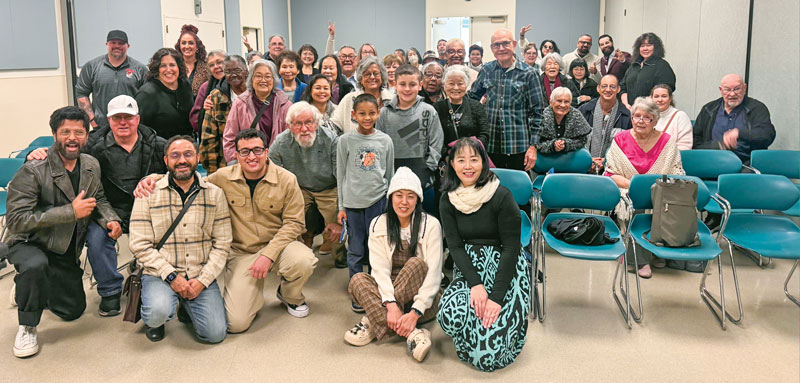
In October of last year, my young men’s leader and good friend of mine told me about Sustaining Contribution. It made me think, Why do we need such a thing? The answer to this was quite clear to me—to support the sustainable growth of the SGI and to carry out our activities for kosen-rufu. The centers where we hold activities and the study material we read to be encouraged come from financial contributions.
When I thought about starting my own Sustaining Contribution, I thought If I can pay for Netflix and Apple Music, then I can do the same for something that has profoundly transformed my life. Of course, watching movies and listening to music helps me relax, but it doesn’t yield benefit 100% of the time. I know that no matter what, my Sustaining Contribution will always yield some sort of benefit in my life. The contribution I’m making toward advancing kosen-rufu is a contribution to my own life.
Since beginning my own Sustaining Contribution, I’ve gotten more involved in my Buddhist practice and received more benefit from it. My mental health has continued to improve, and I am beginning to feel what I can only describe as self-abundance. Going forward, something that I have told myself is to chant to use this Buddhist practice in such a way that I will want to contribute more.
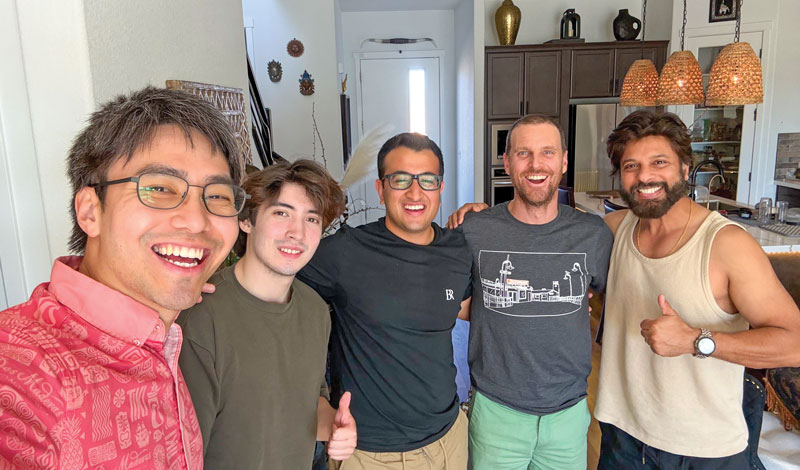
Personally, I am still determined to get into medical school. Recently I have been chanting to achieve good scores on the MCAT and succeed in my post-baccalaureate program. I know I will succeed by devoting myself to this Buddhist practice. I aim to challenge myself and participate in activities more, not just attend them. I recently became the young men’s leader for my district, and I am determined to break through and invite my friends that don’t practice to Buddhist meetings.
You are reading {{ meterCount }} of {{ meterMax }} free premium articles