
This series, prepared by the SGI-USA Study Department, features timeless stories from Nichiren Daishonin’s writings (also called the Gosho) that continue to offer practical wisdom for us today.
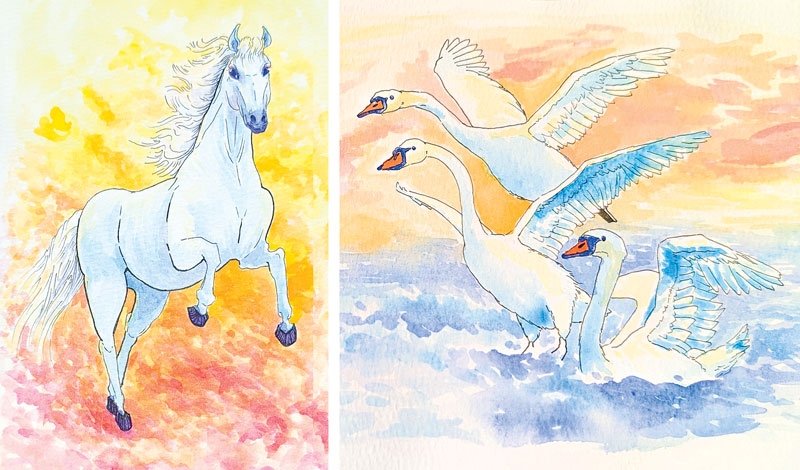
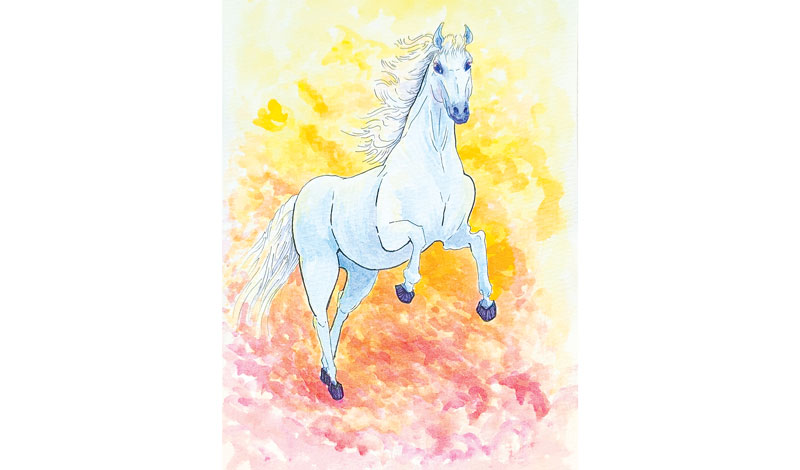
Long ago, there lived a great ruler named King Rinda. The sound of white horses neighing infused him with energy and strength. As long as he was vibrant and strong, everyone in his kingdom was happy. The weather was mild, the people lived in peace and neighboring nations remained friendly.
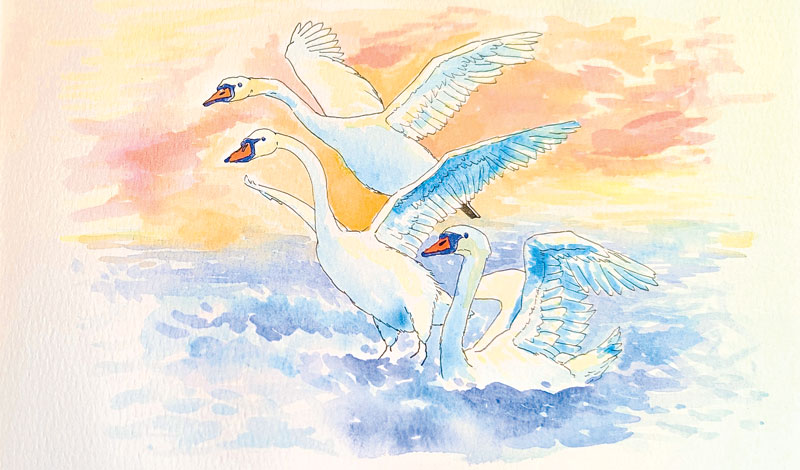
But the horses only neighed when they saw white swans.
One day, all the swans disappeared, causing all the horses to stop neighing. Then, King Rinda became very ill, and the government grew weak. Famine and disease spread, natural disasters struck the land, and enemies threatened to invade.
Desperate to bring back the swans, the king ordered various religious leaders to pray for their return, but not a single swan appeared.
Then, the Buddha’s disciple Bodhisattva Ashvaghosha advised the king to embrace and spread the Buddha’s teachings. The king followed his advice. As soon as Ashvaghosha began to pray, one swan and then another appeared. The horses too began to neigh. Soon, thousands of swans appeared, and the joyful sound of thousands of horses neighing filled the land.
King Rinda was revived instantly. His face glowed, his strength returned and his mind became sharper than ever. His attendants, the people throughout his kingdom and those of foreign nations pressed their palms together in deep respect to the power of the Buddha’s teachings.
From ‘King Rinda’
In Nichiren Daishonin’s writings, the horses and swans symbolize various aspects of Buddhist practice. In his letter “King Rinda,” he relates the neighing of the horses to chanting Nam-myoho-renge-kyo.
It seems to me that at present Brahma, Shakra, the gods of the sun and moon, the four heavenly kings, the Sun Goddess, Great Bodhisattva Hachiman, and all the major and minor gods of the 3,132 shrines throughout Japan are like King Rinda of past times, that the white horses are Nichiren, and the white swans are my followers. The neighing of the white horses is the sound of our voices chanting Nam-myoho-renge-kyo. When Brahma, Shakra, the gods of the sun and moon, the four heavenly kings, and the others hear this sound, how could they fail to take on a healthy color and shine with a brilliant light? How could they fail to guard and protect us? We should be firmly convinced of this! (“King Rinda,” The Writings of Nichiren Daishonin, vol. 1, pp. 989–90)
Ikeda Sensei’s Guidance
Ikeda Sensei: Our vibrant voices chanting Nam-myoho-renge-kyo give power and strength not only to the main tutelary gods of Buddhism, Brahma and Shakra, but to all heavenly deities—the benevolent forces of the universe—activating and strengthening their protective functions. Chanting also moves all the Buddhas and bodhisattvas of the ten directions and three existences into action, and the functions of harmony and value creation will flourish in our communities and throughout the land.
We must remember the words “The voice does the Buddha’s work” (see The Record of the Orally Transmitted Teachings, p. 4). Had the neighing of the white horses been weak and hesitant, King Rinda would probably not have regained his powers to the extent he did. Similarly, when it comes to chanting, it’s important that we constantly strive to strengthen our faith and deepen our practice. Our conviction in faith and persistence in practice are the cornerstones of chanting.
Our invincible prayer—overflowing with the power of faith and the power of practice—can break through the darkness that shrouds our lives and the lives of others and call forth the magnificent dignity and strength of the Buddha nature that is inherent in all living beings. Through chanting, we can expand the realm of happiness and joy and bring forth a world filled ever more with the positive energy and peace of mind that is a reflection of Buddhahood. (The Teachings for Victory, vol. 2, pp. 133–34)
—Prepared by the SGI-USA Study Department
You are reading {{ meterCount }} of {{ meterMax }} free premium articles