

Have you ever entered a room where everyone seemed on edge, and you began to feel the same? Maybe you’ve watched someone (yourself even) smile, make a lighthearted comment or joke and change up the atmosphere. How we experience our environment and how we transform it depends on the quality and strength of our own inner condition. Whatever the scenario, Buddhism teaches that our lives and our surroundings are intertwined. When we want to see a fundamental shift, the most powerful place to begin is by strengthening and “polishing” ourselves.
Regarding this, Nichiren Buddhism offers a hopeful perspective: Since our lives and our environment are fundamentally inseparable, there is always something we can do to make meaningful change. How does this apply to our most intractable challenges and even the world? Let us examine the core Buddhist concept of the “oneness of life and its environment.”
‘Oneness’—We Are All Inseparable
This Buddhist principle holds that, although our life and its environment appear to be two distinct phenomena, they are, in essence, nondual, or two integral phases of a single reality.
Ikeda Sensei writes of this hopeful, revolutionary principle, “While life and the environment are treated as two separate entities, in reality they are so intricately related that there is in fact no separation between them.”[1]
It may stand to reason that our surroundings can deeply influence how we think and feel about things, but it’s another matter to have confidence in our power to influence our environment. The many things happening around us and in society can seem beyond our control. What, then, does “oneness” mean to us?
To help us understand, Nichiren Daishonin uses the simple metaphor of a body and its shadow: “To illustrate, environment is like the shadow, and life, the body. Without the body, no shadow can exist, and without life, no environment.”[2] He also states: “Buddhism is like the body, and society like the shadow. When the body bends, so does the shadow.”[3]
Sometimes it’s easy to forget that we cannot change the shadow—others or the environment—unless we change the body—ourselves. When we change the “body,” the “shadow” has no choice but to change.
Another Buddhist concept that includes the word oneness is the “oneness of self and others,” and it relates directly to the oneness of life and its environment.
When we face daunting obstacles, it’s easy to isolate ourselves, thinking that no one else can understand what we’re going through. However, Sensei reminds us:
It seems to me that it is human bonds—the desire to live for the sake of others—that can give someone the strength to live on at such times. …
When we look after and care for others—that is, help others draw forth the strength to live—our own strength to live increases. When we help people expand their state of life, our lives also expand. This is the marvel of the bodhisattva path; actions to benefit others cannot be separated from actions to benefit oneself.[4]
The Three Realms of Existence: We Are Connected to Our Surroundings
The concept of the three realms of existence explains how our life functions as part of a larger network. It views life from three different dimensions: 1) the realm of the five components (individual functions); 2) the realm of living beings (social relationships); and 3) the realm of the environment (society as a whole, the land, nation and world).
Our inner condition, our relationships and the society we live in are constantly influencing one another. But the key point here is that our inner state of life influences our relationships, and the nature of our relationships shape society and our environment.
1. The realm of the five components (the individual)
This first realm views the physical and spiritual aspects of an individual. Each person has different thoughts, feelings or habits. The five components are form, perception, conception, volition and consciousness.[5] They reflect how a living entity responds to external factors.
From the viewpoint of the Ten Worlds, at any given moment, each of the five components, representing a particular internal function of life or consciousness, reflects the individual’s “world” or condition. This informs how they understand and react to their surroundings. The realm of the five components is most crucial because it directly impacts the other two realms.
2) The realm of living beings (social connections)
The second realm, the realm of living beings, points to individuals formed by the union of the five components, how they express each of the Ten Worlds and hence how they interact. Everyone’s life state influences those around them. Whether in our family, with classmates or co-workers or out in the community, living in society means that we interact with and mutually influence one another.
3) The realm of environment
The third realm points to the place where we conduct our daily activities. The collective life states of living beings, of people, are reflected in the broader society and land where they live. We can see, for instance, conditions expressing the worlds of hell, hungry spirits, animals or asuras reflected in wider problems such as war, poverty, pollution and climate change.
Sensei urges the importance of living with respect for our natural surroundings:
Buddhism regards all existence in the universe as life, recognizing that everything, including trees and rocks and even the tiniest grain of sand, inherently possesses the life state of Buddhahood and, as such, is infinitely noble and precious.[6]
In discussing the three realms with high school students, Sensei once offered this example:
When you study hard and achieve good grades in school, you return home in a good mood, which changes how you feel there, right? The way your parents look at you may also change, and they may even increase your allowance. Or you may find that you enjoy your meals more. If your inner reality—your life—changes, then the way you respond to your environment will also change, and the environment itself will change as well.[7]
The interrelatedness of the three realms demonstrates how a change in one person can ripple outward in powerful ways.
Our State of Life Determines the State of the Environment
Just as we are inseparable from others in society, we are also indivisible from our environment. Therefore, the state of the land, the nation and the world reflects the life condition of people. Nichiren writes:
If the minds of living beings are impure, their land is also impure, but if their minds are pure, so is their land. There are not two lands, pure or impure in themselves. The difference lies solely in the good or evil of our minds.[8]
In Buddhism, “good” can be understood as that which respects the dignity of life and works for people’s well-being, and “evil” as fundamental ignorance that devalues life and creates suffering. All people have within them what Buddhism calls the three poisons—greed, anger and foolishness—which give rise to all suffering.
When the three poisons dominate people’s attitudes and behavior, they degrade the state of the land. Nichiren clarifies, “Famine occurs as a result of greed, pestilence as a result of foolishness, and warfare as a result of anger.”[9]
Unless there is a fundamental change in people’s minds, there cannot be a fundamental change in society. This is why the Daishonin submitted “On Establishing the Correct Teaching for the Peace of the Land” to the ruling authorities of his day. It was his call to peace based on clarifying the fundamental cause of suffering the people of Japan endured at that time.
“You must quickly reform the tenets that you hold in your heart,”[10] the Daishonin stressed.
Establishing the happiness of the people starts with securing the foundation for peace in each person’s heart. Sensei writes, “It is crucial that we establish a correct philosophy of life and strive to transform the way of life and thinking of humanity.”[11]
A Change in Our Hearts Can Change the World
Whether facing difficult work situations, family dynamics, or social circumstances, how can we influence those around us and our environment for the better?
Everything starts with our determination to rise above the negativity in our environment. Sensei says: “A person who is controlled by a negative environment will suffer. On the other hand, a person faced with a difficult situation who can control and influence it will be happy.”[12]
In a workplace, things can improve when even one person models respect and accountability. Or in a family, one person’s calm resolve to create harmonious relationships can ease tensions.
Through the daily practice of chanting Nam-myoho-renge-kyo, we can elevate our life condition, choosing hope and bringing forth courage and wisdom even amid the direst situations. Sensei says: “Invisible radio waves travel vast distances through space. In the same way, our inner determination activates the forces in the universe.”[13] We can even make our environment an ally.
When our life condition changes, our perspective changes, which leads us to change our words and actions. Even if the situation remains the same for a while, how we react at each moment becomes the deciding factor. Through our Buddhist practice, we can be more aware of what is happening with others and in the environment, and take actions based on compassion.
Countless experiences by SGI members prove that a transformation of their circumstances began with their single-minded determination. In fact, as a young man, Sensei himself contemplated the importance of a resolute determination and how it shapes the environment, writing in his diary: “Either our determination is destroyed by the environment or we develop a condition of life powerful enough to reconstruct the environment. Must ponder deeply the relationship between life and its environment.”[14]
At times, we might also ponder if we have the power to change others or the world. However, Sensei reminds us:
When we change, the world changes. The key to all change is in our inner transformation—a change in our hearts and minds. This is human revolution. We all have the power to change. When we realize this truth of life, we can bring forth that power anywhere, anytime, and in any situation.[15]
Our goal is not, by any means, to control others or force outcomes. Rather, through our Buddhist practice, we elevate our life condition, strive to act with compassion and wisdom, and positively influence those around us.
We can always remind ourselves that the key to meaningful change begins from within. And from that inner shift, we begin to transform even the most challenging situations.
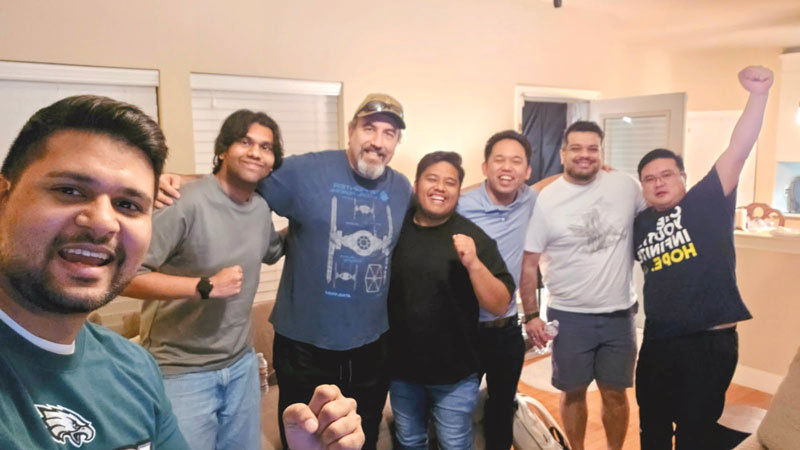
From Blaming to Total Victory

Ricardo Nisidozi / Flower Mound, Texas
Living Buddhism: Recently, you experienced the power of your inner transformation and how it changed your environment. We want to hear about it. But first, can you tell us about yourself?
Ricardo Nisidozi: Sure. I was born into a family that practices Nichiren Buddhism in Brazil and began chanting on my own when I was 12. Around that time, Sensei visited Brazil for the last time, and I had the unforgettable opportunity to perform for him as a future division member. To fast forward a bit, since moving to the U.S. several years ago for work, today, my wife, Priscila, and I are raising our two daughters, Chloe and Lilly, and together we all chant Nam-myoho-renge-kyo.
The experience I’d like to share began in May 2025. I had just taken on a new responsibility in the SGI, my family life was harmonious, and I felt I was at the peak of my career. My life felt on track.
But one day, my boss called me into a meeting, and I was unexpectedly laid off despite having performed well. It was right in the middle of the May Commemorative Contribution activity, and my family had set a challenging goal. Honestly, I felt the layoff was driven by politics and ego, and that filled me with anger.
How did your family react?
Ricardo: We were all shocked. Immediately, our minds went to the practical concerns: How would we pay the mortgage? How would we support our family? We sat our daughters down and explained that we would need to cut back on expenses for a while.
Amid that uncertainty, I made a determination: In 2026, I would achieve my May Contribution goal and make up for what I couldn’t contribute in 2025.
I experienced immediate protection. Within weeks, several companies I had worked for previously offered me a job. I accepted the role that made the most sense at the time. I was grateful to be working again, but the reality was difficult. I had taken a demotion and a pay cut. Financially, our family adjusted, but internally, I was struggling deeply.
Even though I found work quickly, I couldn’t let go of my resentment toward my former boss and felt the need for justice. I couldn’t stop blaming him for the difficult position he had put my family and me in, and that resentment consumed me.

How did this affect other aspects of your life?
Ricardo: Although I was grateful to have work, my heart wasn’t in it. I wasn’t focused on giving my best. Furthermore, this constant state of blaming left me grumpy and impatient. While I did my best to keep my frustration inside, I was becoming increasingly miserable.
That’s when I realized I needed to seriously challenge my life through daimoku and supporting the members. As I chanted, something became very clear to me: Blaming others was not Buddhism. Holding onto resentment created no value. I wasn’t practicing Buddhism correctly.
So I changed—my prayer, my attitude and my actions.
I determined to win as a disciple of Sensei, right where I was. That meant giving my all to the job I had in front of me while continuing to search for new opportunities. And once I shifted my determination, everything began to change. I started performing better in job interviews because my life condition had changed. Sensei explains benefit this way:
“The ‘benefit’ of our practice is eradicating the evil in our lives and cultivating good. In other words, while we speak of receiving benefit, it is not bestowed on us from without. It wells forth from within our own lives like water from a spring. Through the Buddhist principle of the oneness of life and its environment, we can also change our environment and ‘gather fortune from ten thousand miles away.’” (The New Human Revolution, vol. 4, revised edition, pp. 105–06)
My new determination brought about greater fortune.
What happened then?
Ricardo: I got an incredible new opportunity in April, with a higher salary than I had with the company I had been laid off from, and the sign-on bonus was exactly the May contribution goal I had made the year before. As a family, we participated in May Contribution on the very first day this year.
Congratulations! What does oneness of life and its environment mean to you?
Ricardo: It’s interesting. Although I knew theoretically that I shouldn’t blame my former boss, in actuality it was so hard not to. Through faith, this setback became the exact condition I needed to transform my life.
We often hear that life and environment are one, but through this experience I realized something much deeper: It is your determination that changes the environment. When your heart changes, everything changes.
To live controlled by your environment is miserable. When I stopped focusing on others and focused on transforming myself, I felt an incredible sense of freedom. It was liberating. By changing your determination, you can shape your environment—your job, your relationships, your future—into something completely different.
Do you have any determinations for the future?
Ricardo: I want my region to be number one in shakubuku and raising youth and to have the happiest people per square foot. This is my determination as we fight for “One Youth. Infinite Hope.”
This is How We Win

Tonia Dukart / Rosemount, Minnesota
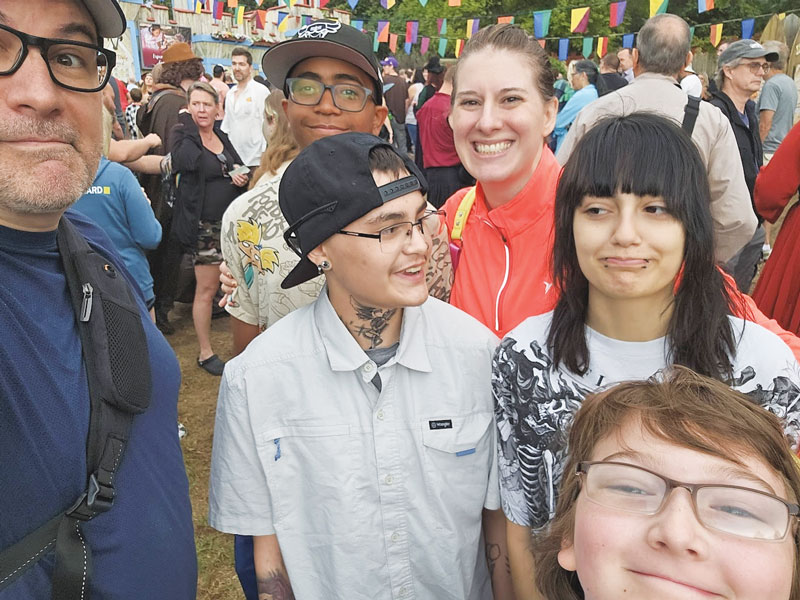
Living Buddhism: Hi Tonia. You currently have four children that have become your family through the foster care system. How did you begin that journey?
Tonia Dukart: I’ve always wanted to be a mom, but my husband, Joel, and I were not able to have biological children. As an elementary school special education teacher, I saw firsthand the profound needs of children. I decided that we would build our family through foster care and adoption, and we would use our home as a place where youth could experience hope, even if only for a short time.
We began the process in 2019, but with COVID-19, everything came to a halt. We were finally licensed in 2021. Most of our foster children have been in their preteen or teenage years.
We’ve had many children come through our home—some for a week, some for much longer. Each one has brought their own challenges and their own incredible potential. Let me just say, raising teens with complex trauma is not for the faint of heart. Though I think that could be said for raising almost any teenager.
At present, our family includes four amazing young people. Remy, age 11, who we’ve supported since 2021. Jonathan, age 15, who has been with us since February 2022 and whom we adopted on November 18, 2024. AJ, age 20, who came to us in 2022. And Sophia, 19 and AJ’s biological sibling, who joined our home in August 2024.
How has it been?
Tonia: Each of them has faced unimaginable trauma. And through supporting them, I’ve come face-to-face with my own limits—my impatience, my frustration and, honestly, sometimes my lack of compassion. It has been the source of my greatest human revolution.
Tell us more.
Tonia: This past winter, I hit a breaking point with Sophia. Her mental health was in a serious crisis, her self harm was escalating and she was failing her classes. I was exhausted and ready to give up. But in my heart, I knew that was wrong. At the Florida Nature and Culture Center, I received guidance from a senior in faith who reminded me that we don’t give up on youth.
I made a fresh determination. I would stop focusing on everything that wasn’t working and believe in her Buddha nature—that she was a shining jewel and her life was precious. How could she believe in herself if I couldn’t believe in her.
Once I shifted, she shifted. About a week after I began chanting that way, she came to a district meeting and really opened up. Since then, she willingly participates in meetings and even invites her friends. And the biggest breakthrough—she graduated in April.
There is still a lot ahead for her, but she is happier, more hopeful and beginning to see actual proof in her life. My prayer is that she will one day choose this Buddhist practice for herself and receive the Gohonzon when she is ready to stand on her own.
Following that determination, what changed on the outside?
Tonia: I became more present, I put my phone away and started listening instead of always trying to give advice. These kids have had their hearts broken a million times, and the adults in their lives have not been trustworthy. Even if I can’t fix whatever they are going through, I want them to know I’m here.
Recently, Sophia experienced another challenge and told me right away. For the first time she cried in my arms and just let me hug her. She recently told my friend in faith that she wished I was her mom. I sobbed. It’s taken two years, but we’ve finally developed deep trust.
Can you tell us what happened with Jonathan?
Tonia: Yes. Jonathan has had his ups and downs but in February, his problems at school escalated to a point where he faced serious consequences. That was another turning point. I realized again that I needed to change. Instead of asking, “Why is he doing this?” I started asking, “What does he need?” It was another opportunity to deepen my faith.
I used to live in fear about the well-being of my kids. In fact, last summer, I had an overwhelming fear that something would happen to AJ, so much so that I contemplated not going to FNCC. But at that conference, I was told that I cannot live in fear. Fear was a result of me doubting my prayer, my senior in faith told me. Sensei says: “Faith is—to fear nothing. To stand unswayed. The power to surmount any obstacle” (The Sun of Youth, p. 72).
Since I started praying to rid my life of fear, it’s gone. I realized, What’s gonna happen is gonna happen, and we are all going to be OK. I believe in my kids and in my Buddhist practice. I don’t have to fear anything.
When I chant for my family, I now have conviction that we will be protected. That conviction resonates through everything. I’m driving forward with confidence. My husband, my extended family and then my kids start feeling confidence too. We are then able to work with, not against, one another.
How do you feel this concept of oneness of life and its environment can help empower us in our daily lives?
Tonia: Everything comes down to me. It’s my determination, it’s my heart, it’s my daimoku. Life is going to be hard, and I will encounter challenges, but how I move through them is up to me. How I respond determines my victory. My karma is my karma. My kids have their own karma, but none of that matters. I have to transform myself. By fully accepting my karma and my part, I can impact everything else.
What are your determinations for the future?
Tonia: I’m determined not to let my environment control my happiness and to keep believing in my kids’ absolute potential regardless of what is happening externally. As a chapter women’s leader, I’m determined to raise youthful successors in all our districts and to have members feel warmly accepted, nurtured and supported as I’ve always felt in my districts.
“One Youth. Infinite Hope” is not just a theme—it is my daily reality.
Each of my kids represents infinite possibility. And through my Buddhist practice, I am determined to become someone who can believe in that possibility, no matter what. No matter how many times things fall apart. No matter how long it takes. I will never give up on a single youth. Because that is how we create hope. And that is how we win.
From the July 2026 Living Buddhism
References
- The New Human Revolution, vol. 15, revised edition, p. 21. ↩︎
- “On Omens,” The Writings of Nichiren Daishonin, vol. 1, p. 644. ↩︎
- “A Comparison of the Lotus and Other Sutras,” WND-1, 1039. ↩︎
- The Wisdom of the Lotus Sutra, vol. 4, pp. 180–81. ↩︎
- The five components are: 1) form: life’s physical aspect that includes the five sense organs—eyes, ears, nose, tongue and body—with which one perceives the external world; 2) perception: the function of receiving information through the “six sense organs”—the five senses plus the mind, which integrates the impressions of the five senses; 3) conception: the function of creating mental ideas from what has been perceived; 4) volition: the will to take action based on conception; 5) consciousness: the cognitive function of discernment that integrates the components of perception, conception and volition. ↩︎
- NHR-15, revised edition, 21–22. ↩︎
- NHR-9, revised edition, 129. ↩︎
- “On Attaining Buddhahood in This Lifetime,” WND-1, 4. ↩︎
- “King Rinda,” WND-1, 989. ↩︎
- “On Establishing the Correct Teaching,” WND-1, 25. ↩︎
- NHR-9, revised edition, 130. ↩︎
- The Wisdom of the Lotus Sutra, vol. 5, p. 61. ↩︎
- Buddhism for You: Determination, p. 40. ↩︎
- A Youthful Diary, p. 195. ↩︎
- On Attaining Buddhahood in This Lifetime: SGI President Ikeda’s Lecture Series, p. 38. ↩︎
You are reading {{ meterCount }} of {{ meterMax }} free premium articles