

Dear SGI-USA members,
This year we remember Ikeda Sensei’s final visit to the United States in 1996 as a chance for each of us to renew our vow to persevere in our efforts for kosen-rufu, side by side with him.
Let’s forge a deeper understanding together about July 3, the Day of Mentor and Disciple!
This year, we commemorate 81 years since second Soka Gakkai President Josei Toda was released from prison (July 3, 1945), and 69 years since Sensei was arrested on false charges of violating election laws (July 3, 1957). This is not a coincidence, but a mystic bond of mentor and disciple that is the foundation of the Soka Gakkai spirit.
How as disciples can we mark this day? Sensei dedicated his life to actualizing his mentor’s dream to rid the world of misery. As disciples, we share the same vow.
In the first six months of 2026, over 13,000 members signed the “Commitment to Peace” pledge to enable one youth to receive the Gohonzon and begin their Buddhist practice.
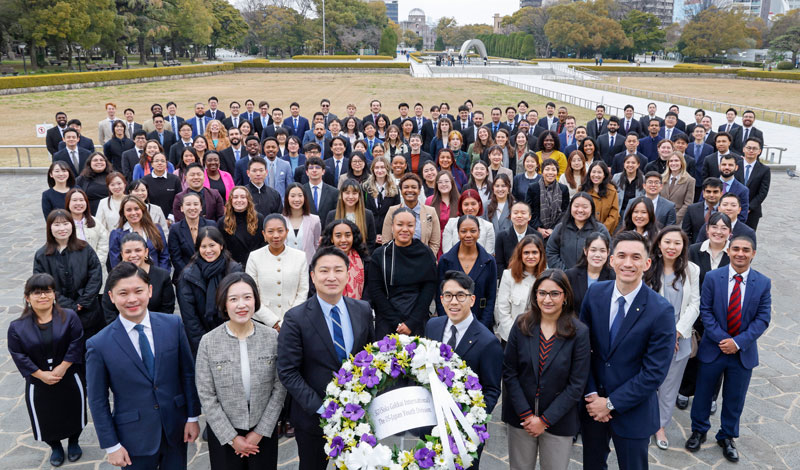
In March, 120 youth and student division leaders attended a significant training course in Japan, visiting Hiroshima and vowing that nuclear weapons will never be used again.
Across the country, organizations have been coming up with creative ways to introduce Buddhism to youth by relating hip-hop and Buddhism, for instance, or inviting friends over for a backyard barbecue.
Our districts have played the most critical roles by switching up their meeting agendas to create gatherings that feel inviting to our friends. Some districts are doing an introduction to the practice before gongyo so that newcomers feel warmly welcomed and not like an outsider.
We are now 18 months from celebrating Sensei’s 100th birthday. As youth, we are continuing to study The New Human Revolution to learn from Sensei how to take action as a disciple. On the following pages (pp. 29–32), youth share what they’ve learned from reading The New Human Revolution.
It is no coincidence that Sensei came to the United States on his first overseas journey to achieve worldwide kosen-rufu. With profound appreciation, we the youth, will overcome every obstacle to continue opening the path that Sensei forged and report how happy the people of America and the world have become. Thank you very much!
With deep appreciation,
SGI-USA Youth Leaders
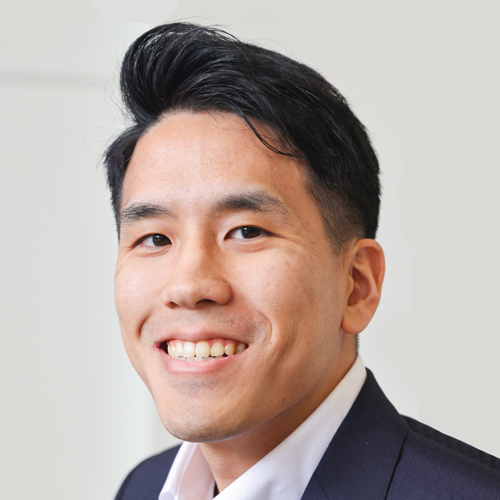
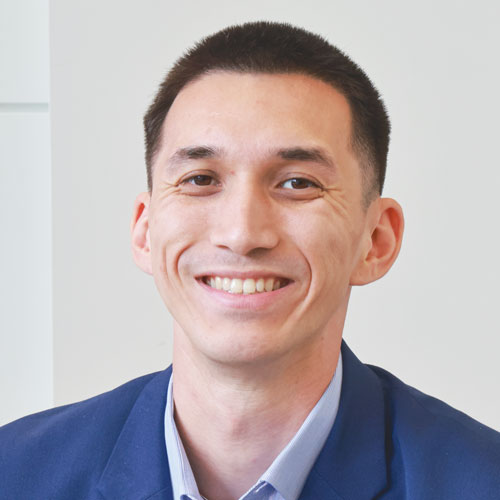
Shota Okajima, Amelia Gonzalez Tesch and Kenichi Hackman
Mentor and Disciple: Giving Positive Direction to Humanity
Ikeda Sensei gave this speech at a meeting in Los Angeles, on July 3, 1996, the Day of Mentor and Disciple. It can be found in My Dear Friends in America, fourth edition,
pp. 491–95.
I am delighted to meet with my friends in the United States on this significant day, the 51st anniversary of July 3, the Day of Mentor and Disciple. On this day in 1945, at seven in the evening, my mentor, second Soka Gakkai President Josei Toda, was released from prison. Alone, he courageously initiated a struggle to prove the righteousness, truth and greatness of his mentor, Tsunesaburo Makiguchi, who had been unjustly incarcerated and humiliated by those in power and who had died in prison.
On the same day, 12 years later, July 3, 1957, also at seven in the evening, I was jailed on entirely groundless charges. I went to jail to protect President Toda and the sincere and courageous Kansai members. [Ikeda Sensei, then Soka Gakkai youth division chief of staff, was arrested on trumped-up charges of violating the election law filed by the Osaka District Prosecutors Office. He was later cleared of any wrongdoing.]
When one is completely dedicated to the path of mentor and disciple, they experience no doubt or confusion, no uncertainty or fear.
During the reconstruction of Japanese society following World War II, President Toda appreciated more deeply than anyone the debt the Japanese owed the United States for introducing freedom of religion and other democratic institutions to Japan. Out of my desire to repay this debt, I founded Soka University of America.
The Expansion of Kosen-rufu Begins With Strong Prayer
Like the indomitable lion seeking no companion, President Toda launched a new struggle for kosen-rufu on July 3. He relied on no one but himself. Physically he was extremely weak. His businesses were in complete ruin. And in the majority of cases, the whereabouts of the former Soka Gakkai members were unknown. Under these adverse circumstances, President Toda started anew, based on strong and earnest prayer.
Nichiren Daishonin says, “I am praying that, no matter how troubled the times may become, the Lotus Sutra and the ten demon daughters will protect all of you, praying as earnestly as though to produce fire from damp wood, or to obtain water from parched ground” (“Rebuking Slander of the Law,” The Writings of Nichiren Daishonin, vol. 1, p. 444). Such was the prayer of the Daishonin, determined to resolutely protect his followers while exiled on Sado Island.
It’s not up to others—everything depends on us. As leaders of kosen-rufu, we should first pray ourselves. Being a leader is not a matter of getting others to do things; it is to become an engine and set oneself in motion. This is the key to victory in all endeavors.
It is important that youth, in particular, actively seek challenges to forge and strengthen themselves. Those who enjoy material luxury from a young age and do not work hard cannot become people of outstanding character. They cannot become great leaders who protect the people.
I hope you will work hard, sparing no effort, and develop yourselves as indomitable champions whom nothing can shake or dishearten.
Youth, Live Vigorously
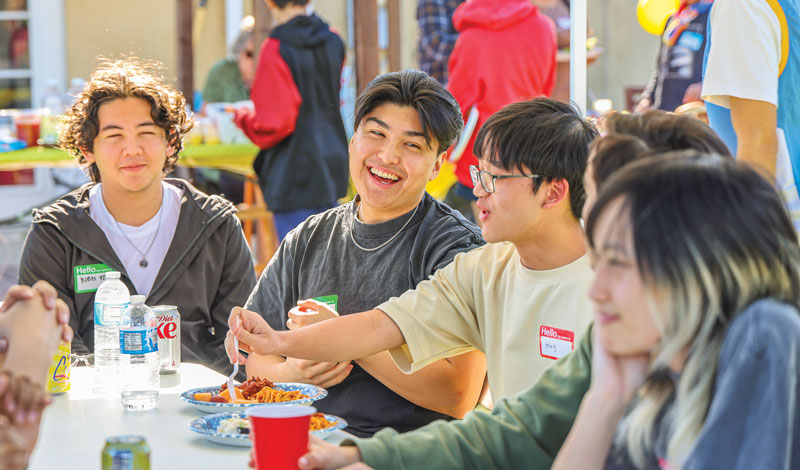
Today, a commemorative youth division gathering is taking place at the SGI-USA Headquarters in Santa Monica. I am delighted to see the growth of so many strong successors in the U.S. youth division.
I praise them for their strenuous efforts in creating another momentous page in the history of our movement with the New York culture festival and the SGI general meeting in Florida. It is my sincere wish that, in the workplace, at home and in the community, the youth will fully and freely manifest all that they have gained from this valuable training.
During an air raid not long after his release from prison, President Toda wrote to his wife’s younger brother: “Chanting daimoku develops the state of Buddhahood. And developing the state of Buddhahood means devoting yourself confidently to your work while leading the most reasonable, sound and cheerful daily life. This sounds easy enough, although putting it into practice is difficult. But it is possible! If this practice did not enable us to, it would not be a genuine faith. I would like you to be a person who can succeed in this. A young person’s life, in particular, should manifest the true power of faith. I, your older brother, have awakened to an eternal life, blazing with a vibrant, youthful spirit, and I am living vigorously and cheerfully.”
Practicing Buddhism means being victorious. In advancing one step at a time amid the realities of daily life while showing concrete actual proof and in becoming victors and successes—people who enjoy abundant good fortune—we demonstrate with our very beings the validity of Nichiren Buddhism and serve as a source of hope and inspiration for those who will follow us on the path of faith.
I hope that the youth division members, while encouraging and supporting one another, will work courageously and cheerfully to realize the great American dream of the 21st century.
Seeking Benefit for Oneself and Others
Tomorrow, July 4, is America’s Independence Day. Two hundred and twenty years have passed since the signing of the Declaration of Independence, which upholds the ideals of liberty and equality.
Tsunesaburo Makiguchi and Josei Toda both recognized the humanism that pulses in America. President Makiguchi discerned a need for humanity to move beyond military, political and economic competition and toward what he termed “humanitarian competition.” His perceiving this in his Jinsei chirigaku (The Geography of Human Life) as early as 1903 shows remarkable foresight.
Regarding both individual and international relations, Mr. Makiguchi asserted: “The purpose of interaction or exchange should not be simply to promote self-interest but to protect and enhance the lives of both ourselves and others. We have to choose a way to bring benefit to ourselves while working for the welfare and benefit of others.”[1]
Where did Mr. Makiguchi find the seeds of this humanitarian formula of seeking the happiness of oneself and others? In America.
Giving One’s All for the Members’ Happiness
All my American friends are cheerful. They have a good sense of humor and are warmhearted and hard-working. In these qualities, I, for one, perceive the ideal characteristics of the human being. I deeply respect and treasure my American friends, who possess such pure and beautiful hearts.
As leaders, please strive to be great pilots of kosen-rufu who guide all of your fellow members without exception toward health, prosperity and happiness. The members are central. Their happiness has to be the prime concern and objective.
“If you see a person who accepts and upholds [the Lotus Sutra], you should rise and greet him from afar, showing the same respect you would a Buddha”—this, as the Daishonin says in The Record of the Orally Transmitted Teachings, is the “foremost point [the Buddha] wished to convey” (p. 192). We must never lose the spirit to respect and trust one another.
It is vital for leaders to bravely take action at the forefront, ready to bear the brunt of any onslaught. It is the role of leaders to unfailingly provide courage, hope and peace of mind to the Buddha’s children. Only by advancing with a stand-alone spirit—no matter what happens—and resolutely leading the way toward victory can we fulfill our mission. This is the spiritual flame that infuses July 3.
Bringing One’s Life to a Beautiful Conclusion
Please make every effort to find and raise capable people. My wish is that you construct a wonderful organization here in the United States, joyfully building ever-expanding circles of friendship and a solidarity of people who cherish hope for life and the future. Please lead the most wonderful of lives.
In closing, I present to you, my beloved and esteemed friends, these short poems I composed:
What great joy!
What profound significance!
To celebrate
this noble day of July here in America.
My friend,
as a disciple,
please bring your life
to a magnificent completion by working
for American kosen-rufu.
Life’s Anchor
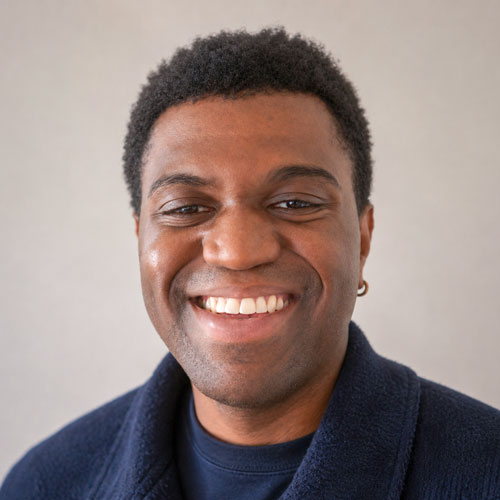
Allan Robinson // Columbus, Ohio
“The most important thing for young people, no matter what your circumstances, is that you never demean yourselves. Faith lets us bring out our limitless potential and enjoy life to the fullest, come what may. The moment you think that you are no good, you stifle your own potential. The key to the future lies entirely in your determination at the present moment. Everything depends on whether you are living with enthusiasm right now.” (The New Human Revolution, vol. 4, revised edition, p. 69)
Living Buddhism: Allan, you grew up in the SGI but began practicing Buddhism on your own in college. How has your understanding of the oneness of mentor and disciple relationship evolved?
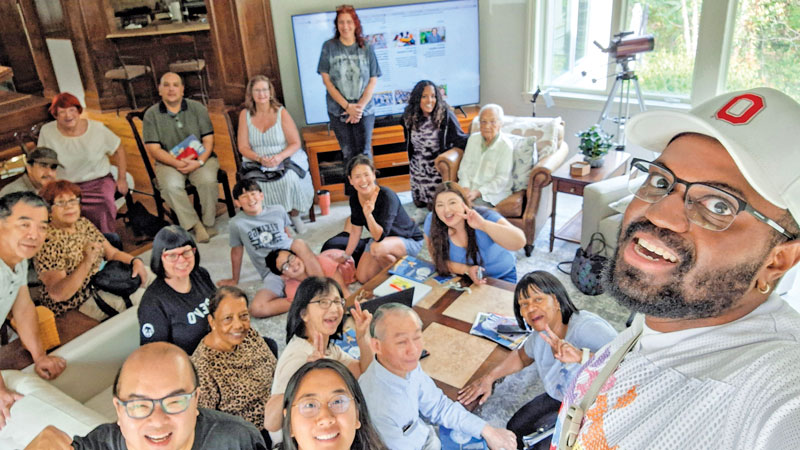
Allan Robinson: Growing up, I remember going to the Cleveland Buddhist Center and coloring in the family room during meetings. But when I was old enough, I started watching Ikeda Sensei’s videos during kosen-rufu gongyo meetings. I wondered who Sensei was given that everyone in the room listened so attentively to what he was saying.
As I read more of Sensei’s writings, I started to feel that his guidance was tailor-made for me. It was the first time I felt understood so deeply by someone else. I could see how he believed in each person and poured his life into encouraging others. Naturally, over time, I decided I wanted Sensei to be my mentor.
The quote above is one that you resonated with. How did you apply it to your life?
Allan: I really gravitated toward this quote. I’m currently applying for jobs, and I’ve never been good at pitching myself professionally. After interviews, I often think, Oh man, that was pretty bad. But recently, I came across this quote and realized I had been demeaning myself. Because I lacked confidence, I had already given up on my victory. Sensei’s words helped me redetermine not to lose confidence in my own potential.
How does having a mentor impact you?
Allan: Before I started taking Buddhism seriously, I was easily swayed by the tiniest inconvenience. I lacked confidence and direction, like a boat tossed around by every wave.
I still have worries and anxious thoughts sometimes, but Sensei’s guidance has become an anchor for me. Life has many ups and downs, but with Sensei’s encouragement, I feel I can take a step back and see things for what they are, face anything and continue moving forward. I want to embody what Sensei has taught me, in everyday life, at work and around my family.
Do you have any determinations for the future?
Allan: As a region young men’s leader, I’m determined to support and believe in the young men in my region so they can stand up in faith and awaken their limitless potential through the “One Youth. Infinite Hope” campaign.
The Path of Faith
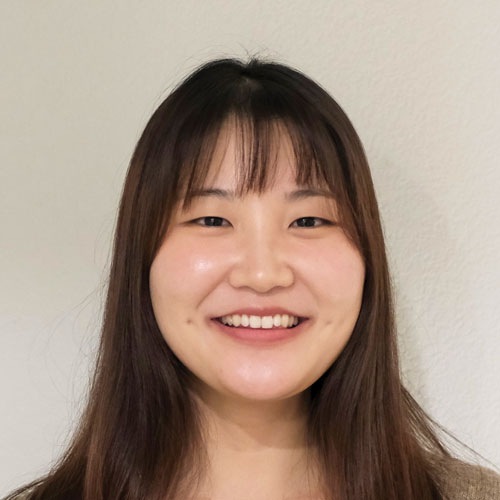
Ji Yun Kim // San Jose, Calif.
Faith means making a new determination every day—for as long as we live. The Buddhist way of life is to keep challenging and improving ourselves with an ever-fresh spirit and unflagging commitment. (The New Human Revolution, vol. 30, p. 86)
Living Buddhism: Hi Ji Yun. How did you start practicing Buddhism?
Ji Yun Kim: It was natural for me to start chanting because my parents and grandparents practice. But in college, when I was really struggling, I began chanting more seriously. The district members embraced me and gave me a place to express what I was going through. Through their behavior, I learned about Ikeda Sensei.
Did you develop your own understanding of the oneness of mentor and disciple relationship?
Ji Yun: Yes. I started reading Sensei’s guidance, and one year, at a student division conference at the Florida Nature and Culture Center I saw a photo Sensei had taken of a path in Windsor, in the U.K., accompanied by a poem. In it, he talks about becoming someone who forges and persists in walking one’s own path. Those words stayed with me because I was struggling to find my own path in life. That was the first time I resonated with his words in that way. Since then, his guidance has picked me up again and again.
Recently while reading The New Human Revolution, I came across Sensei’s words “As long as there is a core of youth no, even a single true disciple, we will achieve kosen-rufu” (vol. 30, p. 825). I asked myself, How can I be that one single true disciple? Sometimes I wish there were more youth fighting for kosen-rufu alongside me, but then I realized that Sensei had a stand-alone spirit, and I can inherit that from him.
You also resonated with the first quote from volume 30 above. Why?
Ji Yun: It’s a straightforward way to understand faith. Faith means to redetermine every day. That makes sense to me. Right now, I’m looking for a job and often have to keep redetermining. I used to wonder whether I was doing the right thing, but after reading this, I realized this process itself is faith. I’m on the right path.
What’s your dream?
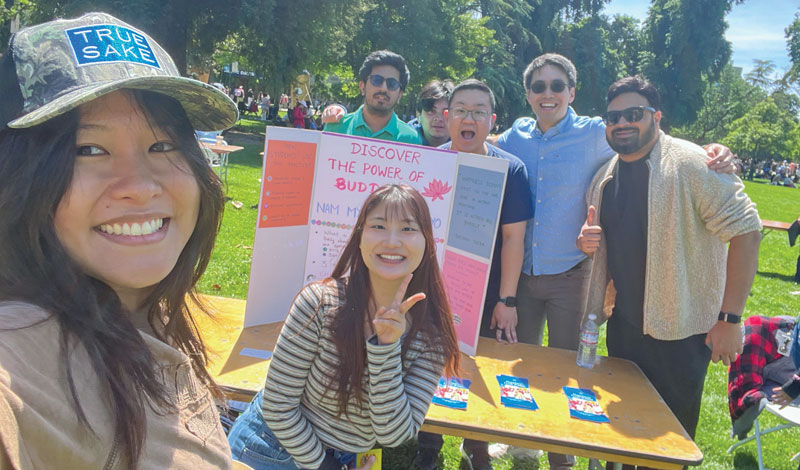
Ji Yun: I want to somehow make a difference in the K-pop industry through design. K-pop has greatly impacted my life and many others, but I also see a lot of suffering within the industry. I want to contribute to transforming that.
I’m also determined to show actual proof by finding the best job and encouraging friends who are going through similar struggles.
Sensei says in The New Human Revolution: “Rather than seeking after your own praise or glory, I hope that you will dedicate your noble lives to sowing the seeds of peace of the Buddhist law throughout the entire world” (vol. 21, revised edition, p. 33). With that spirit, I want to continue sharing Buddhism so that others can become happy.
Becoming Big-Hearted Like Sensei
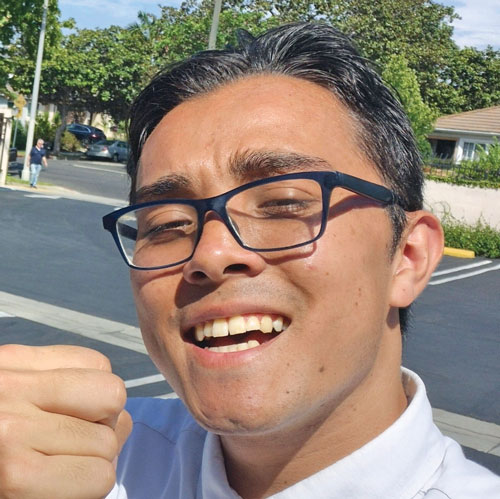
Julian Bruhwiler // Los Angeles
Ikeda Sensei, who appears in the novel as Shin’ichi Yamamoto, speaks to a woman whose husband doesn’t practice Buddhism.
“This is my husband,” she answered, pointing to the big man standing beside her. “His name is Paul. He works as an auditor for the federal government.” She then added, somewhat apologetically, “But he doesn’t practice yet; he does support my practice, though.”
“That’s enough, isn’t it?” Shin’ichi replied instantly. “He happily came with you to welcome us. Doesn’t that make him an excellent member already?” (The New Human Revolution, vol. 1, revised edition, pp. 97–98)
Living Buddhism: Hi Julian, how did you start practicing Buddhism?
Julian Bruhwiler: During the COVID-19 pandemic, social isolation deeply affected me. I was in college, but I lost motivation in school, my grades dropped and I nearly got kicked out. When I told my parents, they asked if I had been chanting—and I hadn’t. That’s when I decided to practice sincerely for myself.
When SGI activities were happening in person again, my young men’s leader began contacting me regularly, wanting to visit me. But I rarely responded to him. I made every excuse not to meet. But when we did, I always felt better. Eventually he encouraged me to be a part of the Young Men’s Division Academy, and we began to study together. Now I support others as a chapter young men’s leader.
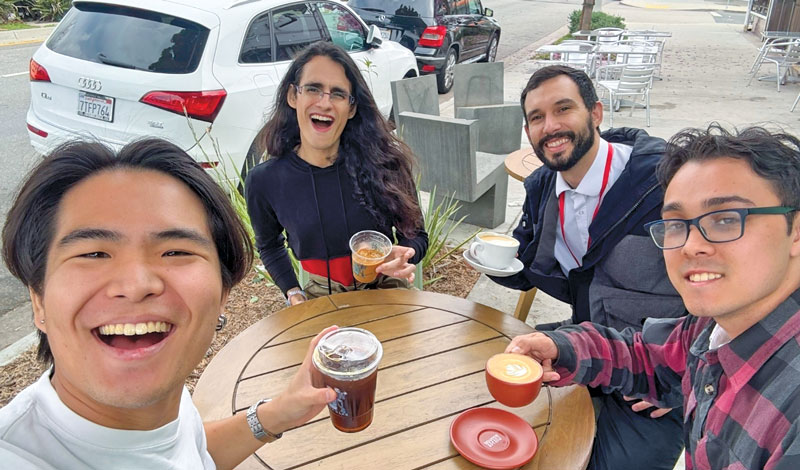
What is your understanding of the oneness of mentor and disciple relationship?
Julian: I used to think that to feel close to Ikeda Sensei, I had to meet him in person. When Sensei passed away in November 2023, I remember thinking, There goes my chance.
A senior in faith explained to me that mentor and disciple are connected through a shared vow and mission. At first, I didn’t fully understand. But after reading A Youthful Diary, I began to see Sensei not only as an extraordinary person but as someone who struggled deeply in his youth. He became more relatable to me, and I started feeling that I wanted to become someone like him and encourage others in the same way he has. Recently, my young men’s leader and I determined to read all volumes of The New Human Revolution together, and I’ve learned more about Sensei that way.
You mentioned resonating with the quote from The New Human Revolution. Why?
Julian: In the quote, Sensei warmly encourages a women’s division member whose husband doesn’t chant, saying that because he supports her, he is still an excellent member. I was struck by Sensei’s broad-mindedness.
It made me reflect on the friends I had introduced to Buddhism. Some weren’t interested, and I felt discouraged by that. This quote helped me realize I had been too focused on results. Now I’m striving to embrace people as they are, without judging whether they practice Buddhism or not.
Toward the goal of welcoming 10,000 youth to the SGI-USA by January 2028, I’m determined to become a true friend who can help others become happy. I chant every day for each young man in my chapter, and I’m also determined to continue deepening my relationship with Sensei.
Toward A Bright Future

Shelby Rafkin // Orlando, Florida
“True victors in life are those who have persevered through hardship, stood often on the edge of despair, yet pressed forward, again and again.
“Though you may have defeats and failures, you mustn’t allow them to make you downcast and pessimistic. The only real defeat is when you give up and devalue yourself. Those who are patient and persistent win out in the end. Never forget that chanting and our Buddhist practice allow us to develop that tenacity.” (The New Human Revolution, vol. 26, p. 46)
Living Buddhism: Hi Shelby, thank you for speaking with us! Could you share how you started practicing Buddhism?
Shelby Rafkin: My parents practiced Buddhism, but I didn’t practice myself. Right before my high school graduation, my father passed away from cancer. My mother fell into a deep depression, and all my friends moved away for college. I felt like I had nothing to live for.
Out of deep despair, one day I went to the altar, opened it and started chanting. Soon after, I got connected to fellow members and began supporting as a member of Byakuren, a behind-the-scenes training group. That’s when I developed my own relationship with Ikeda Sensei and with Nichiren Buddhism.
How did Sensei become your mentor?
Shelby: My dad was like my best friend, and I came to feel that if my dad trusted him so much, then maybe I could too. My desire to seek Sensei as a mentor took on more meaning after I lost my dad. Any question I had, I would go to Sensei’s writings. He became more than a mentor, he became like a father figure.
The mentor-disciple relationship has been pivotal for me in taking full responsibility for my life and creating value. Even after Sensei’s passing, I feel no separation. I know we are connected lifetime after lifetime.
You went back to this quote from The New Human Revolution during a challenging time. How did it help you?
Shelby: Everything was going wrong. In addition to experiencing the biggest heartbreak, I had to look for a new job unexpectedly. With a determination to transform my karma, I went all in in my Buddhist practice.
I was a chapter young women’s leader at the time and had many young women on the chapter name list who were not coming out to activities. I made a determination that I would help them start chanting again, and I called each one. Over time, many have started practicing again and have even taken on leadership. Even amid heartbreak, this period of supporting others was one of genuine joy.
Since then, my circumstances have greatly changed. Now I’m engaged to a wonderful person, and I see that heartbreak as my greatest benefit so that I could deepen my faith and become stronger.
I now feel that it is my privilege to be able to chant to the Gohonzon and to have Sensei as my mentor. Toward his 100th birthday, I want to support a friend to start chanting, and report to Sensei that I’m experiencing a bright future being true to myself.

From the July 2026 Living Buddhism
References
- Tsunesaburo Makiguchi, Jinsei chirigaku (The Geography of Human Life) (Tokyo: Seikyo Shimbun-sha, 1980), 5:183. ↩︎
You are reading {{ meterCount }} of {{ meterMax }} free premium articles