

Your groceries are delivered, your ride arrives without a driver, you complete your errands online, and your bills pay themselves. For many, life has never been more convenient.
But beneath that convenience, there is something essential we increasingly overlook—our need for genuine connections with the people around us. We are not meant to live in isolation. Even so, interactions with family, co-workers, and friends often don’t go as we wish. Ikeda Sensei says:
The reality of human society is that there will always be people we don’t like or just don’t get along with. That’s why it’s important not to get carried away by momentary emotions but instead to make a conscious effort to work together and to strive for unity.[1]
Our relationships impact the quality of our lives. How, then, can we improve them? This month, let’s learn from the Buddhist idea of unity how to build harmonious relationships with anyone around us.
The Power of ‘Many in Body, One in Mind’
In Nichiren Buddhism, we often hear the phrase “many in body, one in mind.”[2] The concept, used to describe ideal unity, means to share a lofty goal or ideal and advance toward it together, without suppressing or denying our own or others’ individuality.
Nichiren Daishonin used this phrase in a letter to his disciples in Atsuhara Village at a time when they were experiencing intense persecution by government authorities:
If the spirit of many in body but one in mind prevails among the people, they will achieve all their goals, whereas if one in body but different in mind, they can achieve nothing remarkable. …
[A]lthough Nichiren and his followers are few, because they are different in body, but united in mind, they will definitely accomplish their great mission of widely propagating the Lotus Sutra.[3]
“Many in body,” or “different in body,” means that each person has a unique personality, strengths, weaknesses, role and mission. “One in mind” signifies that we each share a common goal and conviction—namely, faith in the Mystic Law, the dream of creating a peaceful world by accomplishing kosen-rufu, and the will to work together to achieve it.
The Daishonin’s disciples in Atsuhara did not succumb to persecution because they were united in faith. As such, no authority could sway them. Although they were small in number, they proved that even a small group, when fully united, can change society and history.
Small But Mighty
To be sure, in the letter “Many in Body, One in Mind,” Nichiren shares a historical account that illustrates this principle:
King Chou of Yin led seven hundred thousand soldiers into battle against King Wu of Chou and his eight hundred men.[4] Yet King Chou’s army lost because of disunity while King Wu’s men defeated him because of perfect unity.[5]
Even though King Chou of Yin held an overwhelming advantage given his army’s sheer size, his soldiers had no will to fight for their leader—even turning their weapons backward and parting ranks to let King Wu’s soldiers through.
King Chou lost because his cruel and despotic rule had fueled resentment among his soldiers.[6] Sensei elaborates:
Though by all outward appearances, the Yin forces were there to defend King Chou, they shared neither his heart nor spirit; they were at cross purposes—in other words, “one in body but different in mind.”[7]
Conversely, King Wu and his 800 men were firmly united in their just cause to topple a tyrannical ruler. This shows that more crucial than the number of people is how they unite behind the same vision.
Founding Soka Gakkai President Tsunesaburo Makiguchi saw through the negative forces of his time and how easily they banded together for their own advantage to oppress the good. What’s more, he founded the Soka Kyoiku Gakkai (Value-Creating Education Society, the forerunner of the Soka Gakkai) as an alliance of people who champion good.[8]
Growing to Unite With Anyone
Now that we have learned how impactful it can be to unite strongly with others, how do we translate that into our lives? Sensei offers three ways to create unity right where we are.
1. Human Revolution: When you transform your life condition and take responsibility, you can unite with anyone.
When we find it difficult to get along with another person, it’s all too easy to blame them. Satisfying as that might feel, it won’t change the situation; in fact, it might make it worse.
What we can do immediately is to take full responsibility for the situation and commit to our own human revolution. Sensei assures us:
Humans are emotional beings. And there will invariably be times when we have to engage in activities with someone we may not like or get along with. At such times, you should chant earnestly to be able to unite, get along with, and respect that person. In the process, you will be able to transform your own life condition. And when you change, you’ll be able to unite with anyone.[9]
At times, we might feel the need to isolate ourselves to avoid negative interactions. Contrary to that instinct, however, being among people is the shortcut to learning to better understand others and to further our own growth — our human revolution. Sensei says, “We can polish and develop ourselves only among other human beings. … It is the practice for overcoming self-centeredness and growing and developing as a person.”[10]
We cannot change the situation if we attempt to outsource the solution. For that reason, another key is stand-alone faith. Sensei clarifies: “It may seem at first like a contradiction, but the key to unity is for each individual to be self-reliant. Each person must pray earnestly and become strong.”[11]
An internal change can have ripple effects that spread to those around us. When you resolve to be the person who creates unity, others will naturally be inspired to join you, and together you can change everything.
2. ‘Treasure One Another as Irreplaceable’
In “The Heritage of the Ultimate Law of Life,” the Daishonin calls on disciples to unite “in the spirit of many in body but one in mind, transcending all differences among themselves to become as inseparable as fish and the water in which they swim.”[12]
It is natural that we have different personalities and preferences. What’s crucial is that we strengthen and open our hearts and minds so that we can accept and respect those different from us. Sensei clarifies the meaning of the Daishonin’s passage as to have “the spirit to treasure one another as irreplaceable and to try to bring out one another’s best.”[13]
When we are united in faith and the spirit of the oneness of mentor and disciple, we are all on the same path of realizing happiness for ourselves and others. Sensei points out, “If we are striving for kosen-rufu, we will have no time to quarrel.”[14] We will naturally be able to unite toward a common goal.
3. To Have Courage for Dialogue
When we have disagreements or conflicts, stopping communication might seem the easiest thing to do. However, Sensei states, “Division is evil; unity is good.”[15] Wanting to part ways with others is precisely the nature of devilish functions.
Nichiren often encouraged his disciples to talk to and get along with one another as comrades in faith. Sensei’s efforts in building a solidarity of good across the globe embody the genuine power of dialogue. He writes:
In any situation, dialogue is positive. It builds solidarity. To reject others has only negative repercussions. It invites division and leads to destruction. The point is to meet and to talk. Naturally, perspectives may at times differ. But dialogue gives rise to trust, even among those who don’t see eye to eye. In society as well, dialogue is the foundation for peace, while rejection is the gateway to war.[16]
Unity Is the Key to Lasting Peace
What happens when we create strong unity?
First, negative forces, no matter how strong or deep, will immediately lose their influence. Sensei writes, “The Mystic Law represents a single truth, or ultimate good, that links all life and phenomena and can vanquish evil.”[17] Further, such unity is the key to ensuring the long-term progress of kosen-rufu. The Daishonin states, “When you are so united, even the great desire for widespread propagation [kosen-rufu] can be fulfilled.”[18]
To embody the unity of many in body, one in mind is the purpose of kosen-rufu. The Daishonin shares: “This spiritual bond is the basis for the universal transmission of the ultimate Law of life and death. Herein lies the true goal of Nichiren’s propagation.”[19] As more people actively strive to polish themselves and become capable of creating harmonious bonds, society will be filled with respect.
Second, we can become the driving force for human harmony, even with a small number of people. The Indian independence leader Mahatma Gandhi said, “A small body of determined spirits fired by an unquenchable faith in their mission can alter the course of history.”[20]
Today, we as the SGI-USA Buddhist community are aiming to introduce 10,000 young people to Buddhism by January 2028, where they will encounter the philosophy of “many in body, one in mind,” which Sensei said “can be seen as holding a positive key for overcoming humanity’s karma of division and conflict, and opening the way to lasting peace.”[21] Our united efforts toward that end play a crucial role in opening a brighter future.
Taking Responsibility for the Change

Justin Lawrence / Tacoma, Washington
Living Buddhism: Hi Justin! Thank you for speaking with us about transforming your relationships. To start, can you tell us about your childhood?
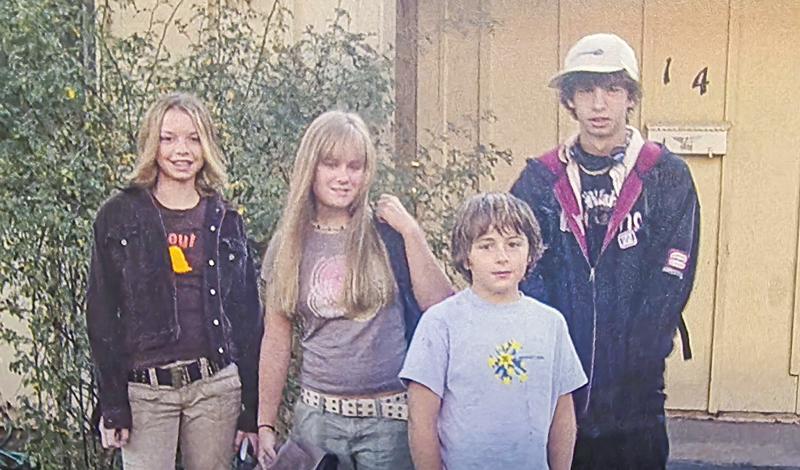
Justin Lawrence: Growing up in Colorado, I was born to teenage parents, in a home where screaming arguments happened regularly.
When I was 8 years old, my parents decided to divorce. My sister and I had to move with my mother and her soon-to-be second husband. I was devastated. I was confused about why I had to move away from my father and close family. I was upset with my mother, rebellious against her new husband and felt she never tried to understand my pain. As the years went by, I sank deeper into a state of confused anger and resentment.
By the time I reached high school, I had serious issues with anger. I would lash out at my siblings, my mother and my stepfather. It often turned into shouting matches with my mother that ended with my screaming, “I hate you!” I began to sneak out at night, getting into trouble. By my junior year, I left my mother’s home and quit school, was drinking and using drugs regularly. About a year later, my friend and I bought one-way tickets to the Pacific Northwest with no intention of going back. I was 18.
I thought that moving to a new place would change my life. But before I knew it, I had created the same reality pervaded by trouble, alcohol and drug use. It was then that I started seeking something spiritual that might help me.
How were you introduced to Buddhism?
Justin: After my friend and I got to Portland, we moved to Tacoma, Washington. I worked a tumultuous job in a burger joint. I knew that I needed to change something. One day, a woman came in to eat. When she got to the front of the line, she told me that she liked that I smiled at all the customers even though the place was incredibly busy. Then she gave me the introductory book,
A Winning Life.
That night, I read the book, and it felt like a big puzzle piece fell into place. I was so moved that I immediately tried to say Nam-myoho-renge-kyo, not knowing if I was pronouncing it correctly. I just knew that this hope filled teaching was something I wanted in my life. So I waited and waited for her to come back. In about a week, she did. I asked if she could teach me how to practice Buddhism. In August 2009, I received the Gohonzon.
What were some of the first benefits you experienced through practicing Buddhism?
Justin: When I began my practice, I was chanting to find a new job. I was also looking for a place to live since the lease was coming up. I chanted every day for these goals. One day, I was on my way to a job interview when I decided to walk into a local restaurant. I didn’t even know if they were hiring, but I ended up getting a job there.
I then discovered the owner of the restaurant was looking for a tenant for her condo. She ended up renting to me and my friends. I was a 19-year-old without a lot of money. She even waived the security deposit when I helped her move furniture and clean. This was the first conspicuous benefit I experienced, and it all happened within a month or two after I started practicing. If I wasn’t convinced of the practice before, I definitely was at that point.
What was the realization that you had about your relationship with your family?
Justin: When I began practicing, I started reading The Writings of Nichiren Daishonin right away. When I encountered a Buddhist concept, I would chant for two weeks so that I could understand it with my life. I was doing many SGI activities, supporting behind the scenes in the young men’s division. When I was reading The Human Revolution, I started to have a profound sense that my circumstances were part of a deep mission that I had.
Through studying and chanting in this way, I started to become more aware of my behavior that was causing me to suffer. I discovered I was walking around with a constant scowl on my face! I woke up to the fact that I still had deep anger, and I wanted to understand and change that part of my life. This quote from the Lotus Sutra sums up this impact on my life: “This cluster of unsurpassed jewels has come to us unsought” (The Lotus Sutra and Its Opening and Closing Sutra, p. 124).
After chanting sincerely about this for a while, a realization hit me one day, related to memories of my childhood. I could see the deep anger and resentment I have been holding toward my family clearly for the first time in my life.
I realized that I had never tried to understand my mother and what she might have been going through. I was 21 years old at that point. When my mother was 21 years old, she had a 5-year-old boy and a 3-year-old girl. I asked myself, What on earth would I do if I had two children right now? At the same time, I was aghast about my own past behavior toward my family.
In that instant, I decided with my whole being that I would forgive my mother for everything. After all, she was doing the best she could with what she knew. And now I had this incredible practice. I determined that I would take responsibility to do my own human revolution and that I would be the one to change.
What action did you take then?
Justin: I called my mother immediately after I finished chanting. I was nervous. I had never done anything that emotional. But I was determined.
I told her exactly what I had realized, that she was only doing her best, and that I forgave her for anything I had ever held against her. I apologized for my own behavior. I also shared appreciation for our family history, because without the struggles I went through, I wouldn’t have encountered this Buddhist practice.
My mother was completely shocked, and full of tears, as was my stepfather. I don’t think she knew what to say. She told me that she had a lot of regrets about how we were raised.

How has your life changed since then?
Justin: My family came to see me shortly after the phone call. I took them to an introductory meeting so that they could see what it was all about. Within a year, my mother chanted for the first time. She chants regularly now, and we talk about Buddhism quite often. We have a truly healthy relationship.
I now have a bachelor’s degree, and earned several competitive internships in college. I have followed my heart to build a career that I find deeply fulfilling and meaningful. In 2025, I started my own construction business.
I have met the most wonderful partner who also practices Buddhism now. We welcomed a child last year, and we are expecting another in June. I can see that I couldn’t have had the healthy relationship we have now without doing my own human revolution. And now, I have the wonderful opportunity to transform the negative karma of my childhood with my own two children.
Congratulations! What would you share with someone who is struggling to transform their difficult relationships?
Justin: From the beginning of my practice, Ikeda Sensei’s encouragement on sincerity stuck with me. He said, “Your sincere behavior and actions will enable you to open wide a future of happiness for both yourself and others” (January 21, 2022, World Tribune, p. 3). No matter how much I felt I was failing or making mistakes, I always did so with the most sincerity I could muster.
If I can be sincere in front of the Gohonzon, I can transform any situation and I can open up my life. I learned that sincerity connects me with the Gohonzon. And sincerity connects me with people. I have one quote from Sensei that is important for me:
I want you to understand the subtle workings of the mind. How you orient your mind, the kind of attitude you take, greatly influences both you and your environment. … Through the power of strong inner resolve, we can transform ourselves, those around us and the land in which we live. (Faith Into Action, p. 8)

What is your determination toward the future?
Justin: I’m determined to be a good father and a supportive partner. I am also resolved to build a successful business. It’s a dream I’ve always had. My biggest internal goal now is to challenge my tendency to judge myself and others. I’m chanting to understand what it means to live a life free of judgement.
I’m now a district men’s leader. We have a goal as a district to have guests at every district discussion meeting this year. I’m determined to continue to bring that energy into our district and to have youth division leaders to create the same harmony that my family now enjoys.
From the May 2026 Living Buddhism
References
- The Teachings for Victory, vol. 6, p. 123. ↩︎
- “Many in Body, One in Mind,” The Writings of Nichiren Daishonin, vol. 1, p. 618. ↩︎
- Ibid. ↩︎
- This story appears in Records of the Historian. ↩︎
- “Many in Body, One in Mind,” WND-1, 618. ↩︎
- See Learning From the Writings: The Hope-filled Teachings of Nichiren Daishonin, pp. 207–09. ↩︎
- Ibid., 208. ↩︎
- See The Wisdom for Creating Happiness and Peace, part 3, revised edition, pp. 122–24. ↩︎
- he New Human Revolution, vol. 26, p. 146. ↩︎
- The Teachings for Victory, vol. 6, p. 123. ↩︎
- WCHP, part 3, revised edition, 166. ↩︎
- “The Heritage of the Ultimate Law of Life,” WND-1, 217. ↩︎
- The World of Nichiren’s Writings, vol. 1, revised edition, p. 128. ↩︎
- Ibid., 141. ↩︎
- Learning From the Writings: The Hope-filled Teachings of Nichiren Daishonin, p. 218. ↩︎
- The World of Nichiren’s Writings, vol. 1, revised edition, p. 142. ↩︎
- Learning From the Writings: The Hope-filled Teachings of Nichiren Daishonin, p. 218. ↩︎
- “The Heritage of the Ultimate Law of Life,” WND-1, 217. ↩︎
- Ibid. ↩︎
- The Teachings for Victory, vol. 6, p. 121. ↩︎
- WCHP, part 3, revised edition, 143. ↩︎
You are reading {{ meterCount }} of {{ meterMax }} free premium articles