

This year marks the 30th anniversary of Ikeda Sensei’s 27th and final visit to the United States in June 1996. Three members recall how his visit impacted their Buddhist practice and lives. And with appreciation for those experiences, how they are participating in the annual May Commemorative Contribution activity to both financially protect and extend the kosen-rufu movement in America far into the future.
Living Buddhism: Thank you for speaking with us. It’s difficult to fathom that 30 years have passed since Ikeda Sensei made his 27th and final visit to the United States in June 1996. Can you share briefly what was happening in your life at the time?
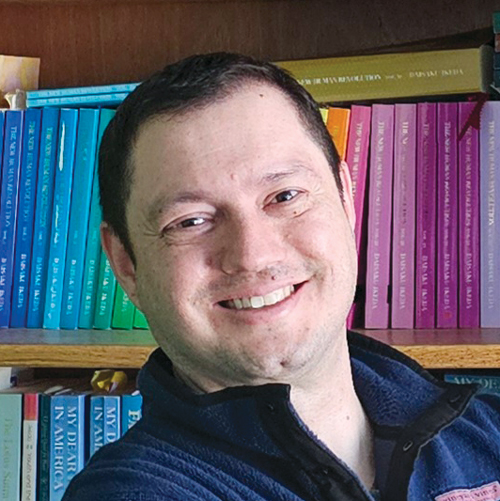
Nico Aragon (Denver): I was 16 years old when Sensei came to Colorado to receive an honorary doctorate from the University of Denver. A few of us in high school were able to support behind the scenes as Gajokai and Soka Group members. This is where I learned the importance of paying attention to detail. At the time, I was attending SGI activities and had just started doing gongyo consistently, but I didn’t really study Buddhism. I was focused on my own practice.

Ushonda Wilson (San Diego): I remember my life just being crazy at the time. I was struggling financially and I had a bad relationship with my boyfriend. I was finishing up community college and trying to decide whether I wanted to pursue my four-year degree or go into the film industry. I was chanting about all of this when Sensei came to Los Angeles.
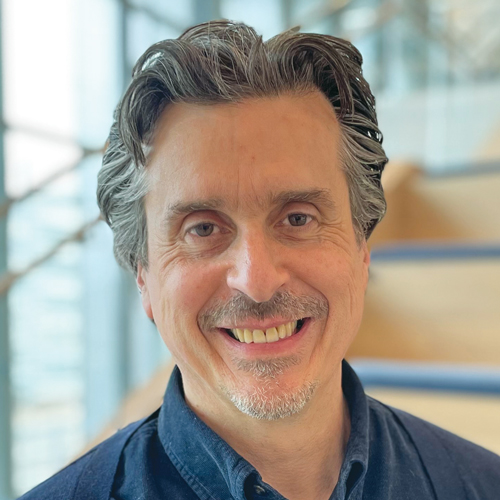
Greg Porretta (Weston, Connecticut): For me, I had been practicing Buddhism for about six years when Sensei visited New York. After graduating from The Julliard School, I was cast in a major role in a new play in St. Louis. After two weeks, however, they decided to replace me.
I came back to New York feeling upset and dejected, and went straight to the New York Culture Center, where I was invited to help prepare behind the scenes for Sensei’s visit. Had I not lost that job, I wouldn’t have been part of this important experience.
What did you take away from that visit that still resonates today?
Nico: On June 9, 1996, Sensei attended the Rocky Mountain Cherry Blossom General Meeting at the old Denver Culture Center. I wasn’t initially supposed to attend the meeting, but was told just beforehand that I could go. I remember being so tired from doing Gajokai shifts, and just as I was starting to fall asleep in the meeting, the whole energy of the room shifted. We saw Sensei come through the back of the auditorium and begin interacting with each member as he went up the center aisle. He wanted to meet all of the members, including everyone in the overflow rooms. I remember thinking how encouraging his life state was, and I learned that developing a high life condition really matters.
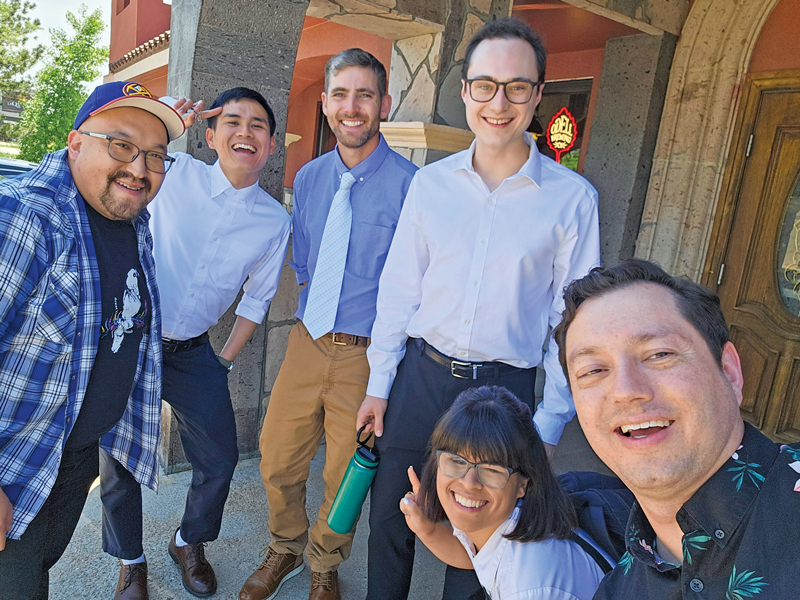
Ushonda: I was fortunate to attend a meeting with Sensei in Los Angeles. While I don’t recall everything he said, I remember how I felt. I was moved by the immense compassion radiating from his life. That really helped me start seeking to understand the oneness of mentor and disciple and how that applied to my life.
Greg: During Sensei’s time in New York, I was on the advance team arriving at each location ahead of him. I watched him closely as he encouraged and interacted with the members. It was uplifting and exciting, but I also felt there was something deeper for me to understand. That experience marked the beginning of my journey to embrace the path of mentor and disciple, and to learn how central it is to our Buddhist practice.
I’ve carried this guidance in my wallet since that time as a reminder of my prime point:
Greatness is not determined by physical proximity to the mentor. … Those who make the mentor’s heart their own and put that into practice are truly great. Wherever you may be, whatever your position, as long as you realize this truth you can conduct yourselves admirably as disciples. (A Conversation With Youth, p. 66)
How did making causes for kosen-rufu impact your life?
Ushonda: As a youth, I remember sometimes having to chant for bus fare to go to the Buddhist center. I was told that every time I made a cause like that to support SGI activities, I was adding to my fortune bank. With that sincere prayer, over time, I was gifted cars on two separate occasions that helped me to do kosen-rufu activities. I felt that having a spirit of appreciation and a desire to have a car to support SGI activities and the members led to the result.
Through daimoku and taking action for kosen-rufu, I developed the courage to delve more into film and television production. I started doing extra work and eventually got offered a job as a production assistant. Since then, every job I’ve taken has paid more than the previous one, which means I’ve been able to steadily increase the amount I give during the May Commemorative Contribution activity.
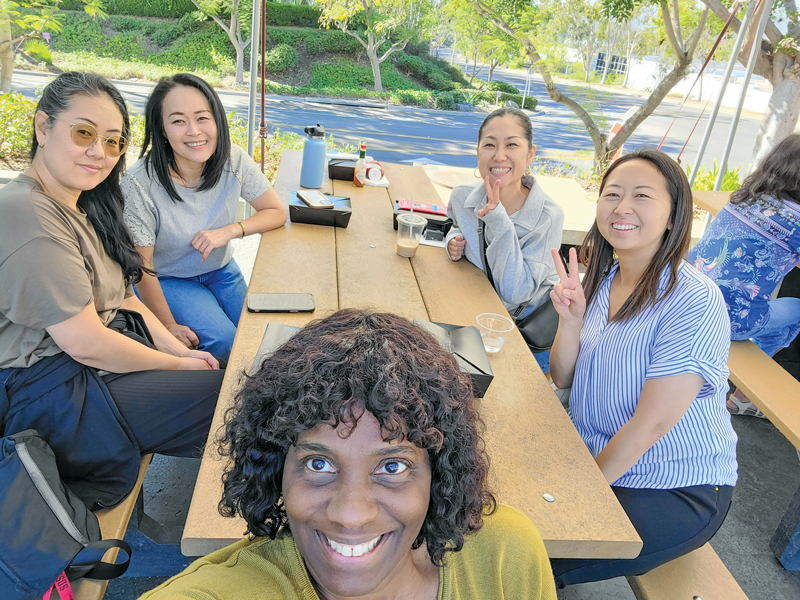
Nico: When I was in the youth division, I took on leadership to support future division members across the country. The experience of having conversations with them completely changed my perspective. I began to understand the concept of children being ambassadors of the future. This made me decide that I wanted to support education.
Right away, I started working at a junior high school, where I took students on field trips to colleges and talked to them about their dreams and the purpose of education. Now, I work in a high school supporting student athletes to build a future for themselves.
Due to the trust I built at work, I was often given responsibilities far beyond my initial qualifications. I firmly believe this was a direct result of the training I received as a youth in the SGI community. There were times when my salary doubled, which is rare in public education. But my biggest benefit is to be in rhythm with these opportunities. I see May Contribution as a time of training, when I set a goal, and use my practice to be creative and steadfast in accomplishing it. This has really changed the way I see all my obstacles—as benefits or protection that enable me to strengthen my core.
Greg: The experience of supporting Sensei’s visit in 1996 laid the foundation for me to face life’s deepest struggles with courage and transform them into value.
When my mother suddenly fell ill and remained in a coma for 12 years, it was an immense and painful challenge for myself and my family, but it also led to profound inner change. During that time, I wrote to Sensei often, striving to develop the same courage and conviction as my mentor, and I feel this experience deepened that bond.
Through my practice and participating in contribution over the years, I can see that I’ve created stability for my children and for their well-being. When I was growing up, that was not that case for me. This is a tremendous benefit.
What would you share about the significance of participating in contribution to new members?
Nico: I think challenging ourselves to participate in contribution is the greatest training for our lives. We get to build the greatest foundation through our earnest resolve. It’s far beyond the numbers, but it’s the intention and the cause that matter. When we contribute for the movement of kosen-rufu, we are constantly sowing seeds of fortune in our lives. It’s like an investment in your own absolute happiness.
Greg: It can be a powerful way to transform our sense of how money operates in our lives. In our society, there’s a hyper focus on this aspect, and it is embedded in a sense of greed. This does not lead to happiness. When we participate in contribution, we can ask ourselves: What kind of value am I creating for myself and others with the resources I have? Sensei says, “When we look after and care for others… our own strength increases” (March 2026 Living Buddhism, p. 50). It is the same with contribution. I feel it’s a tremendous privilege to support an organization that is devoted to the happiness of all people.
Ushonda: May Contribution allows me to always do my human revolution. When I was younger, I only participated in contribution because my mother encouraged me to. As I got older, I really wanted to understand deeply the appreciation behind it. As I chanted about it, I noticed that I began finding appreciation for my own life and the lives of others. Through May Contribution, I can continue to develop that gratitude each year. Really, it’s a way to express my appreciation for having Sensei as my mentor too.
What is your determination now and going forward?
Ushonda: I want to give my full support to the youth. I want to manifest Sensei’s spirit and encourage them through his experiences and the experiences and struggles I’ve overcome. This year, I’ve been chanting to awaken more youth to the same life condition as Sensei. I’m determined to have one youth receive the Gohonzon this year. I do real estate now, and my goal is to establish my own business to help people with disabilities with their real estate needs.
Greg: I want to share my experience with the members about how I transformed my life through participating in contribution, especially with younger members. I’m currently the director of multimedia operations for a large organization, drawing on my background as an actor and visual artist to create meaningful work. More than anything, I’ve developed a real confidence in my life. Through this practice, I’ve come to see that whatever challenges arise can become a source of benefit. When I base myself on the determination to turn poison into medicine, nothing can stop me from moving forward.
Nico: As Sensei’s disciple, I want to have clarity with my mission in terms of my career. As for contribution, every year, my goal is to surpass my previous contribution goal and to use my Buddhist practice to achieve it. Lastly, with the “One Youth. Infinite Hope.” initiative, I am chanting to meet a youth who needs this Buddhist practice. I want to be in the right place at the right time, and have the wisdom and courage in that moment to give them the same tools that have helped me become happy.
Joyfully Making Offerings Elevates Our State of Life
Learning From The New Human Revolution
The following excerpts from volume 4 of The New Human Revolution depict Ikeda Sensei—portrayed in the novel as Shin’ichi Yamamoto—reflecting, in May 1961, a year after his inauguration as third Soka Gakkai president, on the history and spirit of financial contributions in the Soka Gakkai.
Shin’ichi [Yamamoto] turned his thoughts to how organizational activities had been funded in the past. From the outset, when the first president, Tsunesaburo Makiguchi, had headed the organization, responsibility for its finances had been borne entirely by Josei Toda, then the general director. At the beginning of the Soka Gakkai’s postwar reconstruction, Toda again used his own money to cover organizational expenses, so as not to put a financial burden on the members.
But shortly after Toda’s inauguration as second president, several members insisted that they be allowed to bear a portion of the expenses. …
Donations to support organizational activities represent offerings for the advancement of kosen-rufu. Faced with members’ growing insistence that they be allowed to help finance the organization, Toda sensed that the time had finally come to open the door to such a development.
Still, Toda remained extremely cautious. He felt it imperative that finances for kosen-rufu derive from donations made with the utmost sincerity and purity of intention. He was strict as to which members could make financial contributions to the organization. …
Financial contributions to the Soka Gakkai were not the same as donations to other organizations, because it was essential that offerings for kosen-rufu be based on faith. As long as the contributors possessed such sincere and ardent faith, they would not fail to receive immeasurable benefit and be praised by Nichiren Daishonin. …
In the eyes of Buddhism, to deprive them completely of a chance to support the organization in this way would be lacking in compassion.
Reluctantly, … Toda allowed all members to participate provided that it did not cause them economic hardship. (pp. 108–10)
The Spirit of Joyful Offering
The spirit of joyful offering elevates our state of life and produces immeasurable benefit. This, in turn, deepens our conviction in faith. It is an unchanging equation for consolidating the foundation of happiness in our lives.
Shin’ichi opened his copy of Nichiren’s writings. He wanted to thoroughly study again the true meaning of Buddhist offerings in light of the Daishonin’s teachings. He first read “The Gift of Rice,” a letter Nichiren Daishonin had written in response to an offering of rice and other items sent to him at Mount Minobu.
Praising the person’s sincerity, the Daishonin says, “Ordinary people keep in mind the words ‘earnest resolve’ and thereby become Buddhas” (The Writings of Nichiren Daishonin, vol. 1, p. 1125). He thus indicates that earnest faith, a sincere seeking spirit toward Buddhism, is the key to attaining Buddhahood. (p. 115)
Contributions to ‘Accomplish the Daishonin’s Mandate’
The offerings and financial contributions the organization solicited were exclusively to accomplish the Daishonin’s mandate to widely propagate the Mystic Law. Offerings made toward this end were equivalent to offerings made to the Buddha of the Latter Day of the Law. There was, then, no greater offering, no greater good. Certainly, nothing could bring greater benefit. This thought filled Shin’ichi with a sense of immeasurable good fortune and joy at having had the chance to make such offerings as a Soka Gakkai member. (pp. 117–18)
WAYS TO CONTRIBUTE
Debit/Credit Card/E-Check
Via the Member Resources Portal
By calling Member Services (855) SGI-2030 | (855) 744-2030
Mon-Fri: 9am-5pm PT
Additional days and hours:
Sun, May 3: 9am-5pm PT
Sat, June 6: 9am-5 pm PT
Sun, June 7: 9am-5pm PT
New: The contribution envelopes polybagged with this issue will not have an option to write down debit or credit card information to enhance privacy and protect account information.
Checks
You can mail them in the pre-paid SGI-USA contribution envelopes being sent with this issue.
Each World Tribune subscriber will receive a set of two pre-paid contribution envelopes with the May 2026 Living Buddhism and April 3, 2026, World Tribune.
If sending a personal envelope, mail to:
SGI-USA
Attn: Member Services
606 Wilshire Blvd. Santa Monica, CA 90401
Please do not send cash.
For Qualified Charitable Distributions, Securities and Donor Advised Funds
Please contact the SGI-USA Headquarters at 310-260-8921.
You are reading {{ meterCount }} of {{ meterMax }} free premium articles