

What is karma? Is it pre-determined before we’re born? Can we change it?
Some people see karma as something outside their control, or refer to karma as something bad that happens to someone because of their bad behavior. Nichiren Buddhism, however, teaches transformative principles that liberate us from feeling bound by destiny or circumstances.
As Ikeda Sensei says, “No matter how heavy, there is no negative karma that cannot be transformed for the better.”[1]
This month, let’s explore karma through three revolutionary principles that show how we can rewrite our destiny in this lifetime—even instantly—through daily Buddhist practice.
What Is Karma?
The view of karma taught in sutras that preceded the Lotus Sutra often carried a sense of determinism, implying people had to accept their lot rather than striving to change it. Then Shakyamuni clarified that a person’s actions—not their status at birth—determine whether they are noble or humble.[2]
The word karma comes from the Sanskrit karman, which means “act” or “action.” Sensei explains: “Karma refers to potentials in the inner, unconscious realm of life created through one’s actions in the past or present, which, respectively, after being activated by external stimuli, manifest as results in the present or future.”[3]
Based on the law of cause and effect, who we are at this moment is the accumulation of causes over countless lifetimes until now. Buddhism defines karma as “mental, verbal and physical action; that is, thoughts, words and deeds.”[4] We are making countless causes every day through how we think, speak and act. And each cause, whether positive, negative or neutral, produces a corresponding effect.
Our Karma Is Our Unique Mission
“Transforming karma into mission” is the first principle we’ll take a look at.
At times, we face a problem but can’t grasp its significance. Yet Nichiren Buddhism teaches that everything we encounter has profound meaning.
Sensei reminds us: “The way of life of practitioners of Nichiren Buddhism is to find and discover meaning in all things. Nothing is insignificant. Whatever a person’s karma may be, it definitely has profound meaning.”[5]
In addition, having problems is not a sign of defeat or failure. What matters is how we challenge them. Sensei also says: “Difficulties truly become our destiny only if we run away from them. We must fight as long as we live. We must live and struggle tenaciously to the end.”[6]
When we face our karma head-on and take action, our efforts can inspire those around us. In that moment, karma becomes our unique mission. First Soka Gakkai President Tsunesaburo Makiguchi once described the principle of changing poison into medicine:
As long as we are human beings, we are bound at times to meet with accidents or misfortune, or encounter business setbacks. … But we can change any situation from poison into medicine as long as we do not doubt the Gohonzon and continue to devote ourselves to this practice, with the Mystic Law and the Gohonzon as our basis.[7]
‘Lessening Karmic Retribution’—Effecting Momentous Change
The second principle is “lessening karmic retribution.” Through Buddhist faith and practice, Sensei explains, “the negative effect of heavy karma destined to continue into one’s future existences can be expiated by receiving it in a lighter form in this life.”[8]
As long as we continue striving in faith, we can bring forth the life state of Buddhahood—not at some future time but right now. Nichiren Daishonin assures us that “the sufferings of hell will vanish instantly.”[9]
Lessening karmic retribution also opens the path to attaining Buddhahood in this lifetime. Sensei writes:
When we lessen our karmic retribution, it doesn’t mean merely zeroing out a minus balance but rather that we effect a momentous change in the direction of our very lives, shifting from a downward descent toward an infinite upward ascent, from a negative path to a positive one of genuine good. This is the power of the Mystic Law, which has the ability to transform the negative into the beneficial—to turn poison into medicine.[10]
‘Voluntarily Assuming the Appropriate Karma’
The third principle is “voluntarily assuming the appropriate karma.” This principle appears in the Lotus Sutra, when bodhisattvas vow to free people from suffering. To do so, they volunteer to be born in difficult times and take on specific roles and troubles.[11] The Lotus Sutra describes bodhisattvas who, while deserving the rewards of their past practices instead forgo them and voluntarily choose the karma to be reborn in difficult times..
We might at times wonder why we encounter such huge obstacles. But it has been proven time and again by SGI members that the deeper the suffering, the more magnificent the proof we can demonstrate.[12] Sensei writes:
When we change our karma into mission, we transform our destiny from playing a negative role to a positive one. Anyone who changes their karma into their mission is a person who has voluntarily assumed the appropriate karma. Therefore, those who keep advancing, while regarding everything as part of their mission, proceed toward the goal of transforming their destiny.[13]
By returning to our fundamental vow and awakening to our mission as Bodhisattvas of the Earth, even hardships can become fuel for inspiring others and greatly expanding our Soka network.
What Causes Are We Making Now?
Understanding these empowering principles relating to karma, how then do we transform it? The key lies in the causes we are making in this moment. Sensei writes: “The important thing is how we change our attitude or inner resolve at this moment. This is because we can freely create our future through our determination and action right at this very instant.”[14]
Here are three actions we can take to transform our karma:
1) Prayer Purifies Our Lives
Nichiren Buddhism teaches that the Buddha nature exists in the lives of all people. When we chant Nam-myoho-renge-kyo, we activate the life state of Buddhahood within. Sensei once noted, “At that very instant, we have overcome any misfortune or unhappiness caused by past karma.”[15]
Regardless of the past, each moment we chant, engage in our Buddhist practice and take action based on the expansive life force we gain, we make a cause for a brighter future. Rather than lamenting our karma, “we should be determined to rewrite our destiny,”[16] Sensei writes.
Chanting Nam-myoho-renge-kyo also purifies our lives. Sensei explains:
[Chanting] functions to cleanse our lives of negative karma from past actions, just as pure water flushes out dirty water.
The process of purification takes time. At the start, we have to struggle with the slightly dirty water of our negative karma. The power of chanting Nam-myoho-renge-kyo, however, lightens this task too. That’s why it’s so important that we continue chanting. When our lives are eventually purified, everything will start improving dramatically.[17]
With prayer as our starting point, we can transform any karma and enjoy a life of unshakable happiness.
2) Human Revolution Equals Changing Karma
Instead of blaming people, circumstances or our karma, we can actively work on transforming within and carrying out our human revolution. Sensei writes:
It is a solid philosophy that allows us to transform our life state and that of those around us, as well as to transform the land in which we live and even the karma of humankind as a whole.
Changing karma and doing human revolution are one and the same thing.[18]
We may enjoy benefits through our Buddhist practice, but Sensei encourages us to aim for the deeper benefit of changing our karma. “It is not possible to change our karma,” he says, “unless we deeply examine the true nature of our mind and character—which has shaped our destiny—and then work to polish our life and achieve our human revolution.”[19]
By chanting with the vow to face obstacles both externally and internally for kosen-rufu, we can transform our karma at its root.
3) Doing Shakubuku Defeats Our Negative Karma
In his lecture on “The Opening of the Eyes,” Sensei clarifies that “the fundamental cause of negative karma is disbelief in and slander of the Mystic Law.”[20]He also writes, “Actively denouncing and eliminating slander of the Law is itself the direct path to changing karma. Doing so requires courage.”[21]
Nichiren encourages us to awaken to the fact that Law of Nam-myoho-renge-kyo is none other than our life itself. Our aim in sharing Buddhism is to dispel disbelief of slander of the Mystic Law that resides in peoples hearts, which equates to disrespect for one’s own life and the lives of others.
When we share Buddhism with the wish for people’s happiness, the life state of Buddhahood wells forth, giving us the strength to overcome our obstacles and transform our destiny.
Now Is the Time to Rewrite Our Destiny
In a world filled with suffering and negative influences, it’s easy to feel powerless—as if someone else is writing our life story. But the Nichiren Buddhist view of karma gives rise to limitless hope. Sensei writes:
With the profound principle of cause and effect as a springboard toward unrestricted improvement, I believe that the dynamism of the Buddhist doctrine of changing karma can become a vital concept in dispelling the shadow of the death of humanity as a species that has begun to loom darkly over our modern materialistic civilization, and in restoring the brilliancy of life.[22]
Because we have voluntarily chosen our present circumstances to fulfill our unique mission, we can always take action to transform them. Sensei assures us:
No matter what bitter adversity we may face, we will never be defeated. Through the power of chanting Nam-myoho-renge-kyo, we can transform even the most painful sorrow—transmuting it into the compassion to encourage and help others who are suffering—and keep moving forward joyfully and positively.[23]
Whatever challenges we face, in each moment, we can open a new path and write our own story of fulfilling our vow in this lifetime.
For Thousands of Years to Come
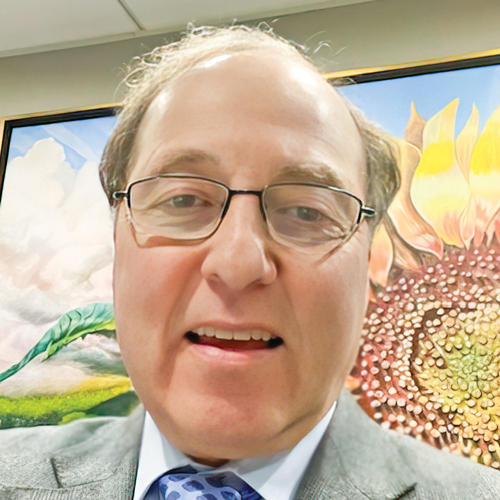
Gregg Wolpert / New York
Living Buddhism: Hi Gregg! Thank you for sharing your journey of transforming your karma. To begin, can you tell
us how you encountered Buddhism?
Gregg Wolpert: I was a rebellious teenager. I had searched hard to find happiness including in martial arts, meditation and, eventually, drinking. In the summer of 1974, I bought a one-way ticket to Alaska. I thought New York was my biggest problem, and if I could just get as far away as possible, I could somehow find happiness. However, the main thing I learned from my trip is that your problems follow you like a shadow. Just changing where you live doesn’t solve problems.
The following summer, I hung out at bars in the Bronx every night. There were several young men who had started practicing Nichiren Buddhism at the same bar. I heard from them about the practice all summer long. After listening to them night after night, I finally attended my first district meeting. It woke up something in my life. It made me think that maybe this was an opportunity to get off the dead-end path I was on. That was the day that changed my life. I received the Gohonzon on August 24, 1975.
What changes did you see once you began practicing?
Gregg: Four days after I received the Gohonzon, I left for college in Boulder, Colorado. I was 18 years old with little money and no car. I was on my own, disconnected from family and friends. I chanted for confidence and courage, and to make friends who would support my growth. And it happened quickly. I’m deeply grateful to the pioneer members in Colorado who showed me how to practice Buddhism.
The big inconspicuous benefit was that I could break down the defenses of self-indulgence I had and start caring for others as well as for my own life. I became far more optimistic about my future. Confidence and happiness welled up from inside me the more I chanted and the more I introduced others to the Buddhist practice. Participating in young men’s division activities was truly the best part of my life. Not only did those activities make me happy, I had no idea at the time the incredible fortune I was building in my life.
What helped you continue supporting SGI activities behind the scenes when you were struggling?
Gregg: The shifts for supporting behind the scenes meant long hours and often required standing outside in cold weather directing traffic and guiding members. But I was getting tremendous benefit from that. Even when the economy wasn’t so great in the late 1970s, I had a job. I became the youngest vice president at the second company I worked for.
Of course, the problem was that the more I did, the more work they asked me to do. So it became an overworked, underpaid situation. But I would still participate in SGI activities and then go back to work on the weekends. It was a challenge, but I think I recognized at that time that hard work was itself sort of a benefit. I felt like I was gaining three years of experience for every year during that time.
You had a turning point at the previous job that drastically changed your career. Can you tell us about it?
Gregg: In the 1980s, I worked on the acquisition of the New York Culture Center, negotiating with the seller, various tenants, contractors, unions and the City of New York. After the closing, I asked my company to assist in the management of the building, but, they refused to take on this assignment. So I did it as sort of a side job and took care of it on my own time. Nothing was more important to me than the success of this project. As I chanted from my heart, I came to the realization that I’d outgrown this company and resigned.
The very same day, I received a phone call from a billionaire real estate investor who was also the largest client of the company I had just left. He asked me to work for him at double my previous salary. He wasn’t looking for the smartest person in the city. He wanted somebody he could trust, who was hard-working and optimistic about the future—all traits I had developed in the young men’s division. I started working for him in 1989. Eventually, I was made a Trustee under the Will and co-president of the company.
Was that unexpected for you?
Gregg: It was totally unexpected and unheard of. I didn’t even know that he knew who I was. I let that go to my head a little. I still remember my first day. The first thing he told me was, “Now I want you to forget everything you learned at your old company.” That was even more surprising.
The person I worked for at the previous company was known in the industry as unkind person. The way I put up with it was, “I’m learning something.” The different skills I learned, including going to school at night, all came back to help me in the long run.
What my new boss was looking for in me was a behind-the-scenes type of person rather than any skill or experience I had in the past. I could learn both the real estate business from him and how to treat people in business. So I went from having the most unkind boss to having the most kind and thoughtful boss in the New York real estate industry.
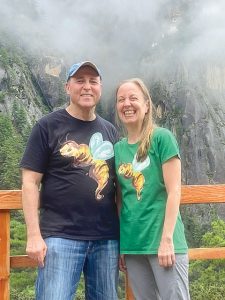
What a transformation! In 2006, you had an unforgettable encounter with Ikeda Sensei. Could you tell us about it?
Gregg: It was at a headquarters leaders meeting in Japan in 2006. I had sent Sensei a gift, which was a collection of Continental Currency, the first paper money printed in the United States in 1776. At the top of the bills was a slogan: “To Counterfeit is Death.” It was meant to scare soldiers or enemies from trying to forge the new paper currency.
To my surprise, Sensei had it on his desk and read the slogan aloud at the meeting. At first, I was confused why he would be reading this, but I realized he was encouraging us to have a genuine and sincere practice. That will always stay with me. I think about this guidance every day before doing morning gongyo. And morning gongyo has become the key to each victory in all aspects of my life.
You have faced numerous challenges over the course of your life. In 2016, you had a major health obstacle. Can you tell us about it?
Gregg: In 2016, one day after coming back from a Taekwondo practice, I had a headache. At the time, I just thought it was a massive headache. My wife called my daughter, who is a well-respected registered nurse. My daughter insisted that I had to be brought to the emergency room immediately. First, I wanted to just rest to be ready for the softball game I had the following day. But out of respect for all the obstacles that my daughter went through to become a nurse, I went to a hospital in an ambulance.
Once the blood test came back, we found out that I’d had a heart attack. The doctor said that I needed a triple bypass surgery immediately. I couldn’t believe it. But as always, I returned to the basics of faith. It wasn’t easy to find a surgeon in August, but the head cardiac surgeon could do the surgery right before he was going on vacation. Seven weeks after the surgery, I was back doing Taekwondo.
The doctor later told me that had I not come to the hospital and had the surgery, I wouldn’t be alive today. I was so protected. All the struggles my daughter went through to become a nurse had a significant meaning for our family. Even my son came to the hospital, and we could all chant together. That really was a big turning point for me.
How would you encourage someone who is overwhelmed by obstacles to use their Buddhist practice to transform their karma?
Gregg: I think the key is to return to the basics of faith, practice and study. We try to “strategize” our way out of obstacles, but it usually compounds the difficulties at hand. And it often leads to the “blame game,” blaming our boss, our friends or our parents for what is happening in our life.
But Nichiren Daishonin tells us to employ the strategy of the Lotus Sutra and chant Nam-myoho-renge-kyo. (See “The Strategy of the Lotus Sutra,” The Writings of Nichiren Daishonin, vol. 1, p. 1001) I think many of us often “overthink” how to overcome problems instead of having heartfelt gratitude to have the Gohonzon and the support of the SGI family. It is crucial to have total trust that we can overcome any obstacle with this practice. It took me a long time to figure that out for myself as well.
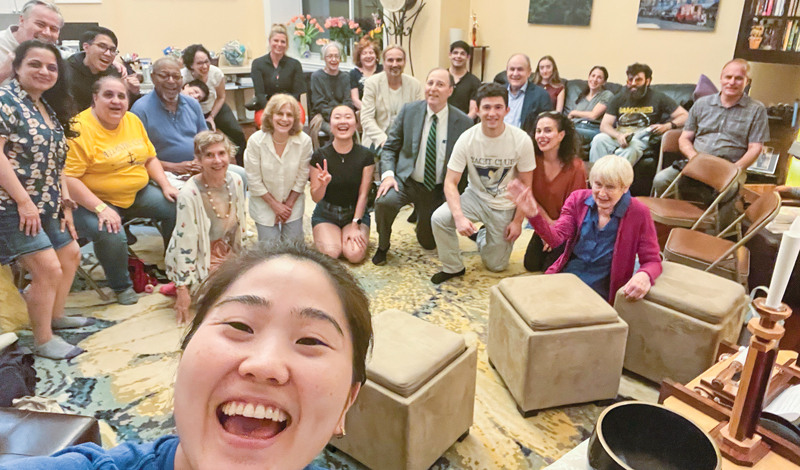
What is your determination toward the future?
Gregg: Every aspect of my business is all about growth and not standing still. We are actively raising capable people who can become leaders in the future when we are not around.
I vow to use all of the business skills I have learned to advance kosen-rufu. I’m looking beyond my lifetime. Now, I’m on a mission to protect the SGI-USA throughout my life and for thousands of years to come.
Most everyone in my business world knows about my Buddhist practice, and I have the responsibility to be an ambassador for Nam-myoho-renge-kyo, as they are all watching my actions, my successes and also how I react to obstacles.
Life is about goals, and if you don’t hit a goal the first time, you can come back and try again. Owning and managing five million square feet of office space, 3,000 apartments, a $19 billion bank and several other businesses is never an easy task. Challenges never stop coming; I face challenges every day, but with the attitude of “bring it on.” I have the Gohonzon, and I use it. I will never be defeated.
From the April 2026 Living Buddhism
References
- Learning From the Writings: The Hope-filled Teachings of Nichiren Daishonin, p. 154. ↩︎
- See Unlocking the Mysteries of Birth and Death, p. 27. ↩︎
- Ibid., 26. ↩︎
- Ibid., 197. ↩︎
- The Wisdom for Creating Happiness and Peace, part 2, pp. 43–44. ↩︎
- Ibid., 47. ↩︎
- The Opening of the Eyes: SGI President Ikeda’s Lecture Series, p. 92. ↩︎
- A Religion of Human Revolution, p. 89. ↩︎
- “Lessening One’s Karmic Retribution,” The Writings of Nichiren Daishonin, vol. 1, p. 199. ↩︎
- Learning From the Writings: The Hope-filled Teachings of Nichiren Daishonin, p. 155. ↩︎
- See The Lotus Sutra and Its Opening and Closing Sutras, p. 200; p. 202. ↩︎
- See The Wisdom for Creating Happiness and Peace, part 2, pp. 40–41. ↩︎
- August 2003, Living Buddhism, p. 5. ↩︎
- The Hope-filled Teachings of Nichiren Daishonin, p. 156. ↩︎
- May 15, 2009, World Tribune, p. 5. ↩︎
- Ibid., 4. ↩︎
- The Wisdom for Creating Happiness and Peace, part 2, p. 50. ↩︎
- A Religion of Human Revolution, p. 100. ↩︎
- The New Human Revolution, vol. 12, p. 46. ↩︎
- The Opening of the Eyes: SGI President Ikeda’s Lecture Series, p. 137. ↩︎
- Ibid., 139. ↩︎
- Space and Eternal Life, p. 120. ↩︎
- January 2014, Living Buddhism, p. 13. ↩︎
You are reading {{ meterCount }} of {{ meterMax }} free premium articles