
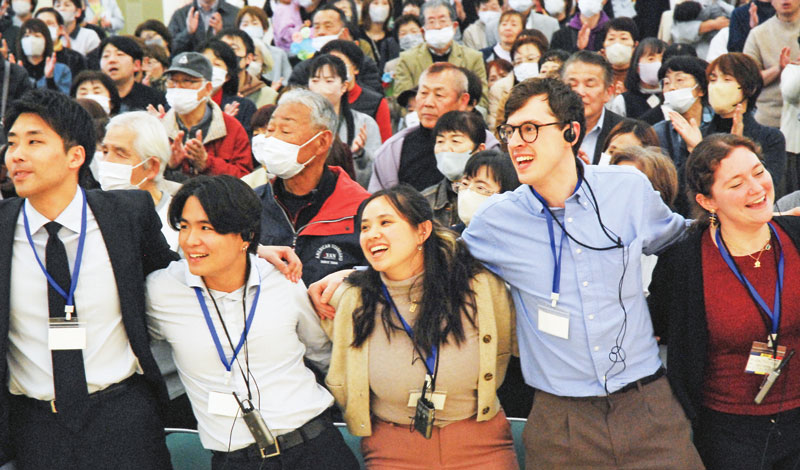
This group began their journey in Yamaguchi City with a tour of the Yamaguchi Culture Center. Inside, they were invited into the Mentor and Disciple Room, where the history that the Yamaguchi members share with Ikeda Sensei came alive through treasured mementos gifted by him and Mrs. Ikeda. Stepping into the courtyard, the youth viewed a tree, standing tall, that Sensei had planted during the center’s opening ceremony in 1977.
Sensei’s visit that year marked two decades since the Yamaguchi Campaign of 1956 and 1957—one of the six historic propagation campaigns that formed the bedrock of kosen-rufu in Japan. Reflecting on the 1977 effort known as the “second Yamaguchi Campaign,” Sensei writes:
Kosen-rufu cannot be achieved without a willingness to give everything for the sake of Buddhism and one’s fellow members. To ignite an undying flame in the hearts of others, you have to brim with a passionate commitment yourself. (The New Human Revolution, vol. 25, p. 178)
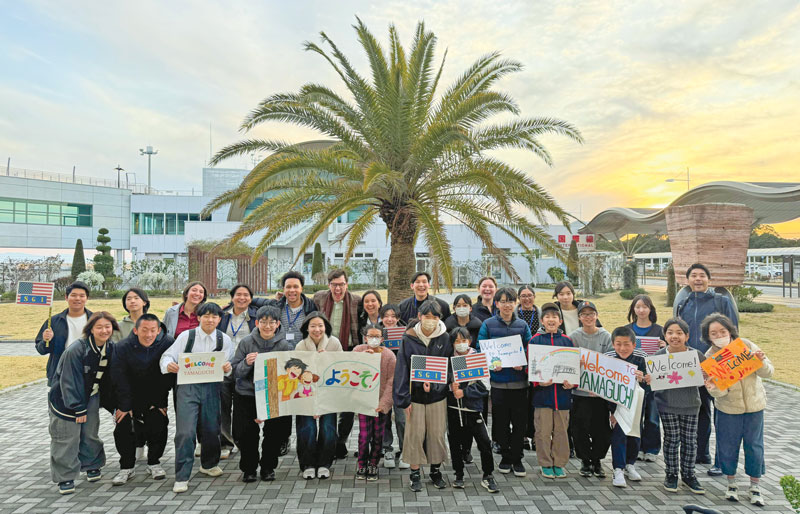
Before heading to their next destination, the youth made a brief stop at the Ruriko-ji temple, a historical site Sensei had visited during the Yamaguchi Campaign. They then traveled to their exchange meeting at the Hofu Culture Center.
Hofu once served as the capital of the former Suo Province, which encompassed what is now southern and eastern Yamaguchi Prefecture. When the Hofu center opened in 1965, it became the prefectural headquarters for the Soka Gakkai, a fitting focal point for a region that embodies the pioneering spirit.
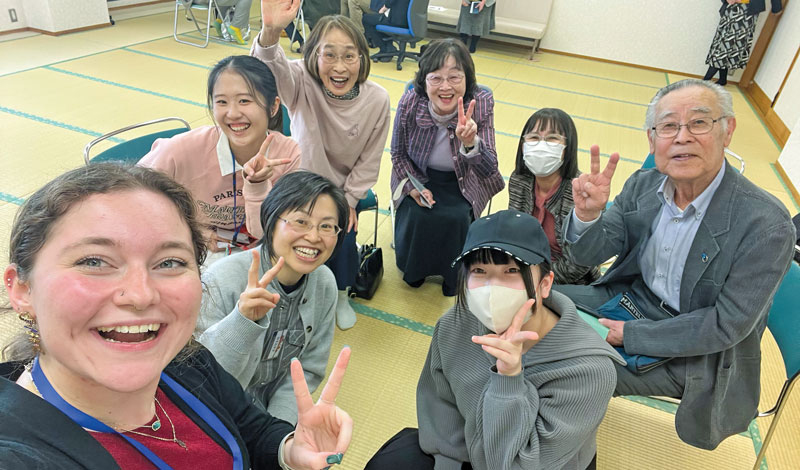
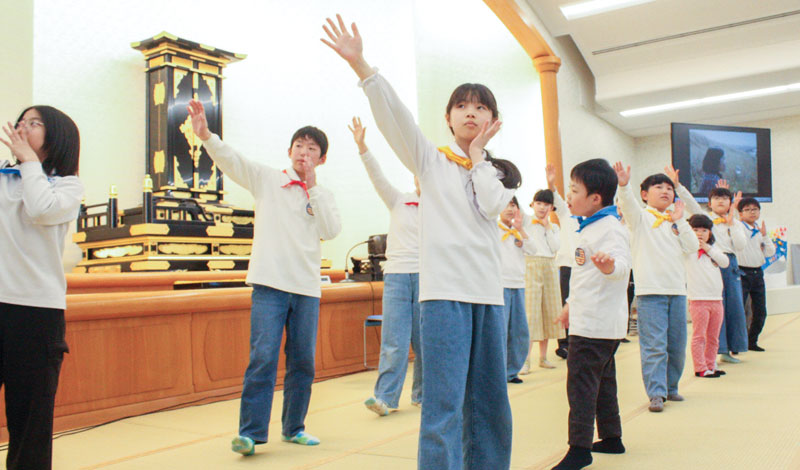
In 1977, Sensei looked to the members of Hofu, declaring that they “are the core of the Soka Gakkai in Yamaguchi Prefecture … the starting point to lead the people of Yamaguchi to happiness” (NHR-25, 174). Now, decades later, those words echoed with fresh meaning as the youth took part in an exchange meeting, where they learned core lessons and personal experiences of those who had built the foundations of kosen-rufu alongside their mentor.

A Fighting Force for Happiness
April Garza Houston
I was struck, almost shocked, by the sincerity of the members in Yamaguchi. It felt like a homecoming of sorts. At the Yamaguchi Culture Center, we visited the Mentor and Disciple Room. One thing that impressed me was a mirror given by SGI Honorary Women’s Leader Kaneko Ikeda. Next to it was a quote: “Today again I will not be defeated. Today again I courageously forge ahead on the path of my vow.”
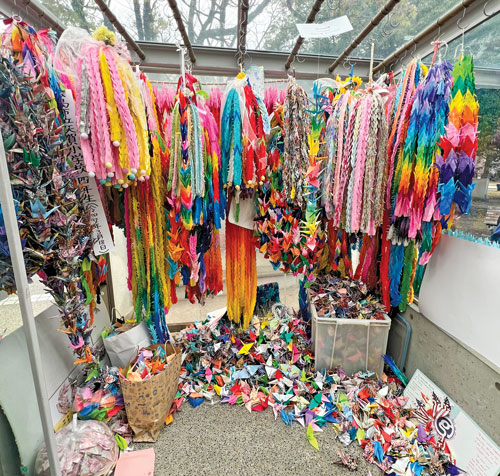
Since visiting Hiroshima, I’ve been reflecting on what it means to practice Buddhism with the SGI in our current times. We are an organization that resolutely stands as a fighting force in the struggle for world peace and absolute happiness.
This January, I celebrated seven years of practicing Buddhism, and the training course solidified my confidence and determination even more. I walked away with tremendous hope for our future.
Each training course participant is genuinely fighting for kosen-rufu in their respective area. It was a reminder of how we’re all working for peace together. Since returning home, I’ve faced challenges. However, I’m determined to share Buddhism with everyone I encounter and show actual proof of this practice through my life.
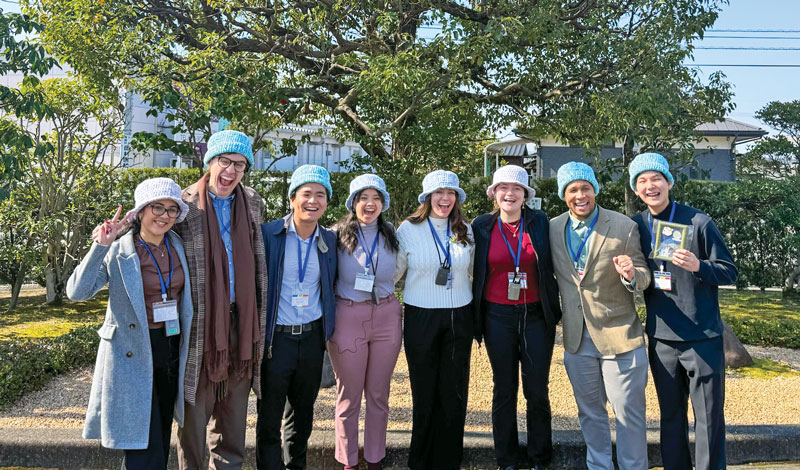
A Fundamental Shift in My Heart
Yuuma Ishii Los Angeles
The members greeted us with warmth and gifts sincerely wanting to encourage us and create a joyful environment. Through them, I felt I had met Ikeda Sensei. This taught me that the driving force to do SGI activities should be a sincere heart rather than a sense of obligation.
During a commemorative dinner, the Chugoku Region youth leader spoke about his grandmother, an atomic bomb survivor. When asked why she has hope she said: “The atomic bomb killed thousands of people. Yet I survived. That is why I have hope for the future.”
This made me think how it’s no surprise that young people lack hope for the future. We see news of war, violence and discrimination every day, and it doesn’t seem like it is getting any better. However, the SGI instills hope in people in times of despair. This visit to Hiroshima helped me find the reason why we must share Buddhism now. Young people need hope and this Buddhist practice is the best way to give that to them.
I am absolutely determined to help one of my friends join the SGI this year and ground myself in the spirit of treasuring the person in front of me.
Guidance | Ikeda Sensei
Become Strong!
On May 21, 1977, during his visit to Yamaguchi Prefecture, Ikeda Sensei made a brief stop at the Hofu Community Center where members had gathered in hopes he would visit. The following is encouragement he shared with those members.
Self-confidence is the backbone of the human spirit.
People with self-confidence are strong. As long as one has confidence, one won’t be defeated by even the harshest adversity.
Shin’ichi [Yamamoto] then said, “Today I’d like to present you, our Hofu members, with a poem:
The citadel of Hofu—
starting point
of kosen-rufu.
“You are all emissaries of the Buddha who have emerged here in Hofu for a profound reason. My trustworthy disciples, we are inseparable. Please continue to follow the path of kosen-rufu courageously, with pride in that fact.” (The New Human Revolution, vol. 25, p. 174)
May 15, 2026 World Tribune, pp. 26–27
You are reading {{ meterCount }} of {{ meterMax }} free premium articles