
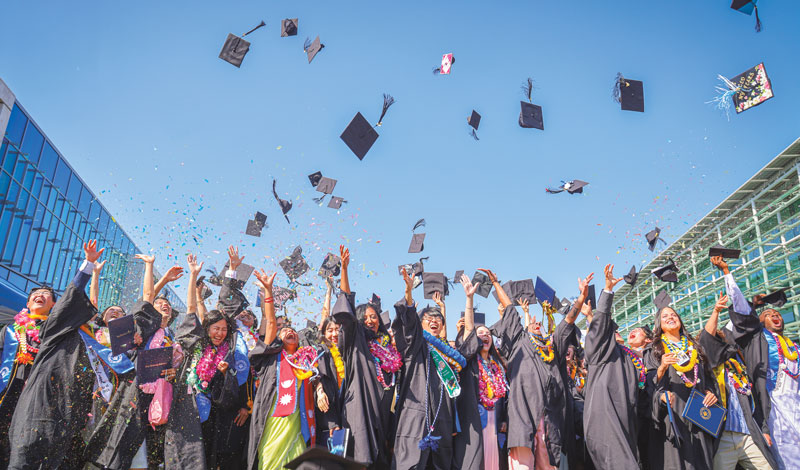
ALISO VIEJO, Calif., May 22—“No one can ever be spared from difficulty,” Soka University of America (SUA) founder Daisaku Ikeda once told a graduating class. “In fact, the greater one’s purpose in life, the greater the obstacles one confronts. The key is whether you can draw upon ever-deeper reserves of patience and perseverance … and to keep taking another step to forge on.”[1]
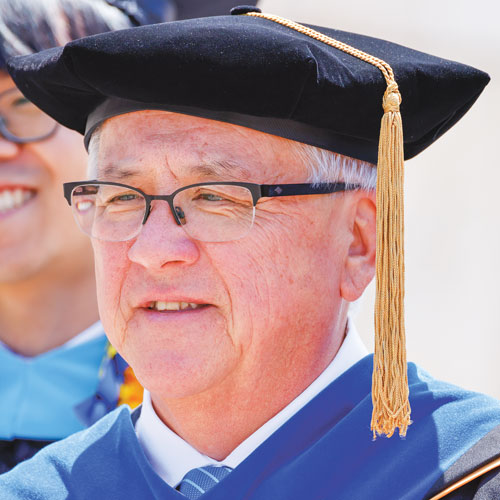
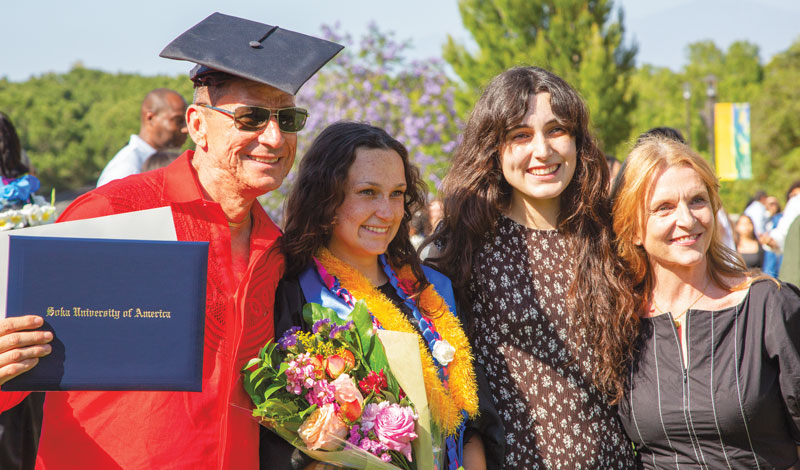
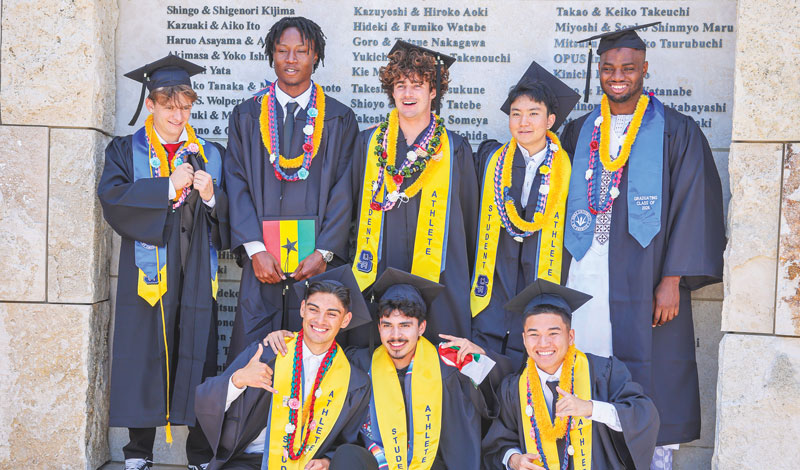
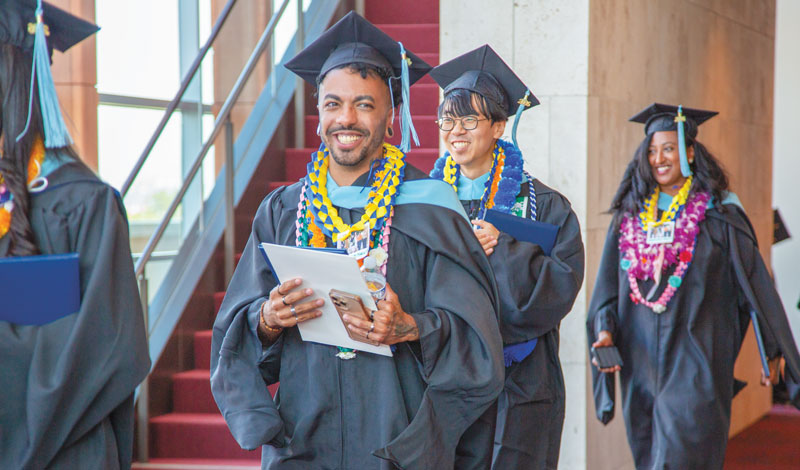
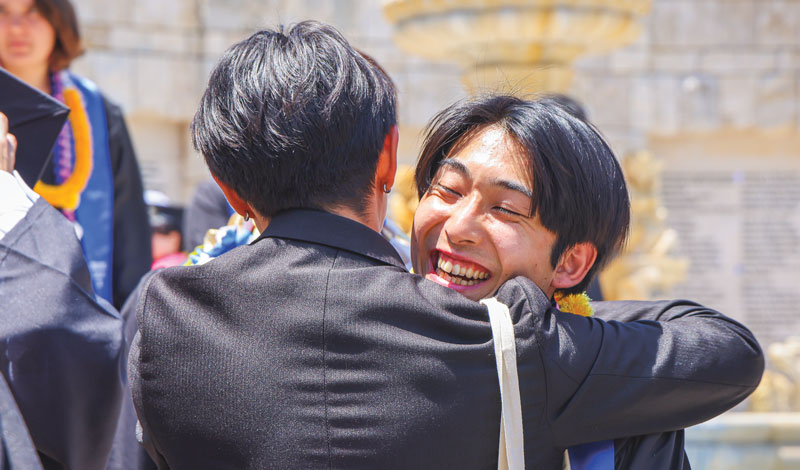
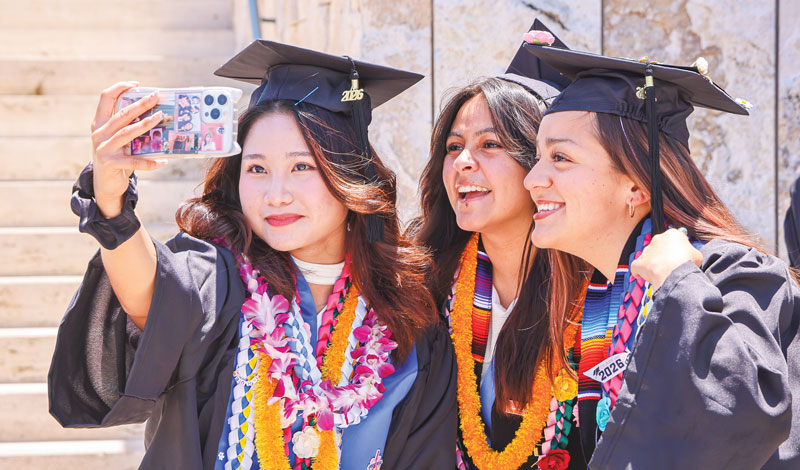
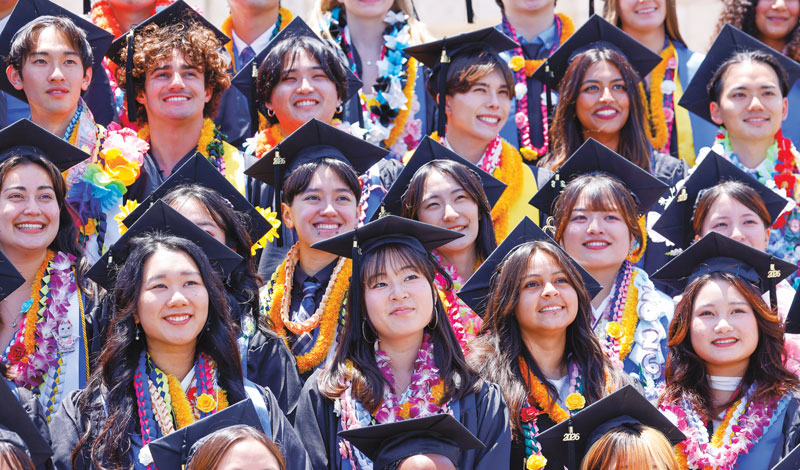
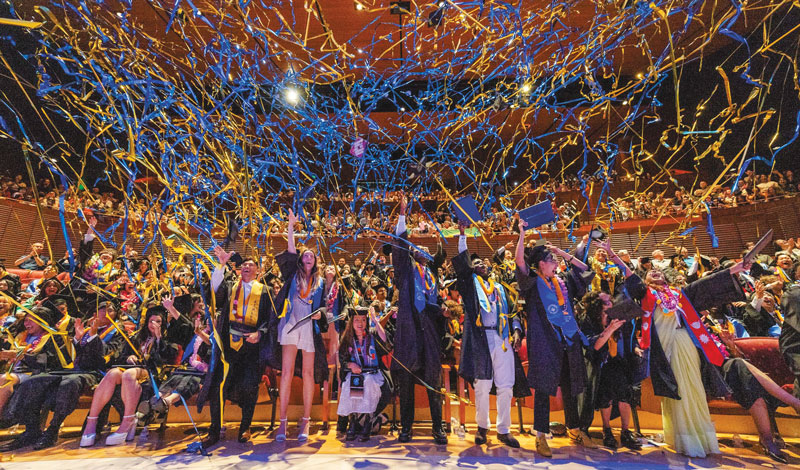
These words were at the heart of the welcome university president Edward M. Feasel gave to the Class of 2026, which held its commencement on May 22 at the university’s Soka Performing Arts Center. The ceremony recognized undergraduate students earning a bachelor’s in liberal arts, as well as graduate students completing a master’s in educational leadership and societal change.
For Feasel, it was 20 years into his professional life that he became the dean of faculty at SUA and a little more than 30 years when he was named president—something he never imagined possible earlier in life. Reflecting on his own decades of growth and advancement, Feasel said the key was drawing upon the ever-deeper reserves of “patience and perseverance” the founder spoke of, “something I want to ask you to keep in mind as you traverse through your journey to create value in your lives and communities in the decades to come.”
The work of ‘heartening.’
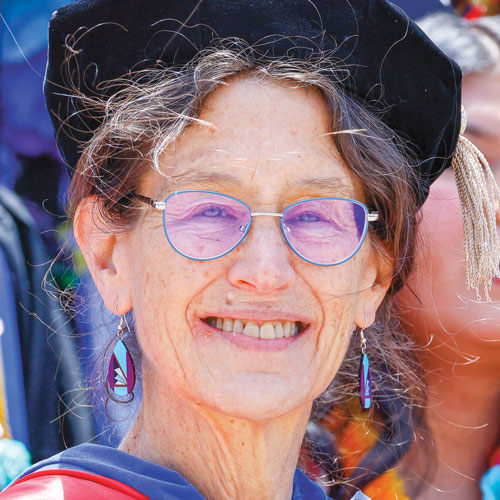
During the ceremony, keynote speaker Sarah Ann Wider, an emerita professor of English and women’s gender and sexuality studies at Colgate University, spoke about turning from the work of demeaning to that of heartening, citing these words of Ralph Waldo Emerson: “It is cheap and easy to destroy. There is not a joyful boy or an innocent girl buoyant with fine purposes … but a cynic can chill and dishearten with a single word. Despondency comes readily enough to the best and most sanguine”[2] (see p. 9).
“Many of us have experienced that ready despondency, that quick and cruel disheartening blow, whether in our own experience or seeing it play out for another; a person—and their ideas and their gifts and what they hoped to contribute—cut down by a single mean-spirited remark,” said Wider, co-author, with Daisaku Ikeda, of The Art of True Relations: Conversations on the Poetic Heart of Human Possibility.
In such circumstances, she turns to the guiding principles for global citizenship outlined by Daisaku Ikeda in his June 1996 address at Columbia University Teachers College.
“I would rewrite Emerson’s words this way, creating what you might call an Emerson-Ikeda collaboration: ‘to help all, to add energy, to inspire hope by new thought, by firm action, perceiving the interconnectedness of all life, recognizing the inherent equality and possibilities within all people: that is the work of imaginative empathy.’ That is the work of heartening.”
‘A culture of care wherever I go.’
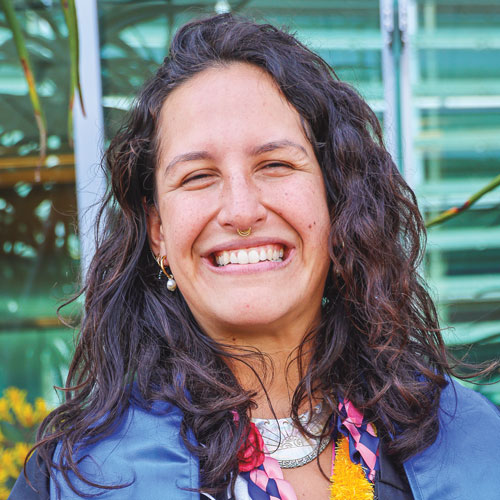
The Founder’s Award—presented in recognition of outstanding contributions and service to the university community—was bestowed this year upon Mareva Aumai Dijoux, of Brive-la-Gaillarde, France, who completed a double concentration in environmental studies and international studies.
In her brief, heartfelt acceptance, she turned the honor outward to her classmates, many of whom she said were deserving of the award.
Dijoux later remarked that SUA embodies a culture of care, where students support one another beyond the surface level.
Here, she came to see the world as it is and to find a way to contribute to it. She plans to continue her education in Costa Rica, focusing on environmental and social justice. “Wherever I end up in the near or far future, I will carry the heart of SUA,” she said, “and establish a culture of care wherever I go.”
‘Please remember, we believe in you.’
Daisaku Ikeda established SUA on May 3, 2001, as a four-year, nonsectarian undergraduate liberal arts school grounded in the humanistic ideals of Soka, or value-creating education. Its foundational mission: to “foster a steady stream of global citizens committed to living a contributive life.”[3]
In 2021, to mark its 20th anniversary as a liberal arts institution that champions education for global citizenship, it named its undergraduate program Daisaku Ikeda College.
In an extension of its mission, SUA this May entered into exclusive negotiations with Middlebury College for the potential purchase of the Middlebury Institute of International Studies (MIIS) campus in Monterey, Calif., and the operation of select Master of Arts programs (see p. 10).
Today, SUA is ranked among the nation’s top liberal arts colleges, including No. 13 in Best Value Schools, according to U.S. News & World Report’s “Best Colleges 2026.”
To the graduates of the Class of 2026, Feasel said that the SUA community looks forward with great anticipation to what each of them will create 10, 20 and even 30 years from now. “Please remember, we believe in you,” he said. “And please return home to SUA again and again to remind yourself of your goals and the determinations you made, and the indomitable spirit you developed while you were here.”
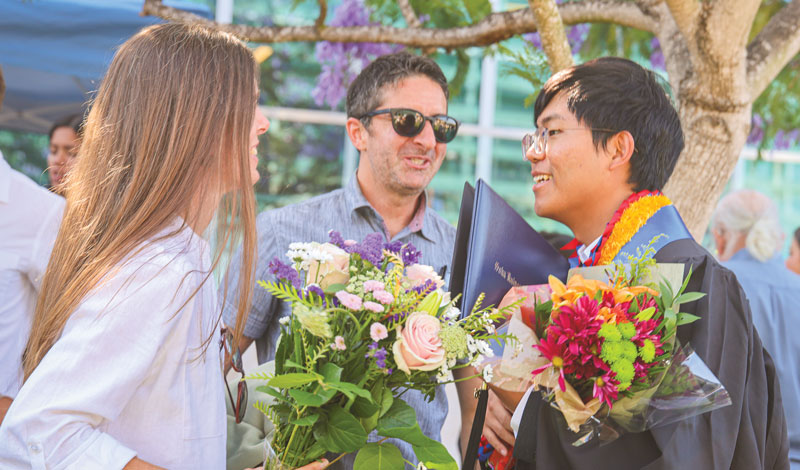
Walking out to the cheers of their parents and friends, the new graduates marked the first of many new beginnings, one won with their own patience and perseverance, as they set out to hearten the world.
—Prepared by the World Tribune staff
Voices from the Class of 2026
Valuable Lessons and Meaningful Growth
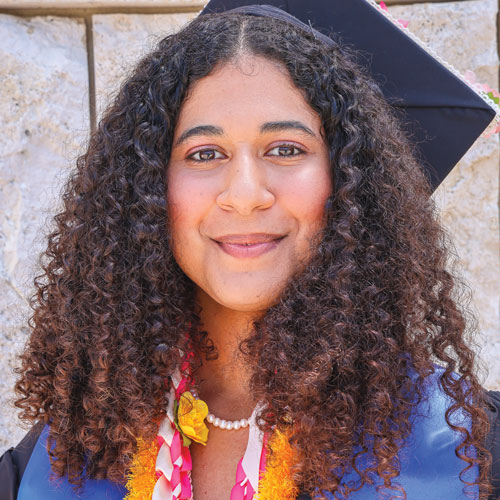
by Gracyn Ervin
Santa Fe, N.M.
My time at SUA shaped me through meaningful growth, especially during my study-abroad experience where I learned to navigate cultural differences with my host family. It taught me the importance of having compassion for people who may be different from me. Although facing these obstacles was challenging, I learned to stay grounded in my values and lead with kindness.
So many professors, peers and other community members supported me along the way and taught me countless valuable lessons. For example, throughout my study abroad a member from my SGI-USA district often reached out and encouraged me. Their words and support taught me to have courage wherever I am.
At SUA I found my passion for writing as a tool to create value and uplift others. After graduating I’ll be working as a project assistant and will be using my writing to inspire and bring light to others.
Honoring My Dear Friend
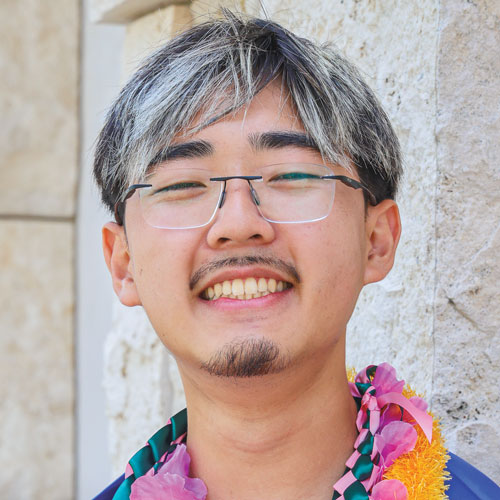
by Jun Sawada
Sao Paulo, Brazil
Last year, our campus community was deeply affected by the passing of my best friend, Lucas Colombo. Lucas was a part of the Class of 2027, and we attended Brazil Soka School together. We had many shared dreams, including attending SUA together and pursuing filmmaking. After he was gone, I struggled to find my sense of purpose.
But through the support of my Soka peers and Lucas’ family, I realized that he fully embodied SUA’s mission to live a contributive life.
Soka students are very ambitious, and I learned how to always live with intention. Experiencing grief during my time at SUA helped me understand the importance of taking care of myself and transforming even the deepest pain into medicine that will allow me to bring about actual change in our world.
Going forward, I will honor the time that I spent here and the life of my dear friend Lucas. My dream is to become a transnational filmmaker to produce art and stories that express positive messages across borders. I hope to build bridges with people of different ethnic backgrounds and bring about solidarity and community for the people in our world who feel unseen—knowing that Lucas lives on through me.
June 5, 2026 World Tribune, pp. 6–7
References
- https://www.soka.edu/about/our-stories/founders-message-sixth-undergraduate-commencement-ceremony <accessed on May 26, 2026>. ↩︎
- Ralph Waldo Emerson, The Journals and Miscellaneous Notebooks of Ralph Waldo Emerson (Cambridge, Massachusetts: Harvard University Press, 1976), vol. 13, p. 51. ↩︎
- https://www.soka.edu/about/mission-and-values <accessed on May 28, 2026>. ↩︎
You are reading {{ meterCount }} of {{ meterMax }} free premium articles