
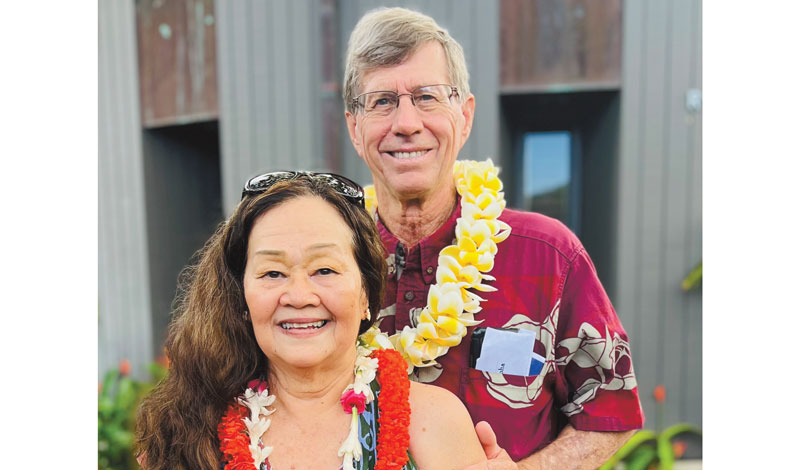
by Charlot Boll
Hawaii
We went through so many beaters while raising the kids, bought cheap or inherited from family. One even caught fire during an SGI discussion meeting (a story my son likes to tell). We weren’t poor—my husband, Ray, made sure of that, working tirelessly in construction to support me and the kids. But we had elected to struggle when we chose to give all three kids private high school educations. Still, we had what we needed, when needed. And our hearts were full of appreciation.
Only a few years before I met Ray, I was living another life, working a high-paying job and driving a Mercedes. My father had commented at the time, with sudden emotion: “Of all my kids, I made sure you never wanted for anything. And of them all, you alone seem unsatisfied.” It was true, he’d spoiled me, the youngest of four. Now, with all the trappings of success, I still felt something was missing.
In my late 20s, I began seeking in earnest for that something, poring over books on spirituality and meditation. I must have mentioned this to the young woman who was doing my nails one summer day in 1977. As it turned out, she had a lot to say on the subject. She was Buddhist. I found myself asking many questions and being stirred by every answer.
“Through this faith,” she told me confidently, “anyone can change their destiny.” She handed me two slips of paper. On the first was printed these words that I’d learn later were the motto of the women’s division then: “A faith that sets our hearts aglow with joy and appreciation is the key to unlocking the great fortune of the treasure house.” On the second, she’d penned Nam-myoho-renge-kyo. I began chanting regularly after this and felt as I did that I was heading at last in the right direction.
My mother not only noticed the change in me—she called attention to it. “Look! My daughter! So bright!” When others agreed, she’d poke the air in front of my face and say: “Buddhism!”
A lot happened within a few months of practice: I quit my high-paying job; I met and began dating my now-husband Ray, who has been a true comrade in faith. Together we built a beautiful, happy family, in which we strove to challenge ourselves to do our very best, acquiring above all the treasures of the heart. Though we didn’t have much, we never failed to challenge ourselves during the May Commemorative Contribution activity, coming always from our deep appreciation. Our three children often tell us how deeply they appreciate the way we raised them and the values we instilled—to honor oneself and others, and to cheer one another on.
The greatest cheerleader award probably goes to my mother. Growing up, she certainly was this for me. And this was why it was so jarring when she moved back into our family home in the late ’80s with me and Ray and our youngest, Amber, full of mean, biting remarks, aimed at me. She’d been diagnosed with dementia, which was far more advanced than we’d feared.
Day in and day out, she’d attack me, and I began to resent our home for the first time.
I was on the verge of snapping when I attended a kosen-rufu gongyo meeting that shook me up. I heard guidance from Ikeda Sensei about cherishing our parents, where he said in effect that those who are unable to appreciate their parents are living in the world of animality. Shocked, I wondered: Is that what has happened to me? After this, I shifted my prayer, chanting to see my mother through Sensei’s eyes.
One evening, it occurred to me to give her a book by Sensei to read aloud to us, called A Poet’s Star. As she read, everyone took notice: Something remarkable was happening. As she spoke, her voice softened, growing strong and kind. She straightened up and spoke as though gently encouraging us. This was the mother I’d known all my life, the one I hadn’t seen since she’d come home. The transformation astonished me, and I realized that she was now, as ever, full of potential for warmth and kindness. This changed me, and it changed the way I spoke to my mother. In turn, it opened the door for many, many moments of tenderness between us.
Some years later, she moved back to the mainland, to California. Though I found on every visit that she’d lost a little more of her memory, it was on my very last that she seemed most lucid. In the summer of 2018, she looked right at me and said, “I love you, Charlot.”
I was reminded in that moment how much my experience with her had transformed me. I have continued to chant with the prayer she brought out of my life—to see each person as my mentor would see them. I have carried this with me into my efforts to introduce others to Buddhism. Even when someone is flighty or cagey or hard to reach, I don’t give up. When my friend, a wonderful young man I’d met two years earlier, received the Gohonzon last year, I was overjoyed. “You’re like family,” he told me, and I could tell how much this community meant to him.
I realized then just how precious the youth are, and also how much they are seeking to become happy and realize their dreams. If I can embrace each one as my mentor would; if I can see each one through his eyes, there’s no doubt that at some point they’ll awaken to the greatness of their lives as I have to mine. It is my mission, I feel, to pass this along.
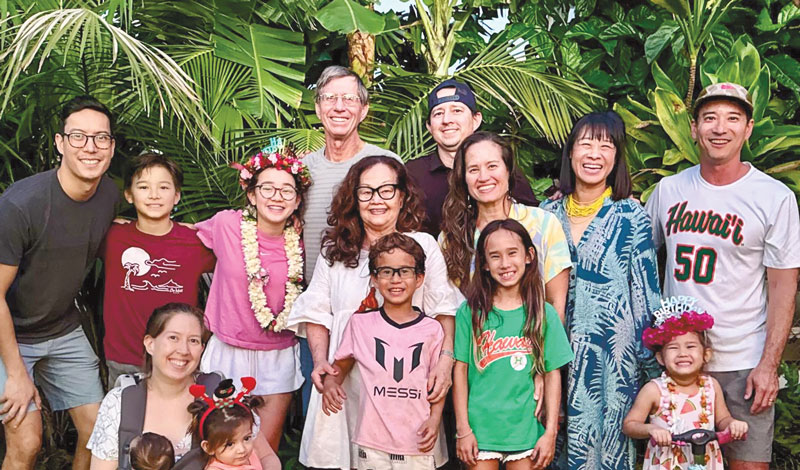
Just looking around myself at family gatherings—at the smiling faces of my children and their spouses and my grandchildren—I feel the need to pinch myself to believe that it’s real. Honestly, I think my children feel the same. All three practice this Buddhism; all are living deeply contributive lives. And while each is doing exceptionally well, they are not dazzled by their success. They know that what’s important is to appreciate, with hearts aglow, our spouses, our children, our communities and our friends—to give our very best to them. For us, there is no doubt that this is the key to our great fortune.
You are reading {{ meterCount }} of {{ meterMax }} free premium articles