
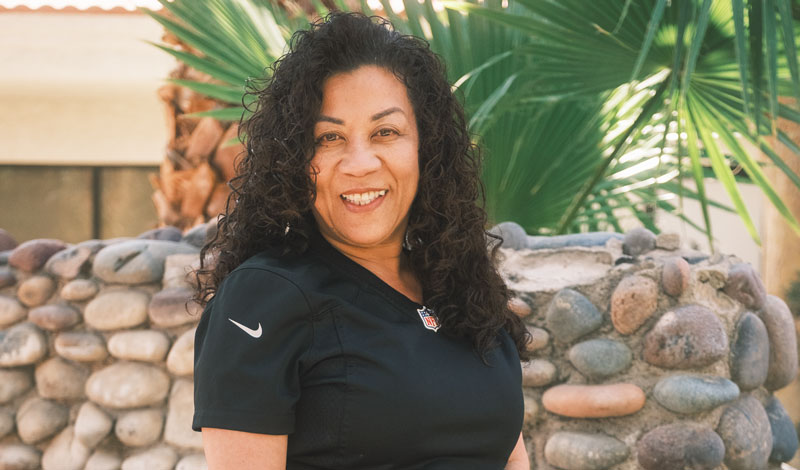
by Sandra Dunn
Las Vegas
Clearly my brother, Mark, and I had to “sort it out”—on this, our whole family agreed. But leaving the party, where the quarrel broke out, I was not even sure where to begin.
“Sort out what?” asked my husband, Jeff, on our drive home, giving voice to my own thoughts exactly. From what I had gathered from my brother’s tirade, he believed I’d taken advantage of our mother’s old age, rewriting somehow the terms she’d drawn up 50 years ago with her bank, naming Mark and I as equal beneficiaries.
A silence had been growing between us for months, since our mother’s passing on the first day of June, 2023. At first, I heard in that silence the natural course of events—a son grieving the loss of his mother. But now more than a year had passed and that silence had only grown larger. Only now did I see that it held something more than just grief. Some profound misunderstanding had reared up between us, one I had no clue how to resolve.
At home, I sat down in front of the Gohonzon to chant, feeling upset and frankly, confused. Gradually, I honed in on what actually mattered: family harmony and mutual understanding. As I prayed, however, frustrations cropped up—literally butting up against my prayer.
But! my mind cried, this is so stupid! But how can he think I’d do that? But how can we have a harmonious family, if I’m the only one trying to change? (My “buts” tend to snowball, you see.) Wanting to study, I threw open my newly arrived copy of Living Buddhism, in which I found an experience that felt as though written specifically for me. The gentleman recounts how he healed his relationship with his brother by basing himself on a vow to repay his debt of gratitude to his mother (see August 2024 Living Buddhism, pp. 17–18.) And I found that shifting my prayer in this same way made all the difference in the world.
Certainly, both my brother and I inherited many of our mother’s qualities—we’re both headstrong, ambitious and good humored. But it’s my brother’s daughter, my niece, Lisette, who got the most of my mother’s diplomatic streak, which must have rubbed off in her formative years—15 of which she lived with Mark at our parents’. It was Lisette who’d invited me to the party where my brother had chewed me out. And it was with Lisette that I’d managed to stay in contact and gradually build trust and rapport. It was from her that I heard, in May of the following year, of my nephew’s upcoming hockey game.
May was always an important month for my mother, ever since I was young. Every May she made a contribution to the SGI on my behalf, showing me by example the spirit of our May Commemorative Contribution activity. As I came of age, I made the decision to do it myself. Rousing a spirit of deep appreciation, I would challenge big, even seemingly impossible goals. Always, I saw the results.
When May of 2025 arrived, I spearheaded a campaign of one-to-one encouragement, sharing my determination to create family harmony by the end of the campaign. When my niece informed me of the upcoming hockey game, I knew it was my chance to respond to Ikeda Sensei, to show actual proof without fail.
Focusing my mind with earnest resolve, I chanted fiercely to create a break through. Slowly, my prayer moved from my head to my heart, and I was able to take responsibility—full responsibility—for completely transforming the situation. A few days out from the game, I was eager, excited and calm. The day before, I called my niece, who relayed some crushing news. “I’m so sorry,” she said, “but I forgot to say, the game is cancelled due to the Memorial Weekend.” Half of the players, it seemed, would be out of town. There was my chance at a May victory, gone. But then, quickly, I thought to ask an obvious question: When had the game been rescheduled to?
Lisette, unaware of just how much hope I’d pinned on this game, replied matter-of-factly, “Oh, June 1st.” It was the anniversary of my mother’s death. And though Lisette would not have known this, it was also the last day of the May Contribution activity.
To repay my debt of gratitude to my mother, I determined in my prayer. I did not know what I’d do when I saw my brother, but I was certain I could trust my heart.
On the day of the game, we all arrived early, to gather at the bar by the rink. As soon as I saw my brother, I rushed to him without thinking and wrapped him in my arms saying, “I miss you so much.” When he hugged me back and said, “I miss you too,” I knew that whatever trust had been lost between us, had been in that single moment restored. After the game, we began to speak once again.
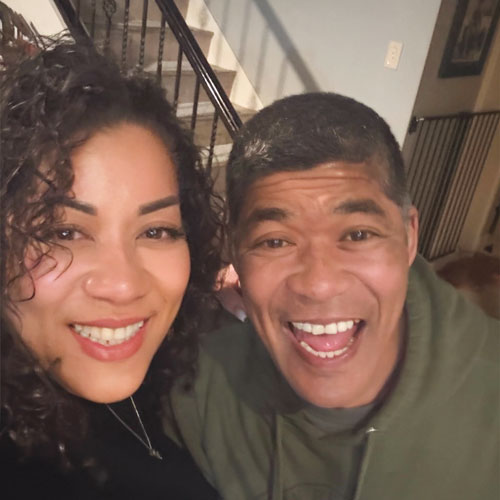
Of all my mother’s favorite traditions, perhaps her favorite was celebrating the New Year. For as long as I can remember, she’d host a family sukiyaki dinner, her favorite cuisine from her childhood. That New Year’s was our first without her, and so my niece and I teamed up to cook. As we cooked, we spoke, and as we spoke, I was reminded of just how deep an impression my mother had made on her life. She is a Buddhist and thinks like one too—in fact she has received the Gohonzon. She was asking about creating harmony with those she loves, and I told her that for me the key is to chant. “I’ve been thinking of re-enshrining the Gohonzon,” she said. “I’d like to start chanting again.” Then, as an afterthought: “But I don’t think my dad ever will.”
That night our home filled with the smell of my mom’s cooking, and of the soul food we made in tribute to my dad. As people showed up, my home grew full with the sounds of our family—with laughter, good humored teasing and jokes.
I felt my mother’s spirit alive in our home, as though she were there, quietly smiling somewhere, just around a corner.
Toward the end of the night, a great ringing was heard, startling me where I was in the kitchen. Someone was striking our altar bell with great force.
We all rushed together to follow the sound, to see what it could be about. And there was my brother, ringing the bell, to call us, it seemed, to one place.
“Let’s chant!” he boomed, surprising us all. “Three times out of respect for my mom.”
So we all faced the Gohonzon and chanted Nam-myoho-renge-kyo three times. And I found myself crying tears of appreciation for this gift—our family united—that my mom left to us to look after.
You are reading {{ meterCount }} of {{ meterMax }} free premium articles