
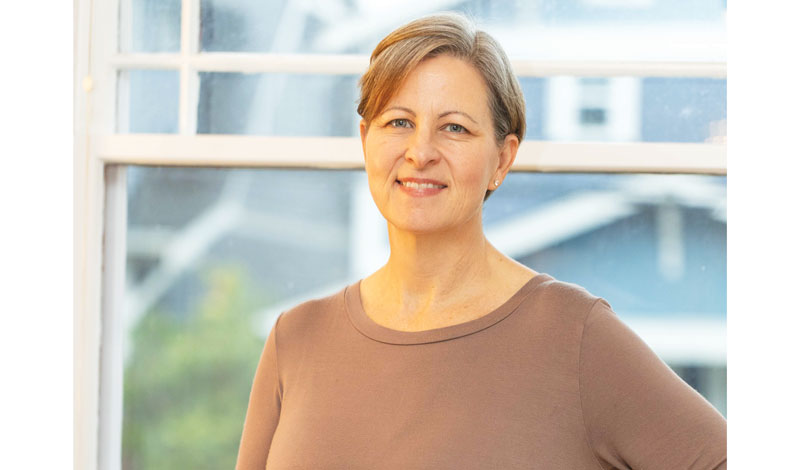
by Sheila Anderson
Seattle
There are beautiful things I recall from that time—the memorial itself, for instance. My mother, who’d been a longtime Buddhist, had asked that we all chant Nam-myoho-renge-kyo. Together, we did, family and friends, many for the very first time.
But mostly, I remember the shock and the pain—she died far sooner than expected. In 2006, at 70, she died of cancer, leaving me and my brothers grieving deeply in our different ways. When the revelations came regarding her will—this too we all handled differently.
Not one of us, we discovered, would see any inheritance—at least not for a very long time. My mother had named us remainder beneficiaries, meaning we’d receive entrustments after her husband passed away. This was hard for each of us to accept, given we were all struggling in material ways.
For me, the top issues were cost of living and housing. My husband, Kevin, and I were renting a beautiful two-bedroom apartment—beautiful and getting quickly outgrown. Our two little children, Jasmine and Thiven, would soon need their own rooms. But in Seattle, the housing market was hot—bidding wars were breaking out on every block. For years, we’d wanted to buy our own home, but this had come to feel out of reach.
Personally, I took my disappointments to the Gohonzon, chanting to perceive some faint silver lining. As I did, I saw that this was, if nothing else, an opportunity to challenge my fears. It would not be the first time I’d challenged fears around money and deepened my understanding of fortune.
I first encountered this Buddhism at 17 in Illinois, through my theater friends in my freshman year of college. For me, whose father left when I was six weeks old, whose stepfather ultimately took his own life, the community and practice I found in the SGI was the first time I felt truly supported and stable.
The changes were immediate—I felt more grounded and confident. Chanting, I found I could take a step back and consider what I truly wanted. Quickly, I realized what may have otherwise taken me years—I did not want to be an actor. Before the year was out, I’d pivoted to a more academic track, which emphasized research and literary analysis. I pursued this path as far as it went—receiving a master’s degree and a Ph.D. It was only once I’d gotten my doctorate in Seattle that I realized, actually, I didn’t want to teach theater! Chanting for a job to simply pay the rent, I found my way into a career in tech. For 25 years, I worked in that field, where I discovered, to my great surprise, that the skills I’d honed throughout my 20s were highly transferable. Storytelling, for instance, and centering empathy in the work were seen as incredibly valuable.
And yet, money worried me constantly—I’m an incredibly rational person. This is not about faith, I’d think when things were tight. It’s math—it just doesn’t add up!
When my mother died, these thoughts came online—how would we buy a house?
Each time SGI-USA contribution activities arrived, I had to challenge my fear. At some point, I realized I tended to make stability my highest priority. Of course, in Nichiren Buddhism, we devote ourselves to the Gohonzon, to the infinite potential inherent in life. This potential was not subject to budgets—it was as expansive as the universe itself. In the years that followed my mother’s passing, I chanted to prove this to myself.
Four years later, we were still living in the same two-bedroom; our kids had not grown any smaller. But the housing market, for us, was still too hot to touch. We were squirreling away every penny.
That year, 2010, the SGI-USA held Rock the Era—youth festivals throughout the country. When asked if our daughter was going, I explained that we were saving up for a house. It was a young person who’d asked, and who followed up now: Wasn’t this a faith decision? This pierced my life, and after chanting about it, we bought plane tickets—Kevin attended as Jasmine’s chaperone. They had a wonderful time, and very soon after our housing fell right into place. In quick succession we qualified for a loan and found a great home in the heart of our chapter. To this day, that’s where we live, hosting SGI meetings and welcoming friends. The victory was not only that we’d gotten a home but that I’d deepened my faith in my prayer and my causes. This was when I began to truly appreciate what it was that my mother had left me. She’d left me a lesson that was mine to learn, that no one could discover but me.
For years, I continued to learn this lesson, especially as my children grew older. By the time they were teens, I’d grown quite anxious about their college educations. I feared they’d graduate with mountains of debt that none of us could pay. Speaking with a friend I’d known since college, she told me strictly: “Nothing beats a mother’s prayer!” and pointed me toward Ikeda Sensei’s encouragement. As I engraved this conviction deep in my life, I felt my fears melting away.
Today, I’m preparing to make our final tuition payment. Our children are on track to complete their degrees without debt. They’ll step into adulthood on solid ground; they have enough to worry about as it is.
In 2019, I attended the Florida Nature and Culture Center, where I learned for the first time about SGI-USA’s Millennium Fund. As soon as I got home to Kevin, I spoke about it with him. We made the decision—very natural for us, without anxiety, just full of appreciation—to participate in this endeavor. We felt that it was our great fortune to have the freedom to support our movement this way.
Last year, nearly 20 years after my mother’s passing, her estate was finally resolved. Long before this, of course, we’d bought our home, educated our children and built solid financial security. Because we’d done all that on our own, we’d gained unshakable confidence.
At the start of this year, I returned to the arts, leaving behind a deeply satisfying, career in tech. Today, I’m on the board of trustees of Seattle Repertory Theater, writing plays and sharing my love of local theater through my blog. Returning full time to this passion I never truly left, I bring with me a deeper appreciation than ever for theater.
Recently, I’ve been writing down my “impossible goals”—there are three of them—every day. They are to see my play produced, to see my children find wonderful jobs and to introduce a young person to Buddhism by the end of this year. You may notice, as I did soon after making this a habit, that not one of these goals is about money.
To me, fortune once meant having enough to feel safe. But now, I know true fortune means much more. True fortune is the wisdom to turn difficulty into value, the freedom to pursue your mission and contribute to the happiness of others.
You are reading {{ meterCount }} of {{ meterMax }} free premium articles