
by Mitch Bogen
Special to the Tribune
Now in its sixth year, the Ikeda Center’s Global Citizens seminar series was founded to bring emerging scholars from diverse fields into dialogue across disciplines to reckon with the most pressing issues of our time.
This year’s seminar, held on June 20, was called “Becoming Human Together: Hope, Healing, and Justice.” This topic was grounded in Daisaku Ikeda’s assertion that “we are not born human in any but a biological sense; we can only learn to know ourselves and others and thus be ‘trained’ in the ways of being human.”[1]
Leading the daylong session were Jason Goulah of DePaul University and James McCarty of Boston University. The two scholars chose writings by Daisaku Ikeda and Archbishop Desmond Tutu as guiding texts for this year’s discussions. During his remarks, McCarty highlighted the idea of human revolution and how, for Daisaku Ikeda, developing our unique human identities “is a formational process” that is never settled.
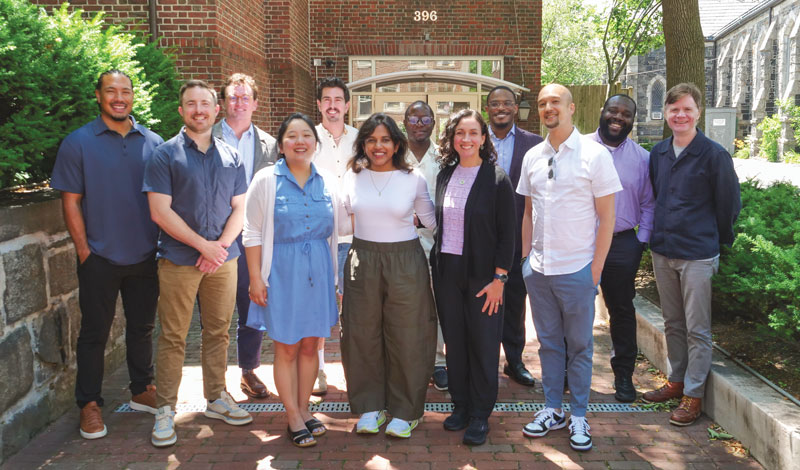
Ten doctoral students were also on hand to share their insights, representing six universities, several academic disciplines (such as theology, sociology, history, education, environmental engineering, and global governance and human security), and five countries of origin.
During the morning session, by using a personal photograph as a prompt, the scholars reflected on those formative aspects of their younger days that started them on their journeys toward their current studies and their educational, ethical and social concerns. These “origin stories” revealed that all of us possess inner lives that are complex and contain the impetus for what we hope to achieve in life.
In the afternoon, the participants engaged in rich discussions that considered topics such as how our inner development, or human revolution, relates to embracing our interdependence with all people. Related questions included how the pursuit of creative coexistence as advised by Daisaku Ikeda might be impacted by social differentials of power and other complexities of our contemporary world.
Each year, the seminar closes with the gathered scholars brainstorming a project that they can pursue together to extend the ideas and community that were sparked during the seminar. This year they considered possibilities for answering the question “What would your discipline look like if it centered humanity in its work?”
For more, visit ikedacenter.org
July 17, 2026 World Tribune, p. 4
References
- A New Way Forward, p. 32. ↩︎
You are reading {{ meterCount }} of {{ meterMax }} free premium articles