
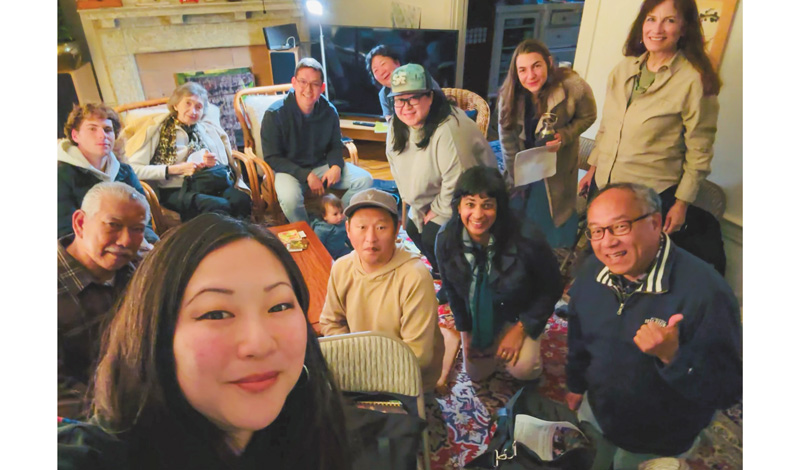
Repaying My Debt of Gratitude
Grateful for the many benefits he has experienced through Buddhist practice, Terry Cottonreader is determined to repay his debt of gratitude by befriending young people and helping them experience the power of chanting Nam-myoho-renge-kyo for themselves.
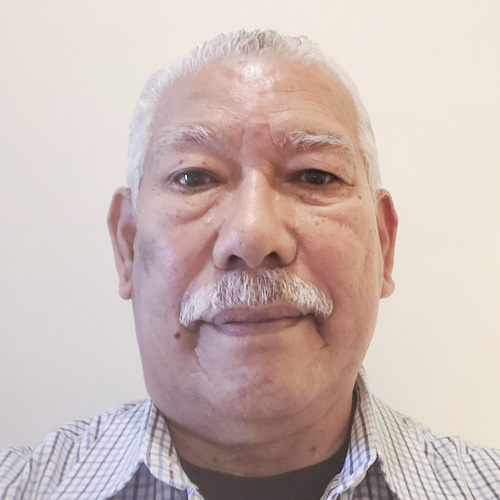
by Terry Cottonreader
San Francisco
I first encountered Buddhism when I was about 5 years old. My mother and I were living in public housing in San Francisco. She had just gotten out of the hospital with tuberculosis, and we were struggling financially. Sometimes we didn’t even have enough money for the bus.
A friend introduced my mother to this practice, explaining that through Buddhism she could transform her health and financial karma. My mom began chanting earnestly and attending discussion meetings across town.
Even when times were difficult, she never stopped sharing Buddhism with others. I remember being with her at stores or running errands when she would strike up conversations with people about chanting. Because her English wasn’t very strong, she would often introduce them to me and ask me to explain the practice. Even though I was shy, those experiences left a deep impression on me.
Over the years, I saw incredible changes in our lives. Through her practice, my mother overcame cancer five times and successfully recovered from two major heart surgeries. Also, our financial situation transformed completely.
Later, I became a police officer and served for more than 30 years. In the 1980s, while investigating a bank robbery, I was shot beneath my bulletproof vest. The bullet passed through my body but missed my pelvic bone by less than an inch. The day after that incident, I made a serious determination to deepen my faith and practice.
I’ve received so many benefits that I feel a deep desire to repay that debt of gratitude by helping others encounter Buddhism—especially young people.
But to be honest, that hasn’t always been easy for me.
I’m naturally introverted, and after decades in law enforcement, you become used to seeing the negative side of society. It can shape how you interact with people. Approaching someone I don’t know—especially a young person—and starting a conversation doesn’t come naturally to me.
So, I chanted about it.
About a year ago, a small group of men’s division members began meeting weekly to support young men and share Buddhism based on Ikeda Sensei’s guidance. Hearing everyone’s efforts inspired me to make a determination: I had to introduce a young person to Nichiren Buddhism.
Soon an opportunity appeared.
There’s a restaurant near my home where I eat often. I kept seeing the same young man there and eventually started a casual conversation while we were standing in line. Over time we spoke a few more times, and one day he asked what I had been doing. I told him I had just come from a Buddhist meeting.
That sparked his interest.
We talked more about chanting and how it had helped me throughout my life. I invited him to attend a meeting. He did—and kept coming back. Eventually, he received the Gohonzon. Even before joining the SGI-USA, he had been chanting for a better job, and not long afterward he found the job he had been hoping for.
Experiences like that encouraged me even more.
At another restaurant I frequent, I began talking with a young musician who worked there. Because I used to play music when I was younger, we connected easily. I shared some of my experiences in life and how Buddhism had supported me.
He asked if he could attend a meeting.
When I picked him up to go, he brought a friend along. Later those two friends asked if they could bring others. Before long, my car was full of young people heading to a Buddhist meeting together.
What really moves me is seeing how they respond when they arrive.
Many of them say they feel something different right away—the warmth of the members, the encouragement, the positive energy. They ask questions, participate and often want to come back again.
At 71 years old, I never imagined I would be introducing young people to Buddhism like this. But when I chant sincerely and take action, opportunities naturally appear.
My determination now is to keep supporting the young people I’ve met and continue introducing others whenever I can.
For me, it’s the best way I know to express my gratitude for this practice that has given me so much.
Transforming Into Undefeated Self
After experiencing a deep loss, Valerie finds renewed hope and mission in introducing youth to Buddhism.

by Valerie Gilbert
Seattle
I began practicing Buddhism as a young woman in 1988. Less than a year before joining the SGI-USA, my older brother suddenly passed away from an asthma attack. I deeply admired him—he was intelligent, funny and kind—and I was devastated by his death. I fell into depression and experienced passive suicidal thoughts. Although medication helped, I didn’t want to depend on medicine alone for my happiness.
Around that time, a friend invited me to a local district meeting. What I remember most is how genuinely happy everyone seemed—not only happy, but happy to see me, even though we had just met. The sound of gongyo and chanting moved me deeply. Losing my brother was the first time I had faced death so closely, and I had no framework to understand life and death. Buddhism gave me that understanding and became the foundation for my life.
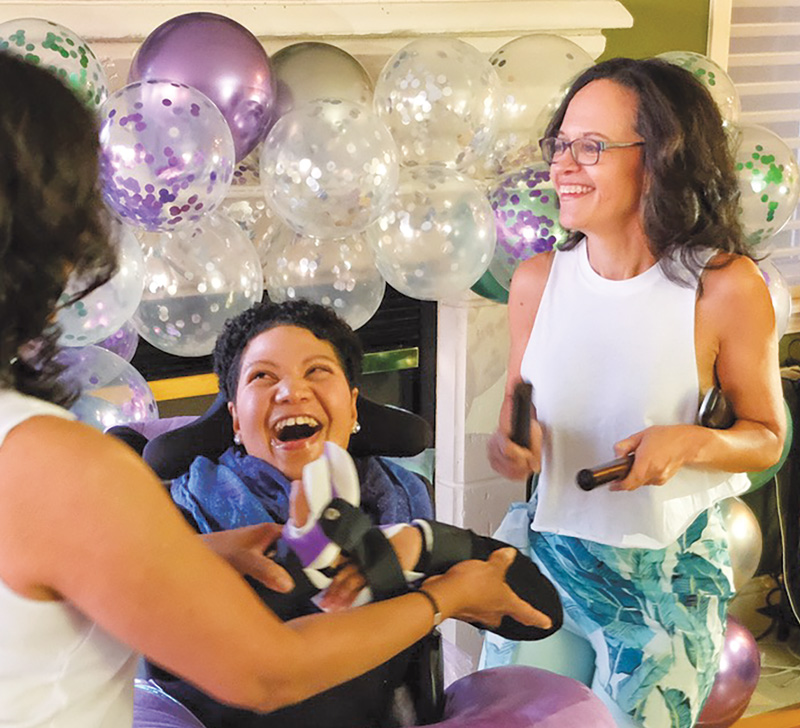
I thought I wouldn’t need to go through the pain again, until I lost my daughter, Whitney, in 2023. She was diagnosed with cerebral palsy as a child, and when she was 30 in 2020, she was admitted to the ICU.
When doctors told me she would not survive, I felt the same fear and heartbreak I had experienced when my brother died. But this time, I had faith. Studying Nichiren Daishonin’s writing “On Prolonging One’s Life Span” I came to understand that we chant not to escape death but to defeat illness, and that means to savor and appreciate every moment of life, the highs and the lows, the suffering and the joy.
As I came to this realization, I composed a haiku to Whitney. The idea came to me while I was washing dishes, and looking at the orchids in the bay window over my kitchen sink.
Let’s live as orchids,
Together, a while longer
In this saha world.
One of the reasons I like taking care of orchids is that I find them to be low maintenance, meaning they don’t need to be watered very often. People who overwater their orchids think they are making life easier for their plants, by giving them this “comfort,” so to speak; but in fact, in order to be beautiful, orchids need a little deprivation, a little hardship, if you will.
I penned that haiku in early 2020, just before the pandemic brought the world to a halt. As it turned out, Whitney accepted my invitation. She and I did live together a little longer in this saha world. We had nearly four more years together, during which time we were practically joined at the hip, and created many more beautiful memories.
For nearly 35 years, she had been my reason for getting up every morning. Still, even when my grief felt unbearable, I never felt defeated. I was filled with appreciation for her life, for our time together and for my Buddhist practice. Despite her physical challenges, Whitney was one of the happiest people I have ever known and truly showed me what it means to “experience joy in both life and death” (The Wisdom for Creating Happiness and Peace, part 1, revised edition, p. 33).
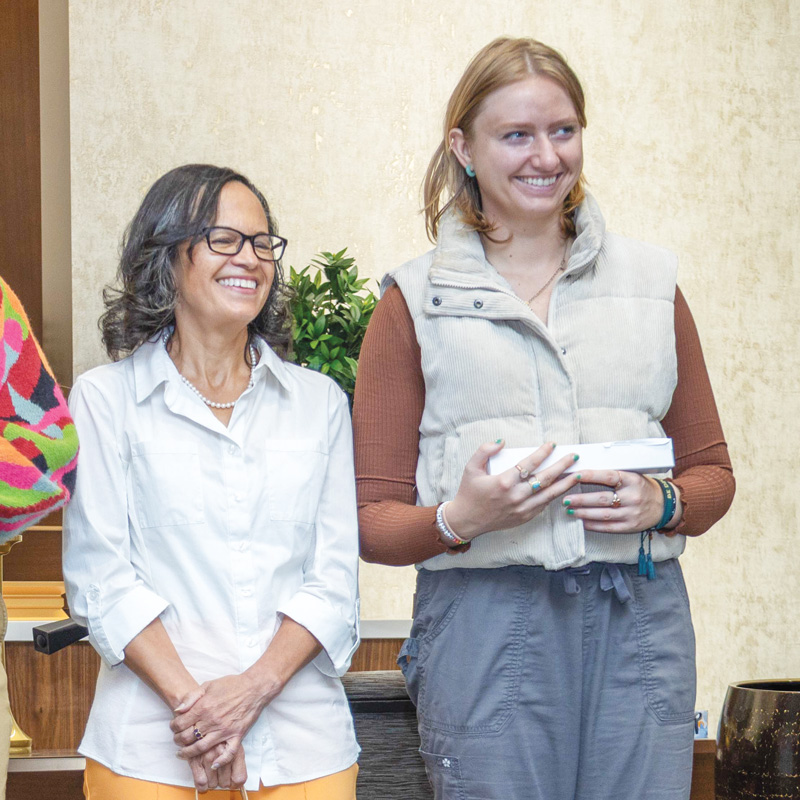
Shortly before Whitney passed away, Allison worked in our home as her caregiver, and I shared Buddhism with her. After Whitney’s passing, we lost contact. Then in 2025, I received a pink orchid with a card addressed to Whitney and me. Seeing our names together again touched my heart. The flower and card were from Allison, who wrote that she had been studying Buddhism.
When we reconnected, Allison was looking for a job, and I sensed she was also struggling internally. Remembering how Buddhism had supported me through my own suffering, I wanted her to experience that same hope. We began chanting together and I encouraged her to attend a district meeting. She started chanting about finding the right job, and within three months she found one she truly wanted. Soon after, she received the Gohonzon.
Watching her grow has brought me incredible joy. Seeing a young person gain conviction and hope reminded me why sharing Buddhism matters so much.
After everything I have experienced, I feel more strongly than ever that my mission is to help youth awaken to their own potential. I signed the peace pledge to help one youth begin practicing Buddhism this year.
As a newly appointed chapter women’s leader, I am determined, together with my co-leaders, to welcome 10 new youth to our chapter, and to advance kosen-rufu by wholeheartedly supporting and encouraging youth.
March 13, 2026 World Tribune, pp. 6–7
You are reading {{ meterCount }} of {{ meterMax }} free premium articles