
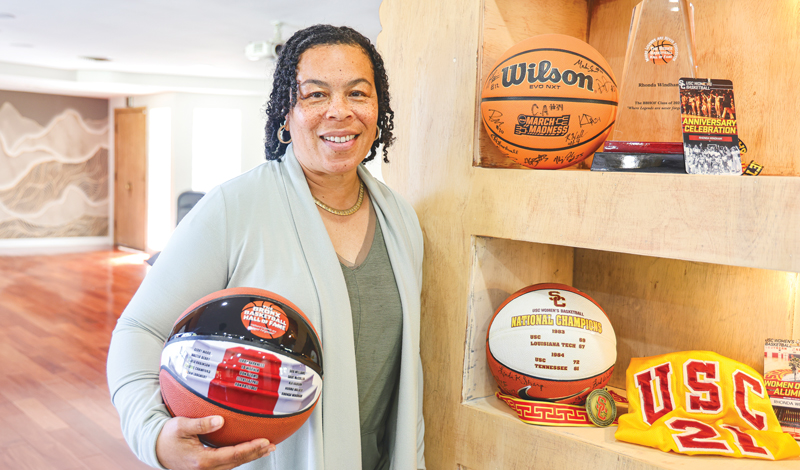
Living Buddhism: Hi Rhonda, thank you for speaking with us.
Rhonda Windham: My pleasure.
LB: Recently, you were inducted into the Bronx Basketball Hall of Fame. Congratulations!
Rhonda: Woo-hoo! Yes, it just happened in November 2025. I’ve been honored for things in the past, but this one … this one touched me differently. The Bronx is my home. Being recognized by the people who shaped me felt like my hometown saying, “Rhonda, you did good.” And I felt such gratitude. Standing there surrounded by family and friends, it wasn’t just my victory. It felt like we all made it.

LB: How did your journey in basketball begin?
Rhonda: I’m a Bronx girl through and through—the oldest of four, raised by my mom, who worked as a teacher and modeled strength every single day. She taught us the importance of education. Her motto was, “Continue to evolve to your higher self.” That spirit shaped my drive and motivation early on.
My mom was a sports lover and a huge New York Knicks fan. When the Knicks were on TV, she was yelling, “Get the ball, get the ball,” coaching from the couch. She was boisterous, and I loved experiencing that kind of interaction and engagement with the game at a young age.
There was a fabulous park near our house called Roberto Clemente State Park with an Olympic-sized swimming pool, a huge gymnasium and a basketball court where the park directors reserved a half court just for the girls. A group of us would play on that court day and night.
When I was 9, my mom sat me down and said: “Rhonda, you are the oldest. Whatever you do, your brothers and sisters are going to follow. I want you to go to college, but I can’t afford to send you so you’re going to have to get a scholarship.”
I distinctly remember going to the room I shared with my sister, sitting at the edge of the bed, staring out the window wondering, What is a scholarship? I had no idea what that was, but I knew it was something I needed to get.
That word came up again.
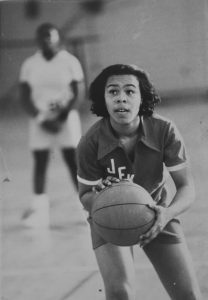
Rhonda: It did. When I was in sixth grade, the park director sat me down and said I was a talented gymnast but that being a Black athlete, I’d have a better shot at a scholarship in basketball. There was that word again, scholarship.
He told me plainly: “You need excellent grades. You need to be a good citizen. And you need to excel in basketball. Become the best.”
And that was it. I locked in. I poured everything I had into becoming the best player I could be.
Right before high school, we moved to a new place where the local high school had a strong girls’ basketball program. On the day of tryouts, my mom warmly encouraged me by saying: “Don’t worry, baby, if you don’t make the team. You’re still a freshman.” I remember stopping, looking back at her and saying, “Not make the team? I’m gonna be a starter.”
You had a lot of confidence!
Rhonda: Confidence… or arrogance. Honestly, arrogance is my default state, something I’ve learned through Buddhist practice. I had talent, but I also had a lot of pride and defensiveness, which would come up again and again in my life.
Still, I ended up making the team and starting my freshman year. I had a great high school career, and we won the city championships in my junior year. I got recruited by a hundred different schools and had many offers, but I decided on the University of Southern California (USC). It was far from home—a private school and an opportunity to grow.
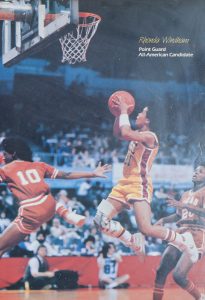
From 1982 to 1987, our USC team was legendary. Cheryl Miller and I came in as freshmen together. We won the 1983 NCAA Division I women’s basketball tournament our freshman year and kept winning. I played alongside other legends like Cynthia Cooper and Pam and Paula McGee. Those were unforgettable years.
And then?
Rhonda: After the college season ended, players often joined overseas teams. I tried out for the national team but made the junior national team instead. My attitude was terrible. Again, arrogance kicked in. I felt I should have been on the national team.
Mind, body and soul were not in full alignment, and I wound up blowing out my knee and having a devastating injury that could have resulted in leg amputation.
Fortunately, because it was during the junior national tournament, I had access to one of the best doctors. He told me with confidence that he could fix me, and he did. Fourteen months later, I was back on the court and able to finish my college career.
What did you do after college?
Rhonda: I coached in Italy for one year, then worked in public relations for the Los Angeles Lakers from 1990 to 1996. A year later, I became the first general manager for the Los Angeles Sparks in the WNBA for three years and also ran an NCAA-sanctioned, Nike-sponsored women’s summer basketball league that became the No. 1 summer league in the country. I did that for 20 years.
But after my time with the LA Sparks, I felt like, What’s next? I had really done everything I wanted to do. It was a scary feeling. I wanted to expand my life and my mind beyond just accomplishments. I was looking for meaning.
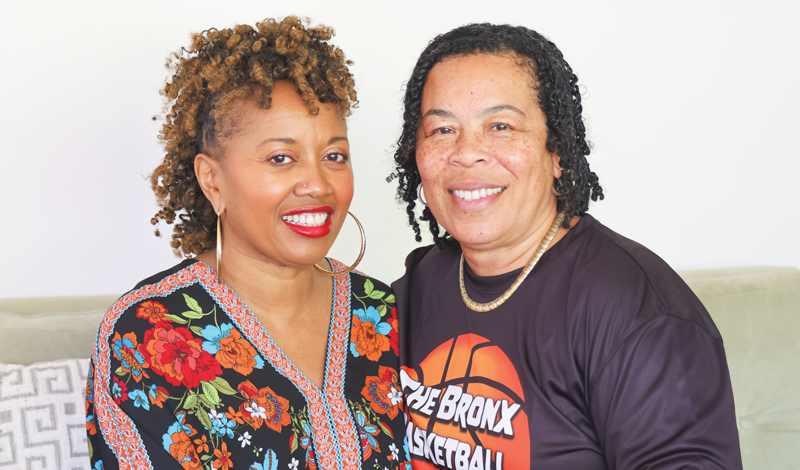
Right around this time is when I met Mira.
Tell us about Mira.
Rhonda: She changed my life.
When we met, we had an immediate connection. She told me right away that she was a Buddhist. Being a gay female, everything I learned from previous religions was that something was wrong with me. So I never felt drawn to religion.
When she invited me to a meeting, I went along. It was nothing like I had anticipated. I thought it would be quiet, dim lights, calm, but I was surprised when I walked into that district house. It was lively, full of warmth, laughter and genuine connection.
During the discussion, people spoke about the oneness of mentor and disciple relationship in Buddhism. On a superficial level, I understood because, as an athlete, I had coaches. Ikeda Sensei is like a Buddhist coach, I thought. But later on, I came to understand the deeper significance. A coach teaches skill. A mentor in Buddhism teaches you how to open, polish and strengthen your heart, something I had never been taught before.
When did you start practicing Buddhism?
Rhonda: When Mira moved to LA, we moved in together, and she started hosting SGI meetings at our place. I became a member in March 2002. But my practice was minimal. I could barely chant five minutes at a time. I came to meetings with a bad attitude: Why are they chanting so fast? Don’t they know there are new people here? It’s too long.
Then Mira told me we were going to an LGBTQ conference at the Florida Nature and Culture Center and that I needed to chant about it. I didn’t want to go, so I didn’t understand the point in chanting to go! But as they say: happy wife, happy life. So, I chanted and went. That conference was a turning point for my practice. The biggest thing that I felt was appreciation, and I left in awe of the SGI community. I left feeling, “I want to be a part of this.”
Then what happened?
Rhonda: Right after the conference, I came back to huge family drama involving my brother’s children that seemed insurmountable. I remember how members in my district really rallied around me, reassuring me that we were going to win and that I was not going to be defeated no matter what. In short, my brother won custody of his kids, which is almost unheard of. While I didn’t understand everything about Buddhism, I understood how these members made me feel: supported, protected and encouraged. That experience became the foundation of my practice.
You accomplished a lot before you began practicing Buddhism. What has been the biggest benefit of your practice?
Rhonda: I had a lot of drive and motivation to succeed, and on the outside, I appeared to have a lot of confidence. But like I said, my default life tendency was arrogance, which I later realized was really fear in disguise. I lacked courage, so I would mask my fear with pride and become defensive. I didn’t have the ability to be vulnerable, which impacted the depth of my relationships. As the oldest of four, family challenges were always the hardest for me.
Can you talk about that?
Rhonda: A couple years ago, I reached out to a senior in faith about disunity in my family. My nephew and I hadn’t spoken for over three years.
It hurt deeply, but I didn’t know how to face it. This person encouraged me to study, chant and have the courage to face all my obstacles head-on. It sounded simple enough, but actually doing this took determination and action.
I began increasing my daily daimoku, studied Buddhism more and participated more in SGI activities. I wanted to show actual proof.
In my studies, I came across this passage from Nichiren Daishonin’s writings:
Worthy persons deserve to be called so because they are not carried away by the eight winds: prosperity, decline, disgrace, honor, praise, censure, suffering, and pleasure. They are neither elated by prosperity nor grieved by decline. The heavenly gods will surely protect one who is unbending before the eight winds. But if you nurse an unreasonable grudge against your lord, they will not protect you, not for all your prayers. (“The Eight Winds,” The Writings of Nichiren Daishonin, vol. 1, p. 794)
Was I holding a grudge? The answer was yes, so I made a determination: I would take responsibility and reach out. After chanting a lot, I sent my nephew a card, then a birthday text apologizing and taking responsibility for my part in our estrangement. And he responded … with love. With us reconnecting, the entire family began to heal. I know this came from prayer but also from my willingness to change first. That was something that would have never happened before.
Having a mentor in Ikeda Sensei helped me develop something I’d never been trained in: a heart of care. He taught me how to shift from leading with pride to leading with sincerity. Instead of focusing on success, I focus on the happiness of the person in front of me. Because of this, I can say that my relationships are completely different now.
Right around the time you met Mira and started practicing Buddhism, you were looking to change direction in your career. What do you do now?
Rhonda: One day, I landed on the USC occupational therapy website, and I felt compelled to go to an info session. During this session, I started crying because it felt like a complete extension of who I am and how I wanted to help people become happy.
So, in my 40s, I went back to school and got my master’s and doctorate in occupational therapy. My expertise is in mental health, working with young people dealing with depression, anxiety and social isolation. Today, I’m a professor, and every day I chant to make a real, meaningful impact on the lives of the young people I encounter.
That’s wonderful. What are your determinations for the future?
Rhonda: As a women’s leader in the SGI, I’m determined to support those around me until they win, like my district members did for me when I was first starting out.
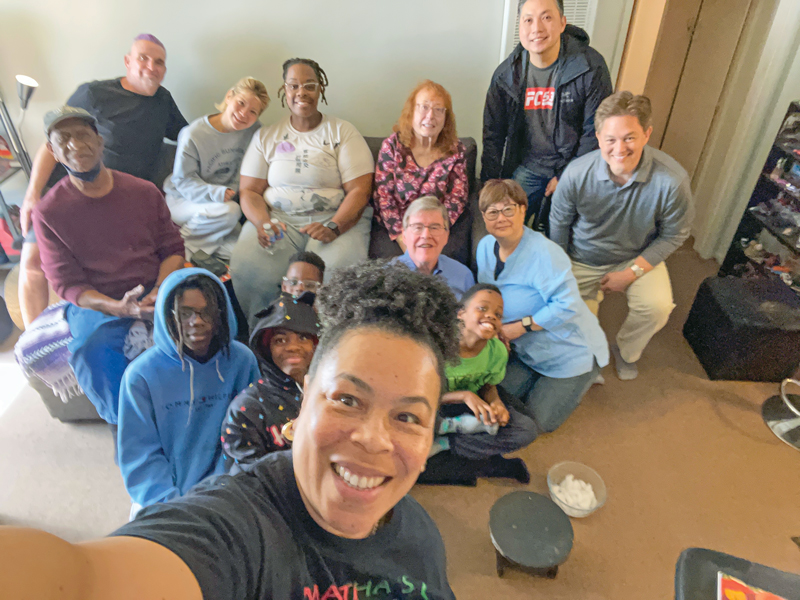
And among my neighbors, we’ve created a weekly tradition where we get together every Friday at my neighbor’s home for happy hour. Through this, we’ve created an incredible community, one in which we support one another and where I can share about my Buddhist practice very naturally. Several of my neighbors have been to meetings.
With the youth, my determination is that they feel supported and they understand the power of their life and their daimoku.
And I’m still involved with the USC women’s basketball team. You can see me courtside with my teammates cheering loudly like my mother used to do in front of the TV.
Nichiren says: “If you wish to attain Buddhahood, you have only to lower the banner of your arrogance, cast aside the staff of your anger. … Worldly fame and profit are mere baubles of your present existence, and arrogance and prejudice are ties that will fetter you in the next one” (“Embracing the Lotus Sutra,” WND-1, 58–59).
I am striving to live this way and can say that I’ve become more capable—capable not of skill but of heart.
You are reading {{ meterCount }} of {{ meterMax }} free premium articles