
On August 14, 1947, Ikeda Sensei was introduced to the philosophy of Nichiren Buddhism at a discussion meeting he attended at the invitation of friends. Ten days later, he joined the Soka Gakkai. This month, we mark 79 years since that fateful encounter.
In the following essay, Sensei discusses the spirit behind sharing Buddhism with others and his own efforts to do so as a youth. The essay was originally published in the October 7, 1998, Seikyo Shimbun, the Soka Gakkai’s daily newspaper.
Propagation is the lifeblood of religion. A religion without propagation efforts has abandoned the basic function of religion—to reach out to people and help them. Second Soka Gakkai President Josei Toda declared that the Soka Gakkai is an organization for propagating Buddhism. In doing so, he was declaring the Soka Gakkai’s mission: to spread the principles of true humanism and to realize happiness for all humankind and peace on Earth.
When I visited Soka University [in Hachioji, Tokyo,] in the autumn of last year [1997], I had an opportunity to talk at length with some of our student division members. One of them said to me, “I am having a hard time introducing Buddhism to my friends.” He was deeply troubled by this, and I was impressed by his seriousness. Here he was, worrying about how he could teach Buddhism to his friends and thereby plant the seed of happiness in their lives. What a fine, noble thing to be concerned about!
With the greatest respect for him, I encouraged him with all my heart: “Everything is hard in the beginning. This is only more true of propagating Buddhism, which Nichiren Daishonin describes in his writings as the most difficult of all difficult things.
“When I was young, my efforts were really just trial and error, but they became the foundation for future success. The important thing is to be determined, positive and optimistic, and to never stop challenging ourselves, no matter what the circumstances. Let’s be invincible optimists!”
I will never forget his face, as he nodded with a smile.
Five months later, he reported happily that he had been successful in introducing another person to Nichiren Buddhism. I was so happy to hear that; I was happy because of his sincerity.
• • •
When I look back, the first person who began to practice Nichiren Buddhism through my introduction was a teacher at an elementary school in Ota Ward. This happened just a short while after I began working at Mr. Toda’s company. Until then, I had spoken about Buddhism with several of my friends. Mr. Toda had even met with one of them and talked to him about Buddhism. But so far none had taken faith and begun to practice.
I was so frustrated that I searched very hard for the best ways to talk about Buddhism to others. I prayed wholeheartedly, and I continued to propagate the Daishonin’s teachings, each time with the firm resolve to bring one more person to this faith. I can’t begin to measure what valuable experience and training this gave me.
And how overjoyed I was when I finally was able to successfully convince someone to embrace Nichiren Buddhism! I could never describe my elation in words. I decided that I would thoroughly look after them and make sure that they triumphed in life. I had the elementary school teacher come to my home every morning, and we did gongyo and read Nichiren’s writings together before going to work. I also remember fondly how I used to stop by after work to teach my friend gongyo.
The advance of kosen-rufu lies in the repetition of such patient, painstaking efforts to awaken one friend after another to faith in Nichiren Buddhism. This is true Buddhist practice.
• • •
When Josei Toda became the second president of the Soka Gakkai and made his vow to attain a membership of 750,000 households, I pledged: “Mr. Toda is my mentor in propagation; as his disciple, I vow to become a true champion of propagation.” And having made that pledge, I threw myself wholeheartedly into this challenge, creating the groundswell for unprecedented propagation in Kamata, Bunkyo, Osaka and Yamaguchi.
I remember one discussion meeting at which all of the seven or eight young men in attendance decided to join the Soka Gakkai. I told them that Nichiren Buddhism was the only way to absolute happiness, and I earnestly assured them that I wanted them to accept those teachings only because I wanted each of them to have the best lives possible.
Such conviction and sincerity will open our friends’ hearts and make them receptive to our message.
• • •
Propagation must always take place in the context of deepening friendship and earning the trust of others. Today we live in an age in which there are superficial discussions, but true dialogue is lacking. Propagating Nichiren Buddhism, however, is a true dialogue: a stimulating exchange, based on consideration and concern for our friends, as we invite them to walk with us on the path of true and complete happiness.
Genuine Buddhist dialogue is discussing such crucial matters as the true value of life and what is right and wrong, based on our daily lives and personal experiences. This is the ultimate practice of humanism, and this is propagating Buddhism. At the same time, propagating Nichiren Buddhism, which involves teaching others the most fundamental solution to sufferings, is the ultimate act of altruism, as well as the fastest way for us to do our human revolution and break out of the shell of our own ego.
• • •
Those who propagate Buddhism are the true disciples of Nichiren Daishonin, those who have inherited his spirit. Nikko Shonin praised all who courageously propagated Nichiren’s teachings, declaring: “You should revere a teacher of the Law who engages in its propagation as a sacred priest, even though he may be your junior” (“Twenty-six Admonitions,” Gosho zenshu, new edition, p. 2196 [Gosho zenshu, p. 1618]). And the benefits attained by those who propagate the Law are boundless and immeasurable.
Out of our single-minded concern for the happiness of others and our ardent desire to attain world peace, we have held high the banner of kosen-rufu and continued to shed the compassionate light of Buddhism throughout the world, undeterred by slander or abuse. This is the proud and noble history of the Soka Gakkai.
• • •
In the “Song of Indomitable Dignity,” there are the lines:
Today and again tomorrow
as our march of propagation progresses
our hearts, too, burn ever brighter
How true. Here, unbeaten by any trials or tribulations, lies the pulse of momentous vitality, the source of supreme joy.
Today once more, our great and lofty dialogue to propagate Nichiren Buddhism rings through the clear autumn sky.
The Joy of Helping Others Realize True Happiness
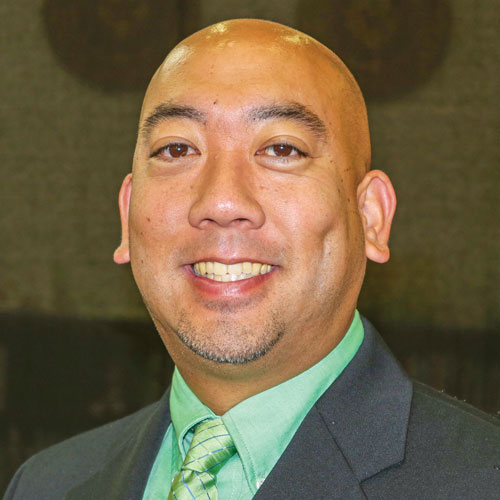
Name: Andy Utsumi // City: Arlington, Texas
Living Buddhism: Thank you, Andy, for telling us about your efforts to introduce others to Buddhism. You recently helped a former student, someone you had built a bond of trust with over many years, begin practicing. Can you tell us about that?
Andy Utsumi: I’ve been an educator for 25 years, and I’ve always tried to keep an open line of communication with my students. As an educator, I write down the names of each student in my class and chant for their happiness. I pray that they become great individuals who contribute to society, make a difference and live out their dreams. I never specifically chant for them to join the SGI; I simply chant for their absolute happiness.
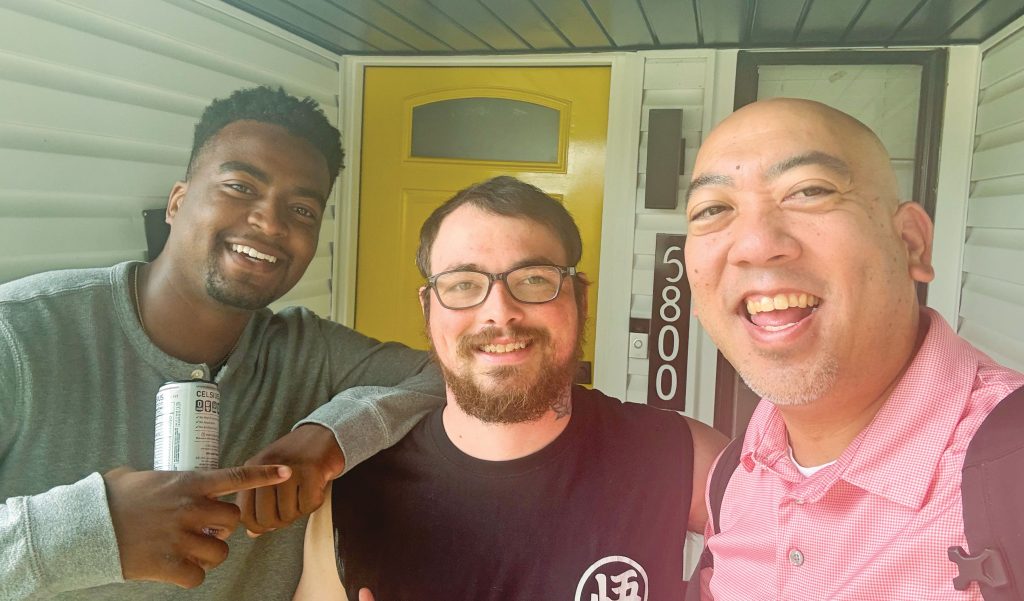
In 2006, when I was teaching fourth grade, I met Isiah. Over the past 20 years, we’ve stayed in touch. In February 2020, we met up, and I introduced him to Nichiren Buddhism. I also gifted him a subscription to the World Tribune and Living Buddhism. Then, in October 2025, he texted me and asked if we could talk. When we spoke, he told me that I was one of the most influential teachers in his life and he wanted to learn more about our philosophy.
That’s incredible. What happened from there?
Andy: He really opened the door for me to share more, without me prompting it, so I did. Soon after, he attended a young men’s division activity and several discussion meetings. He made new friends and told me he felt very comfortable.
Because I live several hours away from him, the members in his district and region really embraced and supported him. Then, on February 22, 2026, he received the Gohonzon at his district discussion meeting.
He is still facing challenges, but it has been wonderful to see the benefits he is receiving through his Buddhist practice.
That’s really wonderful. Have you always been comfortable sharing Buddhism with others?
Andy: Definitely not. I was born into a family that practices Buddhism, but growing up I was very introverted and didn’t want to feel different, so I rarely told people.
Since I was 12, my dream was to become an educator. But during my first teaching job, I was suffering deeply. Even though I was living my dream as a teacher, I felt like something was missing.
At that time, I was living in Arizona, so I reached out to the local SGI organization, connected with a district and began applying my Buddhist practice more seriously in my daily life. From that point on, my life took off.
That first year, after I began chanting consistently, my goal was to win the Rookie of the Year award for my school district, and I did. I went from struggling intensely to receiving that award. It was my first clear experience of actual proof through the practice.
Since then, I’ve wanted to do whatever I can to support the organization and help others experience the benefit of Buddhist practice.
What about now? How do you approach sharing Buddhism today?
Andy: I’m still shy, and I can still feel nervous about sharing Buddhism. Sometimes I worry about how the other person will respond. But I’ve learned that I just have to overcome that fear, open my heart and share sincerely.
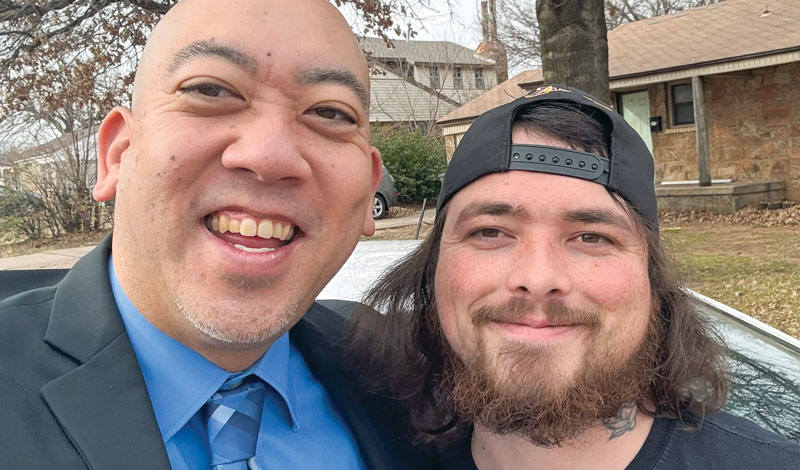
Recently, a former teacher asked me for a ride. During the drive, she opened up about the challenges her family is facing. Naturally, I shared Buddhism with her. Then, my wife and I went to lunch with her so we could get to know her better and encourage her.
It is truly joyful to help someone challenge their situation through Buddhism. I feel that same joy every time I speak with Isiah and encourage him to chant. There is no greater way for us to break through in our own lives than by helping others realize true happiness.
It seems that in both examples, these were people you had built relationships with over time. They reached out to you, perhaps because they trusted you.
Andy: Yes, that’s true. Ikeda Sensei says, “Propagation must always take place in the context of deepening friendship and earning the trust of others” (see p. 23).
That really resonates with me. Trust is built over time, through how we live, how we treat people and how sincerely we care about their happiness.
Why do you do shakubuku?
Andy: I do shakubuku because I see suffering every day, whether it’s in the news, in my community or in the lives of the people around me. There is so much suffering in the world, and I know that sharing Buddhism is the most powerful way I can help transform it.
This practice has transformed my life, and I want that for everyone in my environment. Through doing shakubuku, I feel that my own life has grown tremendously. I have become less consumed by my own challenges and more focused on encouraging others.
I feel it is my responsibility to encourage one person after another to pursue their goals and dreams through this practice.
What is your determination for the future?
Andy: My determination is to fight with everything I have toward the goal of introducing 10,000 youth by January 2, 2028. I am determined that we will achieve this goal, for the sake of the world, no matter what.
I am also determined to build the happiest family together with my wife, my sons and my extended family and to continue helping as many people as possible discover the power of this practice in their own lives.
‘Sincerity Matters More Than Perfection’

Name: Taylor Blourne // City: Denver
Living Buddhism: Thank you for speaking with us, Taylor. Could you tell us how you began practicing Buddhism?
Taylor Blourne: Sure. I was really unhappy, dealing with a toxic work environment and stressed out all the time when a college friend invited me to an SGI intro-to-Buddhism meeting. I was intrigued, so I went.
At the meeting, I shared what I was going through, and a women’s leader congratulated me. I was shocked! But then she explained that life had given me challenges because I was going to overcome them, and one day I’d look back and see how much I had grown. I’d never heard that perspective before.
At first, I didn’t know how I felt about chanting Nam-myoho-renge-kyo, so I just studied and attended meetings. My friend and her mom accepted me exactly where I was. Then, right before COVID-19, I decided to really give it a shot and start chanting consistently. From there, I began seeing many benefits and those experiences helped me latch on to faith.
I received the Gohonzon in June 2022 in Tampa Bay, Florida, as soon as the centers opened after COVID, then moved to Denver the next month. The members of Denver have really supported my growth in faith.
Was sharing Buddhism natural for you from the beginning?
Taylor: Not at all. Shakubuku was intimidating. I’m a perfectionist, so I worried about saying the right thing, offending someone or risking a friendship. If Buddhism didn’t come up naturally, I wouldn’t bring it up.
Over the last year and a half, my understanding has changed. I started studying more and really taking in the idea that “faith equals daily life.” My Buddhist practice became more a part of my identity. For example, having conversations with people about what I’m doing on the weekend naturally leads to telling others that I’m Buddhist.
I also began to understand that my friend had shared Buddhism with me because of her deep compassion. Shakubuku is rooted in friendship. It’s not just about planting a seed and leaving people alone, but about cultivating friendship and showing genuine care.
You recently introduced your friend to Buddhism. How did that happen?
Taylor: It happened in the most unexpected place—at Denver Punk in the Park, a big punk rock festival! There was a rain delay, so my boyfriend, his best friend Kelly and I were sitting in the car waiting. I joked with my boyfriend about his parents wanting to meet “the Buddhist girl,” and Kelly became curious. I shared about Nam-myoho-renge-kyo and how it helped me through difficult times. It was such a natural conversation. I didn’t expect anything to come from it. A few weeks later though, she reached out and asked if there was a way she could start chanting or attending meetings.
She ended up coming to an SGI meeting and deeply connected with our community. She received the Gohonzon in December last year. Watching her grow has been one of the best parts in all of this. She seems so much happier and even joined the Ikeda Youth Ensemble as a bass player. I feel like her cheerleader saying, “Go, Kelly, go!” What’s beautiful is that we still have a great friendship aside from our Buddhist practice.

How has sharing Buddhism changed you?
Taylor: Nichiren Daishonin says: “If one lights a fire [lantern] for others, one will brighten one’s own way” (“On the Three Virtues of Food,” The Writings of Nichiren Daishonin, vol. 2, p. 1060). The more I share Buddhism with others, the more benefits I feel that I receive. The biggest benefit is that I feel empowered to be myself for the first time in my life.
Growing up, I felt like I had to act a certain way to be accepted, and I often felt like the black sheep of my family. But through my Buddhist practice I feel like I no longer have to wear a mask, and I can confidently lean into my own identity.
What advice would you give someone who struggles to share Buddhism?
Taylor: I think about how different my life would be if one person hadn’t had the courage to invite me to a Buddhist meeting. That one interaction changed everything.
You don’t need the perfect words. When you genuinely care about someone, they feel that. This guidance from Ikeda Sensei really encouraged me:
It’s important to show actual proof of faith in one’s daily life. But that doesn’t mean that you should pretend to be something that you’re not. It’s perfectly fine for you to speak about Buddhism from the heart, in your own words, in a very natural way, just as you are. The purpose of faith is not to make yourself look good in the eyes of others. To have compassion for others means sincerely praying and working for others’ happiness, no matter how they may regard you. (The Wisdom for Creating Happiness and Peace, part 2, p. 276)
We don’t have to fit a mold or be a certain way to share Buddhism. Sincerity matters more than perfection.
What is your determination for the future?
Taylor: I want to help create a community where every young person in Denver feels welcomed, valued and free to be themselves, just like I found with the SGI. Just as someone shared this Buddhism with me and helped me discover hope and confidence that I never thought I would have, I want to create that same welcoming
environment for others.
A Door Into a Whole New Part of Life

Name: Kelly Winn // City: Denver
A little over a year ago, I started having what I can only describe as a spiritual awakening. I had just gone through some significant trauma, and at first,
I thought surviving it would be the hard part. But I quickly realized that healing was going to be its own uphill battle.
As I worked through PTSD and tried to restabilize my life, I began sensing that there was something greater than just existing. As a scientist, I have always approached things from a data-driven perspective, but I couldn’t ignore what I was feeling.
I had started researching different spiritual paths when I met Taylor. I knew she was a Buddhist so I reached out to ask if I could learn more. She invited me to a Buddhist meeting that night.
At first, I felt overwhelmed by the idea of going to a meeting based on a surface-level interest. But I asked myself, Is this out of my comfort zone because I’m scared, or because it will lead to growth? I realized it was the uncomfortable growth type, and I decided to push myself to go.
When I arrived, I was struck by the warmth and positivity in the room. The way everyone spoke about their Buddhist practice was so inspiring, and I remember thinking, One day, I want to be able to talk about this like they do.
Since then, I’ve been chanting and attending meetings, and I received the Gohonzon in December 2025. I still feel like I’m only scratching the surface of the teachings, but every time I go to an activity, I learn something that makes me want to come back. Buddhism has helped me look at my life and my challenges from a new perspective.
At first, chanting Nam-myoho-renge-kyo every day felt a little like a chore. Now, it has become a grounding ritual I look forward to at the beginning and end of each day.
I feel pride in talking to people about my Buddhist practice. I feel like no matter who I’m talking to or what social circle they’re in, it’s something I can bring up and people are generally open to hearing about it.
I’m still learning and easing my way into the practice, but I’m grateful Taylor invited me to that first meeting. It was a tiny door I walked through into a whole new part of my life.
You are reading {{ meterCount }} of {{ meterMax }} free premium articles