
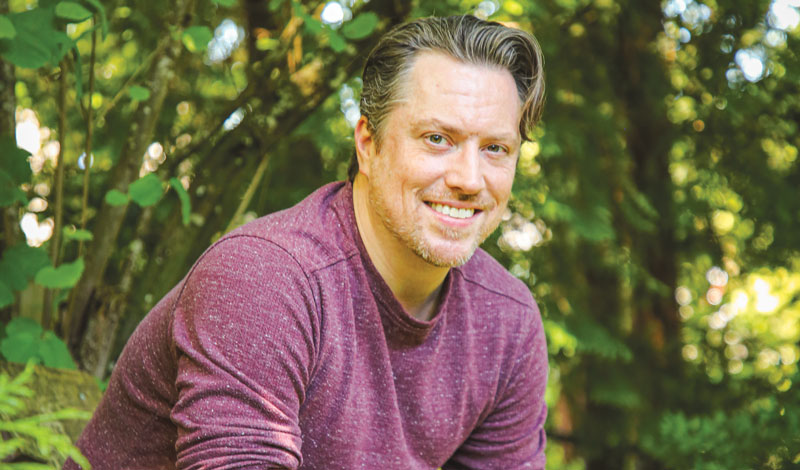
by Erick Rappaport
Portland, Ore.
I kept checking my phone for any cell service—for even a little to break through the dense trees. But my bars were as flat as they’d been that whole week, which left me alone with my thoughts. The U-Haul bumped along the uneven road, over the sound of my hammering heart.
My husband, Mike, and I had spent a week in these woods, which might have made for a relaxing vacation. We hadn’t come to relax, though; we’d come on a mission—to meet the two brothers we were bringing into our care, at their foster home in a small forest town. We’d driven separately so that Mike could drive them home, followed by me in the U-Haul with their things. This was what was happening now, and the reason I felt ready to burst. The past week had surfaced every feeling I’d ever felt in my life. I called my mom the moment I cleared the forest’s edge.
Listening and validating all that I felt—elation, exhaustion, fear and awe—my mother then said: “You have the Gohonzon. You’ll use it for a new purpose now. For them, you have to meet the moment.”
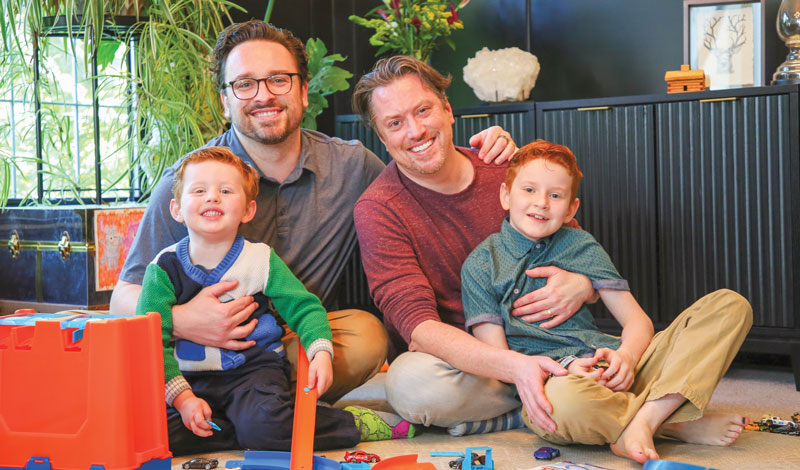
At home that night, these words rang in my mind, as I watched my dogs watching the boys. Conor, age 7, shot about like a rocket, while 2-year-old Elliott tried to keep up. And the dogs, wide-eyed, panting and anxious, looked exactly the way that I felt. I’d prepared for this, I reminded myself, but saw suddenly that I had embarked, with no turning back, on my greatest journey of human revolution yet.
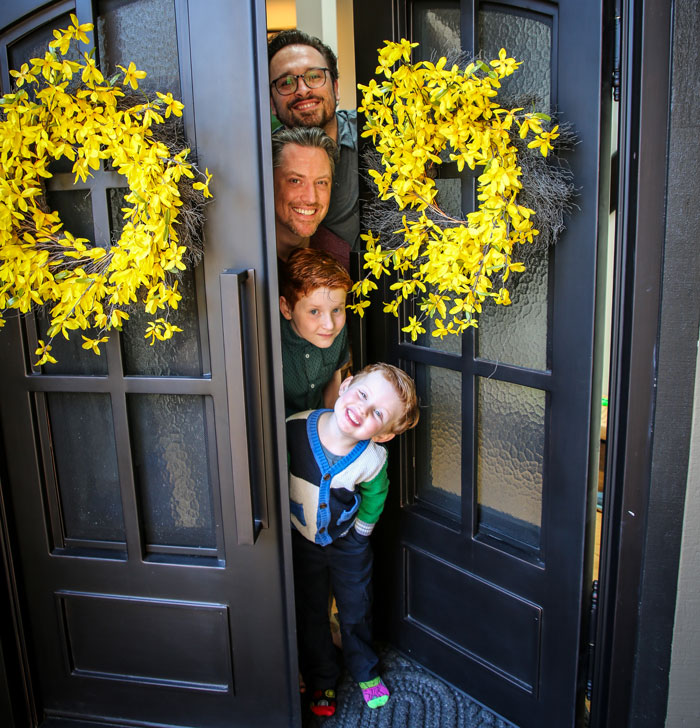
Four years earlier, in 2020, Mike and I moved to Portland, where our situation was, for the first time, truly comfortable. We soon began to consider what had always felt out of reach—we began looking into adoptions. We were warned that the process could take years and then prove utterly fickle, derailing at the last minute. The message was clear: Guard against hope. But as a Buddhist, that was just not my way.
As I chanted Nam-myoho-renge-kyo, I began to feel certain our outcome would be the best. And in fact, when we applied to adopt Conor and Elliott—whose smiles we felt strongly drawn to even before we met—the process moved forward so fast that even our social worker was taken aback.
We’d been selected, she told us, to foster these boys, but this did not yet mean that we were their legal parents. That final step, she warned, could take well over a year. But by then we had already been preparing for months to take them into our care. We’d completed trauma-response trainings and a course, for Conor, on Type 1 diabetic care. We felt “ready,” but as any parent will tell you, no parent ever was or ever is.
The reality was that we were rearing two boys with developed personalities, getting to know them while they got to know us. Moreover, our boys had experienced certain things and had needs requiring immediate attention. But because these needs had gone unreported, and because we couldn’t make certain decisions without state approval, our pleas for help got caught up in bureaucracy. I told myself it was just as Nichiren Daishonin had said: “Iron, when heated in the flames and pounded, becomes a fine sword” (“Letter from Sado,” The Writings of Nichiren Daishonin, vol. 1, p. 303). But often I felt we were battling this on our own.
I found myself chanting as I hadn’t in years, fiercely, morning and evening, to the Gohonzon. In fact, I found myself chanting all of the time—during Elliott’s meltdowns and on raucous drives to school.
I reached out to my Soka community, connecting in a way I hadn’t since moving to Portland. We began attending Soka Family Days and kosen-rufu gongyo meetings, which Conor absolutely loved. He’s a social guy and loves making new friends, but I was surprised by how keenly he listened. On our drives home, we’d talk about Buddhist ideas, the ones he was left thinking about. We talked about the karmic bonds that connect us with those in our lives; how the causes we’ve made in our past and present lives are what bring people together as friends, community and family.
One day that winter, I woke up early, before the sun had risen, and found Conor downstairs in front of the Gohonzon, chanting quietly. When I asked him what he’d been chanting about, he told me it was for the happiness of others. For a kid who’d had so little control of his life, who’d experienced more than many do in a lifetime, here was something he could give that left him empowered—a prayer for the happiness of those he loved.
Each day still brought new challenges, but now Conor would come sit in my lap while I chanted, listening at times, at others joining in. On the drive to school, the boys would still shout at the top of their lungs, but now they were belting out Nam-myoho-renge-kyo together with me. As Mike and I fought to get the care that we needed, I began to feel we were fighting—yes, still fighting our way through—but now together as a family, united.
At six months, we finally got the care that we needed, after advocating with the ferocity of lions for their cubs. And three months later—far sooner than expected—the court deemed their adoptions final. But we knew already by then, without having to be told: we were family through and through.
More than anything, I learned what family means. It means to not give up on another person. Supporting someone, I found, does not mean meeting halfway, because sometimes they cannot meet you there. Sometimes, they cannot meet you even one inch from where they stand, which is right where you’ve got to meet them. It means, from there, taking even one step together with them.
Ikeda Sensei writes in Discussions on Youth: “Life is about scaling one mountain, then facing the next one, and the one after that. Those who persevere and finally succeed in conquering the highest mountain are victors in life” (new edition, p. 11).
With the deepest appreciation, I’m scaling mountains I never knew I could climb, with my children climbing right alongside me.
You are reading {{ meterCount }} of {{ meterMax }} free premium articles