
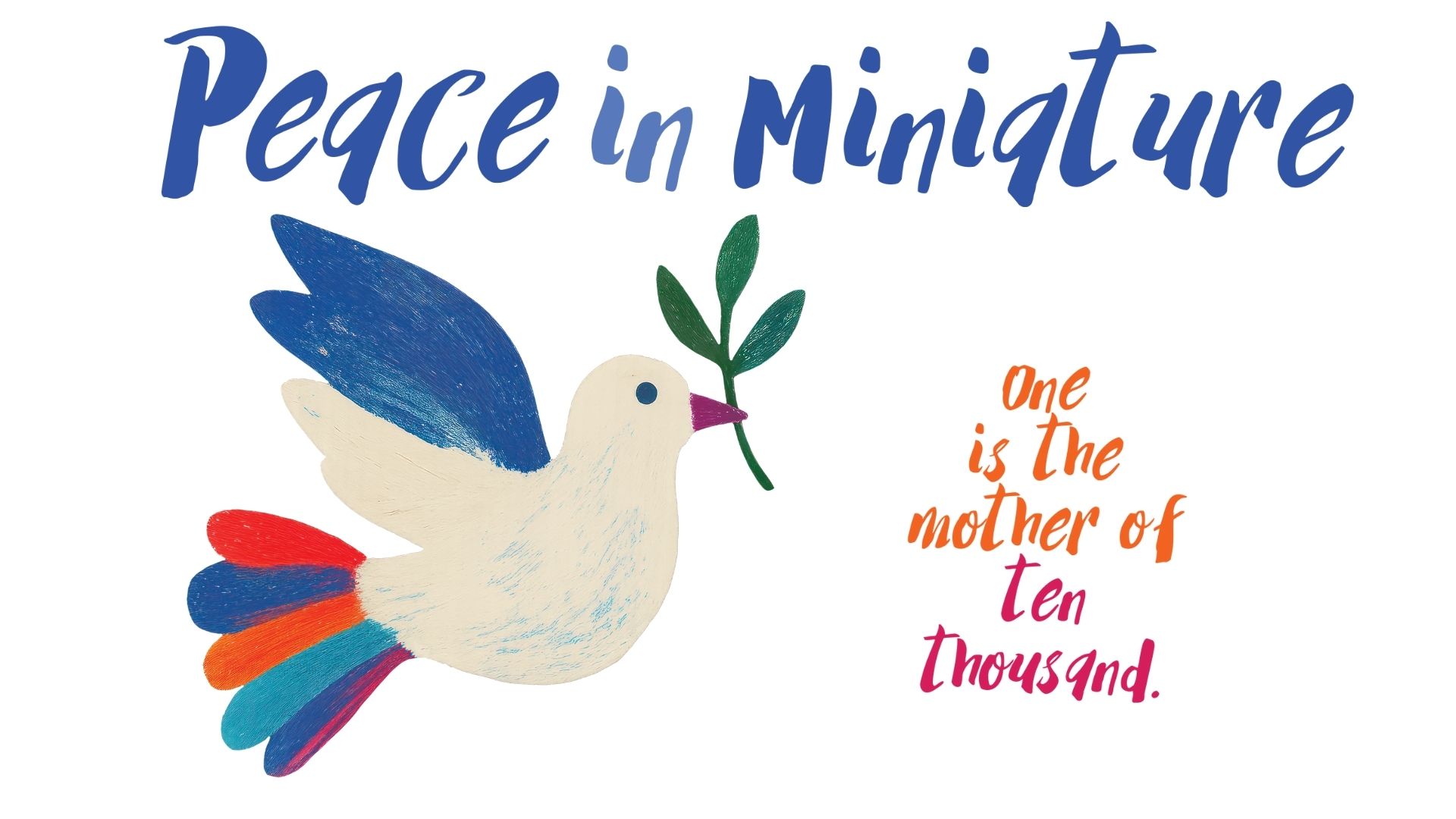
Is it possible to create peace with a single dialogue?
This is the bold challenge that the SGI-USA women and young women took on in October with the launch of their joint dialogue campaign “Peace in Miniature: One is the mother of ten thousand.”[1]
At a time when it’s difficult to watch the news each day and far too easy to be pulled under by the state of our world, “Peace in Miniature” empowers each of us to proactively engage in heartfelt, one-to-one dialogues with our friends, neighbors and one another, with the conviction that in doing so, we can create peace where we stand.
The women and young women responded by stirring up a groundswell of dialogue based on these principles:
- The greatest change starts at the smallest unit of communication, from the ground up.
- The scale of the dialogue is not as important as enabling others to openly and honestly convey what’s in their hearts.
- When we create a space for another person to be heard, they can refresh their fighting spirit and transform their destiny.
- What we do now will turn the tide toward 2030 in creating a century of humanity and peace in our country.
Those engaging in these peace talks have experienced deeper meaning in their daily interactions and more conviction in their mission as Bodhisattvas of the Earth, who are here to create lasting peace.
Ikeda Sensei shared what’s possible when the unbreakable alloy of women and young women work together, demonstrating a combined strength far greater than what either could have achieved alone. He continues:
We are living in a turbulent age. Separate, we are weak. Those who can join together like a powerful alloy will triumph.[2]
In the following interviews, three women share what these peace talks mean to them.
What Peace in Miniature Means to Me
‘There Is Always Something We Can Do’
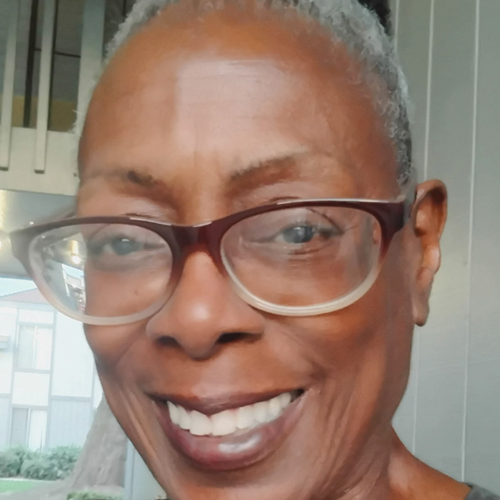
Name: Elyse Redden // City: Merced, California
Living Buddhism: How did you begin practicing Buddhism?
Elyse Redden: I started practicing Buddhism with the SGI when I was in my early 20s, stationed in Japan as active-duty Air Force. I was going through a lot of struggles. My mother passed away when I was 9 years old, and my father raised me. I always felt that there was something more to life than I knew. One summer, I met a Japanese woman who came to my apartment building by mistake. I invited her in, and that’s how I learned about Nichiren Buddhism. One thing that struck me was that I could pray for my mother and brother, who had passed away. I always knew that there was something more to my story.
You’ve been engaging in peace talks. What did you think when you first heard about the dialogue campaign?
Elyse: I thought it is such a crucial movement that we can challenge every day. I have already been engaging in dialogue, but it gave me the impetus and determination to be more proactive and to be more creative in ways to connect with others. We want to build relationships, but the question is how we get there. I was determined to do so by sharing stories and finding common ground.
Are there experiences that stand out for you from these dialogues?
Elyse: Yes, I recently met a woman at a clinic for veterans that we both support. I approached her out of the desire to get to know her and build friendship. It was challenging in the beginning. She’s older than me and was closed off. But as we got to know each other better, I believe I was able to go beyond the surface and reach her heart. We met a few more times after that. It was a great victory for me. I continue to build friendships.

What are you learning through engaging others in this way?
Elyse: I truly enjoy talking with others, but one of the things that I’m learning is how to listen. When we listen to another person’s stories, we can find how our own story connects with theirs. I have a lot of stories that I can share, and to me, the key is how we can use them to help other people. I think that is what living as a Buddhist in today’s world really means. We are living in challenging times, but I think that our three founding presidents of the Soka Gakkai prepared us for this time.
Another thing I learned is that even though I feel that I have common ground with a person, I still need to really learn, listen and see what is in their heart. In this way, I can find different avenues to have meaningful dialogue. There is always something we can do to make a difference.
Deeper Connections, All for Peace
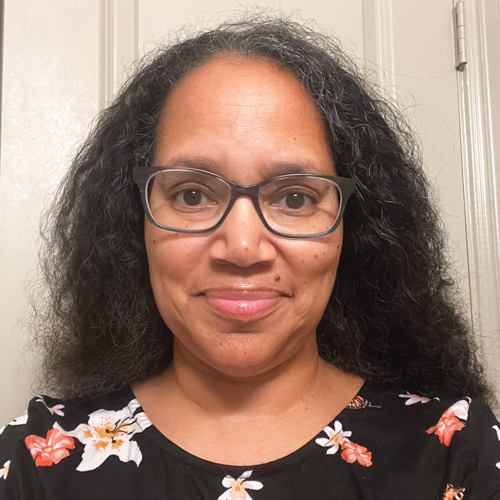
Name: Janette Gaudiesus // City: Georgetown, Texas
Living Buddhism: Recently, you’ve been engaging in peace talks. How did you feel when you first heard about the Peace in Miniature campaign?
Janette Gaudiesus:
I was really excited when I first heard about it. It has a catchy name, but more than that, it immediately resonated with me. At first, I thought it sounded a bit like home visits, but then I realized it went deeper than that, especially because of the emphasis on peace.
To me, it felt like an invitation to have more meaningful conversations, not just surface-level interactions like “How’s it going?” but real dialogue. I imagined deeper connections where people could genuinely open up, and that really inspired me.
Did that change the way you approached your interactions with people?
Janette: Yes. I started chanting about it, especially because I wanted other women to feel excited too. I realized that if I wasn’t excited and embodying it myself, it wouldn’t come across authentically. It also changed how I approach everyday encounters. Sometimes, when talking to someone, like a stranger in a store, I’d be thinking, I should give them a Nam-myoho-renge-kyo card. But now, it’s not just about that. It’s about truly getting to know them, having a deeper exchange and then sharing Buddhism naturally from that connection.
Is there an experience that stands out for you from these dialogues?
Janette: Yes. I met a young woman at an introductory meeting on a university campus in my town. After the meeting, we talked, and she was really struck by the idea that in Buddhism, you don’t have to change who you are. That stayed with me, because it’s something I’m so used to in the practice, but for her, it was eye opening. We continued talking over the next few weeks about her dreams and her future.
A few weeks after we met, she left me a long voice message after returning from a conference she attended. She shared everything—her excitement, her experiences. I remember thinking, I’ve only known her a short time, but there’s already trust here. That connection showed me the power of consistent, sincere dialogue.
What are you learning through engaging in this way?
Janette: I’ve realized that even though dialogue isn’t the norm in society, people really do want to connect. They just don’t always know how. When someone truly listens, it creates space for a genuine bond to form. For example, I was at the store the other day, and I was asking the cashier questions. She seemed surprised that I wanted to get to know her. I also work at a school, and there are many times I feel that if only the student had a safe person to talk to, it would change things dramatically for them.
For me, there’s a greater sense of urgency now. I feel more responsible to reach out, especially to young people, and have these peace dialogues. It feels like each interaction matters, like it might be the one chance to give someone hope.
What I appreciate most is that this doesn’t feel like a short-term campaign. It feels natural, relaxed and lasting, something we can continue doing forever. To me, that is what makes it so powerful.
One Meaningful Connection at a Time
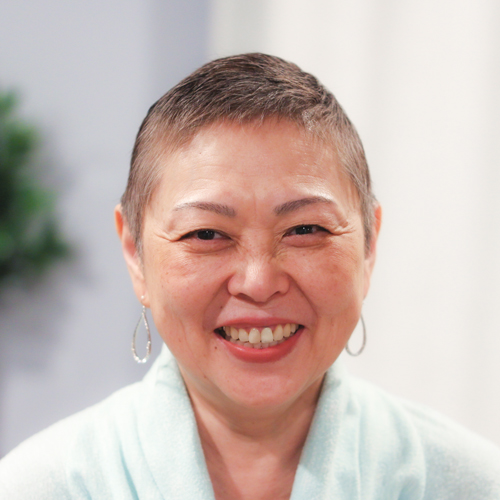
Name: May Feeser // City: Marietta, Georgia
Living Buddhism: What does having a “peace talk” mean to you?
May Feeser: My understanding of creating deeper connections through dialogue changed when I was diagnosed last April with stage 3 lymphoma, a blood cancer.
At first, I had doubts about whether I could overcome this life-or-death battle. As I read Sensei’s guidance and continued chanting, my life state shifted. Once I decided to win with faith, I made 50 little gift bags that had a lion mascot (which I nicknamed the “courageous lion”) and a Nam-myoho-renge-kyo card. I carried them with me to the hospital when I went in for treatment.
At times, the medication made me so drowsy that I couldn’t speak. Instead, I gave the little gift bags to everyone on the medical team overseeing my treatment. That small gesture became an opening for me to continue holding dialogues with them the next time I saw them.
What did you learn from these dialogues?
May: Since my determination was genuinely from my heart, the conditions naturally opened up for me to talk with others. I went to many different places in the hospital for treatment, and I got to interact with many people.
I also saw immediate benefit. To my surprise, nurses started fighting over who would take care of me! That really made me feel that I was in the safest place possible to receive treatment.
One dialogue I had with my oncology doctor was memorable. The first time we met, we spoke for more than an hour. When I shared that I am Buddhist, she said that she had always wanted to know about Buddhism. We talked about human rights, the inherent dignity of human beings and so on. When I asked her if I could invite her to an SGI activity, she shared her contact information with me. I found out later that, since she is quite busy, we only had 30 minutes allotted for our visit. We continue to build on our connections to this day.

How is your health now?
May: In September, after eight cycles of chemotherapy, my doctor declared me in complete remission! In October, I returned to both work and the gym. In December, I attended a women’s conference at the Florida Nature and Culture Center, where I shared my experience. I am fully back to SGI activities stronger than ever.
The Japanese word for mission means to use one’s life. How am I going to use the remainder of my life? I cannot save the world, but I can transform the world around me by first changing myself, one meaningful connection at a time.
You are reading {{ meterCount }} of {{ meterMax }} free premium articles