
This series, prepared by the SGI-USA Study Department, features timeless stories in Nichiren Daishonin’s writings (also called the Gosho) that continue to offer practical wisdom for us today.
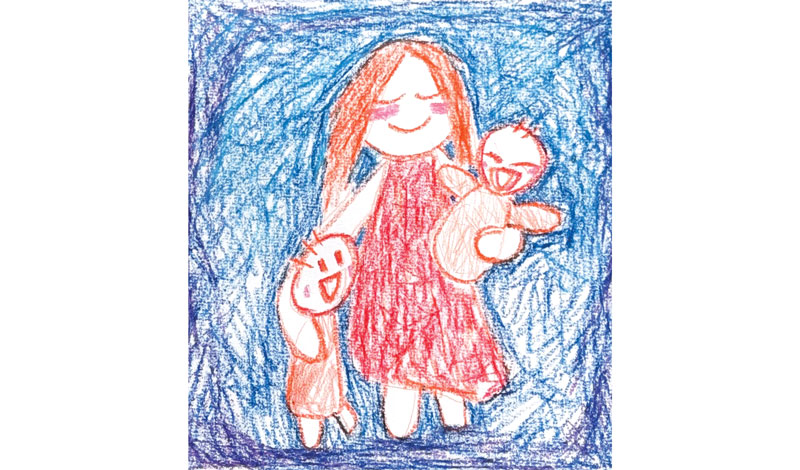
Her victims numbered in the thousands. Families grieved the loss of their young ones. Parents held their children close, afraid they might be next. This was the terror caused by the demoness known as Mother of Demon Children.
As her name suggests, Mother of Demon Children was a fearsome demon with five hundred[1] demon children of her own. People feared her because she kidnapped their babies and fed them to her own children.
Hearing the people’s cries for help, Shakyamuni devises a plan to help the demon see the cruelty of her actions and inspire her to change. He takes one of the demon’s children, Priyankara, who was her youngest and favorite. Heartbroken, the demon searches everywhere but finds no trace of her child. Desperate, she goes to Shakyamuni for help.
Shakyamuni listens to the demon and then says: “I’ve heard you have hundreds of children. So why are you so distressed to lose just one of them? Most families have only a few, but you have been robbing those precious children of life.”
At that moment, Mother of Demon Children understood the pain she caused so many families. She felt empathy for the first time and promised to never take another child. Shakyamuni then returned Priyankara safely to his mother.
Mother of Demon Children is a symbol for a demonic nature that exists within us all—the tendency to devalue or sacrifice others in the interest of one’s own family, group or nation. This can function to justify and even motivate horrific acts of violence.
In “Dharani,” the Lotus Sutra’s 26th chapter, Mother of Demon Children, her Ten Demon Daughters and other deities vow to “shield and guard those who read, recite, accept, and uphold the Lotus Sutra.”[2] The demon’s love for her children, once narrow and exclusive, transforms into a mission to fiercely protect all children based on the spirit of the Lotus Sutra. Her story shows that anyone can change from within, admit harm they may have caused, pledge to right their wrongs and use their life to protect and support others.
—Prepared by the SGI-USA Study Department
From “A Sage and an Unenlightened Man”
“The ‘Dharani’ chapter in the eighth volume of the Lotus Sutra says, ‘If you can shield and guard those who accept and uphold the mere name of the Lotus Sutra, your merit will be immeasurable.’ In this passage, the Buddha is praising Mother of Demon Children and the ten demon daughters for their vow to protect the votaries of the Lotus Sutra, and saying that the blessings from their vow to protect those who embrace the daimoku of the Lotus Sutra are beyond even the Buddha wisdom, which completely comprehends the three existences, to fathom. While by rights nothing should be beyond the grasp of the Buddha wisdom, the Buddha says here that the blessings that accrue from accepting and embracing the daimoku of the Lotus Sutra are the one thing that wisdom cannot measure.”[3]
Ikeda Sensei’s Guidance
In Buddhism, the wrongness of selfishly caring only for one’s own children while being unmoved by the sufferings of other people’s children is exemplified in the story of Mother of Demon Children. …
Through this experience, she became aware of her egotism and developed sympathy for others. In “Dharani,” the 26th chapter of the Lotus Sutra, Mother of Demon Children and her ten demon daughters vow to shield and guard those who uphold the Lotus Sutra and spare them from decline or harm. In so doing, they are transformed from evil demons into protective deities, and Mother of Demon Children’s love for her own offspring is elevated into the spirit of caring about the happiness of all people and protecting them from harm. A mother who awakens to a great purpose in life becomes a symbol of human revolution.[4]
October 16, 2026 World Tribune, p. 9
References
- According to the Dictionary of Buddhism, Mother of Demon Children had 500 children (1,000 or 10,000 by other accounts). ↩︎
- The Lotus Sutra and Its Opening and Closing Sutras, p. 351. ↩︎
- “A Sage and an Unenlightened Man,” The Writings of Nichiren Daishonin, vol. 1, p. 131. ↩︎
- The New Human Revolution, vol. 24, pp. 59–60. ↩︎
You are reading {{ meterCount }} of {{ meterMax }} free premium articles