
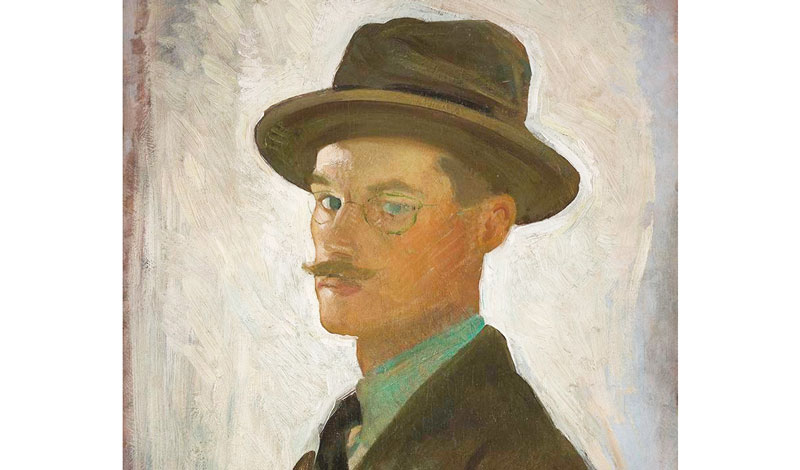
Morton Livingston Schamberg (1881–1918) was a modernist painter and photographer from Philadelphia.
Schamberg became known for his role in precisionism, an art movement celebrating America’s rapidly emerging industrial landscape.
Schamberg studied architecture at the University of Pennsylvania and graduated in 1903. He met William Merritt Chase who helped spark his love for art. He later studied under Chase at the Pennsylvania Academy of the Fine Arts.
In 1908, he visited Italy and studied Renaissance artwork before spending time in Paris, where he encountered new modern art.
Schamberg had his first solo exhibition in Philadelphia in 1910. Around 1912, he began exploring photography, and focused more on buildings and city scenes. He became interested in working with geometric shapes and images of machines, using them to capture the changing life of the modern city.
His art began to change during World War I. Because he opposed the war, he became less interested in machines and started experimenting more with watercolor.
On the cover, Bowl of Flowers (1918), contrasted with his previous work. Turning away from industrial scenes, he began painting flowers, in which he saw a celebration of life. Schamberg died in 1918 when he was 36, during the influenza pandemic.
Throughout his life, Schamberg was surrounded by people and experiences that encouraged him to discover and continue his passion for art. From painting to photography, he continued to find different ways to capture the world around him.
—Prepared by the World Tribune staff
You are reading {{ meterCount }} of {{ meterMax }} free premium articles