
BRYAN–COLLEGE STATION, TEXAS—About 100 miles east of Austin, the neighboring cities of Bryan and College Station are home to a community shaped in large part by Texas A&M University and its tens of thousands of students.
For Bryan-College Station District, however, its location presents both a challenge and an opportunity. It is about two hours from the Austin Buddhist Center, making it difficult for members—particularly young people—to regularly travel there for activities. At the same time, living alongside one of the nation’s largest universities means thousands of young people are right in their backyard.
For Robert Carter, the district men’s leader, the question became: How could we reach the students?
Carter, a retired psychologist who worked at Texas A&M for 33 years, has impaired vision and uses Braille to read. Having joined the SGI in 2015 after his wife introduced him, he had come to appreciate Nichiren Buddhism’s emphasis on inner transformation and helping others bring forth their potential.
As the SGI-USA increased its focus on developing and expanding the ranks of youth, Carter began thinking more seriously about the university community surrounding them, realizing what an incredible opportunity they had to introduce many Texas A&M students to Buddhism. Still, connecting these young people to district activities proved challenging.
Carter reached out to Hudson Chung and Zeke Chen, two local young men’s leaders, to brainstorm how they could better connect with students in the area. Their discussions led to a realization—they couldn’t wait for the students to come to them; they had to go to the students. So, they decided to hold a youth hangout on the Texas A&M campus.
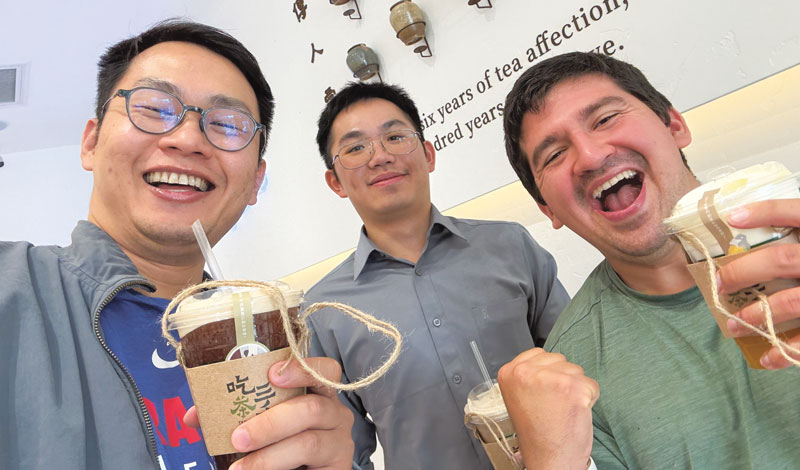
Chung and Chen were uniquely positioned to help make that connection. Both grew up practicing Buddhism in Taiwan and later came to Texas A&M for doctoral studies—Chung in electrical engineering and Chen in chemical engineering. The two had known each other since their university days in Taiwan and reconnected at Texas A&M, where they understood firsthand the challenges of student life.
With the support of the local district, they set a goal of 15 youth for the campus gathering. District members united in prayer, while Chung and Chen began reaching out to students. At first, there were only two RSVPs—Chung and Chen.
Rather than become discouraged, the two began speaking with students they knew, other student division members and guests. Chen invited two friends, including a student who had been struggling to consistently reach her family in Iran.
Another youth member, Gino, drafted a message and shared the event flyer and RSVP link to groups he belonged to. Soon, RSVPs began to come in.
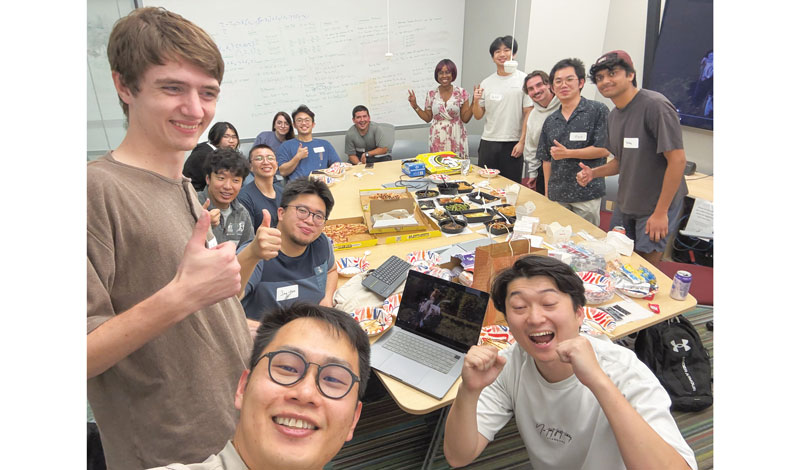
On March 5, 16 youth—including eight guests—gathered on the Texas A&M campus. They shared Chinese food and pizza, played games and learned about Nichiren Buddhism.
For Chung, the difference between this gathering and previous campus activities was the support of the entire district. In the past, campus gatherings might draw three to five people, often the same students. This time, he said, the district had united around a clear goal and supported the youth through prayer, visits and encouragement.
Holding the gathering on campus also made participation easier. Students could simply stop by a familiar place rather than arrange transportation to an SGI activity elsewhere. The March gathering became the starting point for expansion.
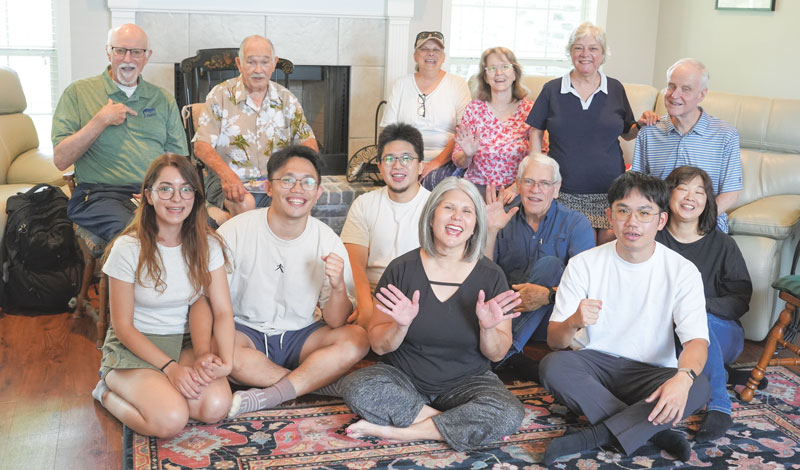
Young people who participated expressed interest in learning more about Buddhism. Chen organized monthly study meetings at the home of a longtime district member near campus. There, the youth did gongyo and studied Nichiren’s writings and Ikeda Sensei’s guidance. He also held small introduction-to-Buddhism meetings, while young people began taking active roles in district discussion meetings.
Two youth members, Gino and Hao, made the two-hour trip to the Austin Buddhist Center to take and pass the introductory exam. Perhaps one of the most encouraging moments for Carter came when one guest who had been attending activities, encouraged another young person to attend a district discussion meeting. “I was not a religious person at first, but I like discussion meetings,” the guest told her friend. “Participating in the discussion meeting just makes me feel good. I learned Buddhism through the discussions. You should come to the discussion meeting too.”
Members of the district are now looking toward the fall semester, when thousands of students will return to Texas A&M. Chung and Chen are considering another campus hangout to welcome students back, while members are determined to continue strengthening youth participation in district activities.
Although Bryan–College Station District is physically distant from the Buddhist center, the members have discovered an expansive arena for kosen-rufu right where they are. And it began with a simple determination: Rather than waiting for the young people to come to them, they would go to where the young people are.
You are reading {{ meterCount }} of {{ meterMax }} free premium articles