

‘Stand up as the Protagonists of Change’
To Protect the Lives on This Planet for Future Generations
A threat to the livelihoods of humankind posed by climate change is becoming more apparent by increasing numbers of natural disasters around the world. In Buddhism, we learn about the oneness of self and its environment. We cannot separate ourselves from nature. Nichiren Daishonin writes, “If you care anything about your personal security, you should first of all pray for order and tranquility throughout the four quarters of the land, should you not?”[1]
Ikeda Sensei penned an opinion piece on this important subject titled “Climate Change: A People-Centered Approach,” which was published on September 19, 2019, by InDepthNews. He pointed out how differences in people’s perspectives will cause them to see the same thing in completely different ways and we need to shed light on the people who are most affected by global warming. Sensei writes:
As we develop responses to climate change challenges, we must consider and incorporate the needs and perspectives of those who are affected by the impact of global warming around the world and who are also vulnerable to gender inequalities and other forms of structural discrimination, rather than simply focusing on economic costs that are more easily quantified.[2]
The SGI issued a statement in November 2025 calling for global solidarity to meet the challenges of the climate crisis. It calls for global solidarity to unite in responding to the climate crisis and emphasizes the key role to be played by youth.
In the interviews that follow the statement, members who were affected by recent natural disasters share their experiences of how they stayed strong and hopeful based on their Buddhist practice. Members from Jamaica share how they come together and keep moving forward after being severely impacted by Hurricane Melissa in October 2025. And a member from Topanga, California, shares how she is transforming poison into medicine in her community after losing her home in the January 2025 Los Angeles wildfires.
It might seem as though climate change is an issue far removed from our daily lives. However, Sensei writes:
It is the people who change the course of society and the times. History is transformed when the people become wise and stand up as the protagonists of change. Kosen-rufu is a movement that inspires and awakens people to become the builders of a new age.[3]
Our determination and efforts to improve ourselves and the environment can shape the future.
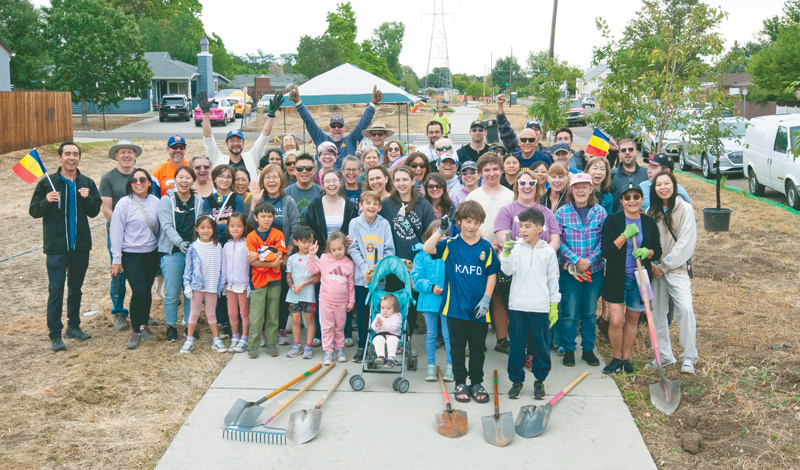
SGI Statement
The Soka Gakkai International (SGI) issued the following statement on November 5, 2025, in advance of the 30th Conference of the Parties (COP30) to the United Nations Framework Convention on Climate Change (UNFCCC).
This year, abnormal temperatures are impacting regions across the globe at a pace surpassing even last year, which was officially recorded as the hottest in history. Unprecedented torrential rains and floods are occurring with increasing frequency, causing catastrophic damage on a previously unimaginable scale.
As the atmospheric concentration of carbon dioxide, the principal greenhouse gas, reaches a record high, all of the world’s reference glaciers continue to melt, and the global mean sea level rose to a record high for the 13th consecutive year. In addition, the unprecedented increase in massive wildfires contributed to a surge in primary forest loss worldwide, pushing the total area lost to an all-time high.
It has been observed that “the future is no longer what it used to be.”
In the past, even as societies underwent various changes, the future was still perceived as something relatively foreseeable. However, we now see crises surfacing everywhere—in terms of both rising temperatures and natural disasters—such that people in many countries are feeling a stark and undeniable shift, a sense that we have entered a radically different dimension from anything we have previously known. As uncertainty about the future intensifies, there is deepening concern that we are approaching a critical threshold regarding the climate crisis in two key areas.
The first pertains to the actual rise in average global temperatures. The goal set by the Paris Agreement of limiting the average global temperature increase to within 1.5 degrees Celsius is now in serious jeopardy. The impacts of the climate crisis have already caused severe damage to people’s homes and livelihoods, particularly in island nations in the Pacific and elsewhere, and the number of those affected continues to rise. Warming significantly beyond the 1.5-degree limit will inevitably lead to even more serious harm to the lives, dignity and livelihoods of people around the world.
The second area of concern is the growing risk that international solidarity, essential for addressing our shared challenges, is weakening. In recent years, reaching consensus among developed and developing nations has become increasingly difficult, and measures such as the raising of tariffs have contributed to fears about the future of the global economy. As a result, cooperation aimed at significantly reducing greenhouse gas emissions now faces serious obstacles.
Amid escalating uncertainty and instability, a sense of resignation may begin to take hold among the world’s people that perhaps resolving the climate crisis is beyond our capacity. If such despair spreads, it will not only undermine momentum for scaling up climate action but also threaten the commitment to existing efforts.
Nevertheless, there are still many areas in which each and every one of us in civil society can raise our voices and take action to promote broader transformation. For example, renewable energy, development of which was at one time thought impractical for many countries, is now projected by the International Energy Agency (IEA) to overtake coal as the world’s largest source of electricity in 2026.
Brazil, the host of COP30, was also the venue of the Earth Summit in 1992, where the UNFCCC and the Convention on Biological Diversity were first opened for signature. These landmark agreements, along with the international cooperation seen in recent years in response to the COVID-19 pandemic, serve as powerful reminders that human beings inherently possess the capacity to unite across national borders and pursue a shared path forward. Even in the face of unprecedented crises, we are capable of upholding a spirit of mutual solidarity, joining hands to protect one another’s lives and dignity and refusing to give in to despair.
Guided by this conviction, the SGI has worked to raise public awareness of the climate crisis and other environmental issues. As part of these efforts, we have held the exhibition “Seeds of Hope & Action: Making the SDGs [Sustainable Development Goals] a Reality,” a joint initiative of the SGI and the Earth Charter International highlighting pathways to sustainable living, in 10 languages across 24 countries and territories. In addition, the Soka Gakkai has worked with the International Tropical Timber Organization since 2021 to support reforestation efforts in West Africa. These initiatives are part of our broader commitment to building a sustainable global society.
On this occasion, we would like to offer two proposals, one focused on civil society and the other on youth, aimed at strengthening international solidarity to help catalyze progress in addressing the climate crisis, drawing upon the experience we have gained through our ongoing efforts.
Strengthening Solidarity Among Civil Society
The first proposal focuses on the mobilization of civil society. To confront the climate crisis, including through efforts to reduce greenhouse gas emissions, national-level measures alone are not sufficient. What is urgently needed is to unite the will of people everywhere in pursuit of a future of hope and security. Civil society initiatives offer a foundation for action rooted in the unwavering determination to resolve this crisis.
Religious communities and their diverse faith traditions can play a vital role in this effort. At an event organized by the Interfaith Liaison Committee to the UNFCCC during COP29 in Azerbaijan in November 2024, an SGI representative emphasized the following point: With more than 80% of the world’s population adhering to some form of religious belief or creed, faith communities are uniquely positioned to inspire the behavioral transformation essential for addressing the climate crisis.
As the SGI continues to engage with the issue of climate change in collaboration with other non-governmental organizations (NGOs), particular emphasis is placed on three key areas:
1. disseminating accurate information about climate change;
2. elevating the voices of those in vulnerable situations—including individuals directly experiencing the impacts of climate change—and ensuring their inclusion in dialogue and decision-making spaces; and
3. encouraging, as people of faith, a perspective grounded in humanity and the lived realities of ordinary people as a guiding principle in climate-related discussions.
Of these, the second and third areas reference the approach of SGI President Daisaku Ikeda, who during his lifetime consistently engaged in dialogue and developed concrete proposals to address the shared issues facing humanity, including climate change.
In his 2020 peace proposal, President Ikeda placed utmost emphasis on never leaving behind those struggling in difficult circumstances. In this, he made specific reference to the plight of people in island nations facing such crises as land submersion caused by rising sea levels. He also shared the efforts of the Toda Peace Institute, which he founded in 1996, noting that it has been conducting research on the impacts of climate change on Pacific island countries since 2018. He cautioned: “Even if these people move to another island and are able to achieve material security, they will remain deprived of what the report describes as the ‘ontological security’[4] they experienced living on their own island. The project concludes that attentiveness to this kind of irreparable pain must be part of any effort to tackle climate change.”
He further urged: “When discussing the impacts of climate change, there is a tendency to focus on the scale of economic loss or other quantifiable indicators. But I think it is important that we attend to the actual suffering of the many individuals that such macroeconomic indices might obscure, and make this central to our efforts to come together in search of solutions.”
According to World Bank projections, if the rise in global temperatures continues at the current pace, the number of climate refugees forced to leave their familiar environments could exceed 200 million worldwide by 2050. In this context, President Ikeda’s call resonates with even greater urgency and significance today.
The U.N. and Brazil, as the host of the upcoming COP30, have called for future climate action to be shaped not only by policy and scientific analysis but also by ethical commitment and inclusivity. In line with this, the Global Ethical Stocktake (GES) was developed as a framework for dialogue that went beyond numerical targets such as greenhouse gas reduction and instead urged a fundamental reexamination of what we, as human beings, are doing to the Earth’s environment from an ethical dimension. It has sought to awaken a sense of collective will, transcending national boundaries, and to inspire humanity to choose new ways of living and build a world with strong ethical foundations. At the heart of these efforts lies the understanding that without a genuine transformation in humanity’s behaviors and priorities, even the most advanced technological solutions cannot truly demonstrate their full effectiveness.
As a first step in this direction, the SGI has expressed its support, as a faith-based organization (FBO), for the implementation of the GES. The SGI contributed actively to the GES process, particularly through the initiative of youth, and has recently reported outcomes to the presidency of COP30.
We hope to help strengthen mutual solidarity among diverse faith traditions to enable such vital initiatives to gain traction as a means of underpinning concrete actions, including the reduction of greenhouse gas emissions.
Now more than ever, all religious traditions must serve as wellsprings of human conscience, guiding individuals to take action in response to the global challenges we face. Moreover, they are called on to play a more active role in inspiring the resilience of the human spirit—a spirit that refuses to give in, no matter how great the adversity, and rises to confront even the most daunting trials.
From this standpoint, the SGI proposes that further opportunities be created at the COP conferences for religious organizations and FBOs to gather, share best practices, learn from one another and work together to develop paths toward confronting the climate crisis and building a sustainable global society.
Mainstreaming Youth Engagement
The second of the proposals the SGI would like to make on this occasion is to establish a permanent youth council within the UNFCCC Secretariat as a means of strengthening institutional frameworks. This would be a body led by young people to explore and develop new measures and implementation strategies aimed at meeting the current challenges, and present these ideas at the annual COP sessions.
In recent years, youth have been raising their voices, urgently calling for stronger climate action to reduce greenhouse gas emissions and sharing ideas and initiatives in their respective countries and communities. Underlying these actions is a deep and unwavering determination to safeguard the foundations not only for their own survival but also for those yet to be born. At the core lies a powerful desire to shape a hopeful future with their own hands.
Because the decisions made by the international community now will have the greatest impact on today’s youth and future generations, demands for their inclusion in decision-making processes have grown stronger. This is essential from the perspective of achieving climate justice.
Against this backdrop, in 2022, the U.N. General Assembly adopted a historic resolution recognizing the human right to a clean, healthy and sustainable environment. This was the first time the U.N. General Assembly formally acknowledged this right. Notably, the resolution also referred to future generations as the necessary beneficiaries of this right.
Over the years, the SGI has emphasized the importance of integrating a human rights perspective into climate action. The venues where we have done this include the U.N. Human Rights Council and the annual COP conferences, as well as, for example, a side event during the sixth session of the U.N. Environment Assembly (UNEA-6) held in Kenya in 2024. The SGI is also part of the Global Call initiative for universal recognition of access to a clean, healthy and sustainable environment as a human right.
In July of this year [2025], the International Court of Justice (ICJ) issued a groundbreaking advisory opinion declaring that states have an obligation to protect the environment from greenhouse gas emissions. The court affirmed that fulfilling this obligation requires states to exercise due diligence and to cooperate with one another in taking effective action.
It was youth who played a catalytic role in this historic process. Inspired by the advocacy of the youth-led Pacific Island Students Fighting Climate Change, the state of Vanuatu took the initiative that led to the adoption of a U.N. General Assembly resolution in March 2023 requesting the ICJ’s advisory opinion, thereby setting the judicial process in motion.
The passion and vitality of youth needs to be embedded within the international framework for addressing the climate crisis, enabling them to drive powerful waves of transformation.
“The future is no longer what it used to be.” This was the cautionary observation bequeathed to humankind of the 21st century by Dr. Aurelio Peccei, co-founder and first president of the Club of Rome. Dr. Peccei, however, did not mean these words solely as a warning about the crises we would face. Rather, he believed that if the future has indeed diverged so sharply from how it was once understood, then conventional methods and systems would no longer suffice to address the challenges ahead. Implicit in his words was the conviction that the leadership driving effective solutions must be entrusted to the younger generations.
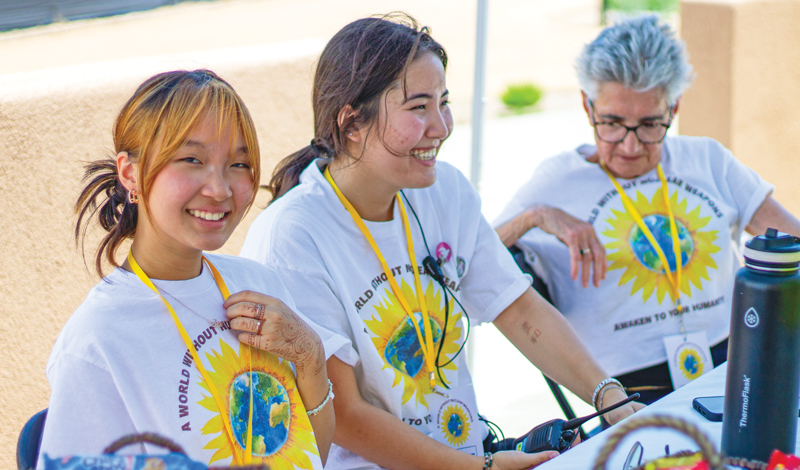
In his 2020 peace proposal, which was issued four months after the landmark U.N. Youth Climate Summit, President Ikeda reflected on his and Dr. Peccei’s shared belief in the boundless potential of youth, as expressed in their dialogue Before It Is Too Late (1984):
Unlike such issues as pollution and resource depletion, which were points of concern during the period surrounding the publication of “The Limits to Growth” and whose causes can, for the most part, be disaggregated, the factors causing climate change are integrated into all areas of our daily life and economic activity, making it that much harder to find solutions. …
Precisely because it is so complex and requires a multifaceted approach, we can view the challenge of climate change as presenting a remarkable diversity of opportunities for human beings to give expression to their limitless potential.
Even before this proposal, President Ikeda consistently emphasized the crucial importance of actively incorporating the voices of youth in the quest for solutions to global challenges. In a 2006 proposal for U.N. reform, for example, he called for the establishment of a specialized agency dedicated to engaging the world’s young people, or a department of youth within the U.N. administration. Aligning with this proposal, the U.N. Youth Office was established within the U.N. Secretariat in December 2023. This office aims to energize and expand youth engagement with, and influence within, the U.N. system.
This expansion of youth involvement needs to be a top priority for international frameworks addressing the climate crisis. In this regard, Mary Robinson, a strong advocate for climate justice and intergenerational dialogue and the former chair of The Elders a group of former heads of state and government, human rights advocates and other statespersons together with Felipe Paullier, head of the U.N. Youth Office, made the following appeal in January 2025:
Our complex global challenges demand the moral strength to not only address current problems but also long-term risks and opportunities. This leadership is not inherently tied to any single generation but is strengthened when decision-making includes diverse perspectives, including those of youth. Engaging young people as equal partners enriches the decision-making process, embedding fresh ideas and future-oriented thinking into solutions that benefit both present and future generations.
In line with such efforts, the Italian Buddhist Institute Soka Gakkai has been actively engaged in the international initiative Youth4Climate (Y4C), co-led by the Italian government and the United Nations Development Program. This initiative empowers young climate leaders and youth-led organizations to develop and implement innovative, impactful solutions to climate change. To date, Y4C has provided financial support to 100 youth-led projects across 52 countries.
In March 2024, SGI youth in Japan worked with other civil society groups to organize the Future Action Festival at the Japan National Stadium in Tokyo, an event calling for immediate action on the climate crisis and the abolition of nuclear weapons. The voices of some 120,000 people, collected through a survey conducted in the lead-up to the event, served as the basis for a joint statement that has since been used in ongoing consciousness-raising activities. In September 2024, SGI representatives participated in the Summit of the Future held at U.N. Headquarters, where they co-hosted side events that shared with the summit the perspectives of youth.
We are firmly convinced that promoting such initiatives that mainstream youth engagement within the context of ever-expanding civil society activism, together with the establishment of a permanent youth council within the secretariat of the UNFCCC, will serve as a powerful harbinger of genuine change. Now is the time to create spaces and opportunities for young people to fully unleash their potential and play the kind of roles of which they are capable.
Turning a blind eye to the grave realities unfolding before us will not stop the accelerating crisis. Based on the two pillars proposed above—global grassroots mobilization and building stronger institutions in which youth are mainstreamed—let us work together to meet this epochal challenge: to protect not only the lives, dignity and livelihoods of those living on this planet today but also those of future generations.
—Adapted from sokaglobal.org, the Soka Gakkai’s international website
‘We Can Face Anything’

Name: Karina Mahbubani // City: Kingston, Jamaica
Living Buddhism: How were you and the members in Jamaica impacted by Hurricane Melissa?
Karina Mahbubani: A lot of members in Jamaica suffered from this most recent hurricane. Some areas still don’t have electricity or water. Before the hurricane struck, a group leader and I drove down to the South Coast to help some members evacuate. When we went back a few days later, everything was blown away. It was like two different worlds. Trees had fallen across the road and roofs were blown off. This drastic change made us realize how powerful the hurricane was.
I live in a part of the island that wasn’t severely affected. Right after the hurricane, two restaurants I run worked with a local organization to send out about 3,000 meals a day to different evacuation shelters on the island.
Could you share how you supported members affected during this time?
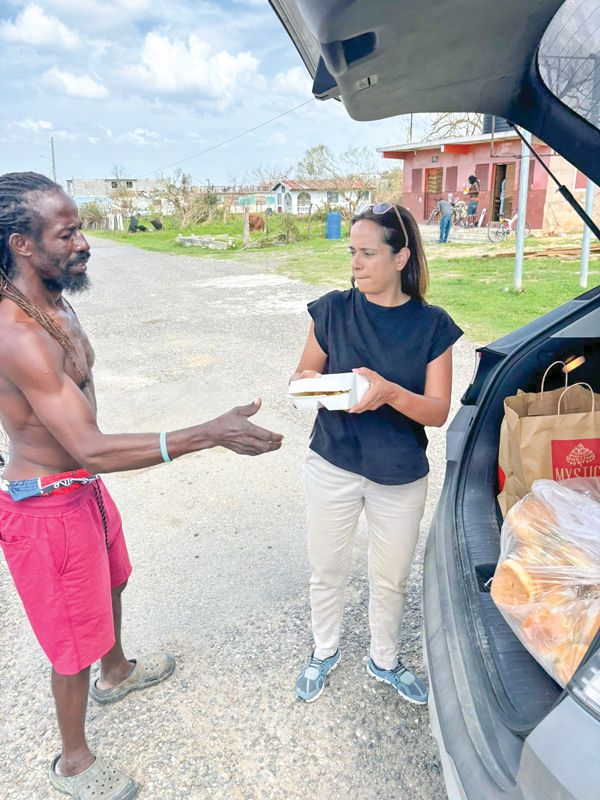
Karina: My immediate response was to stay calm and focus on connecting with each member. For the following months, we focused on communicating with members and bringing them relief supplies. Even a brief message asking if they were safe made a big difference and reminded them that they were not alone. Once the shipment of relief supplies from the SGI-USA arrived, we made trips to the most affected areas to give out the supplies to the members.
I realized how encouragement could create a ripple effect; one call led to another. I saw that by not feeling alone and being continuously encouraged, we can turn fear into determination. One time, we were distributing food on the streets in the South Coast. There was a little girl around
6 years old. I gave her a can of sausage, and she came and hugged me. It was such a small thing and she was so grateful. That was a very defining moment for me.
What has helped you keep moving forward in encouraging others?
Karina: Everything is based on my vow to respond to my mentor, Ikeda Sensei. I’m grateful for what he has left us and now it’s up to us in how we keep moving forward.
I don’t remember a day when I felt hopeless. It is crucial to start the day chanting in a way that can move mountains. And to have the conviction that those mountains are going to move!
In addition, a lot of strength came from messages we received from the members of SGI-USA and the Caribbean Region every day. There were many messages saying, “We are chanting for you.” It has really helped me keep moving forward.
What are your determinations toward the future?
Karina: Through this experience of supporting members impacted by the hurricane, it was very powerful for me to see the strength of having faith. Through chanting, we open paths that we felt hadn’t even existed. By deepening our faith, we can face anything. I pray that everyone can have that kind of experience with faith.
In our region, we currently have eight chapters. One chapter has a Buddhist center in Trinidad. Our vision is for all the chapters to have their own Buddhist centers. It sounds like a goal about centers, but it’s actually about each member deepening their faith, and encouraging each other in their own environment.

Focused on the Way Forward

Name: Kaheem Gooden // City: Kingston, Jamaica
Living Buddhism: Kaheem, thank you for sharing about your experience with Hurricane Melissa and its recent devastation in Jamaica. How were the members impacted by the hurricane?
Kaheem Gooden: I live in Kingston located in the eastern part of Jamaica, which was not as heavily impacted by the storm as the western parts were. Fortunately, I did not experience major disruptions to my essential services, and my home had minimal damage.
My primary concern was for members living in the western part of Jamaica. Many of them had their homes heavily damaged or destroyed. During the storm, phone and power lines went down, making communication with members who lived in those areas challenging. All I could do in those moments was to chant for everyone’s safety.
What action did you take after the hurricane subsided?
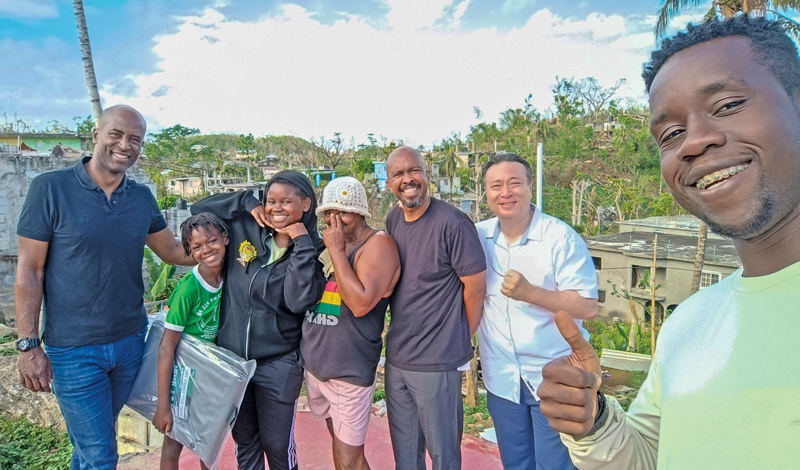
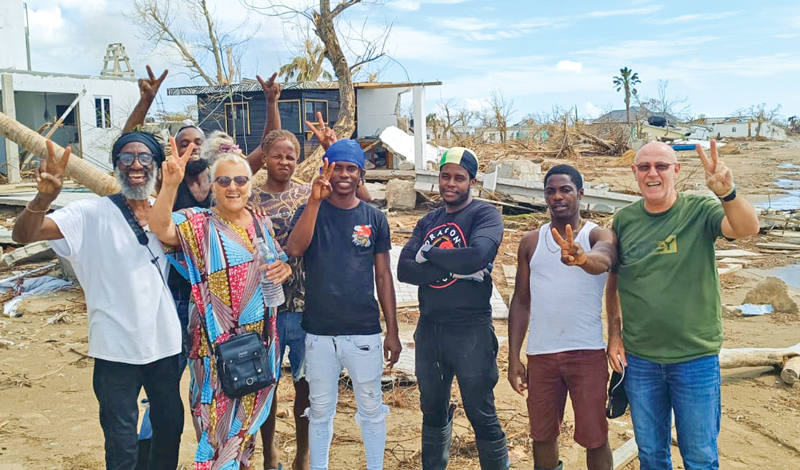
Kaheem: We made multiple trips to first locate all the members and provide them with essential supplies such as food and water purification systems. Since communication was limited, we drove around for hours searching for members and providing relief supplies in cooperation with local law enforcement.
Can you share a memorable story from your relief efforts?
Kaheem: A longtime friend of mine saw the actions that I and fellow SGI members were taking. Encouraged by this, he was determined to join us on one of our trips where we visited the damaged home of the South Coast District leaders. We worked on clearing out sand and debris that entered the home during the hurricane.
By the end of the day, we were able to clear out one of the rooms in the house where we set up a small, portable Gohonzon and resolutely chanted together. Even my friend joined us and despite all the hardships, I felt in that moment that we made true progress in moving forward.
What is your determination?
Kaheem: Now more than ever, I believe we need to share the philosophy of Nichiren Buddhism with more people in Jamaica. Toward the goal of welcoming 10,000 youth by January 2028, I am personally determined to introduce at least three young men to the Buddhist practice. I believe this is how we as youth can take the lead in developing a future we want to be a part of, especially at a time where many are still struggling and don’t believe their causes have an impact on the future.
Any parting thoughts?
Kaheem: What I am most focused on now is finding the way forward and encouraging others that we can make our situation even better than before the hurricane. The following guidance from Ikeda Sensei is one that I went back to during the storm and as we continue to recover: “When faced with desperate circumstances, perseverance opens the way forward. True glory comes to those who keep pressing onward resolutely, refusing to be defeated or discouraged. There can be no success without adversity. Tremendous effort leads to tremendous joy” (The New Human Revolution, vol. 17, pp. 332–33).
So Long as We Never Give Up

Name: Jayne Cole // City: Parottee, Jamaica
Living Buddhism: Thank you for sharing your experience with us. You have been personally impacted by two hurricanes. Can you share your most recent experience?
Jayne Cole: Yes, in July 2024, Hurricane Beryl cost us our business, and we had to restart from scratch. Then, in October 2025, Hurricane Melissa hit our island with devastating consequences. It was painful to see so many people struggling from the loss. Together with my husband, Carlyle, who is a district men’s leader, we kept chanting for every member’s safety.
At first, I had so many questions. But soon, I recalled the following passage from Nichiren Daishonin’s writings:
“Although I and my disciples may encounter various difficulties, if we do not harbor doubts in our hearts, we will as a matter of course attain Buddhahood. Do not have doubts simply because heaven does not lend you protection.” (“The Opening of the Eyes,” The Writings of Nichiren Daishonin, vol. 1, p. 283)
This clarified the reason why I came to the South Coast in Jamaica. It was my mission to care for others in the community—that is the most important thing in my life now. I felt such a profound sense of gratitude for my Buddhist practice, because inside of my being, I was not swayed in any form.
How did you continue caring for other members during this challenging time?
Jayne: What I kept remembering was how Ikeda Sensei chanted—with the roar of a lion. From where we were staying in Kingston, it took three hours one way to go to the most affected areas to support the members. My husband, Carlyle, drove six hours for one month so that we could visit each member. During the trip, we were chanting most of the time. I felt an immense sense of gratitude and joy to care for the members, especially in a time of crisis.
Members in Jamaica are resilient. Shortly after the storm, our district had an introductory meeting and four guests participated. At the New Year’s Day meeting, we had nine guests.
What an incredible fighting spirit! What are your determinations toward future?
Jayne: We moved to Jamaica in 2013 with a determination to work for kosen-rufu and respond to our mentor. Back then, only five people in the area were practicing Buddhism. Now, almost everyone in the town knows about Nam-myoho-renge-kyo.
Our district currently has four groups. Carlyle and I are united as district leaders with the determination that our district becomes a chapter. I have experienced a lot of loss and gain throughout the journey of my Buddhist practice. But I’m hopeful that this is the catalyst for great good to occur so long as we never give up.
Deciding to be Undefeated

Name: Azmina Kanji // City: Topanga, California
Living Buddhism: Thank you for sharing your journey since the Los Angeles wildfires in January 2025. How were you affected?
Azmina Kanji: When the wildfires destroyed my home, it felt like the ground gave way underneath me overnight. Suddenly, everything felt uncertain.
Shortly afterward, I went with my son to the place where my home had been. There was nothing left—just ashes and silence. At that moment, I felt something clearly: I’m still here. My life isn’t burned. My mission isn’t burned.
While I’m still in recovery mode, rebuilding my home and my life, I feel deeply supported by my SGI community all the way. I continue to move forward based on daimoku, trusting that even from ashes, something meaningful and beautiful can grow.
What has been the source of your strength during this time?
Azmina: Encouragement from SGI members came through right when I needed it. Just days after the fire, my good friend in faith came to encourage us at a time when everything still felt raw. A fellow SGI member, who was my district leader when I first began practicing, generously offered a place to stay, warmly caring for me. I was displaced physically, but I never felt alone.
Some days can be heavy, but I stayed undefeated by deciding—sometimes minute by minute—not to let this loss define me. Some days that means chanting through tears, sitting quietly with what was gone and still choosing to take one step forward. I keep going back to Ikeda Sensei’s guidance: “Courage—your determination to win in this moment can change everything” (Champions of Hope, p. 1). This has helped me reframe what “winning” looks like. It is about persevering in my Buddhist practice with hope, even when I feel fragile.
You also have been supporting other members as a district women’s leader. How did you continue moving forward in encouraging others?
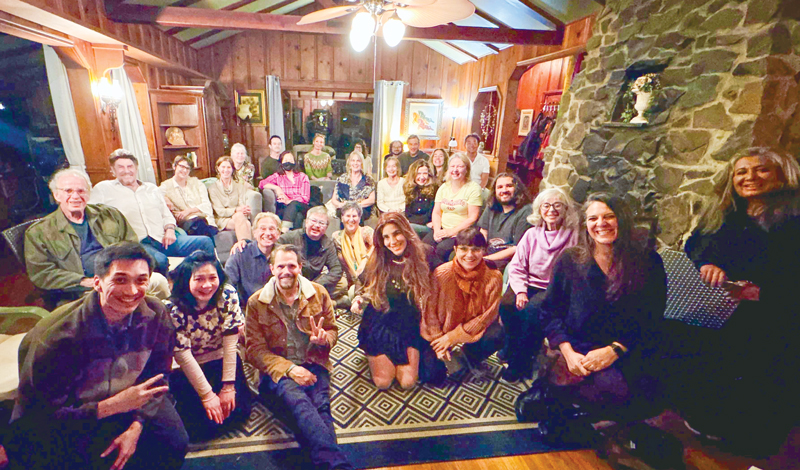
Azmina: I became the Topanga District women’s leader in June 2025, after the fire. First, I felt I was not ready. But then I thought of the fellow SGI members in the district who have supported me and also the members whom I have introduced to Buddhism. I realized: I can’t let them down. And I knew that I needed to challenge myself to expand my capacity to win in my personal life and for others in the community.
I realized that offering encouragement doesn’t require having it all together. Some days, encouraging others means simply showing up. I found that when I encourage others, my own courage comes back to life. We are deeply connected, and we move forward together.
What is your vision for the future?
Azmina: My goal is simple: to help as many people as possible to start chanting Nam-myoho-renge-kyo. Along with a fellow SGI member who has been helping the reconstruction, I’m determined to have a place where our community can come and chant together. I want others to experience the power of this Buddhist practice for themselves, especially when life feels overwhelming. I want everyone on my street to start chanting. And it’s not a small street!
From the March 2026 Living Buddhism
References
- “On Establishing the Correct Teaching,” The Writings of Nichiren Daishonin, vol. 1, p. 24. ↩︎
- October 11, 2019, World Tribune, p. 10. ↩︎
- The New Human Revolution, vol. 15, revised edition, p. 19. ↩︎
- Ontological security: The concept of ontological security was proposed by Anthony Giddens in 1991. It refers to an individual’s sense of order, security and continuity within a rapidly changing environment. For instance, if an event occurs that is not consistent with the meaning of an individual’s life, this threatens their sense of belonging and confidence in their identity. In this regard, sociologists and psychiatrists argue that ontological security is threatened by anthropogenic climate change. On a societal level, migration from environments degraded by climate change breaks the continuity of the bond between people and their land, and compromises the material, social and cultural aspects of security. ↩︎
You are reading {{ meterCount }} of {{ meterMax }} free premium articles