

Please present the 3-Minute Gosho (pp. 46–47) at your discussion meetings. For the main study portion of the meeting, you can choose to expand on the 3-Minute Gosho or choose from one of the following:
1) What Do You Think? (pp. 48–49)
2) Material from any recent issue of the World Tribune or Living Buddhism.
3-Minute Gosho
Growing With Good Friends in Faith
Passage
Even a feeble person will not stumble if those supporting him are strong, but a person of considerable strength, when alone, may fall down on an uneven path. —“Three Tripitaka Masters Pray for Rain,” The Writings of Nichiren Daishonin, vol. 1, p. 598
Background
In Buddhism, a “good friend” is someone kind and wise who helps us stay on the right path of faith. This passage shows why good friends matter.
Nichiren Daishonin likely wrote this letter in 1275 while living on Mount Minobu. He sent it to the lay priest of Nishiyama, a village leader and sincere believer who often visited Nichiren and brought him food and supplies.
Nichiren explains that good friends are rare, while “evil companions”—bad influences who can pull us away from faith—are numerous. A good friend supports us, encourages us and helps us keep practicing Buddhism. Even if we feel unsure or have little wisdom, we should seek out good friends, stay close to them and appreciate their advice. With their support, we can keep growing and move closer to revealing our Buddhahood.
From Ikeda Sensei’s The New Human Revolution
Ikeda Sensei stresses the importance of having a self-reliant spirit while also being an active part of the community of Buddhist practitioners.
“Living out our lives alongside our fellow members in the Soka Gakkai, we can become truly happy. The Soka Gakkai is the harmonious community of practitioners (sangha) of our times.
“It is also crucial that we stand up with a self-reliant spirit, because kosen-rufu will not be achieved if we think that someone else will take care of things. On the other hand, we mustn’t isolate ourselves, either. Nichiren Daishonin writes, ‘Even a feeble person will not stumble if those supporting him are strong, but a person of considerable strength, when alone, may fall down on an uneven path’ (“Three Tripitaka Masters Pray for Rain,” WND-1, 598). Don’t forget that growth in faith is achieved through uniting with our fellow members—good friends who act as positive influences—and encouraging and inspiring one another.” (The New Human Revolution, vol. 26, pp. 123–24)
Presenting this month’s 3-minute Gosho? Click here for a brief tutorial video.
What Do You Think?
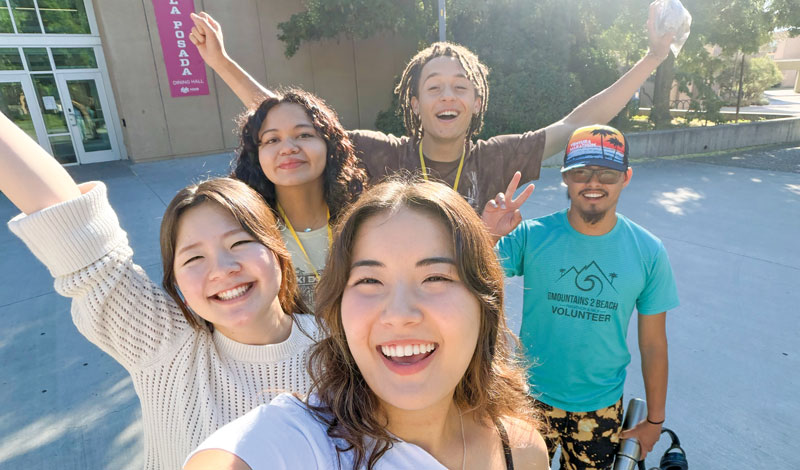
How Do We Make Genuine Friends?
Forming lasting friendships can be challenging—whether we’re in a new, unfamiliar place or simply longing for deeper relationships. The American Psychological Association’s 2025 “Stress in America” survey found that more than half of U.S. adults feel emotionally disconnected at least some of the time.[1]
What does Buddhism have to say about friendship?
Shakyamuni Buddha clarified to his disciples that advancing with good friends “is not half the Buddha way, but all the Buddha way.”[2] And Nichiren Daishonin asserts:
The best way to attain Buddhahood is to encounter a good friend. How far can our own wisdom take us? If we have even enough wisdom to distinguish hot from cold, we should seek out a good friend.[3]
Ikeda Sensei describes the highest level of friendship as the bond of comrades who share the same ideals.[4] For SGI members, our friendships are rooted in a shared vow for kosen-rufu. It’s more than simply spending time with people who share our interests or getting along with those we like or who like us.
In Buddhism, a “good friend” is someone who encourages us to challenge ourselves in Buddhist practice and deepen our faith. It can be someone who directly supports or guides us. But even someone whose presence we might not appreciate at first, can prompt us to strive harder and grow.
Friendship Starts With Being a Good Friend to Others
So, how do we make genuine friends? Sensei says:
Friendship depends upon you. It is your attitude that is important, not the other person’s. … It is your concern and feelings for the other person that make a friendship.[5]
In other words, making good friends starts with our own determined prayer and sincere actions to create trusting relationships.
As we chant Nam-myoho-renge-kyo for our friends’ happiness, we draw forth the wisdom and courage to support them in meaningful ways. Even our struggles, when faced with faith, can deepen our empathy and help us connect more genuinely.
A recent New York Times article suggests 10 simple ways to deepen friendships, including sending thoughtful mementos, remembering important events in friends’ lives and connecting with people of different ages and backgrounds.[6] Such efforts show genuine care and help others feel valued.
Helping others in practical ways is common in friendship. And the greatest support we can offer, from a Buddhist perspective, is encouraging people to address the root causes of suffering and reveal their own strength. This spirit underlies our efforts to share Buddhism. Sensei explains:
There is no contradiction between the spirit of shakubuku—that of “refuting the erroneous and revealing the true”—and true friendship. The spirit of compassion is fundamental to both. Consequently, it is the Buddhist ideal that the more we exert ourselves in faith, the greater the generosity with which we can embrace our friends and deepen our friendships. Because shakubuku is an endeavor to touch others’ lives through dialogue, trust and friendship are essential.[7]
Talking with friends about Buddhism is an act of the greatest good. Through dialogue, we fulfill our mission as members of the Soka community: to become genuine friends to those around us. Creating peace begins with these everyday efforts to build trust in our families, neighborhoods and communities.
—Prepared by the SGI-USA Study Department
From the September 2026 Living Buddhism
References
- See https://www.apa.org/pubs/reports/stress-in-america/2025 <accessed on July 14, 2026>. ↩︎
- The Wisdom for Creating Happiness and Peace, part 3, revised edition, p. 106. ↩︎
- “Three Tripitaka Masters Pray for Rain,” The Writings of Nichiren Daishonin, vol. 1, p. 598. ↩︎
- See The Victorious Teen, p. 61. ↩︎
- The Victorious Teen, p. 65. ↩︎
- See https://www.nytimes.com/article/how-to-make-friends-as-an-adult.html <accessed on July 16, 2026>. ↩︎
- The New Human Revolution, vol. 1, revised edition, p. 219. ↩︎
You are reading {{ meterCount }} of {{ meterMax }} free premium articles