
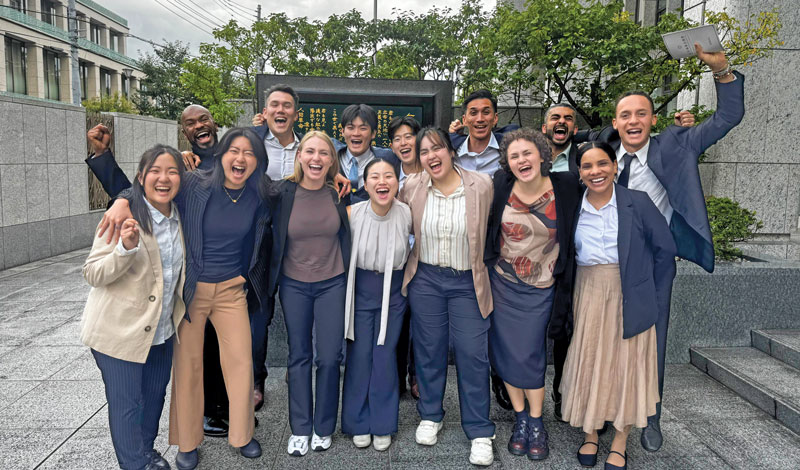
TOKYO—Fourteen SGI-USA members joined 250 representatives from 55 countries and territories for the SGI Youth Training Course, held Sept. 3–7 in Tokyo. For the U.S. participants, those five days became an opportunity to seek answers to questions arising directly from their efforts for kosen-rufu at home—navigating a vast geographic area with very few youth leaders, juggling demanding schedules and pursuing ambitious propagation goals without losing sight of the person in front of them.
The SGI-USA youth joined guidance sessions specifically for participants from countries in North America and Oceania that included topics like introducing others to Nichiren Buddhism, member care, Buddhist study, supporting the future division members and the challenges young people face. Across these varied topics, the guidance continually returned to one point: Whatever the activity, what matters is the person in front of us and how we can encourage them.
TOKYO
SEPTEMBER 3
Soka International Women’s Center
North America and Oceania Guidance Session
Everything Begins With One Person
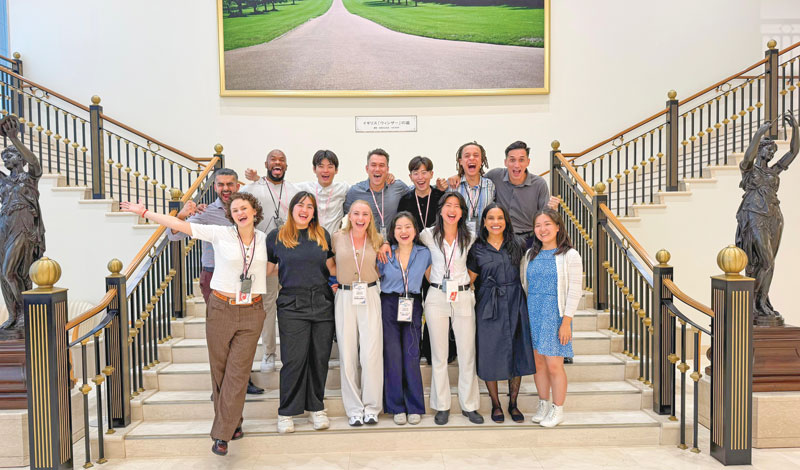
The events for the U.S. members started with visits to the Soka International Women’s Center and Soka Bunka (Culture) Center. At the women’s center, the group learned of the care taken to create such a place for women to feel welcomed, safe and empowered. Later, at the Soka Bunka (Culture) Center, they viewed an exhibition of 50 paintings and drawings by survivors of the Battle of Okinawa.[1] The artwork offered a stark reminder of the human cost of war and the importance of creating peace within ourselves, our families and our communities.
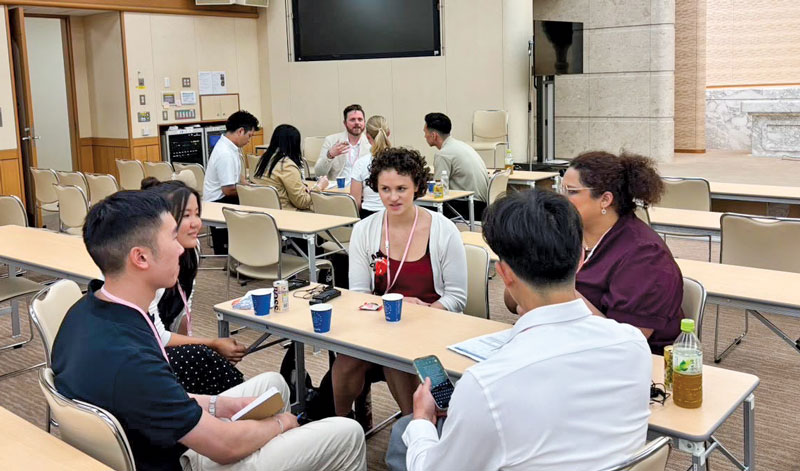
That evening, Mitsuo Nishikata, the SGI youth leader, met with participants from North America and Oceania to discuss their propagation efforts. With growing momentum, they sought guidance on how to help guests move beyond attending an activity and begin experiencing Nichiren Buddhism for themselves.
Nishikata emphasized that the essential point of shakubuku is one’s own confidence. But if a friend does not want to practice, they should never be pressured, he said, because doing so could damage the trust that’s been built. Instead, he encouraged the participants to treasure their friends, appreciate them and continue praying for their happiness.
The discussion then turned to member care. Why does the organization exist? What is the spirit of kosen-rufu? Even when addressing thousands, Nishikata explained, Ikeda Sensei was never simply speaking to a crowd. He sought to reach the individual. President Toda and Sensei focused on nurturing one-to-one connections.
Nishikata explained that member care begins with prayer: How is that person doing? How can I support them? He encouraged the youth to gradually expand the number of people they embrace in their prayers and make others’ happiness part of their daily lives—just as Sensei always kept members throughout the world in his prayers.
The same spirit applies whether caring for a member or a friend. Shakubuku and member care might look different, Nishikata said, but the essential point is the same: encourage the person in front of you.
TOKYO
SEPTEMBER 4
Soka Bunka (Culture) Center
World Youth Center
The Impossible Is Changed One Life at a Time
The second day centered on studying the history and spirit of Sensei’s landmark Osaka Campaign.[2] At the Soka Bunka (Culture) Center, SGI Executive Advisor Hiromasa Ikeda discussed the May 1956 struggle in which a 28-year-old Daisaku Ikeda inspired the members in Japan’s western region to an unprecedented propagation victory.
In his lecture, Hiromasa Ikeda emphasized that the significance of the Osaka Campaign was not simply the extraordinary numerical result Sensei had achieved, but how he achieved it.
Rather than standing before the members and demanding a result, Sensei visited them, one by one. Many were struggling with finances and still developing their faith as new members. As he met with individuals, he listened to their concerns and offered wholehearted encouragement, sharing in their struggles and helping them bring forth confidence through their Buddhist practice.
Hiromasa Ikeda explained that this bond of trust was fundamental to creating a victorious campaign. As members experienced their own revitalized faith, their joy naturally spread to their friends. In this way, the Osaka Campaign advanced through one person encouraging another—each individual’s transformation becoming the starting point for further expansion.
That afternoon at the World Youth Center, the lessons from Hiromasa Ikeda’s lecture carried into a study session with Nishikata. As the young people considered their own “seemingly impossible” challenges toward 2030, Nishikata brought the focus back to the individual. Amid efforts to advance shakubuku and achieve goals, he stressed the importance of sincerely caring for and encouraging each person.
In this way, “making the impossible possible” came back to one-to-one encouragement—helping one person awaken confidence and advance in faith.
TOKYO
SEPTEMBER 5
Hall of the Great Vow for Kosen-rufu
What Does It Mean to Be Sensei’s Disciple?
The third day moved from learning about the Osaka Campaign to creating a vision of peace spanning the globe. Yoshiki Tanigawa, the SGI General Director, lectured on the 30th anniversary of Ikeda Sensei’s June 13, 1996, address at Columbia University’s Teachers College, titled “Thoughts on Education for Global Citizenship.”[3]
Sensei in this lecture identified three qualities of global citizenship: wisdom to perceive the interconnectedness of life; courage to neither fear nor deny difference but to respect and understand others; and compassion that extends beyond one’s immediate surroundings to people suffering elsewhere. Tanigawa emphasized that a global citizen is not defined by international travel or the number of languages one speaks. Sensei was describing ordinary people who confront their own suffering while acting for the happiness of others.
Tanigawa then turned to the mentor-disciple relationship and the Lotus Sutra’s phrase “This is what I heard” (The Lotus Sutra and Its Opening and Closing Sutras, p. 3). The disciples did not merely hear Shakyamuni’s words. They had to grasp his intent accurately enough to transmit them. For the young people in attendance, Tanigawa’s guidance offered a way to consider what it means to inherit Sensei’s spirit: to grasp his intent and carry it forward through their own actions.
That afternoon, the participants attended a gongyo ceremony at the Hall of the Great Vow for Kosen-rufu. The visit offered an opportunity to renew their determination to advance kosen-rufu. The experience also gave another dimension to the mentor-disciple relationship studied that morning—refreshing their vow with their mentor in their hearts could become the starting point for creating victory from that moment forward.
The day concluded with a North America and Oceania future division guidance session led by the national future division leader and the Tokyo women’s leader. They emphasized beginning with one’s own joy and focusing on and trusting each future division member—giving them a voice in their activities rather than deciding everything for them or rushing their development. While others’ experiences can inspire young people, faith ultimately has to become their own through facing their struggles and developing their own conviction.
TOKYO
SEPTEMBER 6
Soka Youth General Meeting
Starting With Me
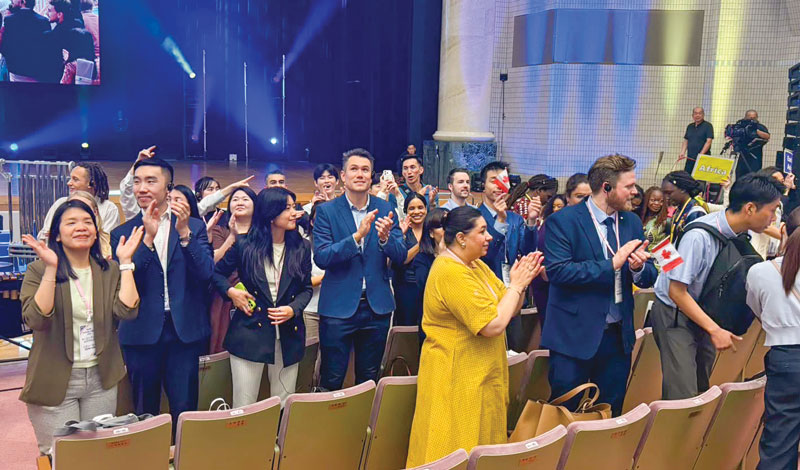
On Sunday, more than 3,000 young people gathered at Soka University’s Ikeda Memorial Auditorium for the 2026 Soka Youth General Meeting. The theme, “Starting With Me,” reflected a central message of the training course—change begins with the individual.
The auditorium came alive with experiences, determinations and performances by young people from around the world. The program gave expression to the international scope of kosen-rufu and the shared commitment of youth advancing the movement in their respective communities.
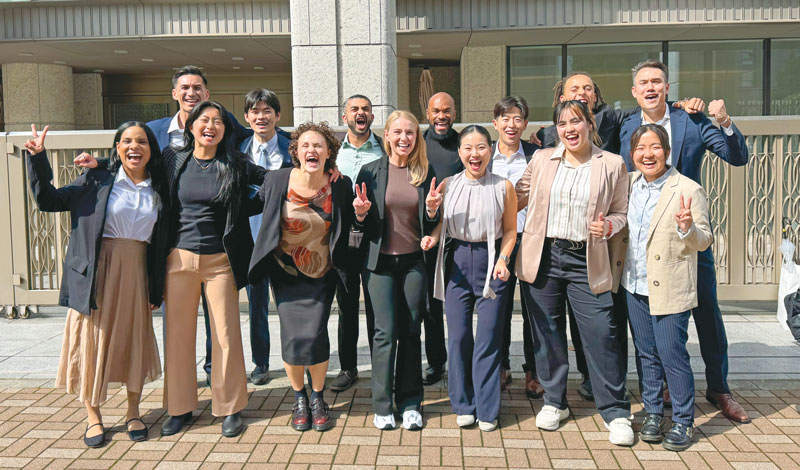
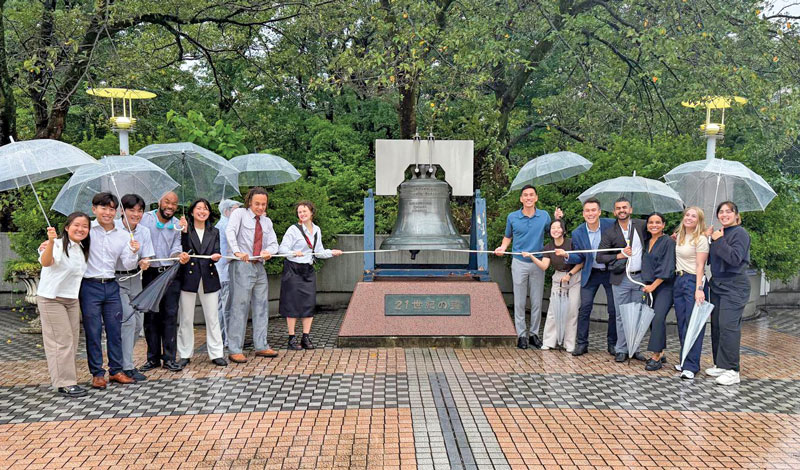
Throughout the training course, participants formed friendships across cultures, sharing experiences and determinations for kosen-rufu during meals, activities and informal exchanges. In those connections, the theme “Starting With Me” took on a global dimension—each person’s determination to contribute to a shared movement for peace.
TOKYO
SEPTEMBER 7
Soka Gakkai Headquarters
The Mission of SGI-USA
On the final day, the North America and Oceania youth received guidance from Hideaki Yanashima, SGI young men’s leader. Addressing the SGI-USA youth, he acknowledged the vast distances across the U.S., the need for more youth leaders and the challenge of balancing work, family and activities.
Yanashima encouraged them to take on these realities while deepening their sense of mission and the importance of engaging in their human revolution. Drawing on the Osaka Campaign, his guidance returned to the purpose of kosen-rufu and the importance of sharing in people’s joys and struggles. Whatever their present circumstances, he encouraged them not to put themselves down or rush, but to strengthen their fundamental determination and continue moving forward.
Become the Person Who Can Encourage Anyone
The training course concluded with a guidance and Q&A session led by Minoru Harada, president of the Soka Gakkai. He spoke about “voluntarily assuming the appropriate karma,” reminding the young people present that they are Bodhisattvas of the Earth—the lead actors in their own lives, capable of transforming the winter of suffering into a springtime of growth and joy.
Participants asked about: young people depending heavily on social media for friendship; members whose life choices others might not understand; and the struggles of working in an industry connected to weapons and war.
In each case, Harada returned to the person. Rather than judging someone based on their circumstances, he encouraged the participants to seek to understand the individual. Regarding technology, for example, he encouraged leaders first to understand what fellow youth are thinking and seeking and then offer guidance capable of reaching their hearts. Faith, he stressed, is daily life. Whatever circumstances a person may be facing, the essential challenge is to utilize faith to continue engaging in one’s human revolution.
During this session, Harada kept returning to a point that had emerged repeatedly over the previous five days—that encouragement begins with sincerely seeking to understand and support the person in front of you. One person’s human revolution can become the starting point for changing an entire community.
For the 14 SGI-USA youth returning to communities across America, while the training course in many ways began in Tokyo, it did not end there. Many of the participants spoke of returning home with renewed determination—to create peace in their communities, to treasure the friendships they had formed with youth from around the world and to become a source of hope for others.
Kenichi Hackman, SGI-USA young men’s leader, affirmed that everyone is returning home knowing the mission that awaits them here. Sensei demonstrated, he said, “how one disciple who chants day after day to fight alongside his mentor can achieve the impossible, and now it is our turn.”
With the “One Youth. Infinite Hope” movement advancing, Hackman resolved to begin with prayer and “share our joy with one youth after another.”
For these 14 youth, “Starting With Me” was no longer simply the theme of a meeting in Japan. It meant returning home, treasuring the person in front of them and putting everything they learned into action.
From the November 2026 Living Buddhism
References
- Battle of Okinawa: One of the deadliest battles of World War II, fought from April to June 1945 between U.S.-led Allied forces and the Japanese military. The battle devastated Okinawa and resulted in the deaths of well over 100,000 civilians. ↩︎
- Osaka Campaign: In May 1956, the Kansai members, uniting around a young Daisaku Ikeda, who had been dispatched by second Soka Gakkai President Josei Toda to support them, increased their chapter’s membership by 11,111 households in a single month. ↩︎
- The full speech can be found in My Dear Friends in America, fourth edition, pp. 447–57. ↩︎
You are reading {{ meterCount }} of {{ meterMax }} free premium articles