

What is prayer in Nichiren Buddhism? How does it shape our daily lives and society? Ikeda Sensei once described prayer in this way:
Prayer is the courage to persevere. It is the struggle to overcome our own weakness and lack of confidence in ourselves. It is the act of impressing in the very depths of our being the conviction that we can change the situation without fail. Prayer is the way to destroy all fear. It is the way to banish sorrow, the way to light a torch of hope. It is the revolution that rewrites the scenario of our destiny.[1]
As SGI members, we carry out such prayer by chanting Nam-myoho-renge-kyo each morning and evening as the foundation of our Buddhist practice. What we chant and how we chant are essential to making the impossible possible each day—in our lives and in our environment. This month, let’s take a deeper look into prayer.
What Is Prayer?
The word prayer might evoke the idea of passively asking an external power for salvation. But prayer in Nichiren Buddhism is entirely different. It is the effort to strengthen our inner conviction in the power within us and to align our lives with the vast rhythm and life force of the universe—the Mystic Law.
Shakyamuni Buddha awakened to the truth that all people, without exception, have an eternally abiding Buddha nature.
Nichiren Daishonin awakened to this truth and spread the revolutionary view that, regardless of social status, background or length of Buddhist practice, anyone can reveal their Buddhahood in this lifetime, just as they are, and build indestructible happiness. He established a practice accessible to all, enabling us to resolve suffering on a fundamental level.
This accessible practice entails chanting Nam-myoho-renge-kyo—the title and essence of the Lotus Sutra—to the Gohonzon, a mandala or object of devotion embodying the Daishonin’s enlightened life state.
Simply by engaging in this practice, we can transform ourselves, the environment and the world by a “radical deepening of our own chanting of Nam-myoho-renge-kyo to the Gohonzon.”[2]
Sensei illustrated this point when encouraging a farmer in Brazil struggling to grow crops:
Prayer in Nichiren Buddhism means to chant based on a pledge or vow. At its very core, this vow is to attain kosen-rufu. It means chanting resolutely with the determination ‘I will realize kosen-rufu in Brazil. Therefore, I will show magnificent actual proof in my work. Please enable me to somehow bring forth my greatest potential.’ This is what our prayer should be like.[3]
When we pray for ourself and others with a vow to continue growing and contributing to spreading Buddhism’s humanistic ideals, our lives expand limitlessly. Sensei writes: “Our Buddhist practice of chanting enables us to overcome our shallow, limited ego and our attachment to our lesser self, and reveal our greater or higher self that is one with the Mystic Law.”[4]
Bringing Forth Boundless Wisdom and Courage
Why is chanting to the Gohonzon every day so important?
Just as we use a mirror to get ready, we need a spiritual mirror to reflect our inner state of life. The Gohonzon serves as that mirror. Nichiren writes: “A mind now clouded by the illusions of the innate darkness of life is like a tarnished mirror, but when polished, it is sure to become like a clear mirror.”[5] We can polish our lives by chanting Nam-myoho-renge-kyo and continuously elevate our state of life toward Buddhahood.
Life inevitably presents obstacles. No one can escape the four sufferings of birth, aging, sickness and death. To fully enjoy life without being defeated by hardships, we need a strong life force.
“Chanting Nam-myoho-renge-kyo,” Sensei says, “enables us to bring forth limitless life force.”[6] With such vibrant life force, even difficulties can become springboards for our growth and progress.
But we might sometimes struggle to find a way forward, especially when overwhelmed by our deep-set negativity or fundamental darkness. In discussing Nichiren’s writing “The Strategy of the Lotus Sutra,” Sensei explains:
The ‘strategy of the Lotus Sutra’ refers to faith in the Gohonzon. It is faith that battles ignorance and delusion, breaks through negative karma, and wins without fail through confident prayer and the boundless wisdom and courage that flow forth as a result.
No matter what the situation, when we base ourselves on the Mystic Law, the ultimate Law of the universe, we will never be deadlocked.[7]
Cowardice, fear and doubt distort our view of life, making even minor challenges look like huge obstacles.[8] By deepening our faith in the Gohonzon and strengthening our resolve to be victorious, we can bring forth unlimited wisdom and courage to make the impossible possible.
Prayer—A Direct Path to Happiness
How can we experience the power of prayer in our daily lives? Here are three essential perspectives to keep in mind.
1) We Are Buddhas Just as We Are
The purpose of practicing Nichiren Buddhism is our happiness. There is no need for formality—we can honestly chant with what’s in our hearts in good times or bad. Sensei reminds us:
The Gohonzon is the manifestation of the Buddha endowed with infinite compassion. We should therefore go ahead and chant about our desires, our problems and our aspirations, just as they are. When we’re suffering, feeling sad or experiencing hard times, we should just go to the Gohonzon with an open heart, like an infant who throws himself into the arms of his mother and clings to her. …
In time, even hellish sufferings will vanish like the morning dew and seem as but a dream.[9]
2) Set Concrete Goals
By chanting with focus and refreshing our determinations each day, we can tap into our Buddha nature and bring forth wisdom, courage and compassion. When we align our personal goals with our vow for kosen-rufu, we can draw boundless inner power.
How do we set goals around chanting? Sensei emphasizes that both quantity and quality matter:[10]
The most important thing is that we are filled with a satisfying sense of revitalization after chanting. When we continue chanting in this way each day, we will naturally come to experience a life in which all our desires are fulfilled.”[11]
What do we do when things don’t turn out the way we wanted? We continue chanting! As long as we never give up, everything will work in the best way possible. Second Soka Gakkai President Josei Toda often said: “A strong prayer to the Gohonzon is certain to be realized. There are three conditions, however: Nam-myoho-renge-kyo, Nam-myoho-renge-kyo and more Nam-myoho-renge-kyo!”[12]
3) Maintain a Firm Determination
To realize our goals and dreams, we must win over our deep-seated fears, doubts and negativity.
Sensei says, “When we pray, it’s important to have a firm conviction that all our prayers will be answered and to pray with intensity.”[13] Even a subtle shift in our mind of faith can make a profound difference. To believe in the Gohonzon means believing in ourselves.
Mr. Toda often stressed, “You should resolve, ‘I am Myoho-renge-kyo!’”[14] Strengthening our faith is vital, because the moment we grow complacent or careless, devilish functions attempt to disrupt our Buddhist practice .
Nichiren stressed, “It is the heart that is impor-tant.”[15] Here, “heart” doesn’t mean emotion alone but implies a sincere desire or a vow.[16] When we resolve to realize our goals and demonstrate actual proof for kosen-rufu, we reveal a powerful life condition capable of moving even the entire universe.[17]
We Win the Moment We Pray
What difference does praying with resolve each day make? Sensei once explained:
A mind that has broken free of the fetters of ignorance is as vast as the sky and as free as a soaring eagle. … It is filled with the Buddha wisdom that enables us to rise above and overcome all ills and misfortunes.[18]
Our prayer can change any poison into medicine. Mr. Toda once said, “It can transform a life imbued with painful karma into one that is like strolling in a beautiful garden, or like a pleasant dream.”[19]
When we chant to the Gohonzon, we align our lives with the universe itself. “When we synchronize the microcosm of our lives with the macrocosm of universal life, we can tap unlimited power and overcome any problem,”[20] Sensei said. At the same time, we immediately activate all the protective forces in the entire universe to support our efforts.
The moment we pray with fresh and vigorous resolve, the path to victory opens up before us. Prayer, Sensei says, “is a burning inner flame to be victorious. If that flame of resolve blazes in our heart, the instant we chant, we have already won.”[21] With such single-minded resolve, our next steps become clear. And from that elevated life condition, every action we take turns into a source of benefit.
Leading a Life of Complete Fulfillment
Today, as division and uncertainty cast shadows over the world’s future, we may sometimes feel powerless or unsure where to begin. But there is always something we can do from where we are right now. Sensei urges:
Let us chant to the Gohonzon about all of our problems in life and challenge them. Prayer is essential. Let’s never forget that everything starts from prayer.[22]
Through earnest prayer, we can find the conviction and clarity to transform our challenges. He also reminds us: “Our wisdom is essentially unlimited. It can make the impossible possible.”[23] Prayer draws forth wisdom and becomes the driving force for taking wise, tenacious action.
Sensei assures us, “So long as you maintain strong faith, resolutely chanting daimoku to the Gohonzon no matter what happens, then without fail you will be able to lead a life of complete fulfillment.”[24]
When we refuse to give up and base ourselves on prayer with firm resolve, we can win—always—with the best possible outcome.
Prayer for Absolute Victory
Five passages from Nichiren Daishonin that will change the way you pray.
1. You must simply make up your mind. … You should pray intently that Shakyamuni, Many Treasures, and the Buddhas of the ten directions will all gather and take possession of your body to assist you. (“Reply to Yasaburo,” The Writings of Nichiren Daishonin, vol. 1, p. 827)
2. Suffer what there is to suffer, enjoy what there is to enjoy. Regard both suffering and joy as facts of life, and continue chanting Nam-myoho-renge-kyo, no matter what happens. … Strengthen your power of faith more than ever. (“Happiness in This World,” WND-1, 4).
3. Never seek this Gohonzon outside yourself. The Gohonzon exists only within the mortal flesh of us ordinary people who embrace the Lotus Sutra and chant Nam-myoho-renge-kyo. (“The Real Aspect of the Gohonzon,” WND-1, 832)
4. Though one might point at the earth and miss it, though one might bind up the sky, though the tides might cease to ebb and flow and the sun rise in the west, it could never come about that the prayers of the practitioner of the Lotus Sutra would go unanswered. (“On Prayer,” WND-1, 345)
5. A sword is useless in the hands of a coward. The mighty sword of the Lotus Sutra must be wielded by one courageous in faith. Then one will be as strong as a demon armed with an iron staff. (“Reply to Kyo’o,” WND-1, 412)
Anything Is Possible with a Strong Prayer
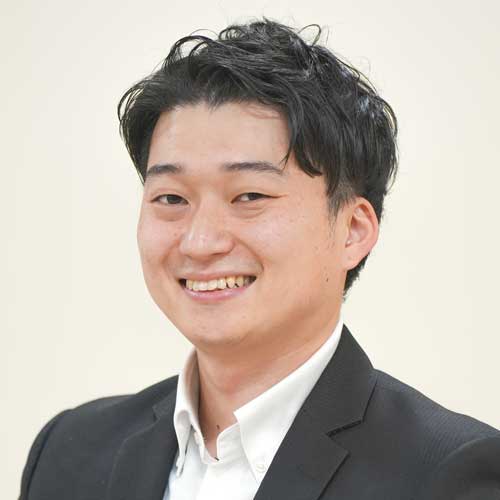
Koichi Onogi / Austin, Texas
Living Buddhism: Thank you, Koichi, for sharing your experience about prayer. To begin, how did you start practicing Buddhism?
Koichi Onogi:
I was born into a family that practices Nichiren Buddhism, and grew up in the garden of Soka. I always saw my parents working hard for the Soka Gakkai and for the members. My great-grandparents first started practicing, so I’m the fourth generation in my family to practice Buddhism.
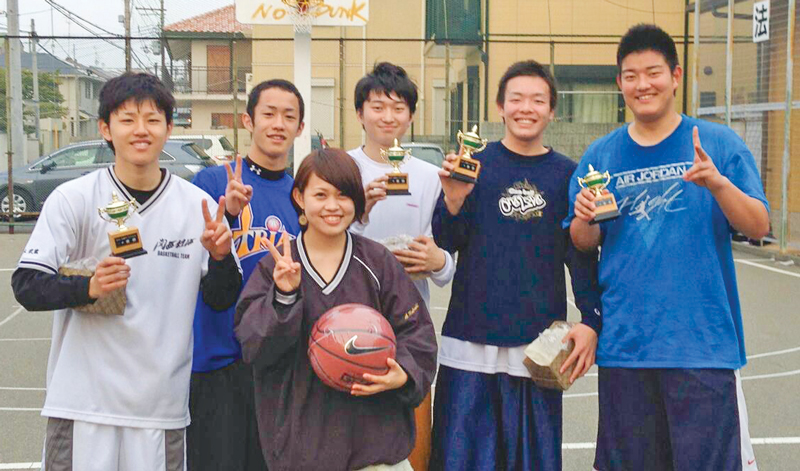
I started doing gongyo when I was 5 or 6. I attended many future division activities growing up. Even when I became busy with my basketball practices in junior high and high school, I continued chanting every day.
When was the first time you prayed intently?
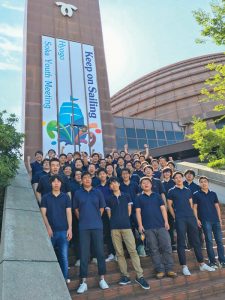
Koichi: In Kansai Soka junior high and high school where I went, there was a unique tradition of holding a big sports festival each year run by students. When I was in ninth grade, I was in charge of planning the sports festival for the junior high school. My teacher encouraged me by saying, “Your strong resolve will determine the success of the festival, so please chant abundantly.”
At the time, a huge typhoon was expected to come in, so I chanted many hours for three or four days straight for this typhoon to have no impact on our festival. Then, the typhoon changed its path! But soon after, we had to cancel the festival because a new type of flu was spreading.
How did you react to that?
Koichi: I was upset! I thought, I chanted so much. What is going on? Teachers encouraged me afterward, but I don’t even remember what they said because I was so angry. That month, I stopped chanting consistently. Shortly after, there was a school trip to Tokyo, and I was asked to support but I rejected the request. I didn’t want to do anything. During the trip, my friends and I behaved badly and upset our teachers.
The morning after we arrived, Ikeda Sensei visited Soka University in Japan where we were staying. We made a line and the car Sensei was in moved by slowly to encourage each person. I didn’t get to say anything at the time, but I felt like Sensei strictly looked into my eyes. In that moment, I thought to myself, This isn’t the time to stagnate. Maybe I should try again.
From then on, I started studying hard and got more engaged with school activities. I became a chief editor for the school magazine, putting a spotlight on great activities in the school. We sent each issue to Sensei. In 12th grade, I was in charge of the sports festival again. This time, because of the difficult experience I had in the ninth grade, I was determined to have the best possible festival together with Sensei. And we did! I felt really great about it. That was when I started thinking about going to Soka University of America (SUA). I learned that prayer based on strong conviction can turn anything into a great opportunity.
During your time at SUA, you had another turning point. Can you tell us about it?
Koichi: When I came to SUA, I had intense culture shock—life in the U.S. was so different from where I grew up. It was difficult for me to join district meetings because I didn’t know what I could share, and my English wasn’t as good as it is today.
During my study abroad, I did a backpack trip around South America. When I went to Cusco, Peru, I stayed with a person my friend’s father knew. It turned out that he was an SGI member. Members in the district got together every morning to chant for an hour. Since I was staying there, I joined them.
I heard the experience of the district men’s leader. He used to struggle with alcoholism and poverty while raising his four kids. One day, he went to a district meeting. He still remembered the exact day—feeling for the first time that he wanted to change his life. After that, he started working at a travel agency and now he has three offices in Cusco, running for kosen-rufu together with his wife as a district leader.
Hearing the story of how his family completely transformed their lives through this practice deeply encouraged me. At that moment, I felt, Maybe I should put more effort in my Buddhist practice.
Once I came back from studying abroad, I started getting more involved in SGI activities. I fought all out as a vice district leader, and we received an award as a district. I felt really fulfilled from having done everything I could do.
When you were working in Japan, you had a realization about your dream through prayer. How were you praying during this time?
Koichi: After graduating from SUA, I worked at a global consulting firm. I was really struggling with the intense workload. One day, I got a call from a youth leader who had raised me back home. He encouraged me saying, “Koichi, the only thing that prevents you from introducing others to this Buddhist practice is your lack of conviction.” This was another turning point. I started chanting more and challenged myself to share the practice with others. Through this, I was able to overcome many struggles.
Then, the COVID-19 pandemic started. After finishing a project at work in April 2020, I wasn’t as busy as before. I decided to use the extra time to chant abundantly to determine the trajectory of my life. I wasn’t sure if I wanted to keep doing the same work for the rest of my life. I chanted for hours every day asking myself, How do I want to use my life? Then, I found within myself the dream that I had always held, to become a researcher. I realized that I had been choosing my path based on feedback from others instead of what I really wanted to do.
First, some doubts and fear came up. But through chanting with a firm determination, I could bring forth so much wisdom. I connected with friends and alumni to get guidance and information on what I had to do. Once I made up my mind, everything became clear on what steps I had to take in order to achieve my goal. Within a year, I got accepted to a master’s program and moved to Chicago in 2021 to start the program.
You had a new obstacle after you started your master’s degree. How did you use prayer to win this time?
Koichi: In the program, everyone has a track they focus on. Even though I had applied for economics, I didn’t get assigned to any track. I thought, “What? How am I going to pursue research in economics then?” But I was not discouraged. I started another daimoku campaign to change poison into medicine. I realized that I needed a research assistantship. In general, the chance for master’s students to get such a position is quite low, and it is highly competitive.
In January 2022, the school started the semester a week later than originally scheduled. I thought that might be the best time to reach out to professors. I con-
tacted some professors, and the next day I got two research assistant positions! It was almost a miracle, but I think I was able to move the protective functions of the universe in a way that everything worked out in the best way possible.
In addition, the university started a new extension program for undergraduate students to take advanced econ courses. There was one rule, however, that graduate school students who are majoring economics couldn’t take them. Since I wasn’t majoring economics, I could take them! I could take all those courses, making many connections and even my GPA went up. At the end of the program, I was the only person who got into a Ph.D. program in econ among my classmates.
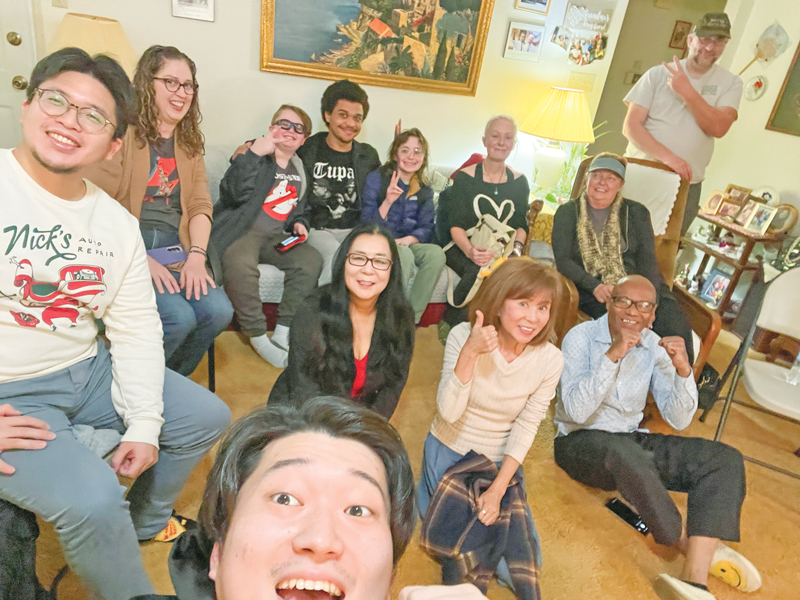
I moved to Texas to start my Ph.D. studies. I have a great support system where a couple of students look at my research whenever I have a question. I have shared about my Buddhist practice with some students in my cohort. As we continue to chant and make causes in our practice, I feel like the people around us become our protective functions.
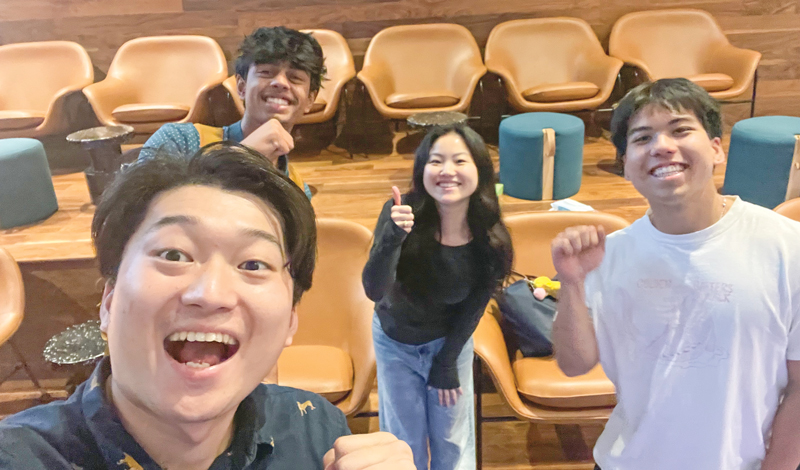
Was there any shift in how you prayed over time?
Koichi: Yes. Through my journey with prayer, I learned that chanting brings out so much appreciation. One day, I was crying with deep gratitude to my parents for introducing me to this wonderful practice, for my sincere friends in faith, who have always encouraged me. Above all, for Ikeda Sensei, who created such a beautiful Buddhist community and peace movement to which I can devote my life to. And that appreciation brings forth the wisdom to have clarity, courage to take action and conviction in the path we choose.
Before, when I had an issue, I chanted. But now, whether anything good or bad happens,
I chant. When a great thing happens, I can appreciate and deepen my faith. Also, whenever I feel like I’m not having enough appreciation, I try to sit in front of the Gohonzon and chant. And 100% without exception, I feel deep appreciation toward a person or the environment. Daimoku always works!
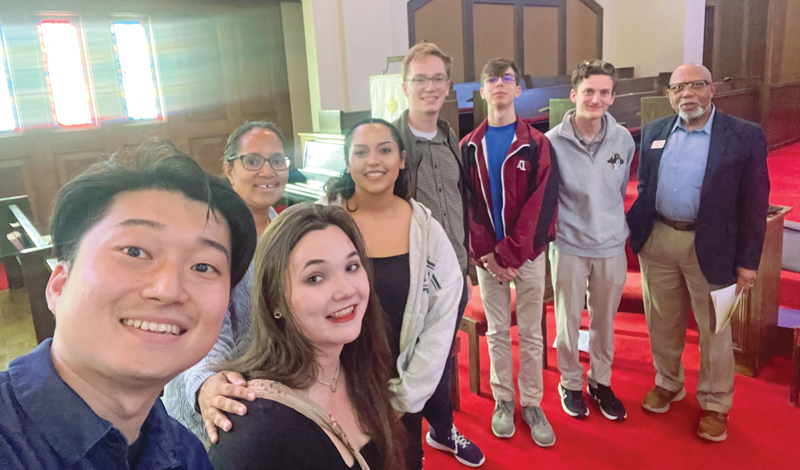
Any closing thoughts?
Koichi: During each campaign, Sensei always put prayer first. If that’s the way our mentor fought, then I think I should be fighting the same way, too. I really want to challenge myself with chanting as much as possible.
One time, I was visited by a student division leader who always encouraged me. Before we began chanting, he shared with me that it is important to pray never to become an enemy of my mentor or the organization in any way. So that’s something I always chant about at the beginning.
I have all my goals written on a board along with all the members’ names. I am always chanting to make sure I’m going all out in my efforts. I want to make this one year worth 100 years for kosen-rufu.
From the March 2026 Living Buddhism
References
- December 3, 2004, World Tribune, p. 8. ↩︎
- March 17, 2006, World Tribune, p. 3. ↩︎
- The New Human Revolution, vol. 1, p. 269. ↩︎
- The Hope-filled Teachings of Nichiren Daishonin, p. 248. ↩︎
- “On Attaining Buddhahood in This Lifetime,” The Writings of Nichiren Daishonin, vol. 1, p. 4. ↩︎
- NHR-4, 76. ↩︎
- The Hope-filled Teachings of Nichiren Daishonin, p. 143. ↩︎
- See Ibid., 143. ↩︎
- NHR-11, 110–12. ↩︎
- Discussions on Youth, new edition, p. 303. ↩︎
- The Wisdom for Creating Happiness and Peace, part 1, revised edition, pp. 123–24. ↩︎
- June 27, 2008, World Tribune, p. 4. ↩︎
- NHR-23, 315. ↩︎
- Nov-Dec 2006, Living Buddhism, p. 92. ↩︎
- “The Strategy of the Lotus Sutra,” WND-1, 1000. ↩︎
- The Hope-filled Teachings of Nichiren Daishonin, p. 137. ↩︎
- See NHR-21, 250. ↩︎
- The Hope-filled Teachings of Nichiren Daishonin, p. 141. ↩︎
- June 27, 2008, World Tribune, p. 4. ↩︎
- Discussions on Youth, new edition, p. 301. ↩︎
- May 15, 2009, World Tribune, p. 5. ↩︎
- The Wisdom for Creating Happiness and Peace, part 1, revised edition, p. 120. ↩︎
- Making the Impossible Possible, p. 90. ↩︎
- My Dear Friends in America, fourth edition, p. 95 ↩︎
You are reading {{ meterCount }} of {{ meterMax }} free premium articles