

Ayu Nakazaki and Koichi Onogi
SGI-USA Student Division Leaders
Hi everyone! How has your summer been? Are you feeling ready and excited for the new semester?
Before we begin this fresh new semester, this month we will focus on how we can start SGI-USA campus clubs at our schools this fall.
To establish an SGI-USA campus club, it is required to have at least one SGI-USA student division member—someone between the ages of 18 and 25 who is enrolled in post-secondary education—appointed as the club leader. Campus club activities, however, are open to all students currently enrolled at that school, regardless of age.
A club advisor (a local women’s or men’s division leader) is optional, though it is highly recommended to find someone who can support the development and success of the club.
Students should check their school’s specific policies to become an official club since each university has its own rules.
To establish a campus club within SGI-USA, a paper application should be completed and submitted to the local SGI-USA zone office. Please check with your local leaders for more details.
Now that we know the basic steps to starting a campus club, you may still be wondering: Do I really have enough time and energy to do this? What kind of activities should we even do?
By challenging ourselves to think about how to create an engaging and empowering space for students, we can tap into our creativity and enliven on-campus SGI activities. Such efforts also help us build a firm foundation for our lives. It helps us transform our life condition and win in every area of our lives.
Ikeda Sensei says:
“Life is a constant struggle with problems. They’ll always be there. What matters is whether you let them defeat you or not. Happiness rests on you becoming a person whom nothing can defeat. … Youth is the time to forge a strong inner core so that you can face such difficulties. The only way to do that is to actively strive to develop your capability in the Soka Gakkai and polish and strengthen your life.
“As young people with the mission to become great leaders of the 21st century, please reach out to those around you who may be struggling, thoroughly encourage them, and speak with them about Buddhism. In doing so, you can cultivate the leadership and character that will inspire others while also deepening your conviction in Nichiren Buddhism.” (The New Human Revolution, vol. 28, pp. 22–23)
As Sensei says, when we challenge ourselves in faith we can develop ourselves and win over any situation. We do not need to wait for the perfect conditions or timing. Instead, we chant Nam-myoho-renge-kyo and take action—one step at a time.
When Sensei faced fierce adversity and stepped down from his position as Soka Gakkai president, he encouraged the student division and young men’s division leaders by saying, “Youth must resolve to take full responsibility and be the driving force for development” (NHR-30, 159).
This is our time as student division members to embark on a fresh voyage toward the ocean of kosen-rufu. Let’s reach out to our local youth or student division leaders and friends to discuss what we can do to create gatherings of students on campus, and in our communities where we can talk about how to overcome our struggles and live the most joyful lives through the power of Buddhist practice.
Are you feeling inspired to start or expand your campus club? Let’s do it together!
Again, if you have any questions regarding student division activities or campus clubs, please reach out to your local SGI-USA leaders.
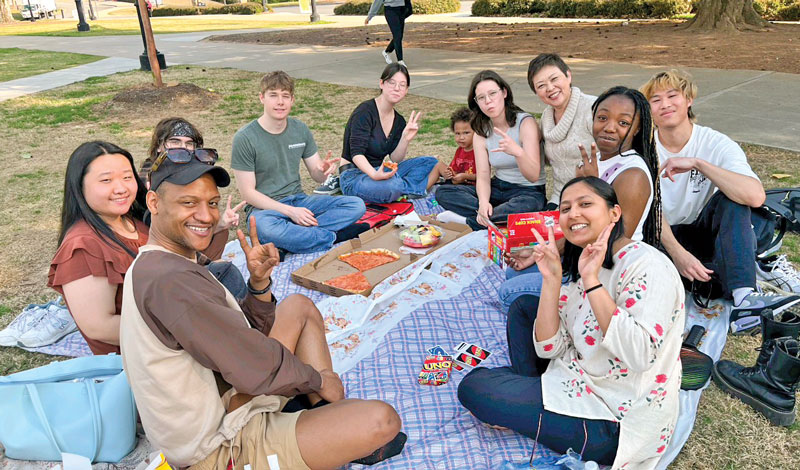
A Culture of Encouragement

Name: Justin Ratanavong
City: Atlanta
School: Kennesaw State University
Living Buddhism: Hi Justin. Thank you for speaking with us. How did you begin your Buddhist practice?
Justin Ratanavong: When I was growing up, Buddhism was always a part of my life. However, it was not until I entered college that I began looking to Buddhism as a way to succeed academically and manage the stress that came with that transition.
At first, I would just chant Nam-myoho-renge-kyo to achieve good grades and academic success. Diving into Buddhist study and connecting with other SGI members led me to experiencing a shift in my practice. I realized that Buddhism is not only about achieving specific goals but rather a way to develop myself and bring out my full potential.
How has your Buddhist practice helped you navigate student life?
Justin: Before I began practicing seriously, I would often doubt my capabilities and become discouraged when things didn’t go as planned. Chanting consistently shifted my mindset in a positive way, and I became more confident in myself—seeing obstacles as opportunities rather than setbacks.
As an engineering student, there are many times I feel overwhelmed by coursework, exams and balancing multiple responsibilities. My Buddhist practice allows me to double down in my efforts and become resilient despite all the stress. It’s become a key source of encouragement in my growth as a student and a campus club leader.
What is the focus of your campus club at Kennesaw State University (KSU)?
Justin: Our activities focus on creating a welcoming environment where students encourage one another. In our meetings we share experiences and center our discussions around study material in the Living Buddhism or World Tribune.
Sometimes we plan out a whole study beforehand, and other times we freestyle it and just have an open dialogue with each other. For example, around Valentine’s Day we talked about learning to love ourselves.
The campus club is a space where students can let go of their feelings of stress, pressure or loneliness. It’s a space where we learn to create value during our time in college and have a support system to always go back to.
For me personally, the campus club has brought me camaraderie. I want other students to know that a positive environment exists within the SGI and that they don’t need to be consumed by the negativity we experience in the world today. That’s what fuels me to continue doing campus club activities.
What challenges have you experienced as a campus club leader? How have you grown from them?
Justin: The biggest challenge is encouraging students to attend meetings. Many have schedules packed with classes, jobs, internships and other commitments, making it hard to find a time that works for everyone. Further, some students aren’t familiar with Buddhism, and at times I’m met with hesitation when inviting them to attend a campus club meeting.
This challenge has taught me the importance of consistent outreach and developing creativity to make our meetings welcoming and relevant to students. Rather than becoming discouraged, I see it as an opportunity to find new ways to connect with others. More than anything, the campus club has deepened my sense of responsibility and desire to contribute to the success and happiness of others.
What are your determinations?
Justin: Moving forward I’m determined to make the club more visible at KSU. We plan to participate in campus events and create more interactive activities that showcase Buddhism through social gatherings and cultural events.
Since I will be graduating soon, I hope to build a strong foundation for the club—establishing a culture of encouragement to empower everyone to discover their innate potential.
Personally, my immediate goal is to secure an internship and pursue a career in lean manufacturing or continuous improvement, which are processes of reducing waste and increasing efficiency in engineering. On a deeper level, I will continue to learn new things about myself and forge a stand-alone spirit.
You are reading {{ meterCount }} of {{ meterMax }} free premium articles