
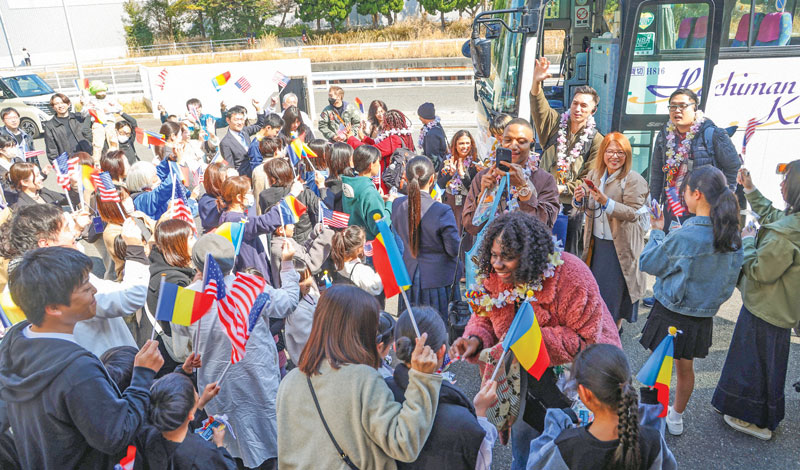
The 120 SGI-USA youth training course participants traveled to several prefectures in Chugoku region, the westernmost area of Honshu, the largest island of Japan. There, they traveled to 15 locations to attend exchange meetings in groups of eight.
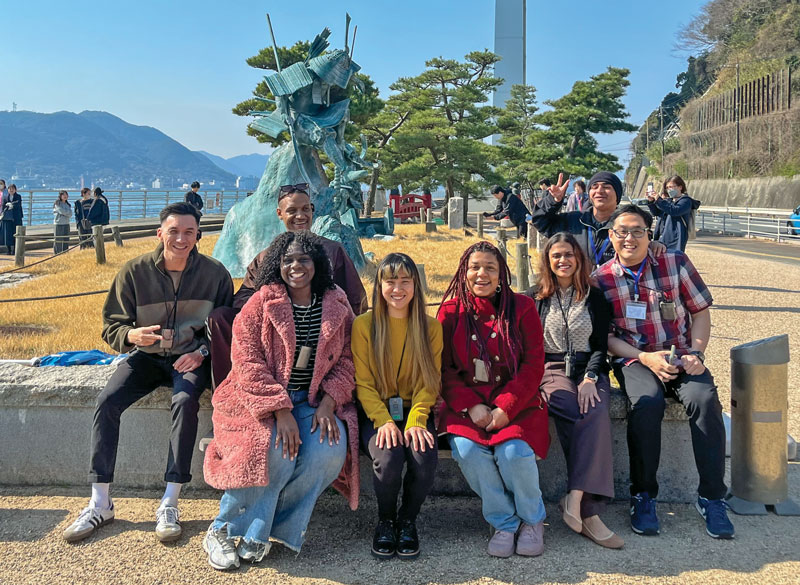
This exchange group made their way to Shimonoseki, the largest city in Yamaguchi Prefecture, where they walked in their mentor’s youthful footprints.
Their first stop was the Toyo-kan, the inn where Ikeda Sensei, then 28, lectured before a small group of members at the start of the Yamaguchi Campaign—one of the six great propagation campaigns that formed the bedrock of kosen-rufu in Japan.
Sensei had traveled first to Shimonoseki, selling his personal belongings to cover his travel expenses (see Making the Impossible Possible, p. 80). At the time, the membership numbered around 100 households. Yet, within the walls of the inn, Sensei chanted with the members and lectured on Nichiren Daishonin’s writing “On the Four Stages of Faith,” instilling in them the profound mission they shared to propagate the Law and alleviate the people’s suffering.
From the inn, the local members took the youth to the storied Kanmon Bridge, where, in the 12th century, the Battle of Dan-no-ura took place. Here, the famous samurai Minamoto no Yoshitsune defeated the ruling Taira clan, spelling the end of the Heian era in Japan.
The Shimonoseki members relayed what Sensei once wrote about Yoshitsune: “Though lacking experience, the youthful Yoshitsune was fearless. He was determined to win no matter what, and he possessed a keen mind and indomitable vigor and strength” (The New Human Revolution, vol. 15, revised edition, p. 281). Adopting Yoshitsune’s spirit, Sensei fought with the same resolve during the Yamaguchi Campaign, regarding it as “a battle for the Law that shall go down in history” (A Youthful Diary, p. 302).
To be sure, the members’ collective propagation efforts in 1956 and early 1957 expanded the membership in Yamaguchi Prefecture from about 400 households to nearly 10 times that, creating an enduring model for successive generations.
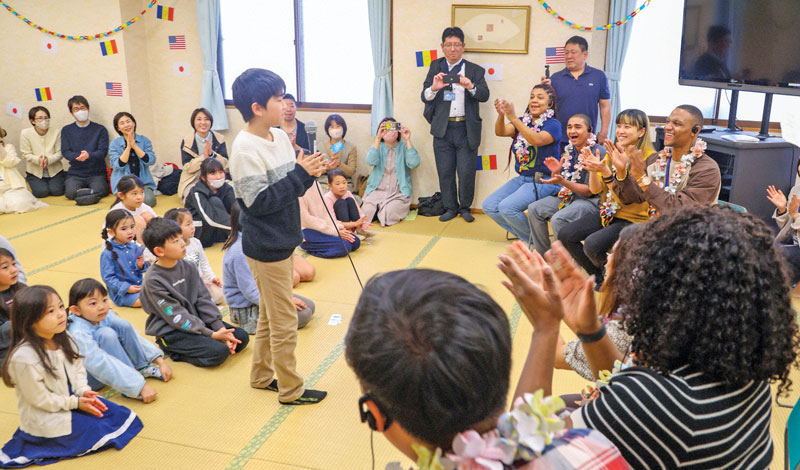
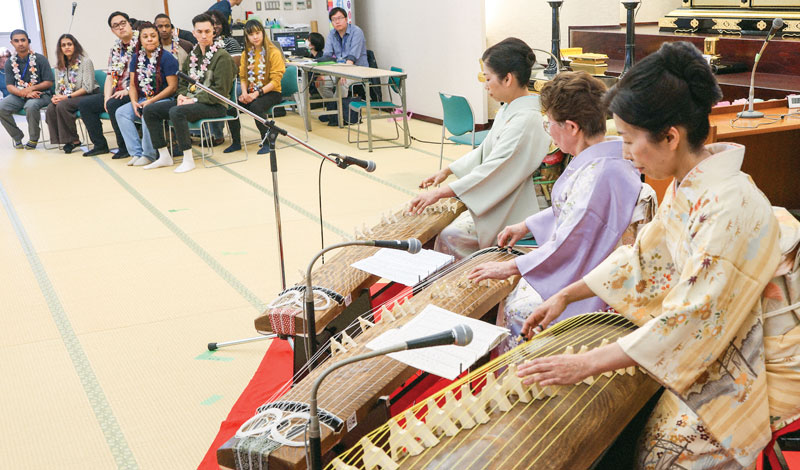
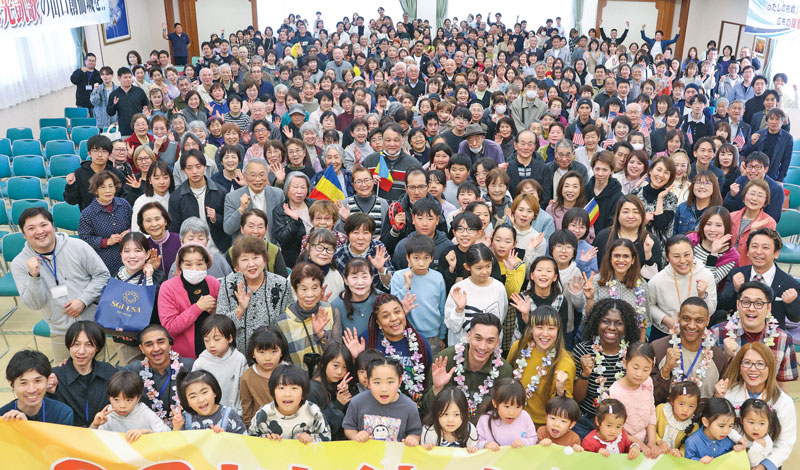
Seven decades later, the youth from the U.S. stepped into that history. Arriving for their exchange meeting at the Shimonoseki Culture Center, they were welcomed with gleeful anticipation. There, they performed a short dance to the K-pop hit single “Golden” and engaged in a dialogue session with guests brought by local members. Using all their youthful vigor, they passionately shared Buddhism, linking the past to the present and the future forever onward.

Solidifying My Vow
Jackie Alexander Chicago
In Shimonoseki, it was so great to have dialogue with members who are also seeking to transform their communities through shakubuku. At the exchange meeting, a guest asked me, “Why are there youth in America practicing Nichiren Buddhism, a religion that originated in Japan?” I shared about Ikeda Sensei’s travels for peace and how my life and practice have been directly affected by his causes to expand kosen-rufu.
Traveling to Hiroshima had a tremendous impact on me too. Seeing the devastating effects of nuclear weapons solidified my vow to ensure the achievement of kosen-rufu. As someone who works in a children’s hospital, seeing images of a destroyed hospital and the devastation nuclear weapons inflicted upon the local children is something I will never forget.
The training course showed me that others can learn about Sensei through my life. It’s important not to judge others based on their view of Buddhism. With that, I’m determined to deepen my care for the members and help two young people begin their Buddhist practice.

Treasuring Each Individual
Jonathan Cheng New York
At our exchange meeting in Shimonoseki, many future division members greeted us. I thought about Ikeda Sensei and what he would do in that moment. With that spirit, I asked each of them their names and their dreams for the future—telling them that they each had a big mission to fulfill.
The sincerity of each member touched me the most. Everywhere we went, we were welcomed by members and given gifts. It felt as though Sensei were greeting us everywhere we went.
My biggest takeaway from this training course is to apply the spirit of treasuring the person in front of me. I’m determined to do more home visits, have dialogue with more people and create an SGI organization where youth feel treasured. I’m excited to listen to each young person in my region, hear what they want to do and create activities where we naturally want to invite friends and share Buddhism with them.
May 15, 2026 World Tribune, pp. 22–23
You are reading {{ meterCount }} of {{ meterMax }} free premium articles