
On their visit to the Okayama Minami Culture Center, this group of youth learned it was the place where, in July 1978, Ikeda Sensei composed the future division song “Torchbearers of Justice.” His visit came amid the intense challenges the members experienced during the first priesthood issue, when Sensei stepped down as Soka Gakkai president to shield the members from the Nichiren Shoshu priests’ corrupt and authoritarian machinations.[1] Sensei recounts: “I said to a group of future division members then: ‘Please promise me to become people committed to justice, who seek out challenges and surmount them. I will be carefully observing to see whether you succeed in that goal’” (April 2019 Living Buddhism, p. 49).
The Minami Center was the first of three centers the youth visited across Okayama Prefecture that day—each carrying its own history, each offering a living connection to the members who have carried Sensei’s encouragement forward for generations.
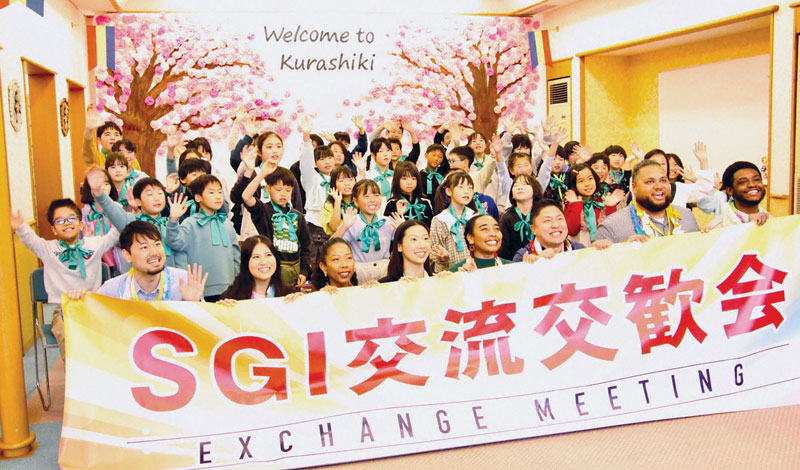
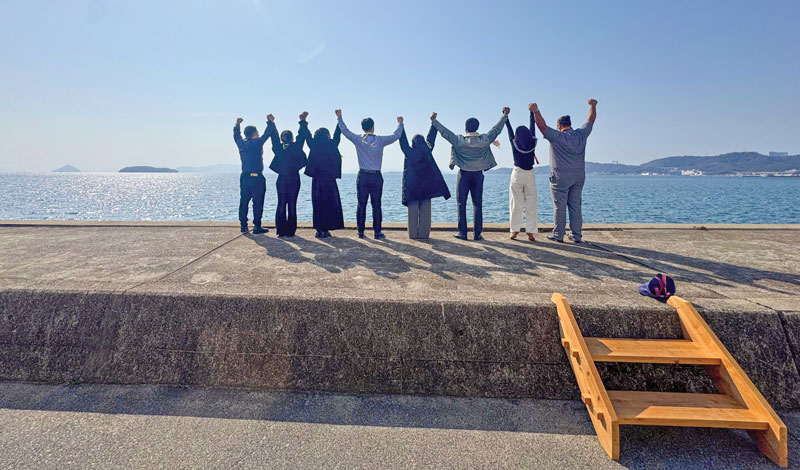
At the Kurashiki Minami Culture Center, nearly 50 members welcomed the group. Behind the center, overlooking the Seto Inland Sea, the local young men had built simple wooden steps so that Sensei could see the full expanse of the sea during a visit there. From that vantage point, Sensei encouraged the members, turning what might have been an ordinary moment into an enduring memory.
During the exchange meeting, the youth climbed those same steps and looked out over the same waters—an experience that became a powerful symbol for them to carry forward the vow for kosen-rufu in Sensei’s stead.
Later that morning, the group traveled to the Kurashiki Culture Center, where nearly 100 members welcomed them. The visit opened with a special performance by about 40 future division members, whose songs filled the hall with joy and energy. Soon after, the visiting youth joined them in a series of interactive activities—from calligraphy and kendama[2] to a blind-folded game that quickly dissolved into laughter despite the language barriers.
For many, the day reflected the spirit Sensei passed on to the future division in his song: “Through blizzards and raging storms, let’s boldly press on.”[3]

Centering on Connection and Prayer
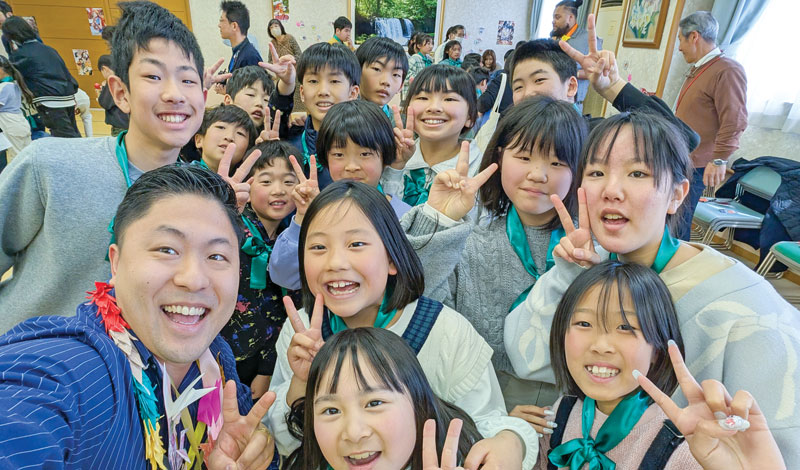
David Honda Torrance, Calif.
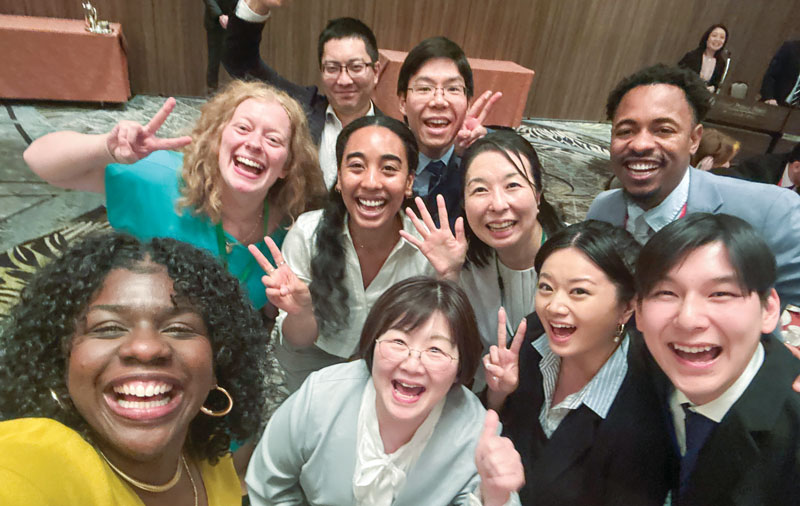
What stood out to me during the Kurashiki exchange meeting was the history each location shared with Ikeda Sensei and the pride the members took in carrying it forward. The meeting felt less formal than I expected yet was incredibly engaging, centering on
connecting with members, including those of the future division. That spirit of joy left a strong impression on me.
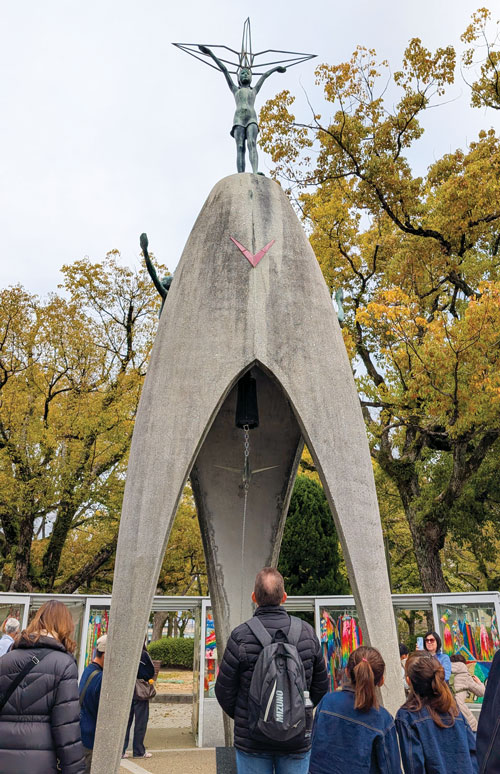
The most impactful part of the training course was our time in Hiroshima. Visiting the Children’s Peace Monument and learning the meaning of the paper cranes deeply moved me—this idea that each crane represents a child’s life and carries a message of peace to the world. It made me reflect on how our actions today shape the future for younger generations.
Moving forward, I am determined to strengthen my prayer and take action rooted in sincere daimoku. I want to connect with others, share hope and raise successors, believing that everything begins with prayer and that each effort can create lasting change.

Expanding Care to Others
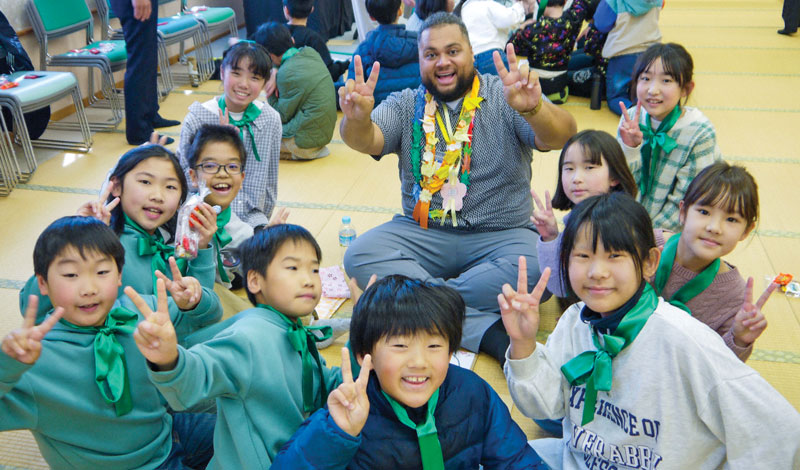
Laila-Rose Galvin Brentwood, Md.
Throughout the Kurashiki exchange meeting, I was touched by the generosity, heartfelt care and thoughtful hospitality of each member we met. I deeply appreciate all the staff who took care of us and prepared such an incredible experience.
Our time in Hiroshima was also impactful, as it solidified my mission to work toward the abolition of nuclear weapons. I heard a bell from afar and learned that every day at 8:15 a.m., it rings in remembrance of the atomic bomb dropped here, at this time, nearly 81 years ago. I was overcome with emotion, realizing that I was standing in a place where many people experienced unimaginable devastation. In that moment, I felt a deep determination to connect with and enable other people to remain hopeful amid the challenges we face in our lives and in the world around us.
I am determined to engage wholeheartedly in dialogue with as many people as possible to understand their perspectives and discover what we can do to improve our world together. I’m also committed to offering the same level of care I received in Japan to my family, friends, members and guests, and to show actual proof with my life.
May 15, 2026 World Tribune, pp. 16–17
References
- The first priesthood issue: Nichiren Shoshu priests conspired with a corrupt Soka Gakkai lawyer to attack Ikeda Sensei and the Soka Gakkai’s members, seeking to gain control over the organization’s assets. On April 24, 1979, Sensei stepped down as Soka Gakkai president to protect the members from further persecution. ↩︎
- A kendama is a traditional Japanese skill toy consisting of a wooden handle (ken) with three cups and a spike, connected by a string to a ball (tama or dama). ↩︎
- Nov. 9, 2018, World Tribune, p. 2. ↩︎
You are reading {{ meterCount }} of {{ meterMax }} free premium articles