
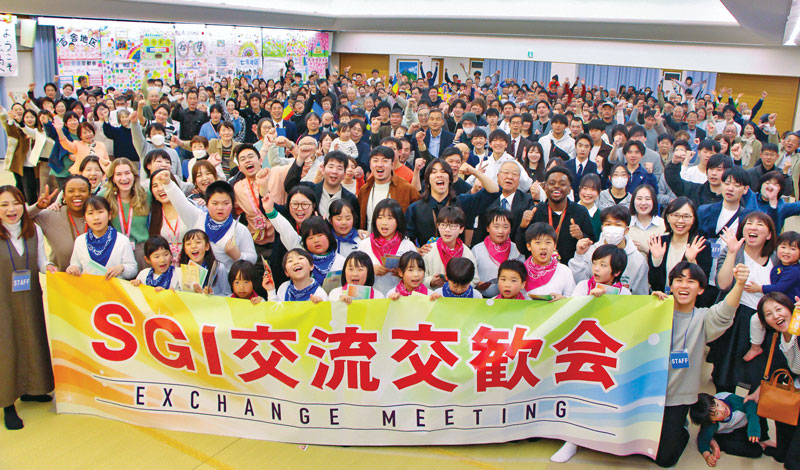
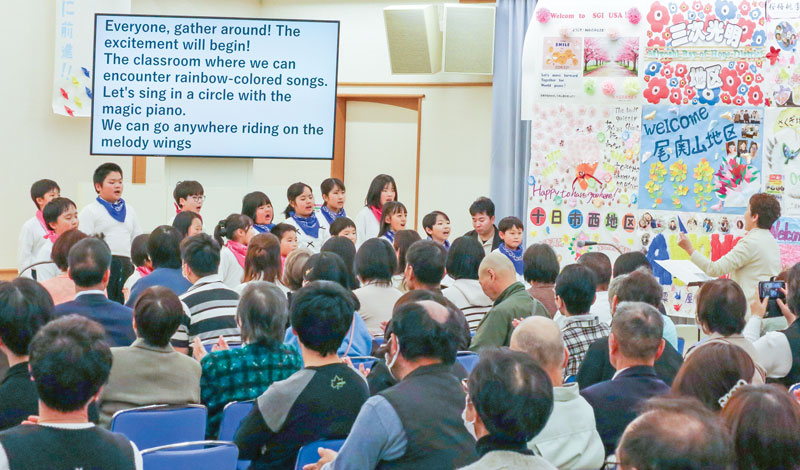
This group set out to the Mihara Culture Center, located in the north-eastern part of Hiroshima Prefecture, where they met members who recalled their experiences with Ikeda Sensei. After speaking with local members and their friends, they drove an hour west, to Miyoshi, to visit the peace center there.
In the summer of 1972, torrential floods destroyed large swaths of Miyoshi as well as its surrounding areas, forcing the evacuation of some 16,000 residents. Soka Gakkai members, some of whom had lost their own homes, gave their unstinting support to their neighbors. Sensei, who was fully engaged in commitments to the north in Tohoku, directed swift relief to the victims. The relief efforts, which quickly delivered indispensable supplies, left a deep impression on the community.
Sensei came to the city that September, touring the affected areas and taking group photos with the members there to encourage them. The Fukuyama Municipal Gymnasium in Hiroshima was one of his stops. He addressed the members, saying: “It is precisely because your communities have experienced such hardship that you must transform them into places of genuine happiness. That is your mission. I have absolute confidence that you can succeed” (The New Human Revolution, vol. 16, p. 219).
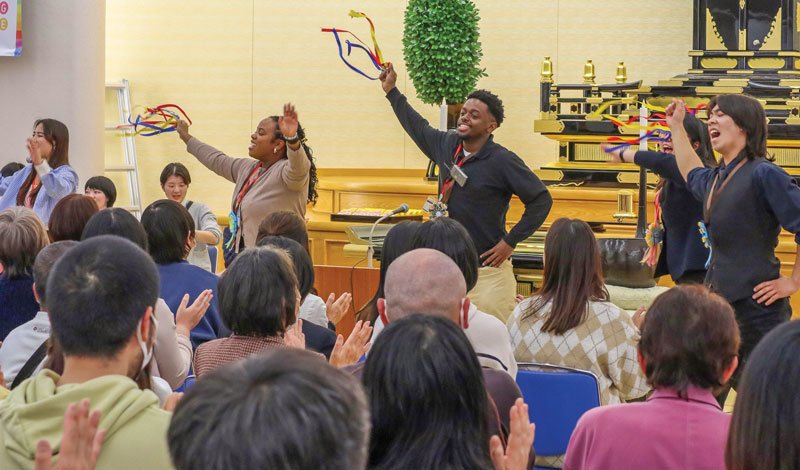
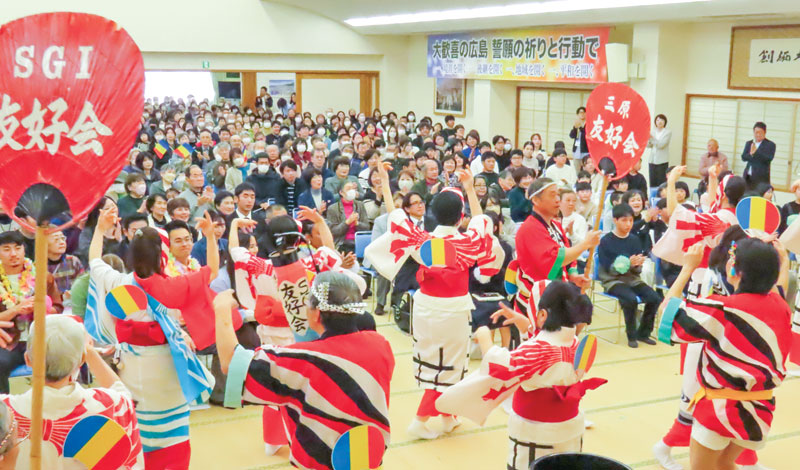
This spirit was reflected throughout the exchange meetings held at the Mihara Culture Center and Miyoshi Peace Center. In Miyoshi, the youth were welcomed by a thunderous taiko drum performance, embodying the local members’ passion for peace. The traditional Yassa dance from Mihara—first performed to celebrate the completion of Mihara Castles in the 16th century—expressed the dancers’ confidence and joy in building a future of peace, embodying Sensei’s encouragement to transform loss into gain and suffering into joy.
Deepening My Prayer
Kyler Koepke Aliso Viejo, Calif.
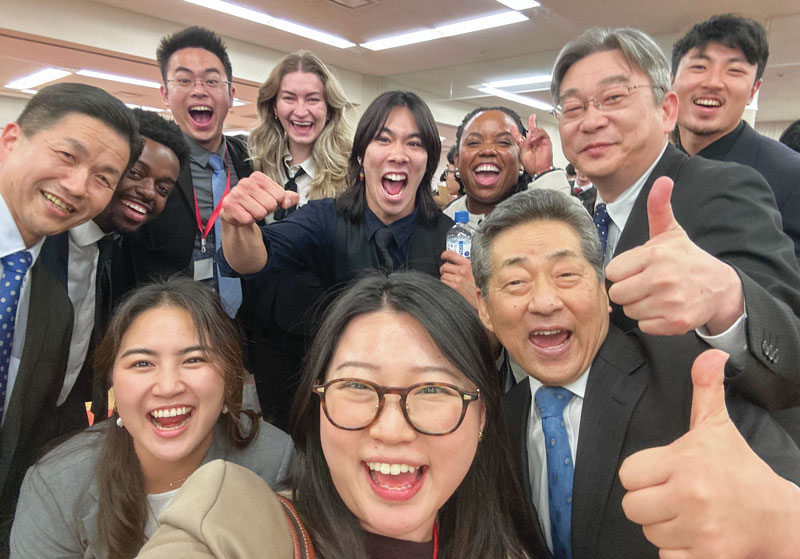
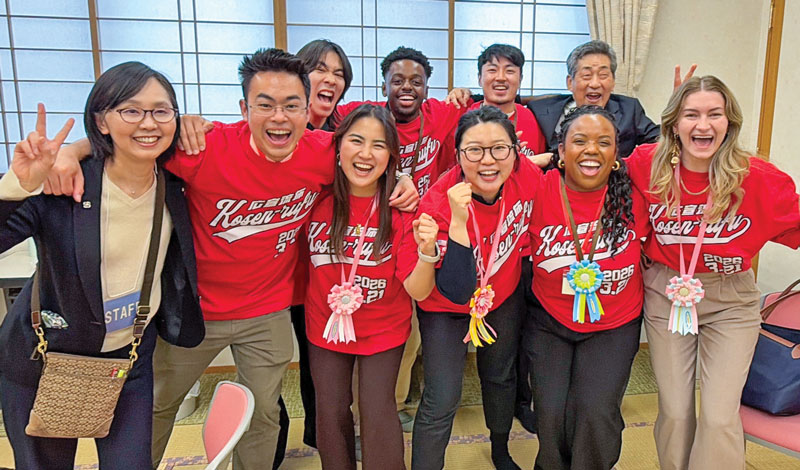
One of the highlights of the exchange meeting in Mihara was joining a small discussion group with several Japanese members and guests. What surprised me most was how encouraged the guests felt simply by seeing SGI members from the U.S. One said that they didn’t believe people in America practiced this Buddhism and that seeing us gave them confidence and hope. I felt the true power of connection beyond language or culture.
Another unforgettable moment was arriving at the center, where members stood waiting with signs and warm smiles. Some were moved to tears, while others eagerly greeted us in English. Their sincerity made me realize the significance of our presence and how much each person’s efforts to encourage others matter.
Through this experience, I realized I had been making excuses and lacking sincerity in my prayer. But chanting each morning with determination helped me reconnect with appreciation and purpose. I felt my life condition shift in a tangible way. Now, I am determined to challenge myself more, deepen my prayer and continue growing so I can become someone who brings courage and hope to others.

‘Your Vow Is My Vow’
Haru Koga Chicago
The warm welcome we received from the members, including those of the future division, filled me with so much hope. Their joyful energy, sincerity and extensive preparation left a lasting impression on my heart. It reminded me that no matter the distance between us, we are united by the same mentor and the shared goal of advancing kosen-rufu in our respective communities.
One of the most powerful moments for me was visiting the Hall of the Great Vow for Kosen-rufu. The last time I had been there was nearly nine years ago, before moving to the United States. At that time, I did not know my mission in the U.S. This time, chanting alongside 119 fellow youth leaders from SGI-USA, I felt like I finally understood the depth of my mission for kosen-rufu. I renewed my vow to fulfill it together with my comrades in the U.S.
Through this experience, I came to understand that we, as SGI-USA youth, have a profound responsibility to lead worldwide kosen-rufu. Given the current state of the world, I am determined to be the light of hope wherever I go in my community and as I support the young women and student division members in the organization. Ikeda Sensei, your vow is my vow!
May 15, 2026 World Tribune, pp. 6–7
You are reading {{ meterCount }} of {{ meterMax }} free premium articles