
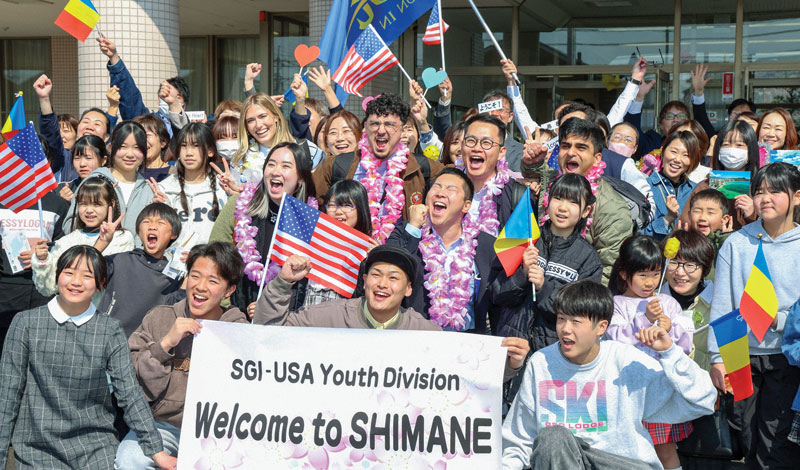
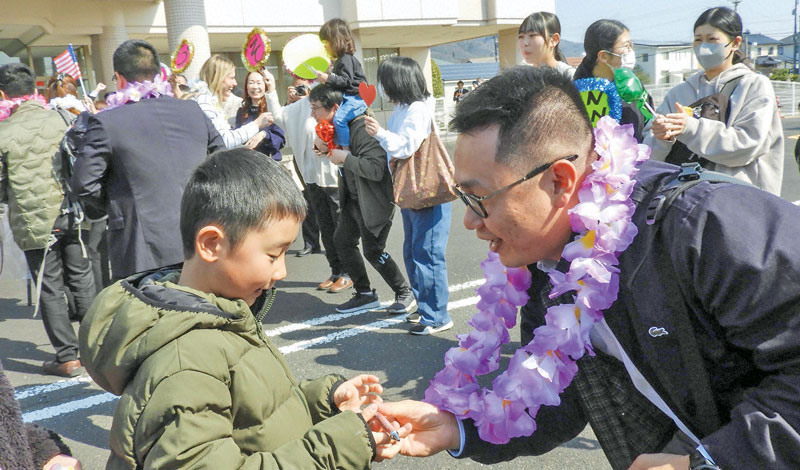
Outside the Izumo Culture Center, future division members and local families greeted the visiting youth with wide smiles and cheers. Throughout the exchange, a phrase began ringing out among the youth: “Sanko saiko!” (Sanko is the best!). At first, it sounded like a spirited chant, born from the warmth of a welcome meant for more than mere guests, but for a family returning home.
By the end of their time in Shimane, however, those words carried a far deeper meaning.
The phrase traces back to Ikeda Sensei, who visited the region in 1973. Historically, the Chugoku region of western Japan is divided into San’yo, the “sunny side of the mountain,” and San’in, the “shady side of the mountain.” San’in includes Shimane and Tottori prefectures—areas known for their natural beauty, deep history and rural communities.
Rather than accept the image of “mountain shadow,” however, Sensei proposed a new expression: “Sanko”—“mountain light.” He believed the places facing the greatest challenges could become the brightest examples of hope through the practice of Nichiren Buddhism.
When the youth learned this history, they embraced it wholeheartedly, cheering “Sanko saiko!” throughout the exchange. Soon local members joined them, their voices blending together with pride and joy.
Throughout the exchange, the visiting members were warmly embraced with heartfelt performances, thousands of folded paper cranes and stories of local places that deeply connected them to Sensei’s encouragement on his visits to Shimane Prefecture.
By the end of the exchange, “Sanko saiko!” was no longer just a chant. It had become a vow.
A Grand Celebration of Life
Hiromi Inaba Oakland, Calif.
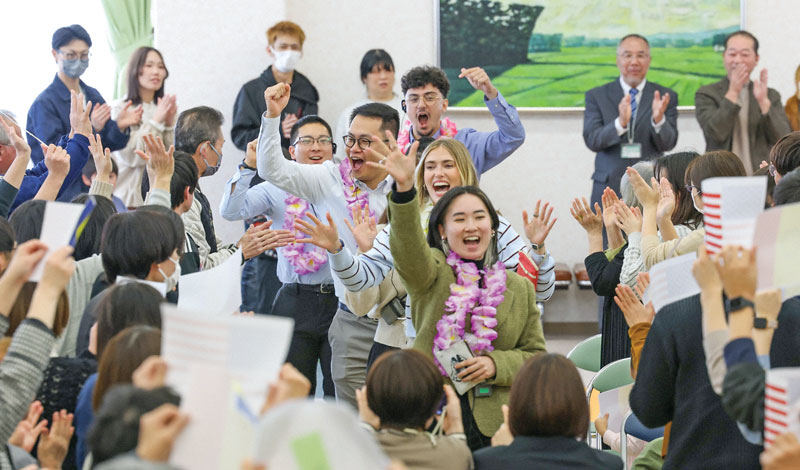
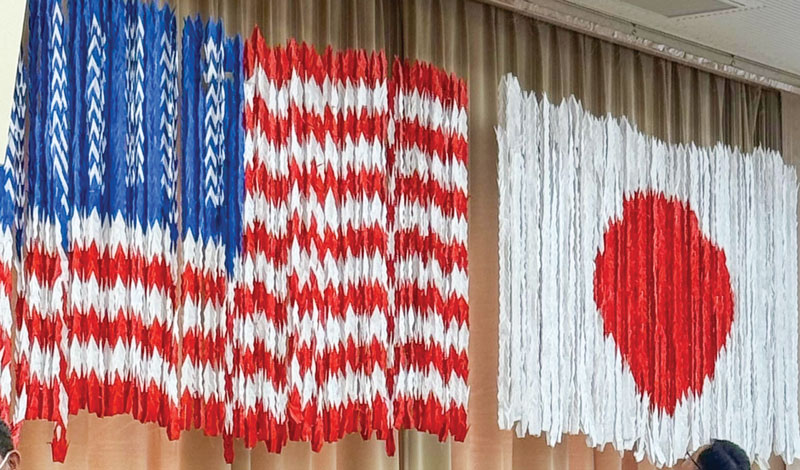
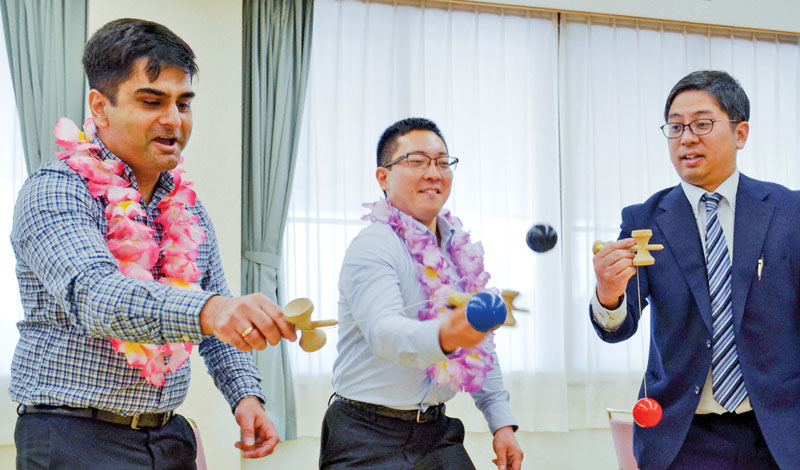
Filled with joy and laughter, the exchange meeting became a vibrant opportunity for cultural exchange. The members there prepared activities such as a dance performance, tea ceremony, calligraphy and traditional games. I was particularly moved by a side-by-side display of the American and Japanese flags made of paper cranes, symbolizing peace. They shared that they deepened their friendships through folding the cranes together. I thought about what activities we could do in Oakland to strengthen our bonds of friendship.
In Hiroshima, I was deeply impacted when I heard the testimony of atomic bomb survivor Keiko Ogura. When asked how to ensure a future without nuclear weapons, she said we should have people of different backgrounds come together and talk. It made me appreciate SGI discussion meetings as a truly revolutionary effort. At the end, she told us joyfully: “I’m going to live as long as possible! That is my peace activity.” Hearing this from a survivor of one of humanity’s worst acts, I was inspired to treasure my life, and it also deepened my appreciation for living a life dedicated to kosen-rufu.
The training course felt like a grand celebration of life! I’m determined to cultivate this spirit in front of the Gohonzon every day and let this appreciation for life blossom in my interactions. I want to see a Soka Renaissance in Oakland Region, and I’m determined to start with winning in my daily life and inviting all my friends to win with me.
No Borders in Faith
Koji Komiyama Honolulu
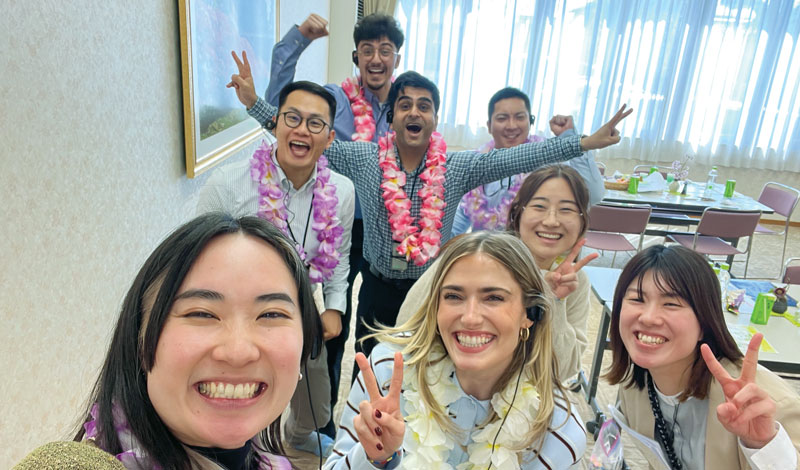
When I attended the exchange meeting in Shimane Prefecture, I was deeply moved by the spirit of unity I felt from the moment we arrived. The members welcomed us wholeheartedly—from the airport to the community center—creating an atmosphere where I truly felt there were no borders between SGI members. Through sharing and singing with, and encouraging one another, it became more than an exchange; it was a living experience of a global family.
During a Q&A the previous day with all the youth participants, SGI General Director Yoshiki Tanigawa encouraged us not to rely on others. If we do, we cannot fully bring forth our own power and potential. He emphasized that it is crucial for youth to take responsibility in spreading peace with strong determination and conviction. Hearing this, I realized the importance of strengthening my stand-alone spirit.
Returning home, I am determined to take full responsibility for kosen-rufu in my community. I will challenge myself more in shakubuku and home visits, strengthen unity and share what I learned—especially the realities of nuclear weapons and the importance of peace—within my community.
Guidance | Ikeda Sensei
Land of the Sun
In the following excerpt, Ikeda Sensei explains why he renamed the region from “San’in” to “Sanko.”
Shin’ichi Yamamoto thought about the fact that Shimane and Tottori prefectures were part of what is known as the San’in (shady side of the mountain) region, as opposed to the San’yo (sunny side of the mountain) region. As such, the area had a somewhat dark image in the Japanese mind. But considering that Izumo was the place where the legendary Sun Goddess was said to have first descended, and given the actual beauty of the area, Shin’ichi felt it was really a brilliant land of the sun. If the members there strove to promote that awareness in their community, he thought, they could create a place of brimming hope that would lead to a new era of development. Toward that end, it was crucial that they worked to spread Nichiren Buddhism, the Buddhism of the Sun, and make their community into a place of peace and prosperity shining with good fortune that the benevolent functions of the universe protected with their majesty and strength.
It occurred to Shin’ichi that, in that sense, Shimane and Tottori Prefectures should by rights be regarded as the sunny, not the shady, side of the mountain. (The New Human Revolution, vol. 18, pp. 155–56)
May 15, 2026 World Tribune, pp. 34–35
You are reading {{ meterCount }} of {{ meterMax }} free premium articles