
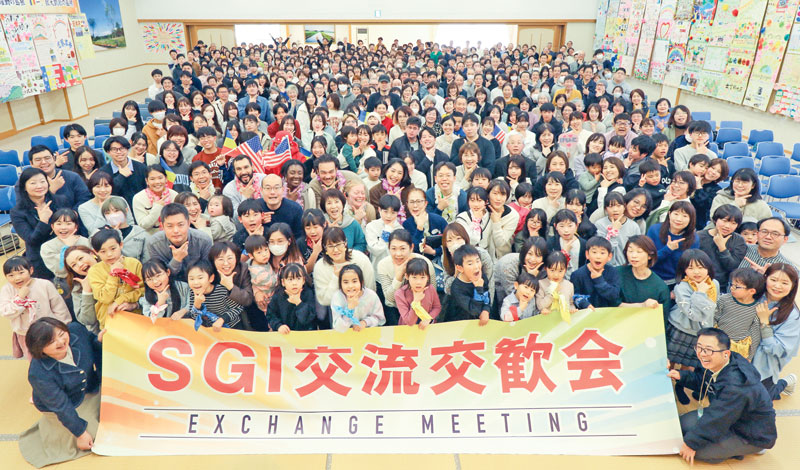
The 120 SGI-USA youth training course participants traveled to several prefectures in Chugoku region, the westernmost area of Honshu, the largest island of Japan. There, they traveled to 15 locations to attend exchange meetings in groups of eight.
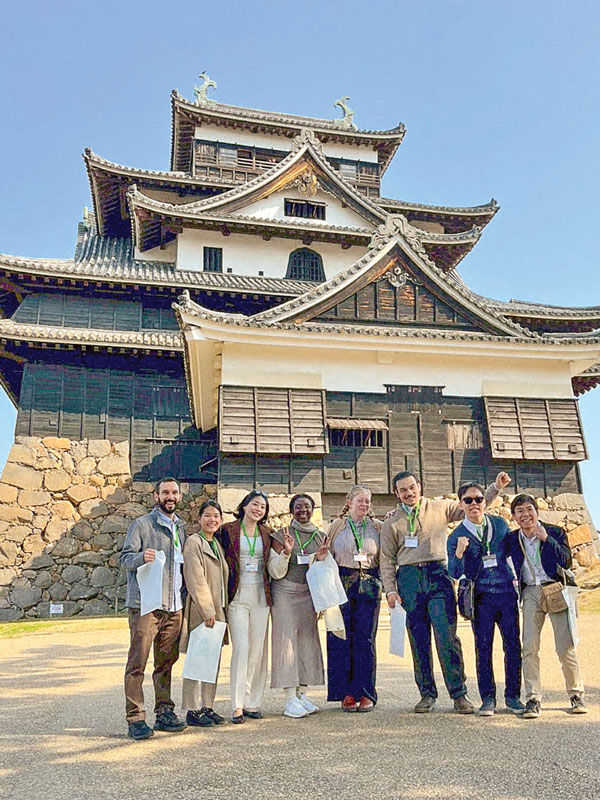
On the morning of March 21, the youth found themselves at the foot of Matsue Castle, a place that has withstood more than 400 years of fires, earthquakes and deliberate demolitions that have claimed many of the original castles in Japan. It was a fitting first stop for a day that would be defined by that precise spirit: passing on the vow to protect and extend the kosen-rufu movement from one generation to the next.
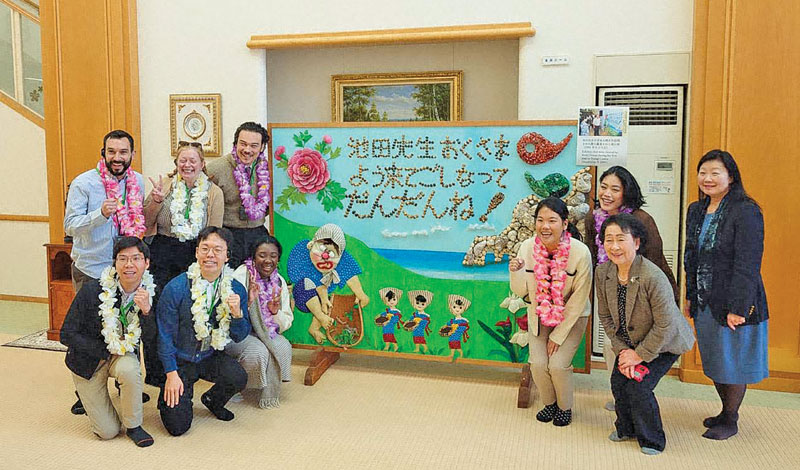
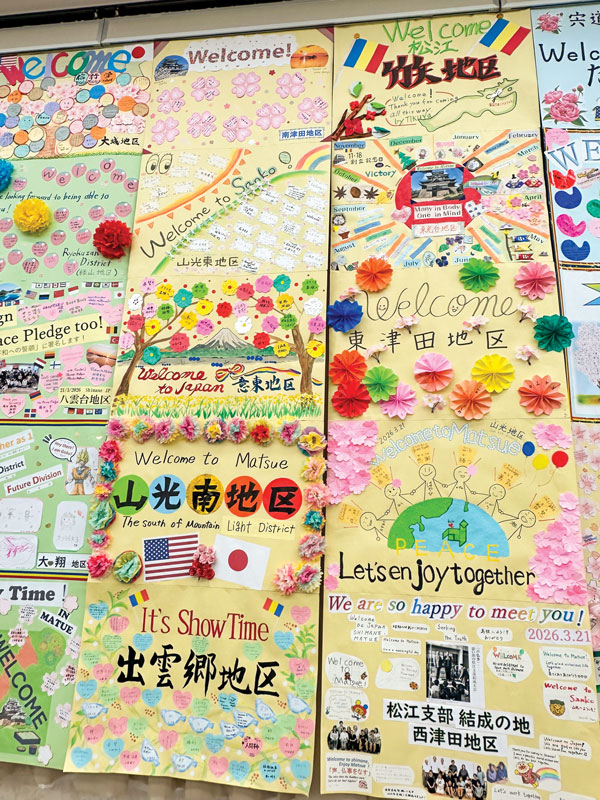
That same spirit greeted them at the Shimane Culture Center later, where the members had poured their hearts into every detail—the youth, student and future division members greeting the group with songs, handmade leis and heartfelt messages. Members from throughout Shimane shared their faith experiences and musical performances, imparting a joyful spirit that carried through to a final group rendition of “Eternal Journey With Sensei.”
But the moment that brought Shimane’s history into the sharpest focus came during the meeting with Kazuko Miyai, whose family’s story is woven into The New Human Revolution.
As a child, Miyai watched her mother endure great hardship at the hands of her father. Even when she was eventually hospitalized, her mother did not waver, chanting with single-minded determination to transform her karma. Her mother made a quick recovery and returned home changed, and over time, her father transformed too.
By 1960, both of Miyai’s parents had become district leaders. And a year later, after introducing 100 families to Buddhism, they were appointed the first chapter leaders in Matsue. Miyai was 18 by then, old enough to remember her father’s inaugural speech, where he froze at the podium, managing only a few nervous words. Afterward, Ikeda Sensei warmly encouraged him, calling it “a brilliant speech” and later penned the calligraphy “The voice carries out the work of the Buddha.”
For the youth, it was one of many such moments throughout the day—from the ancient stones of Matsue Castle to the living memories of the members who had stood alongside Sensei—that transformed Shimane’s history from something they could study into something they could live.
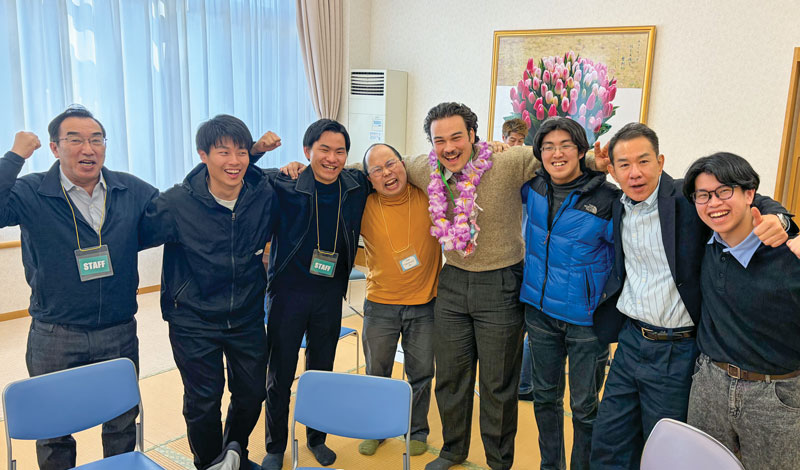

I Can Transform Suffering Into Joy
Jordan Nodarse San Diego
Attending the exchange meeting, I was struck most by the sincerity of each member. I could feel how much effort and heart they put into creating the meeting, and it moved me deeply. It was something you could not miss—something you couldn’t help but feel.
The part of the training course that impacted me most was visiting the Hiroshima Peace Memorial. It was thought that nothing would grow in Hiroshima for 75 years, yet new buds sprouted, and people regained hope and courage. Knowing the immense suffering that the people of Hiroshima experienced, and seeing how they transformed it into a beacon for peace, gave me a profound realization: If such devastation can be transformed, then I can transform my greatest suffering into joy.
Moving forward, I am determined to transform my karma right where I am. I’ve awakened to the understanding that everything I do is for kosen-rufu. I will expand my life and win in my SGI activities, school, work and relationships, while taking the lead in shakubuku and home visits in San Diego.

Our Lives Are Kosen-rufu
Jaiya Correll-Greene New Castle, Del.
The deepest impression I carried from the Shimane exchange meeting was the shared conviction of the members that our lives themselves are kosen-rufu. More than an idea, it felt like a call to take responsibility for my own happiness—to fight, each day, to become my best self and help others do the same.
That understanding deepened during the training course when I visited Matsue and heard the experience of a woman who first met Ikeda Sensei when she was 17. Decades later, he gave her a painting and a message that he was praying that her happiness would become as vast as the ocean. Sensei’s lifelong encouragement to her showed me the depth of his care for others. It was a reminder of what it looks like to be a compassionate leader for kosen-rufu. Walking through Shinanomachi and visiting Soka Gakkai centers, I began to reflect on my own life. I want to strive with the spirit of creating 100 years’ worth of history in a single year and build a happiness that is unshakable—one that can encourage others, especially young women, through my writing and art. With this determination, I will expand our district and strengthen bonds of faith, advancing together with hope.
Guidance | Ikeda Sensei
A Voice of Conviction
In the following excerpt, Ikeda Sensei encourages Kazuko Miyai’s father (Gensuke Hamada in The New Human Revolution) on the importance of the voice.
Shin’ichi [Yamamoto] asked a leader accompanying him from Tokyo to bring some paper and a writing brush and ink. He then wrote in Chinese characters: “The voice carries out the work of the Buddha.” When he had finished, he presented the calligraphy to [Gensuke] Hamada, saying: “Nichiren writes, ‘The voice carries out the work of the Buddha’ (The Record of the Orally Transmitted Teachings, p. 4). Speaking out and talking to others is an integral part of Buddhism. Just keep on chanting and encouraging others. By doing so, you will definitely gain the ability to speak with eloquence and confidence.
“But you don’t have to make long speeches. Just a few simple words are fine. The important thing is that your voice reverberates with faith and sincere conviction.” (The New Human Revolution, vol. 4, revised edition, pp. 100–01)
May 15, 2026 World Tribune, pp. 32–33
You are reading {{ meterCount }} of {{ meterMax }} free premium articles