
by the Midwest Zone team
Tell us briefly about your zone’s history.The current zone was established in 2007, coinciding with the formation of the three territories of SGI-USA. We have four regions, which comprise seven states: Minnesota, North Dakota, South Dakota, Iowa, Nebraska, Missouri and Kansas. The zone also supports members in parts of Illinois and Wisconsin.
Do you have Buddhist centers in your zone? Yes, we have two. We have the Kansas City Buddhist Center, located in Kansas City, Missouri, and we have the Minnesota Buddhist Center, located in Minneapolis. Because many areas are rural, our members’ homes serve as our primary castles of kosen-rufu.
Does your zone have a particular point of pride? We take great pride in several significant community partnerships. These include holding the “Gandhi, King, Ikeda: A Legacy of Building Peace” exhibition in all four regions. Several of these exhibitions were opened by Lawrence E. Carter, Sr., founding dean of the Martin Luther King, Jr. International Chapel at Morehouse College.
In 2005 Ikeda Tip Top Park was established in Ironton, Missouri, and later Kaneko Ikeda Lookout nearby. In 2020 the Cherry Tree Peace Grove, honoring the three Soka Gakkai founding presidents, was dedicated in Minneapolis in association with the Minneapolis Park Board.
Since 1997, we have had a weekly introductory meeting at Fort Leonard Wood, Missouri, for military personnel. This longstanding meeting has introduced thousands of young people to Nichiren Buddhism over the years.
We held a youth division meeting in 2008 at Ikeda Tip Top Park and received a message from Ikeda Sensei, which is now framed and displayed in the zone’s Buddhist centers. We have also had 15 honorary citizenships and four honorary doctorates conferred on Sensei.
What is your prime point with Sensei as a zone? Our zone’s prime point with Sensei centers on the significant honorary doctorate he received from two schools at the University of Minnesota on May 14, 2022. SGI General Director Yoshiki Tanigawa traveled to Minneapolis to receive this award on Sensei’s behalf and read Sensei’s acceptance speech, titled “A Common Future Heritage.” The award was given at the graduation ceremony for the Humphrey School of Public Affairs. We commemorate this event every year at our May kosen-rufu gongyo meetings. In this speech, Sensei made two specific references to the Mississippi River, which resonates deeply as its headwaters are in our zone. We have embraced the following words from this message as Sensei’s eternal guidelines for the youth of the Midwest Zone. He states:
The Mississippi River, which runs through your campus, has its headwaters in the state of Minnesota. From this source, it ceaselessly flows off and away, and yet, its waters remain connected in a continuous stream as it enriches vast expanses of land. …
There is an Eastern saying that the “farther the source, the longer the stream.”[1] …
The people’s poet, Walt Whitman, extolled the importance of the Mississippi River as unmatched by any on earth. It is my hope and my confidence that today’s graduates will achieve personal happiness and success as well as great contributions for the future of a united humankind. (June 3, 2022, World Tribune, pp. 4–5)
Do you have something that is unique to your zone? The entire Midwest Zone is encompassed by the Mississippi River basin, and the river’s headwaters are located in Minnesota. It is the largest geographic zone in the U.S., covering more than half a million square miles. This vast area, which includes many outlying districts, is approximately 3.5 times the size of Japan. It serves as America’s and the world’s agricultural powerhouse. While we have several major metropolitan areas, most of the zone is composed of rural areas and small towns. Furthermore, the zone is home to diverse Native American nations and reservations. Finally, the region is characterized by its distinct and often challenging climate. The northern states of our zone border central Canada. We experience some of the harshest winters in the country, which are marked by extremely cold temperatures.
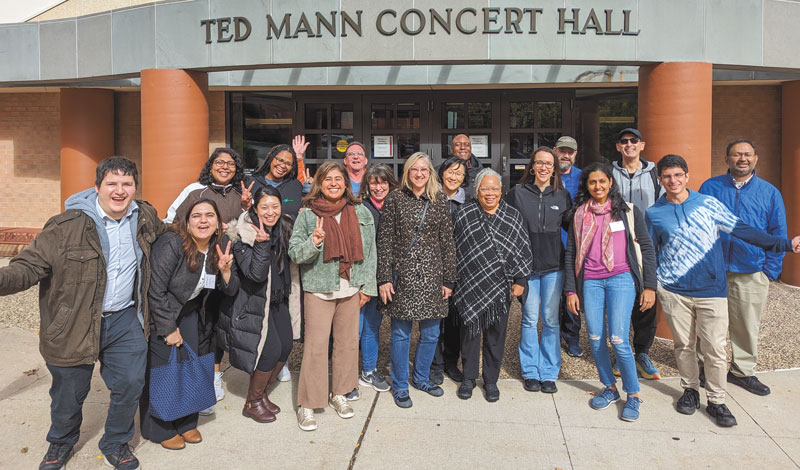
What is your zone’s vision toward 2030? Our first major goal is to welcome 300 new youth members by Jan. 2, 2028, which will serve as an important mile marker for our future development. We plan to hold a meeting at the Ted Mann Concert Hall, the venue where Sensei received his honorary doctorates from the University of Minnesota, to celebrate our growth as a zone in reply to Sensei. Additionally, through the growth of our youth membership, we hope to open Buddhist centers in the St. Louis and Iowa-Nebraska regions.
Anything else you’d like to add? Every year we encourage our Midwest Zone leaders to attend the FNCC Central Territory Leadership Conference to connect directly with Sensei and deepen our conviction in faith.
December 5, 2025 World Tribune, p. 9
References
- “On Repaying Debts of Gratitude,” The Writings of Nichiren Daishonin, vol. 1, p. 736. ↩︎
You are reading {{ meterCount }} of {{ meterMax }} free premium articles