
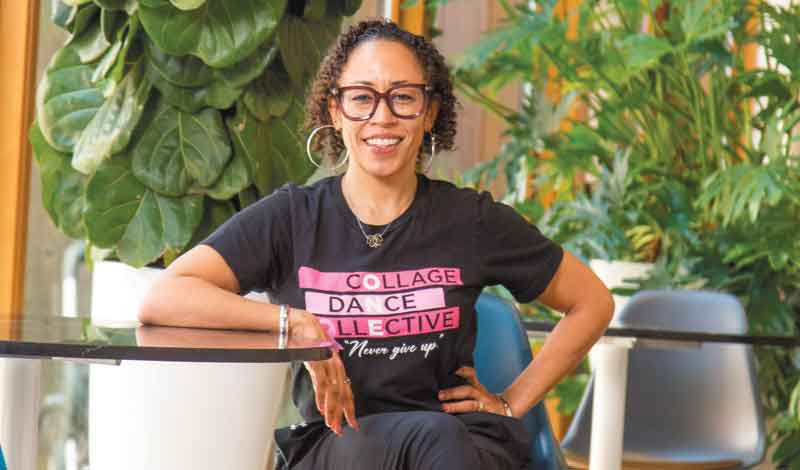
by Karen Niceley
Memphis, Tenn.
Before my mother relapsed for the last time, she enjoyed a long spell of sobriety and health, in which she came to many SGI activities—any my sister or I emceed or danced at. It was about the happiest I’ve ever seen our mom, who’d so often despaired that a long family line of depressed, embattled women had doomed her to unhappiness.
When she died suddenly in 2007 near our family home in Maryland, there were few people I was willing to see. One of them was Tiffany, among my closest childhood friends. An SGI member, her example had moved me to join the practice the year before. I was never more inspired by, nor more anxious about Tiffany than I was then. “I’m not a bit afraid!” she told me. “So why are you?” Because you just got diagnosed with cancer, I wanted to shout. Because I can’t bear to lose one more person I love.
Bolstered by her conviction, but hanging by a thread, I returned to New York and spiraled. There, I managed to drag myself to my dance auditions and my ballet students, but gut-wrenchingly, from the depths of depression and addiction.
I’ve no idea where I’d be now if not for the young women and pioneer members of New York, who poured their lives into raising me—me and my sister, both. Slowly, we stood up, taking on leadership and joining the Byakuren Group, a behind the scenes training group for young women and nonbinary members. Their fierce care convinced me that my life was worth fighting for.
In 2009, I attended a conference at the Florida Nature and Culture Center (FNCC) for the first time and asked about something I’d never understood: the mentor-disciple relationship. When my question was engaged with appreciation, without judgment, I knew I’d found a safe community of faith, in which I could grow at my own pace. When asked the following year to lead the Byakuren Group for East Territory’s Rock the Era, a massive youth festival, I said yes knowing it was my opportunity to grow. But honestly, I did not know then how difficult it would be. The night before the festival, everything that could’ve gone wrong, did.
I went to bed that night thinking I can’t do this. And then I slept (maybe better said napped) and dreamed that Ikeda Sensei was encouraging me—encouraging me with every fiber of his being. You can win! You must win! And I awoke in my Byakuren uniform (no time to change) and strode out to meet the girls in the hotel lobby, thinking: Guess what we’re having today—victory, that’s what!
In our huddle, I shared this with all my heart. Ours were tears of determination that morning, and before heading into position, my sister and I hugged tight. This is for mom, we agreed—for mom who’d been happiest when she’d seen us striving, winning, happy.
The festival went wonderfully and lent deep confidence to my daily life, auditions and teaching.
A few weeks later, I got a call—a prank call, I was sure—from someone claiming to be the producer for The Color Purple, a Broadway hit heading for tour. Did I want a role? Stunned, I said yes to my biggest break yet, but with a newfound sense of mission. From day one, I came to rehearsal determined to be a source of strength for others. By the end of this unforgettable tour, three of my fellow dancers had received the Gohonzon.
The tour ended at the perfect time—in time for me to be by Tiffany’s side. The cancer had advanced to its final stage, yet she lived on with a fighting spirit. She was the one, in fact, who called us over to her house that day in 2012, for gongyo. Chanting with her in my arms, I felt her rhythm fading. I continued, chanting strongly as she transitioned to her next life in which, if I knew her at all, she’d be taking up the fight again—for kosen-rufu, courage and happiness.
In New York, I began teaching again, realizing this was where my passion lay. When I got a call that year from the director of The Color Purple offering me a role on another major production, I turned it down. My students too were preparing for a show. I couldn’t leave them. Though I may not have grasped it fully just then, I had decided what I wanted to do: teach. I poured my life into my students, community and friends.
After Tiffany died, our friends founded a dance center in her memory, in Memphis. Once a summer, I went down to teach a monthlong intensive before coming home to New York. That was the sum of my involvement.
But this changed the summer of 2020, when I saw the new dance center under construction. They need all hands on deck, I realized. In 2021, I moved, taking on the role of community engagement manager, a role that breathes life into a central mission of the center—to bring in youth from lower income schools that have had little exposure to ballet. I arrived determined, excited and also, I soon found, unprepared for the demands of the job.
“We’re going to perform,” I told my students on our first day.
“Perform what?” they asked. They didn’t believe they could.
By the start of this year, I was filled with doubt, carrying it with me to the FNCC in February. I came back resolved—to not only extend opportunities in the arts, but to transform the karma of Memphis.
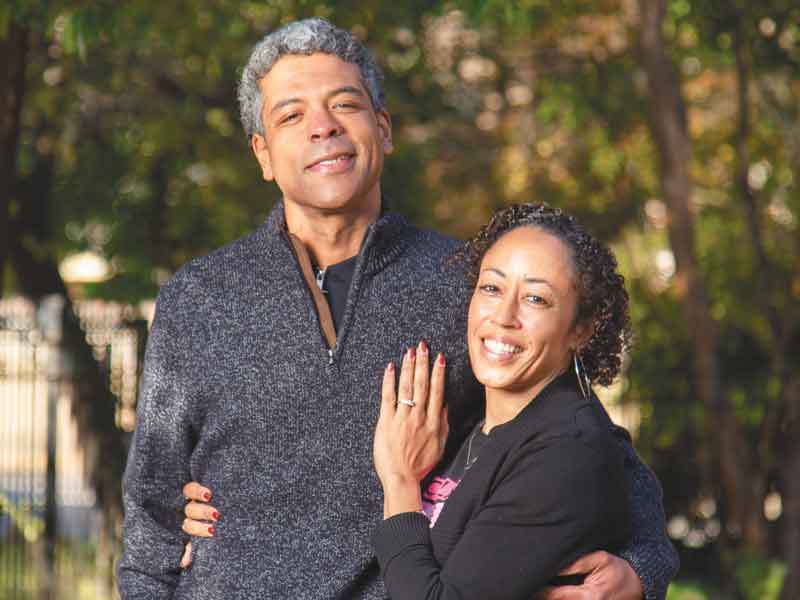
I began hosting chanting sessions at my house, uniting in prayer for youth. We determined to report new victories at every discussion meeting and visit members who hadn’t been out in some time. Our efforts bore fruit by summer—we had youth in attendance and victories to share, victories we ourselves could not predict. In July, on vacation, my partner, Raymond, got on one knee and asked for marriage. Talk about changing karma—I’m 48 and have never been proposed to. I’ll never forget the joy of saying yes.
My prayer was to transform our district, but somehow I’ve been the one to change. As a teacher, I focus less on how my students look—on their technique and footwork and form—and focus more on how they feel. Former students have dropped in and complained—not because my class is harder than they remember, but because now it’s much more fun.
“No fair!” they say. “You were so strict with us!” And it’s true, I was, and I don’t know what to tell them, except, “Let’s embrace the change!”
These days, I walk into class and call out: “How are we feeling? What are we working on? Are we ready to go for broke?”
In time, they’ll master the footwork—naturally, they will. So long as they love dancing, the rest will follow in time.
You are reading {{ meterCount }} of {{ meterMax }} free premium articles