

During the SGI-USA youth training course in Japan, on March 20, 2026, the youth participated in a Q&A session with SGI General Director Yoshiki Tanigawa, who had just returned from visiting Brazil and Mexico. In his opening remarks, he encouraged the youth to ask about anything.
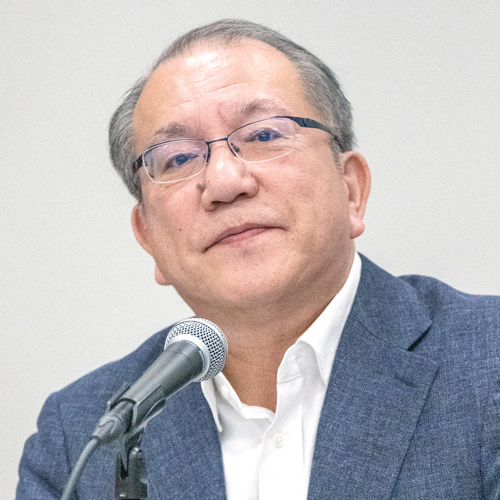
SGI General Director
Q: Some new members and friends struggle with the concept of mentor and disciple. Some guests are even turned off by the intensity of some of Ikeda Sensei’s guidance at meetings. What is a more modern approach to connect people with Sensei’s heart?
A: We tend to think that there are certain steps we take in introducing our friends to Buddhism. First, maybe we start talking about Buddhism, then we may invite them to a discussion meeting, then our friends may commit and receive the Gohonzon. Right now, youth in Japan are trying different things to better fit the world we live in today. For example, we tell people that there is no pressure to join the SGI, and they are free to try this Buddhism and share their own experiences.
It is not good to judge your friends based on their current response (in respect to how they feel about the organization or Sensei). When I went to India, I met a young woman who was emcee for a general meeting. She visited Kansai for an exchange over two years ago and learned about the Osaka Campaign and the Kansai spirit. With this visit, she redetermined to advance kosen-rufu. When she returned to India, she introduced 18 of her friends to Buddhism. This January when I met her, she had introduced three additional friends. To do this, how many friends did she speak to? She spoke with 250 people.
When it comes to shakubuku, Nichiren urges us to talk to people about Buddhism—to use your energy and power to share this Buddhism. “Teach others to the best of your ability, even if it is only a single sentence or phrase” (“The True Aspect of All Phenomena,” The Writings of Nichiren Daishonin, vol. 1, p. 386). It’s not about how they will react to your conversation. It’s about how you take action.
He also teaches that when you share Buddhism, it may take time for the other person to understand, but eventually they will attain Buddhahood.
Sensei says that shakubuku is the most supreme and respected action. Please joyfully share Buddhism.
When it comes to mentor and disciple, how can we deepen that spirit?
This year we celebrate the 70th year of the Osaka Campaign. When Sensei started this campaign, most were new members who had never met second Soka Gakkai President Josei Toda. Sensei was only 28 years old. He did 8,000 home visits. All the members who interacted with him said he was so young but had such amazing power. They felt that his lecture on Nichiren’s writings and personal guidance were filled with conviction.
When Sensei received a call from President Toda, his mentor, he would correct his posture. Everyone wondered, this amazing person shows such great respect for President Toda. Who is President Toda? He must be amazing, too.
When Mr. Toda came to Kansai for a lecture, so many members showed up to see him. He thought, Wow Kansai has great energy.
The mentor-disciple relationship isn’t something you can explain by putting it into a certain mold. When people wonder Why is she so strong? or She has such an indomitable spirit, then they realize, She is like that because she has a mentor. They will feel, I want to have that same spirit, and will want to adopt the same mentor.
Q: Our region has a goal to introduce 50 youth toward SGI-USA’s goal of 10,000. We have young men’s division hangouts that are successful, but few four-divisional activities other than discussion meetings. One district does a social hour after meetings. Is it OK for our region to encourage all districts to do this?
A: It’s only natural that such decisions would be based on location and time, and is something to look at flexibly and adapt accordingly.
When I prepare to visit a country, I always study the history, cultural background and Ikeda Sensei’s efforts there. There are some countries where there were little to no members when Sensei first visited. Those few people made a firm commitment to do shakubuku in their land.
In the countries where there were few members, Sensei would meet and encourage them. They were excited and wanted to do something, but they didn’t know how. Sensei said, kosen-rufu is not so complicated. It’s all about the person in front of you. Treasure them. Engage with them sincerely. Share with them the teachings of Buddhism if they’re deadlocked in life.
It’s not wrong to strategize on how to build an organization. It’s something that should be considered based on the various conditions at play. But oftentimes, when a directive is put into effect from the top level, it’s easy to become passive.
The moment you become passive on the receiving end, you cut your power in half. What’s important is for each person to see themselves as protagonists and take initiative. To what extent can we bring forward that sense of being a protagonist? Sensei continuously encouraged youth saying, it’s not a true battle if you’re just on the receiving end or just following because someone told you to do something. For example, if you do something simply because your mentor told you to, your true power won’t be unleashed. There is no growth or responsibility. A battle, challenge, any struggle—it must be won through one’s own efforts. Once you’ve decided and committed to it, determine you’ll have a full victory and report victory to your mentor.
This is fundamentally based on truly believing in the infinite potential of each person. Work together to achieve victory. This becomes the true force that can break through any barrier. Another important thing to keep in mind is that the spirit of “Let’s do it together” is great. But having the determination “I will do it. I will take full responsibility” is even stronger.
In Mexico, Sensei shared with the youth: “Just you. You first must rise up.” As long as there is one spark, the flame will be ignited. If one person has a strong vow and stands up, they can be the trailblazer to open the path forward. You are the central protagonist of this area. Because of that, no matter what, don’t give up. Without a doubt, others will follow in your footsteps. In his writings, Nichiren Daishonin is speaking to one person when he says, “I entrust you with the propagation of Buddhism in your province” (“The Properties of Rice,” The Writings of Nichiren Daishonin, vol. 1, p. 1117).
His writings talk about relying on oneself. There is no waiting for someone to save you or relieve you of your sufferings. In “Reply to Yasaburo,” Nichiren writes: “You must be firmly resolved. … You must simply make up your mind” (WND-1, 829). We don’t know when our lives will end, so to what extent can we live wholeheartedly? The fact that we are alive right now is because we have a mission to fulfill. How can we use our lives to fulfill our mission?
Q: Suffering is widespread in my city. There are many non-profits and religious groups making efforts but with no unity in finding a solution. My local organization would like to have a three-day peace summit that allows us to share how Buddhism can provide solutions.
A: It’s up to the local members to determine how to run activities in your area. Nichiren Buddhism teaches us to always go to the root cause of various issues. For example, why does war happen? We approach it by looking at the fundamental cause of suffering and war, and think about what we can do to create peace.
Every society is unique and has its own unique circumstances, so there is no one answer to solve a problem. Buddhism looks at the world, for example, and asks: Why does war happen? What causes famine? What causes diseases and pestilence? When we look at these problems from the perspective of life itself, we can see that they are rooted in the three poisons.
Warfare and retaliatory actions happen because of the three poisons. What causes war, for example, is anger. Anger is the first poison. When anger increases in volume, speed and scope, that’s when war occurs.
The second poison is greed. Greed creates a disparity between the rich and the poor, and causes famine. For example, let’s say we want to eat an expensive steak. Raising the cow required for one piece of steak requires so much energy. But if we’re able to take that energy, not for personal gain but for the betterment of others, then we can reduce the degree of famine we see in society.
Buddhism teaches that the state of hunger doesn’t mean there is no food. Actually, even in hunger, there could be plenty of food, just as there would be in a Buddha land. But for those who dwell in the state of hunger, it’s like having to use very long chopsticks to eat. Because the chopsticks are so long, they can’t bring the food to their own mouths. They are unable to eat the food in front of them, which increases their hunger.
In a Buddha land, the same food is on the table, and they have the same long chopsticks, but instead of trying to feed themselves, they feed one another. They’re able to satisfy their hunger. They are happy because they can make others happy. Therefore, hunger and famine aren’t caused by a lack of resources. Famine is caused by greed.
The third poison is foolishness, which causes pestilence or disease.
These are some basic Buddhist principles we can share with others through dialogue. We patiently speak with others and believe in their Buddhahood.
If we’re talking about working with other organizations or groups, the important thing is to look for common ground. What we’ve seen through Ikeda Sensei’s actions around the globe is that he constantly had dialogue with others. Despite differences, his dialogue partners agree with the core of our philosophy. Once we find common ground, we can decide on united action.
Humankind has made substantial progress in science, economics and culture. In some ways it feels like we have advanced. On the other hand, we find that famine is worse than ever before. Sensei shares what second Soka Gakkai President Josei Toda said in his lecture on “The Kalpa of Decrease”:
Civilization and scientific progress were supposed to contribute to stronger nations and stronger people, but until now, humanity has been concentrating all its energies on struggles and disputes between nations, taking us in the exact opposite direction of peace. The more technological advances we see in our daily lives, the more high-handed we’ve become. The more civilized or culturally developed we’ve become, the more arrogant we’ve grown. Both advanced technology and civilization, it would seem to me, have contributed to making us not only more high-handed and arrogant but also envious and cowardly. What, then, can serve as the driving force for creating a utopia of peace and happiness on earth? It has to be religion. (The Teachings for Victory, vol. 2, p. 155)
Q: Many young women in my area are single parents and struggle to do activities. There are so many activities for youth but they struggle to make those meetings. How do we make space for young parents and nontraditional families?
A: In society, we have different ideas of what a “normal” or “standard” family is. When it comes to family, maybe traditionally we think there is a mother, father and children.
We have the five eternal guidelines of the Soka Gakkai and the first is: “Faith for a harmonious family.” Every person has a different idea of what a harmonious family looks like. Some might think it is one in which all the members practice Buddhism. Or maybe it’s a single-parent household and the parent is the only one practicing. Or a couple, who don’t have children, but both practice. These are all examples of faith for a harmonious family.
Ikeda Sensei has shared before, in talking to members who are unmarried or have lost family members, that no matter their circumstances, every single member, without exception, is a cherished member of the Soka family. Continuing to expand our harmonious family is how we accomplish world peace. Just because someone in your family isn’t practicing Buddhism doesn’t mean you can’t have a harmonious family. As long as one person in that family stands up, then it can lead to a harmonious family.
But of course, I understand, because of their current circumstances, some members cannot make it out to SGI activities. So what’s important, especially for those members, is to make sure they still are treasuring their faith, feel appreciation for the Gohonzon and are doing what they can based on their circumstances.
Nichiren teaches the heart is most important. What is our spirit? What is our attitude?
From my own personal experience, I was extremely busy when I first entered the workforce. I had to work all day every day. I couldn’t make it to activities. We worked as a team so I couldn’t just leave for activities. In Japan, there’s a lot of social pressure to stay late or go out for drinks with colleagues. There were fewer opportunities for activities. I felt my boss was my biggest obstacle, because I couldn’t go to activities.
One day, I opened up a book with Sensei’s guidance. There was a passage where a young man said, “I’m so busy that I can’t come out to activities.”
Sensei responded, saying (paraphrased): Right now you’re fully committed to work. That’s what you should do. You may miss out on SGI activities because you’re so dedicated to work. However, what is most important is your mindset during those moments. If you think, Oh well, I’m too busy, I can’t make it, and have a lackadaisical attitude, you’ll never break through or transform your situation. But if you have the determination to make it to even that last five minutes of a meeting, you can make a cause for breakthrough. We can also determine that right now, I’m in a season of life where I have to focus on work, but there will come a day when I can do many more activities. (For more on this topic, see The New Human Revolution, vol. 4, revised edition, pp. 149–53, 279–81.)
When I came across that guidance, I reflected on my mindset. There was a part of me that had given up on making it to activities. I was at a crossroads. I chanted sincerely to do so no matter the circumstances, and I found I was able to make it to more activities. Then, those prayers were fully answered when I started working for the Soka Gakkai and started doing more activities than I ever thought possible.
The key here is to empathize with your members, especially single mothers. They might lack confidence in raising their kids or struggle with finances, but please share with them that by living based on faith they can break through their circumstances. Even though they may not be able to do activities now, if they chant earnestly, they’ll definitely be able to make it happen.
Giving guidance is about relieving pressure from a person’s life. If they’re tired, they become more pessimistic. They start thinking, I’m chanting but nothing is happening. In those crucial times, we have to step in to lighten whatever is lying heavily in their hearts. You can talk to them, reach out to them and share Sensei’s guidance that would be perfect for their situation. For those members, having someone in their life to encourage them and be there for them is important. That’s why we have this organization.
May 15, 2026 World Tribune, pp. 38–39
You are reading {{ meterCount }} of {{ meterMax }} free premium articles