
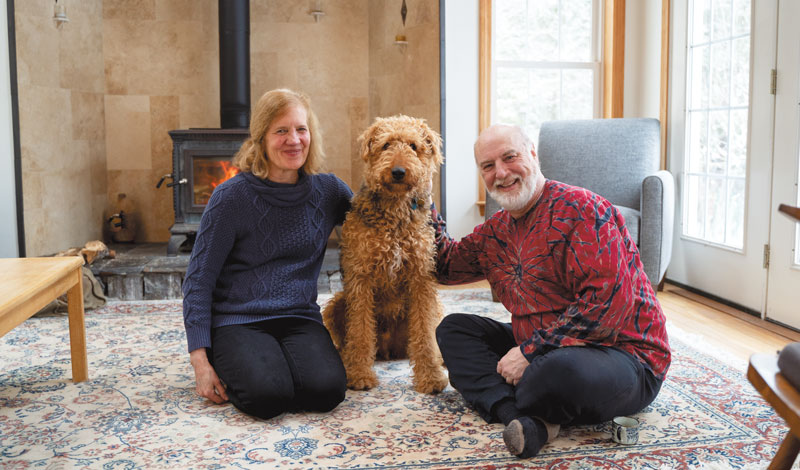
by Cynthia Johnson
Portland, Maine
My family never wanted for material things—my father made sure of that. Yet I was a deeply anxious child, sensitive to the suffering inside our home. My mother’s depression and alcoholism, my father’s focus on acquiring wealth; their unhappy marriage and tumultuous split left me deeply anxious about my prospects for happiness. In particular, I doubted whether I could have a happy family someday.
I began practicing this Buddhism a few months after graduating from Bowdoin College. My close friend had begun chanting Nam-myoho-renge-kyo and had become much lighter, focused and bright. Many benefits followed in the coming years—among them a deeply fulfilling career. From my 20s to my 60s, I taught special-needs children. But amid the joy this brought, deep doubts remained—about whether I could build a happy life with a partner.
But nearing my mid-30s, I felt the time had come to challenge these fears directly. I deepened my study, supported others and mustered the courage to act. And crucially, I challenged myself in financial contribution.
Contribution, for me, was not about the amount (often I had little to give). It was about forging a life condition of deep appreciation, courage and joy. I wanted to transform the karma of my family, in which an overfocus on wealth had fueled family rifts and a sense of never having enough. I saw every contribution as an opportunity to acquire lasting treasures of the heart.
Chanting, I envisioned pulling my husband’s hand from out of the universe—pulling this unknown person into my life. On my first date with my now-husband, we walked to a nearby beach. As I climbed the rocks, he held his hand out to help me. That evening, while chanting, I was astonished to realize that this was just as I’d envisioned. As our relationship deepened, it confirmed for me that I was right to hope for this and more. I began to think of my life in terms of possibilities, not as the consequences of my past. Soon after marriage, we had our son, then our daughter. We were overjoyed.
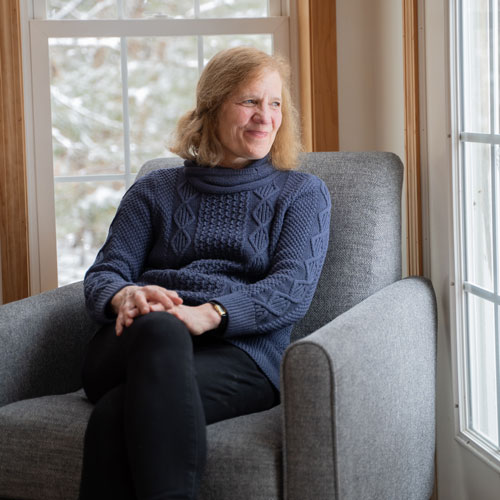
When my mother passed away, in May of 2018, she left me an unexpected inheritance. Knowing how much she’d suffered during my childhood, it felt deeply meaningful to contribute on her behalf. We both believe, my husband and I, that the treasures of the heart are most important. Finances for us have not caused discord, though we have faced our own fair share of challenges.
My daughter struggled emotionally and socially in high school, while my son experienced deep depression and mental confusion in college, requiring frequent psychiatric hospitalizations. Some doctors told me he’d never recover—truly terrifying for me.
I opened a lecture by Ikeda Sensei, in which he says: “Chanting in terms of faith … consists of the struggle we wage in our hearts … against the negative and destructive forces within us. … Through strengthening our conviction that we possess the Buddha nature—we can break through the darkness obscuring this awareness, thus revealing the life state of Buddhahood” (On Attaining Buddhahood in This Lifetime: SGI President Ikeda’s Lecture Series, p. 3).
I resolved to view this experience as a test of my faith and to never be defeated. I chose to believe in my children’s Buddha nature, and that with the Gohonzon, everything would become a source of happiness. I contributed as a declaration of my absolute conviction in my family and this practice. I also sought support from the SGI community, never isolating myself in my struggles.
Gradually, I saw incredible proof. My daughter gained confidence and stability at school, graduating college in just three years’ time. Now she’s pursuing a Ph.D. in Biochemistry and truly enjoying the work. My son, for his part, transformed everything, regaining his mental health. He received the Gohonzon, earned his master’s and is now a working engineer. What’s more, he’s in a caring and committed relationship.
These experiences showed me the power of building fortune through contribution as a vital part of Buddhist practice. We didn’t just change our family’s circumstances; we transformed the very foundation of our lives. It is not for me merely a personal practice, but a way to ensure others can receive the same support, encouragement and hope that transformed my family’s life.
Looking back, I see that my single greatest struggle has been to believe in my own Buddha nature, a belief that lies at the very core of Buddhism. I could practice this faith—chanting, studying and sharing it widely—but most importantly, I had to believe in it. Contribution concretely centers my life on a spirit of appreciation, an inexhaustible source of conviction.
When I retired from the school district where I worked for 37 years, my fellow teachers made me a video. They spoke of the ways I’d impacted them and our students, and their words brought me to tears. Every day, every challenge in that moment felt worth it—to know I’d made a difference in their lives.
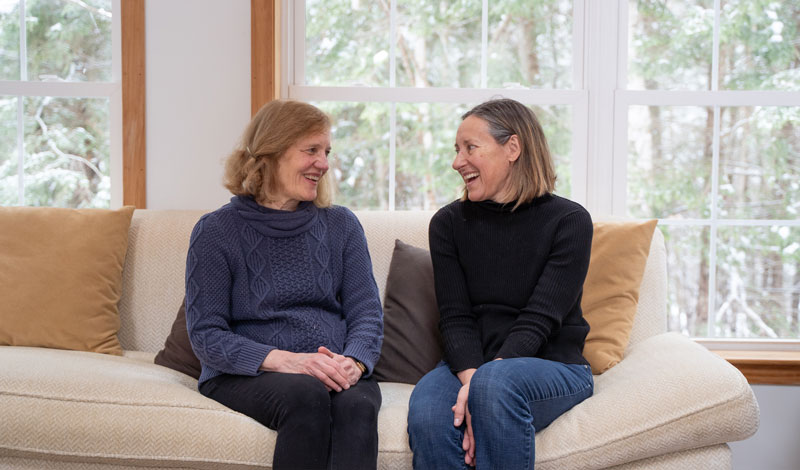
Then, two years later, came the cancer. The timing was one more reminder of my fortune. Newly retired, with the full support of my husband and both our children thriving on their own, I had the time and resources to pursue the best care imaginable. What’s more, the doctors caught it early, which is rare for this aggressive cancer. I did not panic—I knew what to do. I chanted abundantly and shared Nam-myoho-renge-kyo with every member of the medical team, every neighbor I met while out walking, every acquaintance who crossed my path. Every time I told someone how I was using my faith to challenge my illness, I felt my life force expand. With little pain, I underwent chemotherapy and radiation, after which the cancer was declared in remission. More than anything, this battle has been an opportunity for me to reflect on the life that I’ve lived, to ask myself if I have lived it fully. The answer is yes—I have no regrets; I’ve devoted my life to creating happiness. I can imagine no deeper joy, no deeper appreciation than this.
You are reading {{ meterCount }} of {{ meterMax }} free premium articles