
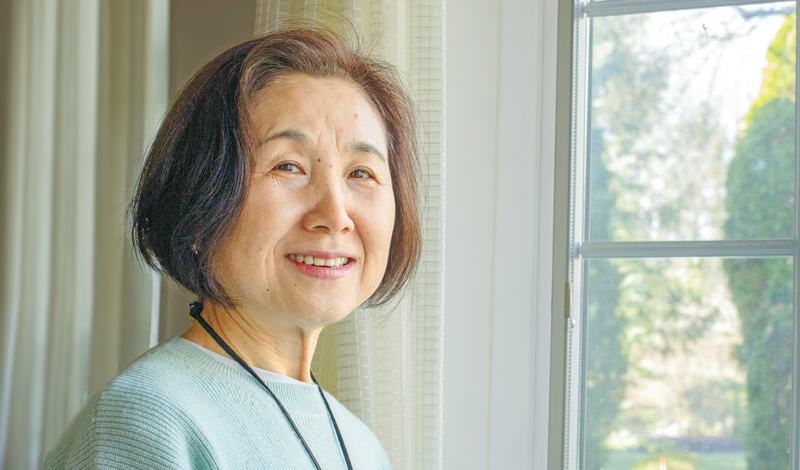
Living Buddhism: Thank you for speaking with us, Fumiko. Can you tell us how you came to practice Buddhism?
Fumiko Nishino: Well, what few beliefs I had, I lost early. Like most families in Japan, mine prayed on rare occasions—on holidays and funerals—to certain gods or saints, but I’d stopped putting stock in this. When I was 7, my friend drowned in a river. I was there when it happened and lost faith in the gods, who would not allow such a thing, if they had any power to stop it. Still, on the rare occasions that I did pray, I prayed for my father to change.
Tell us about him.
Fumiko: Usually he was a kind, softspoken man, but when he drank, he grew violent. You’d have a hard time believing the two were the same—the kind father versus the hell-
raiser so many complained of in town. A heaviness and shame filled our home. Even if we were willing to forget what we’d seen and heard, we knew the town would not. He had served in World War II and, while suffering no bodily injuries, carried scars within.
Home was not a happy place, then.
Fumiko: Not much laughter, no. But I do have some happy memories. My happiest are of my grandmother’s home in the countryside, which I visited with my cousins every spring, summer and winter break. A small woman in a small home on a large patch of land, she tended to everything by herself.
She was warm and strong, and we were free to run and roam, to chase the animals and pounce on bugs and pick flowers and fruits. In the evenings we’d come home exhausted and flop down in front of her little black-and-white TV, watching cartoons while she cooked, tidied up and prayed.
When did you encounter SGI Nichiren Buddhism?
Fumiko: Years later, in my early 20s, after I got engaged to my husband. His mother asked me to meet her at a train station in Tokyo. She explained that I’d be joining the family faith and advised I learn gongyo before the wedding. “This is a practical Buddhism,” she said, but offered no further explanation. Out of deference to her, I did begin chanting daily but had no understanding of what it meant.
Naturally, then, I found myself chanting to the Gohonzon just as I had prayed to the gods as a child. And I prayed, half hoping, not really expecting, for my mother-in-law to move out. Because she had, to my astonishment, moved in.
Right away?
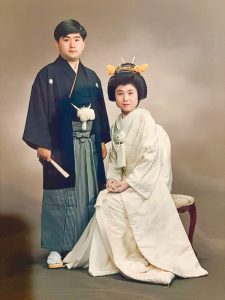
Fumiko: She took the reins in everything. Planning every detail of our wedding, she scheduled it on her own birthday. Then she chose where we would live and then, as mentioned, moved in. Inwardly, I resisted her every step of the way but, wanting harmony, avoided confrontation.
I chanted for her to move out so that we can have a happy separation—this was my first sustained prayer to the Gohonzon. And despite understanding almost nothing about this practice, I discovered that my prayer had some power. About a year into our arrangement, we got news delighting us all—I was pregnant. I quit my job to prepare for full-time motherhood. And then a few weeks later, more news—I was pregnant with twins. At this, my mother-in-law moved out along with my father-in-law, who was kind and quiet all the time. Living with two newborn babies was more than she could imagine for herself. My relief, however, was short lived. In a few months’ time, she arranged for us to move again, to her neighborhood, where I had to pass her home to get to any places.
Though dissatisfied with my situation, I continued to chant. I had chanted for something, and that something had happened, if not in the way I’d imagined. But prayers could be answered—that much I saw, and began to chant with some conviction for what I truly wanted—for what I’d never had—for a family filled with joy and laughter. Now I appreciate her so much because she introduced this practice to me and helped me do my human revolution.
You moved to the U.S. the following year?
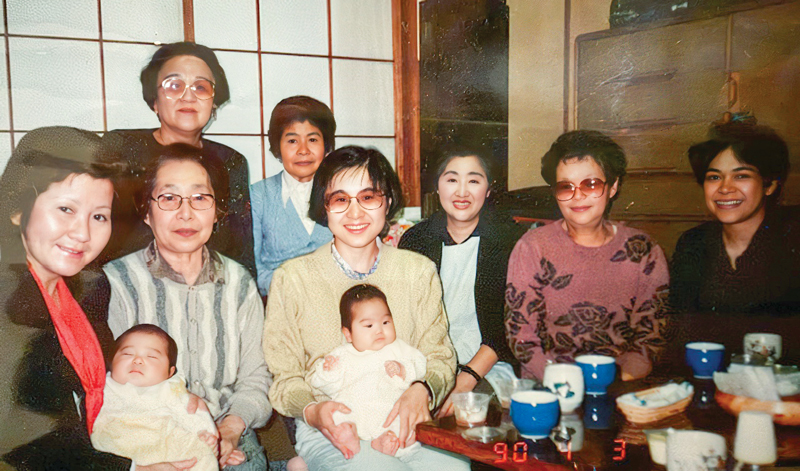
Fumiko: I did. That year was one of big changes—my children were born and my husband was transferred to an office in New York. The move marked a significant turning point in his career, and in my own practice of Buddhism. It was here in the U.S. that I truly discovered the transformative power of our teachings. A pivotal moment came when I decided to take a Buddhist study exam, delving into material that profoundly impressed me. Complex concepts I’d never known before were made easily accessible through Ikeda Sensei’s explanations. The study led me to a powerful realization: faith was not about changing other people; it was about my own growth and development.
And something else occurred to me too. As I chanted with newfound understanding, I remembered something I’d forgotten—a memory from my childhood. I was 9 or 10 in my grandmother’s home, absorbed in a show on her little TV. And she sat beside me, facing the Gohonzon, chanting Nam-myoho-renge-kyo. I must have figured it was the same kind of prayer as a prayer to the gods and, having lost faith in all that, tuned her out. But I remembered now, chanting with new understanding, that my grandmother had been practicing Buddhism with the Soka Gakkai. And everything I knew and loved about her—her warmth and her strength—made sense.
While I prepared for the study exam, fellow Women’s Division members with small children, prepared lunch for me and the kids every time so
I could give my all to my studies. Their kindness touched me deeply and showed me the true spirit of our Soka community and how to be a disciple of Ikeda Sensei to protect the organization.
Our conversation turned to our grandmothers—I mentioned my memory of mine—and she shared she’d received an inheritance from hers and used it to make a financial offering to the SGI-USA out of her deep appreciation for the Gohonzon, Sensei and our SGI organization. I was taken aback.
You’d made contributions before, but hers surprised you. Why?
Fumiko: Since the start of my Buddhist practice, I had, but viewed contributions in strictly “practical” terms—what one gives according to one’s means. I never thought to embrace them as opportunities to expand my life through appreciation. Daring myself to achieve something challenging infused my practice with new energy and inspiration. This was a life-changing realization that encouraged me to think beyond my limitations.
Feeling inspired, I shared with my husband that I really wanted to take on a challenge in the May Commemorative Contribution activity. Studying Buddhism in-depth for the first time and contributing for the first time in this way were causes that directed me inward and began a journey of inner transformation, of shedding light on my own tendencies and transforming them.
What are some examples of this?
Fumiko: When my son was navigating the college application process, I had strong opinions about where he should attend. It would be a reflection, I felt—a kind of verdict, somehow—on me as a mother. Through chanting, I came to a profound realization—my ego was clouding my judgment. Where my son was concerned, I feared that following his own free-spirited nature would reflect poorly on me as a mother. And I felt, perhaps as my mother-in-law had, that I had to take the reins. Realizing this, I changed my prayer, from one for my children’s “success” on my terms to one for their absolute happiness. I wanted them to become capable people—people who could contribute to world peace. I realized my son was afraid to tell me his dreams—what he wanted to pursue, though he was willing to share them with his father. At some point, he gained the courage to tell me that he wanted to be a game programmer. And I told him, “OK, go ahead if you want that.” And on his face I saw, What? Mom said OK?
I was learning to trust in my prayer—to believe that whatever he did, it would lead to kosen-rufu. I began to chant for his genuine happiness and fulfillment. I envisioned him finding a college atmosphere where he could learn, thrive and truly be himself. He got accepted to Soka University of America, a place where he not only enjoyed his time but also flourished. After graduating, he went on to Carnegie Mellon University to pursue further study. Now, he is pursuing his dream as a video game producer in Japan.
Wonderful! What are other changes you saw?
Fumiko: I have always kept “faith for a harmonious family”—one of the Soka Gakkai’s eternal guidelines—at the center of my prayer to create a family filled with laughter. I can proudly say that my family is always filled with joy, and I have wonderful relationships with my children.
This practice also transformed my relationship with my father. In the past, I struggled to like him because he brought so much trouble to our family. However, through chanting and learning the teachings of Buddhism, I started to see my father’s life from a different perspective. I came to understand that he was a victim of the war and must have experienced a hell that he never told us about. From then, my anger toward him changed to compassion.
From a Buddhist perspective, I realized that my mother faced her own challenges but did her best to support him. Before my father passed away, we spent meaningful time together. When, after his passing, I discovered that he had left me an inheritance, I decided to contribute the amount, honoring him and connecting his spirit to the Mystic Law for eternity.
You have a deep love of children. Tell us about that.
Fumiko: Well, I really love people. Even the oddballs and the ones who rub others the wrong way. I’ve come to see them as Buddhas and as reflections of aspects of my own life. I’ve come to see children too in this way.
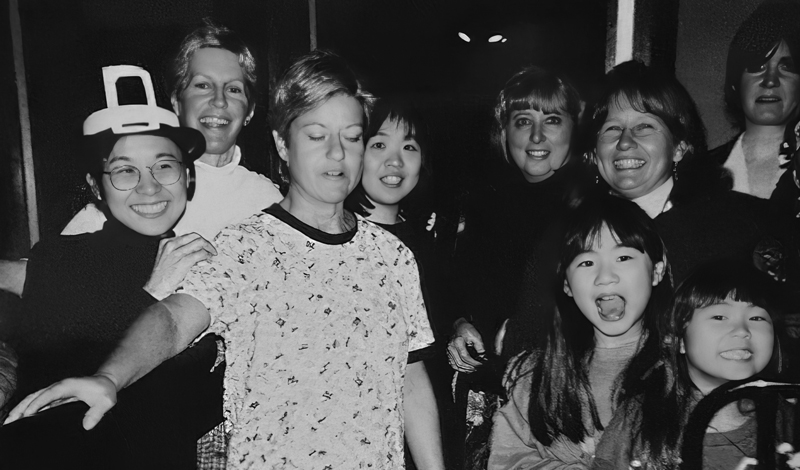
For the past 30 years, I’ve been part of a read-aloud group for children. Initiated by a group of Japanese mothers, the group was geared toward their children, who rarely heard a story in their mother tongue, a story they need not struggle to understand. For their self-esteem and natural development, we felt the group was important.
My own children took part in its early founding. It has continued since, and after the woman who began it moved back to Japan, I became the most involved. I love good stories for the same reason I love people—because the best of them have great power and create great value, challenging us to see ourselves in new ways and to see the best of us in each other.
You are reading {{ meterCount }} of {{ meterMax }} free premium articles