
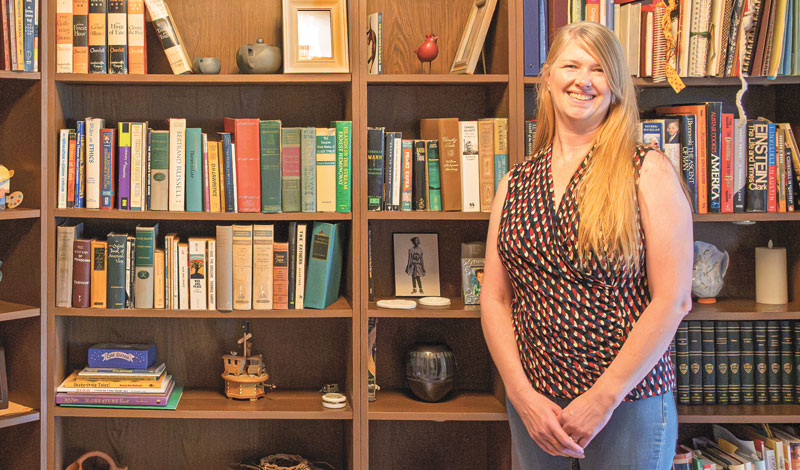
by Susannah Lancaster
Evanston, Ill.
When my work told me, last year in October, that I’d be out of a job by winter, I thought what I thought in situations like these: Why? Why me? Self-pity was where I went on reflex, but it wasn’t only me I pitied. As the primary breadwinner of our family of four, I was terrified for us all.
For 11 years, I’d worked as a full time photographer for a company that was now closing. Scrambling to land something—anything—new, I reflected on how comfortable I’d been. And yet, I’d been dissatisfied too, unfulfilled for years. I could not have fully appreciated it then, but losing my job was forcing a break with the safe and familiar. It was making me face my life head-on and setting great changes in motion.
As my employment deadline approached, I met a friend and former colleague for coffee. While catching up, she mentioned her Buddhist practice and a seemingly impossible health situation she turned around by chanting Nam-myoho-renge-kyo. Intrigued, I asked to learn more about her Buddhist practice. Within days, she introduced me to a local SGI member, and we chanted together.
I began attending Buddhist meetings and, during the holidays, participated in longer chanting sessions at members’ homes. Something shifted within me. Although my employment had ended and my future remained uncertain, I began to feel grounded rather than consumed by worry. I experienced a sense of connection—to myself and to others—that I hadn’t felt before. I’d also found a community where I truly belonged.
In April 2026, I received the Gohonzon. Chanting to the Gohonzon enshrined in my home, I found the courage to face something else I’d been avoiding for years: the difficulties in my marriage.
Over the years, I’d expressed my concerns about our relationship to my husband, but they seemed to fall on deaf ears. Now, just weeks after receiving the Gohonzon, I found the courage to make a change and take some time for myself. Soon after, my son and I moved into my parents’ home—a difficult but liberating decision.
The following week, my brother-in-law offered me work repairing and renovating homes. Grateful for the opportunity, I figured it would buy me time until I found a “real job.”
I found that I really enjoyed the work. I learned to repair damaged drywall, fix broken joints in walls and ceilings, rebuild corners, paint and install wallpaper. Although the work was physically demanding, I took pride in transforming something damaged into something beautiful.
But just as I began finding my footing, another series of challenges emerged.
In August, I learned that my teenage son was experiencing a serious mental health crisis. As a mother, I was devastated that he was suffering this way, but I was so glad he told someone. Finding appropriate treatment proved difficult. For a week, I made phone calls, encountered dead ends and continued searching until we found a suitable intensive treatment program that could support him.
Then, soon after, I got violently ill with a stomach bug, and my 81-year-old mother tripped and fell and broke her arm. I found myself slipping into that familiar pattern of self-pity: Why? Why is this happening to me when I’m doing all the things I’m supposed to do?
Exhausted from worrying and trying to manage every situation, I decided to try something different: to let go of doubts and lean into my faith.
I began chanting earnestly for my son, my husband, my mother, my work and my purpose. Although long workdays often prevented me from attending meetings, I deepened my Buddhist practice through chanting, Buddhist study and journaling. Each day, I returned to the Gohonzon to face myself. Gradually, something began changing within me.
One of the most significant changes was in my relationship with my husband. I’d long harbored anger and bitterness over our difficulties. But my friends in faith encouraged me to chant for his happiness. So I did. As I chanted for him, the anger began to soften. I found myself sincerely wishing for his happiness and well-being, regardless of what happened to our marriage.
Unexpectedly, he began taking steps to improve his own life. He sought help, took on more responsibilities and received a promotion at work. We began communicating again and have even gone on several dates. I don’t know where our relationship will lead, but I’m optimistic.
My son has also made tremendous progress. He’s back on track with school, is completing college applications and recently became a finalist for a major scholarship. I’m incredibly proud of his determination and resilience.
And my career is flourishing.
My brother-in-law secured a contract to work on a large home renovation project in Chicago. He entrusted me with responsibility for the work, and I’ve developed a wonderful relationship with the interior designer.
Recently, she asked me to help design intricate decorative molding throughout the home. She was so impressed with my work that she wants to hire me for future projects—and has asked me to photograph the completed interiors!
What’s remarkable is that interior design was my childhood dream. My grandfather was an architect, and by age 7, I was already fascinated by designing homes. But I was discouraged from pursuing it at a young age and eventually found my way into photography. Now, decades later, I have the opportunity to bring these passions together.
Through this journey, I’ve come to realize that my greatest benefit from practicing Nichiren Buddhism isn’t simply the improvements in my circumstances. It’s the acceptance and confidence I’ve developed. I’m learning to accept myself, others and the circumstances I face without allowing fear or uncertainty to hold me back. I’ve discovered that acceptance doesn’t mean resignation. It means facing reality with the courage to keep moving forward, even when I can’t see how everything will turn out.
I’m determined to keep chanting for my family’s happiness, to nurture this newfound professional direction and to contribute to the happiness of others.
Just as I’ve learned to restore damaged walls and transform them into something beautiful, I’m learning that life’s most difficult experiences can become opportunities to uncover new possibilities.
In the past, I settled for what felt comfortable, afraid of what might happen if I made a change. Through my Buddhist practice, I’m learning to live in a way that’s true to myself—not as someone resigned to her circumstances but as someone empowered to create my future.
Faith isn’t always easy, but neither is resistance. Today, I’m choosing to move forward with faith.
You are reading {{ meterCount }} of {{ meterMax }} free premium articles