
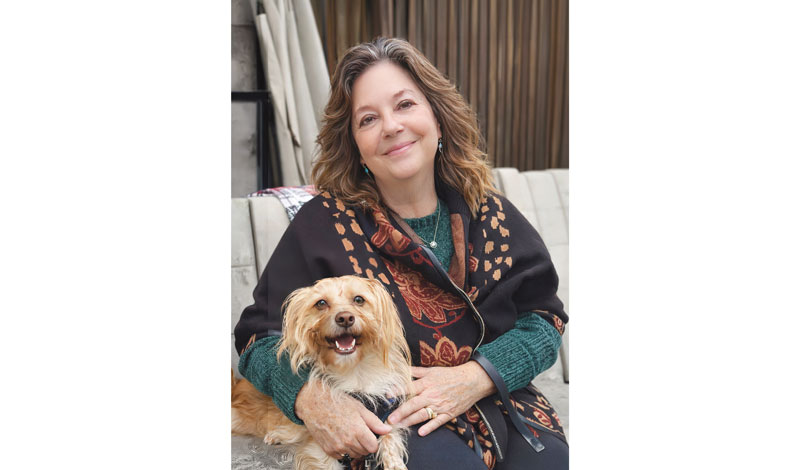
by Laura Hendrickson
Santa Rosa, Calif.
“You ought to be a singer,” I was told all my life, by friends and teachers and family. And this was what I set out to do after college, first in my hometown of New York, and then, in San Francisco in the early ’80s.
Like many artists trying to find their footing, however, I quickly realized I needed steady work. Scouring the city for waitressing jobs, I got the same answer from every restaurant in town: No openings. Not one.
One day I drove west, farther than planned, into the outskirts of the city. There, in a quiet neighborhood, I passed a small restaurant with a handwritten sign in the window: “Waitress Wanted.”
The owner, a Japanese woman, sat down with me smiling and offered me the job. A thrill shot through me when she mentioned she practiced Nichiren Buddhism—the very thing my mother had practiced for years.
My mother was introduced to the practice of chanting Nam-myoho-renge-kyo in the ’70s by a friend and began attending meetings in a lively district that included many performers and artists. She often encouraged me to chant with her, and, now and again, I would. But I never perceived it might have a real bearing on what I wanted to do—which was, of course, to sing. Even so, Buddhism remained quietly present in my life. Discovering it again in an hour of need, in a restaurant tucked away in the suburbs, I felt something unexpected—as though I’d opened a door that had been waiting for me in particular.
Before we opened the shop each day, I chanted with the restaurant owner. Through her sincere prayers for my happiness and steady encouragement, I became more engaged in SGI activities. I joined the chorus and sang with the other young women—not for acclaim or our names up in lights, but to bring joy—pure joy—to people.
When I moved to Santa Rosa a few years later, the women’s division members took me under their wing. One in particular took me along when she met with the members, who were often women three times my age. I’d wonder what they’d think of me being there, and what on earth I’d have to say. But when I felt full of doubt, she gave it to me straight. “When you really chant about another person,” she said, “your wisdom will ignite while engaging with them and in that moment, you’ll know what to say.” Again and again, I overcame my doubts, and saw again and again that it made a difference.
Dialogue with others, dialogue with myself—each one helped me grow. And one day, chanting about my music career, I heard a voice from deep within.
“That is not your path,” I heard this voice say. “Your path lies in cultivating people.” Reflecting on my true path in life, I decided to become an educator.
I went back to school and by the late ’90s, was teaching, enjoying particularly encouraging children who struggled to believe in themselves. Seeing young people gain confidence and discover their abilities was incredibly rewarding.
I took on greater and greater responsibilities, eventually serving as a middle school principal for 12 years. Though challenging, the work was deeply meaningful—we supported students facing difficult circumstances and strove to create an environment where they felt encouraged and capable of building a better future. My Buddhist practice remained my foundation throughout, and I came to see how teaching students and raising young people in faith were deeply connected. The focus in both cases was on helping people believe in themselves.
A turning point came in 2024, when I retired after decades of working in education. At age 65, I’d entered my Many Treasures years, and overnight, my pace of life slowed dramatically.
For many years, my days had been filled with responsibilities—meetings, planning, mentoring teachers and supporting students. Suddenly, the rhythm of my life was quiet. And at first this was uncomfortable. I found myself asking: Who am I now?
Once again, I turned to my practice. Each morning, I chanted and prayed about how to use this new stage of my life in the most meaningful way. Through that prayer came an important realization—that my mission had never been tied to a title. Wherever I was, whatever I did, my mission was what it had always been: to encourage people, especially youth. That realization helped me see that opportunities to do so exist everywhere.
I remember one district discussion meeting where a young women’s leader shared her first closing words, her hands trembling and voice unsure. After, we talked. I shared with her my own early struggles and the guidance I had once received about believing in myself.
As her shoulders relaxed and a small smile appeared, I understood that at heart my work was the same. Though on a smaller scale and though the spotlight was gone, my work was to believe in one person at a time.
On another afternoon, walking my dog, I saw two high school boys on a park bench near my home. At midday, with their backpacks beside them, it was clear that they were skipping class.
At first, I considered walking past, but something inside me said, Talk.
So I walked over and said, “Hey, how are you guys? Shouldn’t you be in school?” Recovering from their surprise, they began to tell me what was going on in their lives. They were struggling in school and feeling discouraged about their future.
We ended up talking for quite a while. I listened and shared some thoughts from my years working with students: that difficult moments didn’t define their future and that they still had many possibilities ahead. Before we parted, one said quietly, “Thank you,” and the other said that he’d try to go to school the next day.
All that it takes to encourage someone is the courage to show that you care. Sometimes I hear people say that Many Treasures members are too old to connect with young people. But I don’t believe that at all. What young people respond to is sincerity and joy. When we chant deeply and bring forth a joyful life condition, others naturally feel it. Ikeda Sensei states:
Nichiren Daishonin writes, “If one lights a fire for others, one will brighten one’s own way” (“On the Three Virtues of Food,” The Writings of Nichiren Daishonin, vol. 2, p. 1060). Please be confident that the higher your flame of altruistic action burns, the more its light will suffuse your life with happiness. Those who possess an altruistic spirit are the happiest people of all.[1]
Today, in my “retirement,” I serve as a university professor preparing future teachers, supporting a statewide credentialing program. Drawing on decades of experience, I mentor students and help design courses—encouraging them in times of doubt, grounding them in purpose and celebrating their growth. Each interaction feels like a continuation of the vow I’ve carried throughout my life.
Now I strive, wherever I am, to let my life shine with the spirit of encouraging others. Our mission doesn’t end when our roles in life change. It simply takes on a new form. For me, this stage of life feels especially full—of doors just waiting to be opened.
April 3, 2026 World Tribune, p. 5
References
- My Dear Friends in America, fourth edition, p. 241. ↩︎
You are reading {{ meterCount }} of {{ meterMax }} free premium articles