
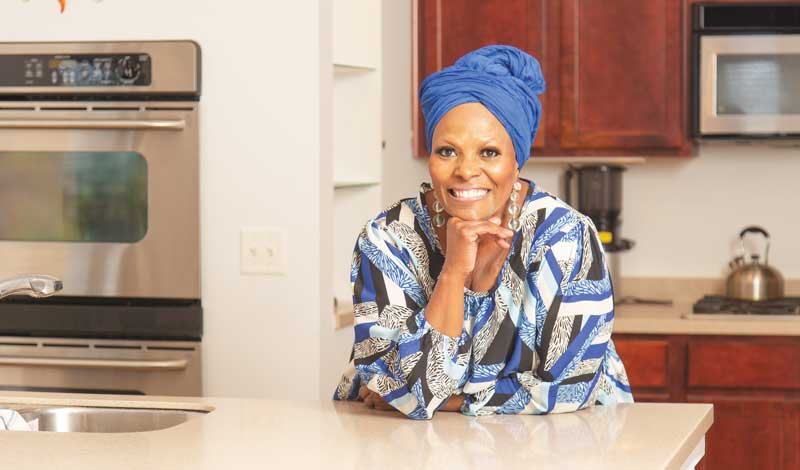
by Valerie Brady
Memphis
While my parents listened in the kitchen to the preachers on AM radio, I lay on the porch watching the clouds, waiting for the choir. The choir was what could move me, in ways the sermons never would, to dream bold dreams about my future. Come high school, I’d perform in many churches with the gospel choir, but felt, once the music ended, an emptiness inside.
After high school, I attended my first Buddhist meeting and never looked back. I met and married a young man and together had two sons. I pursued a career as a police officer—an experience that was both dangerous and transformative. For many years, I was the only female in a male-dominated environment, facing sexism, discrimination and constant reminders that women—especially Black women—were considered inferior to their male counterparts on the force. Respect was not given; it was earned. It was in this literal sense—not the prideful one—that I woke each day with something to prove. But prove myself I did, to both my co-workers and the community I served.
During this time, however, my Buddhist practice suffered. When the boys were still small, I became a single mother working full time. I had bills to pay, mouths to feed, a community to protect and a house to run, and before I knew it, maintaining my Buddhist practice seemed like a luxury someone in my shoes could not afford. I stopped attending meetings, chanted here and there only when the thought occurred and, though I did not see it at first, began living increasingly in the lower worlds—namely, for me, in a state of fear—fear for my life every day on the job and fear for my sons every day they grew older, more rambunctious and less inclined to obey. The suffering became unbearable in 2017, when my relationship with my eldest reached its worst. To see him suffer and not know what to do put me, as a mother, in the world of hell. Having harped and preached and scolded—having exhausted every strategy I had, I turned to the only one I hadn’t tried yet—the strategy of the Lotus Sutra.
I sat down in front of the Gohonzon and chanted, not for a few distracted minutes, but for a good long time, with all my heart. And I began to notice a change.
The following day, I got up early and chanted abundantly before stepping out to work on the beat. The moment I did, I realized I felt different and the difference was that I was not afraid. It was at this moment that I realized just how deeply fear had seeped into my life—into my work and into my home. Chanting for the happiness of my son, I began to feel that I had the power within my life to transform the situation, not by preaching and not by force, but by example. I began to trust in the Buddha nature within both our lives. And without realizing it, I’d begun to trust again in the Buddha nature of all people.
Starting my days with prayer, I began to see the city differently, as a place full of potential, full of Buddhas, and to see myself first and foremost as a fellow member of the community. I got to know the elderly as well as the kids by sitting with them, bringing pizza to them in the park. When I passed, they’d call out: “There go that lady!” and call me over—“Ms. Brady!” to show me their report cards. Soon I wasn’t alone in my department—others joined in too, and police cars became markers where people knew they could gather to talk, joke and engage if they needed help or advice.
I was 20 years into Buddhism and understanding for the first time one of its most basic principles—the oneness of life and its environment—the idea that your inner state of life—whether happy or hellish—will be with you wherever you go, reflected back by your environment.
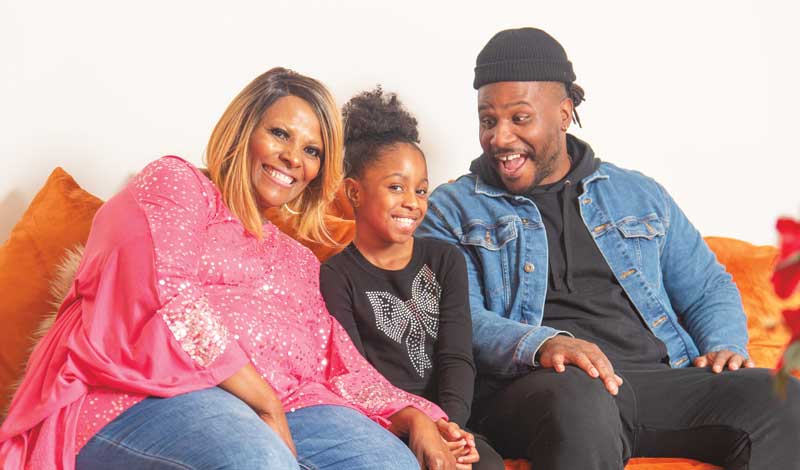
I stopped preaching to my son, and starting living by example, trusting in his capacity to build the best life for himself. Quickly, our relationship improved and, with the support of the young men’s division, both my boys took faith, took on leadership in the SGI and are to this day fighting on the frontlines of our movement.
Harmonizing my family became a touchstone in my talks with parents. My department received many calls from parents who felt that discipline was their only recourse. Telling the story of me and my boys, however, I testified to another way, one that began with changing ourselves. Soon, I became someone both parents and their children were happy to see.
In 2023, after 24 years on the force, I retired, thinking it was time at last to take it easy. But just one year into retirement, I received a diagnosis of stage 3 breast cancer.
“This cancer will spread quickly” the doctor said. “It’s very aggressive.”
I thought immediately of my parents, who’d both died, one after the other, in their 50s from cancer. I brought my overwhelming fears to a friend in faith, who jolted me with a simple observation:
“You don’t believe you can transform your karma,” she said. “You don’t believe you can turn this poison into medicine.” She was right, I didn’t. “So the cancer’s aggressive,” she acknowledged, “then you chant aggressive.”
The next day, I made the decision to chant and study with my heart—not with my head. Everything I read—from Ikeda Sensei’s guidance and The Writings of Nichiren Daishonin—I would apply. And when I chanted, it would be no fearful, beggarly kind of prayer, but a lion’s roar—a vow: No matter what, I will not let this cancer consume my life.
This time, I knew better than to backslide in faith. If anything, I chanted more, supported my friends in faith and upped my SGI activities.
As Nichiren Daishonin guarantees, “misfortune will change into fortune” and “Nam-myoho-renge-kyo is like the roar of a lion” (“Reply to Kyo’o,” WND-1, 412).
Even as I underwent chemo, even as my hair fell out and my strength waned, my doctors marveled at my life condition. Whatever the prognosis, I simply assured them: “I’ll be fine” and shared Nam-myoho-renge-kyo.
To their astonishment, the tumor shrank dramatically within the year. Soon, they were able to remove it completely. In 2024, they declared the cancer in remission.
The battle is far from over—just this past June, the cancer returned to the same spot, and I began taking medication to treat it. It isn’t spreading, and most importantly, it isn’t getting me down.
Whether it’s cancer or something else, life will always give us cause to worry. It’s up to me, I feel, to fight to bring forth the power of the Buddha, to show what it means to live a life of good health, courage and indestructible happiness. I know now the best way to fight—by example and without a trace of fear.
You are reading {{ meterCount }} of {{ meterMax }} free premium articles