
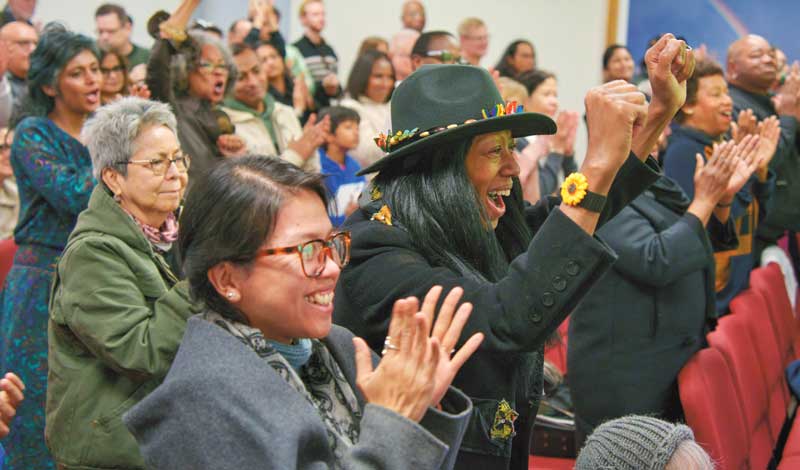
Ikeda Sensei gave the following guidance at the SGI general meeting in Maidenhead, England, June 11, 1994. It can be found in The Wisdom for Creating Happiness and Peace, part 3, revised edition, chapter 23, installment 2, pp. 69–71.
Striving to awaken all to their unique and precious missions, Shakyamuni never gave up on anyone. Citing one such episode, Ikeda Sensei points to what is vital in life—faith in people and the spirit to serve.
I would like to share a story about an ordinary person who enjoyed a beautiful mentor and disciple relationship with Shakyamuni—a story demonstrating that everyone has a mission in life.
I am referring to the Buddha’s disciple Chudapanthaka, who was famous for his bad memory. He was so forgetful that he couldn’t even remember his own name. Nichiren Daishonin describes him as “the most forgetful person in the whole continent of Jambudvipa [the entire world]” (“On Forgetting the Copy of the Sutra,” The Writings of Nichiren Daishonin, vol. 2, p. 657).
Chudapanthaka had joined the community of Shakyamuni’s disciples together with his older brother. But in spite of trying his hardest, he made no progress in his Buddhist practice. Other disciples ridiculed him for his slowness. One day, even his own brother gave up on him and sent him away, telling him that he had no hope of succeeding as a disciple and should just return home. Recalling that day later, Chudapanthaka said that he had stood there discouraged but still cherishing the hope that there might be some teaching he could master.
Just then, his teacher, Shakyamuni, appeared at his side and gently touched his head. Taking him by the arm, he then led him back to the community. Having been filled with despair, Chudapanthaka must have felt great joy at his teacher’s compassionate kindness. Though everyone else had rejected him, his teacher accepted and understood him, believed in him and cared for him. Chudapanthaka found himself filled with new resolve.
Later, Shakyamuni taught Chudapanthaka in a way that enabled him to deepen his life state while joyfully serving his fellow disciples. Chudapanthaka faithfully attended Shakyamuni and continued his sincere efforts, just as his teacher instructed. By doing so, he triumphed.
In the Lotus Sutra, Shakyamuni predicts that he and his brother will become Buddhas, both with the same name Universal Brightness. Though Chudapanthaka appeared foolish and forgetful, he in fact came to live a wise life of the highest value.
In a letter to one of his disciples in June 1275, the Daishonin writes:
Chudapanthaka was unable to memorize a teaching of fourteen characters even in the space of three years, and yet he attained Buddhahood. Devadatta, on the other hand, had committed to memory sixty thousand teachings but fell into the hell of incessant suffering. These examples exactly represent the situation in the world in this present latter age. Never suppose that they pertain only to other people and not to yourselves. (“Three Tripitaka Masters Pray for Rain,” WND-1, 602)
What makes us admirable as practitioners of Nichiren Buddhism? Not background, social position or inherent abilities but our tireless efforts to support our fellow members and help them become happy. That dedicated faith and humanity cannot be overlooked. Such a person is the noblest of all—a person who will attain Buddhahood.
You are reading {{ meterCount }} of {{ meterMax }} free premium articles