
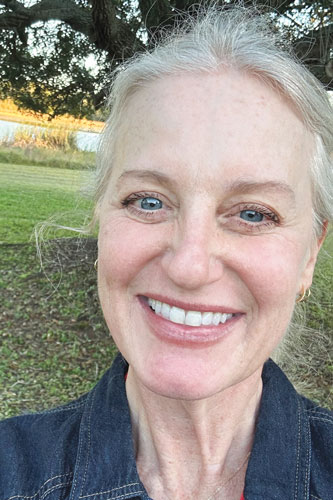
by Carolyn Haynesworth
Alpine, Texas
I began chanting in Dallas, in the fall of 1997, when, on the surface, my life looked complete. I was 26 with a master’s in social work, married to my high school sweetheart. But internally, I was overwhelmed. My work with children and families experiencing homelessness exposed me daily to deep suffering, and I felt powerless and increasingly depressed. I searched for answers through books, meditation and different philosophies, but nothing gave me the direction I needed.
Everything began to change through an unexpected encounter. While working at a child care center for homeless children, I met a woman who had escaped a violent situation, bringing her children to safety. Despite everything she had endured, her life was transforming in a positive direction. When I asked what was helping her, she explained that she had begun chanting Nam-myoho-renge-kyo. She’d first heard of the practice while in Japan, but had taken it up here in the States. She’d seen the film What’s Love Got to Do With It, about the life of rock-and-roll icon and SGI member Tina Turner. She invited me to an SGI meeting, and I went. From then on, everything began to shift in my life.
Through this practice and Ikeda Sensei’s guidance, I came to understand that I could become the protagonist of my life and transform even the most difficult circumstances. Instead of feeling defeated by my work, I saw it as my mission. I stopped viewing the people I served as victims and instead saw their dignity and potential. As my life condition changed, so did my environment. I began to enjoy my work and developed a deep respect for each person I encountered.
Over time, that shift expanded my life in ways I never imagined. I earned a Ph.D., raised my children and deepened my Buddhist practice. Today, I work as a consultant on homelessness nationwide, partnering with major cities—including New York—to design outreach and intervention programs. What once overwhelmed me became the very field in which I now contribute at a higher level.
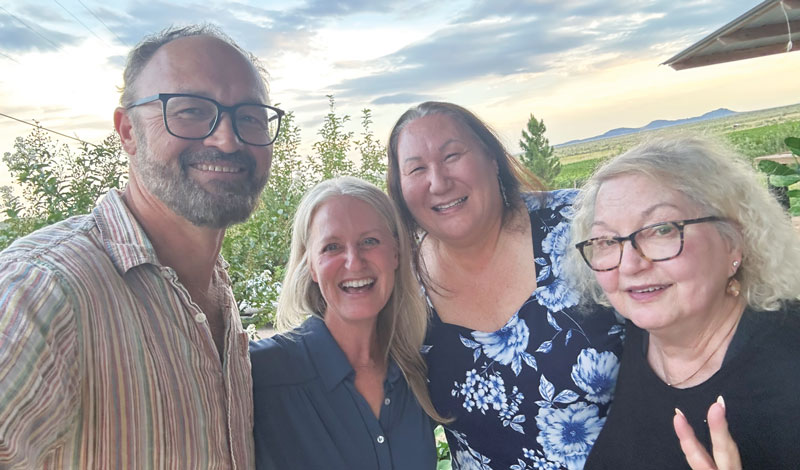
A few years ago, I moved to Alpine—a rural town of about 6,000 people in far west Texas. It’s more than five hours from the nearest SGI-USA Buddhist center, and there isn’t a large community of members here. At first, that felt daunting. But here I felt Sensei’s encouragement most strongly—to stand up where I am and become a source of hope.
I realized I couldn’t rely on what had been built before—I had to build something myself. I made a vow to create a thriving district by 2030 and began chanting to meet youth. That determination, grounded in Sensei’s guidance to treasure each individual, became the basis for everything that followed.
That’s when I met a young woman who had recently arrived in Alpine, fleeing a violent situation while caring for her newborn. I met her through a friend—her aunt—and felt compelled to reach out given her circumstances. She had no income, no stability and no clear path forward. At first, I simply stopped by as a friend, helping her access basic needs. But before long, I felt a deeper determination to stand with her and help her awaken hope.
I invited her to my home for a small gathering. She came with her baby and immediately felt at ease. We began chanting together weekly. She asked questions, studied sincerely and within months received the Gohonzon.
What struck me most was her response when I asked why she kept coming. She said, “My life knew I needed it.” It wasn’t intellectual—it was a deep recognition.
Since then, I’ve watched her transform her life. Within 10 months, she started a baking business, gained custody of her child and secured her own home. More importantly, she’s become joyful, confident and hopeful. She chants daily and is steadily building a new future.
What began as support became a genuine friendship. We text daily, chant together and encourage one another. Her victory feels like my own. I had prayed to meet someone who would stand up with me, and I feel she is that person.
She has never been to a large meeting or an SGI-USA Buddhist center. Her entire experience, thus far, has been one-to-one connections. In a place like Alpine, this showed me that we don’t need perfect conditions—we need sincere prayer and courage.
My hope now is to offer young people what was given to me through Sensei—to feel that their life has purpose and that they are exactly where they need to be to fulfill it. Here, in a small town on the frontier, I am convinced we can build a vibrant community. Sensei has given us everything we need to reach people anywhere. There are no limitations—only opportunities.
May 3, 2026 World Tribune, p. 10
You are reading {{ meterCount }} of {{ meterMax }} free premium articles