
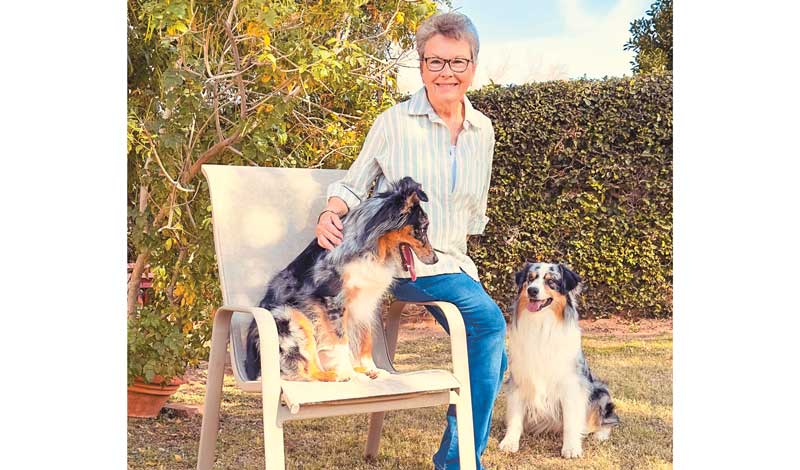
by Sydney Munger
Phoenix
We thought it was the altitude—the elevation gained on our recent move to Prescott—that was slowing Betty’s morning strolls, cutting them short and turning her home, winded and fatigued. A former military nurse, my wife was known for her stamina, which she’d maintained in retirement, and would doubtless soon recover here in the high desert. Betty was tough, is what I’m trying to say—a diamond if I was a rock. She could adjust—always did, always had—to changes dwarfing a few thousand feet of thin air.
Ten years earlier, in 2006, I’d gone in with Betty for my regular checkup and received the shock of my life. The doctor did not need to elaborate. I, too was a nurse and knew that ovarian cancer was a disease most women did not survive.
I reached out right away to a senior in faith, who told me about the power of a vow. It was the first time that I, in just my second year of leadership in the SGI, had discussed this point—of fusing personal prayers with a vow to work for kosen-rufu. Desperate to survive, I chanted to live not just for my own sake but to show actual proof to my members. This passage from The Writings of Nichiren Daishonin became my go-to: “Nam-myoho-renge-kyo is like the roar of a lion. What sickness can therefore be an obstacle?” (“Reply to Kyo’o,” WND-1, 412).
I battled for my life in the truest sense—for the courage to brave surgery and chemo and all that they took—my hair, my strength, my energy—with a smile that I actually meant. This came from a fighting prayer to support my friends in faith.
Betty, I should mention, was rather new to Buddhism, having decided suddenly, two years earlier, that it was for her. She’d turned to me during an LGBTQ-specific SGI activity and said, simply, “Well, I guess I should join.” It was not long before she took on group leadership.
In any case, she lent me her full support—as a partner, a nurse, a comrade. It was with her by my side that I chanted with a lion’s roar to regain my health. As our district grew more lively and well-attended, I understood that the true battle had already been won: I was no longer afraid, focused single-mindedly on bringing hope to those around me.
After a few years, the cancer abated, and after five was declared in remission. By then, we’d both retired, bought a camper and begun planning a life of cross-country road-tripping.
And then in 2015, Betty stunned me with a bit of news she’d kept to herself—she’d developed a tremor in her hand. At the hospital, we received news that shocked me more than my own cancer diagnosis had. Parkinson’s, the doctor said, in its early stage. Betty was unflinching. I was shaken to the core.
We made the decision to move back to Phoenix, with its mild winters, abundant sunshine and renowned Parkinson’s clinic. At home, chanting together, we tried to internalize our new reality, to look it in the face without flinching. Slowly, I began to view things in a different light. Here was my opportunity to repay a debt of gratitude—one that was a decade in the making.
Ikeda Sensei says, “Only a diamond can polish a diamond” (The Wisdom for Creating Happiness and Peace, part 2, revised edition, p. 260). To support Betty now in the way that she’d supported me, I’d need to become more solid than a rock, as unbreakable as a diamond.
As our lives centered on her exercise and educational programs, we chanted together to win.
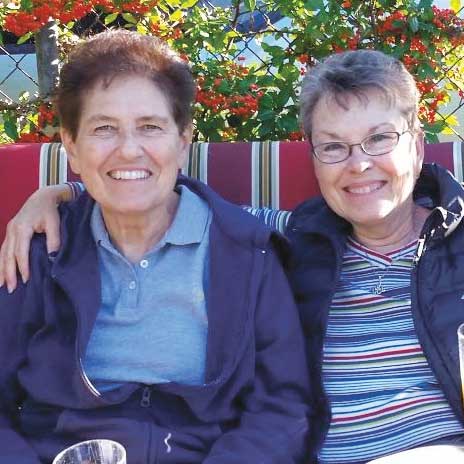
When the pandemic halted these programs, her symptoms progressed. Trips to the ER increased. Speech and cognition declined. Many times, I felt helpless and exhausted. As I had at the most difficult points in my chemo, I felt the strong urge to resign my leadership position. Seeking guidance on this point, I was assured that my mission now was just to care for Betty and do my best. With this in mind, I continued.
In 2021, we agreed, painfully, that it was time to find Betty a group home. Searching for one, however, I was staggered by the cost—over half my monthly income. It seemed we’d worked and saved all our lives to merely survive our final years. I felt backed against a wall, with another one closing in. Reacting with panic, I met with my women’s leader, who reminded me of the unlimited power I possessed, which I’d harnessed before to regain my health.
Everything I’d learned told me this was true, and yet doubt and fear remained. Chanting, I visualized my breakthrough in a literal sense—every “Nam” in Nam-myoho-renge-kyo as the chop of an ax through that wall closing in. On the other side, I knew, lay the financial solution for Betty’s care. My daimoku again became a lion’s roar.
Gradually, I went from fearing I’d never afford Betty’s care, to believing I could, to knowing I would. Before the year was out, a friend referred me to a reputable group home. Incredibly, I could afford it.
Deeply relieved, I did not realize that the hardest part was still to come.
Over the next four years, I visited Betty daily while her condition slowly declined. Sometimes the visits were torture—excruciating attempts to perceive the woman I loved beneath her many symptoms. And yet the nurses told me often, “We’ve never had a patient like her—not the least bit irritable or cranky”—a benefit, I felt, from our years of Buddhist practice.
It was on Christmas that I realized Betty was nearing end-of-life. I started chanting more at her bedside and seriously studying Sensei’s Unlocking the Mysteries of Birth and Death.
Passing by, the nurses would inquire about the reading, about the chanting. One of them chanted with me, while still others offered to read the books I left. In my grief, I began to feel appreciation, even joy—even while unconscious, Betty was enabling others to form a connection with Buddhism.
On Jan. 5, Betty passed away, with me chanting by her side.
A month has passed, and grief comes and goes in waves. But I hold on to something she said toward the end, smiling and inexplicably bright. I found her fully alert in her room one day, looking me in the eye. “Thank you,” she said simply, “for everything you’re doing for me.”
Here she was, the woman I loved—right here all along. She’s still here—even now, I’m sure—I feel this in my heart. She’s supporting me still, with her quiet strength, and though I’m sad, I’m not afraid. I’m striving to help others to live; to lend hope to those who’ve lost hope. Because hope is a treasure nobody can take—a diamond that’s right there within.
You are reading {{ meterCount }} of {{ meterMax }} free premium articles