
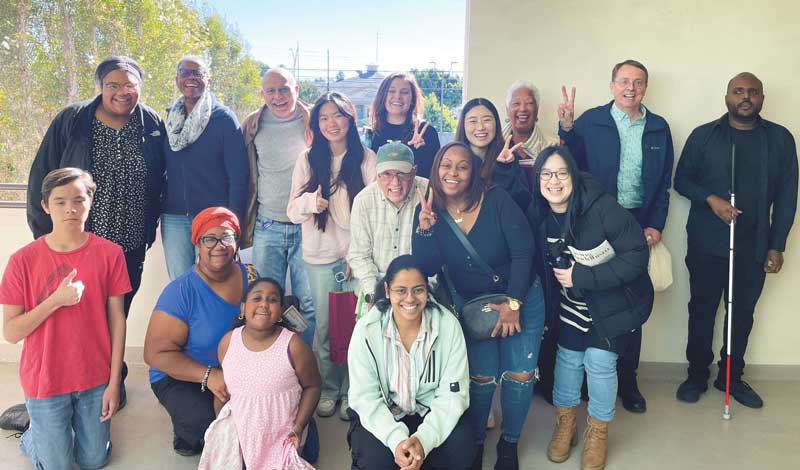
by Ee Joon Choi
Los Angeles Chapter Young Women’s Leader
Through my recent experience with my friend Manasi, I’ve come to understand that shakubuku is really about friendship—praying for someone’s happiness, staying by their side and never giving up on them.
Manasi received the Gohonzon last August after a year and eight months of ups and downs. Looking back, it wasn’t a straight or easy journey, but it became one of the most meaningful faith experiences of my life.
When we first started talking about Buddhism, she was genuinely interested. But as she got busier applying for internships and training for a marathon, it became harder to meet. After she declined a few invitations to discussion meetings, I started hesitating to ask again, because I didn’t want to come across as pushy or damage our friendship.
Still, I continued chanting for her every day.
As soon as she finished her marathon, I invited her to a meeting. She came and even shared how chanting helped her push through the race. Hearing her talk about actual proof in her life made me so happy, and I honestly thought she would quickly become a member. But I learned that nurturing a seed takes much more patience and care than I expected.
Soon after, she became busy again and stopped attending activities.
My seniors in faith and I decided to simply meet her where she was. Instead of waiting for her to come to us, we went to her campus. Sometimes we met at 7 a.m., sometimes at 8 p.m. We chanted in her apartment, in library study rooms or even in my car. Wherever we could be together, we prayed together.
Those visits didn’t feel formal or pressured. They felt natural. Each time, our friendship grew stronger.
As she opened up more, Manasi shared honestly that after receiving hundreds of job rejections, she could no longer feel the power of the practice. Her confidence had dropped, and her self-doubt was growing. Hearing that really struck me. I realized I couldn’t just encourage her with words—I needed to strengthen my own faith and life first.
Around that time, I attended the Korean language conference at the Florida Nature and Culture Center (FNCC) with my dad—a big deal for the both of us, having only recently begun rebuilding our relationship in earnest. The weekend challenged me in ways I did not expect, to the point that I wondered whether this FNCC conference would be my first without a victory. But I kept chanting until the very end and finally broke through, letting go of old resentments that were preventing me from appreciating the person he’d become. By the end, I felt nothing but genuine appreciation for my dad.
Sharing this breakthrough with Manasi brought us even closer. It gave her hope that change was truly possible.
After that, my leaders and I started a group chat with Manasi and another young woman so we could chant together daily. The group quickly became fun and supportive. We shared victories, struggles and even silly moments. Buddhism began to feel like something warm and natural in her life.
In May, she filled out her Gohonzon application. Within two months, she landed a job! But obstacles kept appearing. She moved twice and got busier, making it hard for us to meet. Just when everything seemed set, the night before her conferral, she texted saying she might not make it.
For a moment, my old fear came back—of one misstep costing me a friendship. I realized how often I held myself back because I didn’t want to be disliked.
Then I remembered second Soka Gakkai President Josei Toda’s guidance about substituting courage for compassion. If I truly cared about her happiness, I had to speak up.
After chanting and seeking guidance, I decided to talk to her simply as her friend—not as what I thought an SGI leader should sound like. I reminded her how hard she had fought for her dreams and that receiving the Gohonzon would be the greatest cause she could make before starting this new chapter. I trusted our friendship and spoke from my heart.
She felt it. And the next morning, she received the Gohonzon.
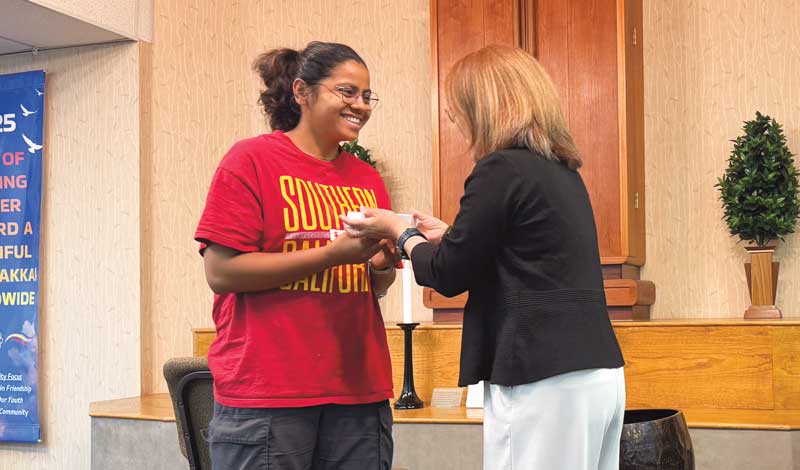
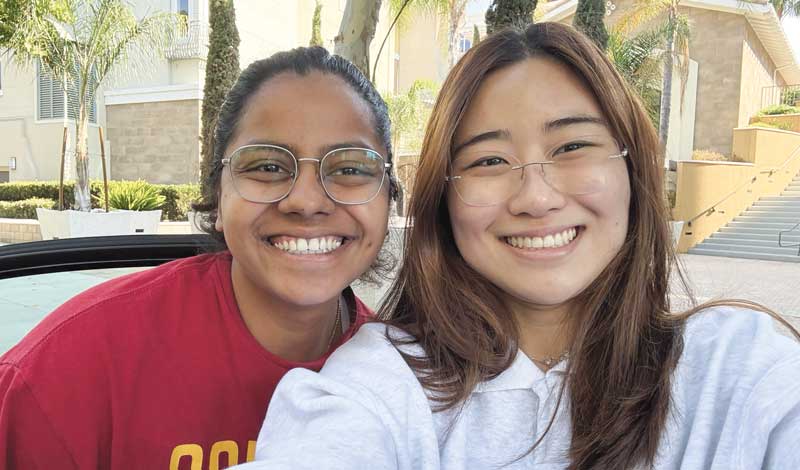
The conferral was filled with joy, with members literally jumping up and down to welcome her. In the car afterward, she shared how excited she felt to begin her journey of faith.
Through this experience, I realized something unexpected: every time I encouraged Manasi not to give up, I was encouraging myself. Supporting her helped me confront my own fear, transform my relationship with my dad and even challenge my financial karma with greater gratitude and determination.
It wasn’t just that Manasi received the Gohonzon. I changed, too.
This experience taught me that shakubuku isn’t about pressure or persuasion. It’s about prayer, sincerity and building genuine friendships rooted in trust. When we truly care about someone’s happiness and have the courage to act for their sake, everything begins to move.
Friendship is what opens the door—and faith is what carries us both forward.
You are reading {{ meterCount }} of {{ meterMax }} free premium articles