
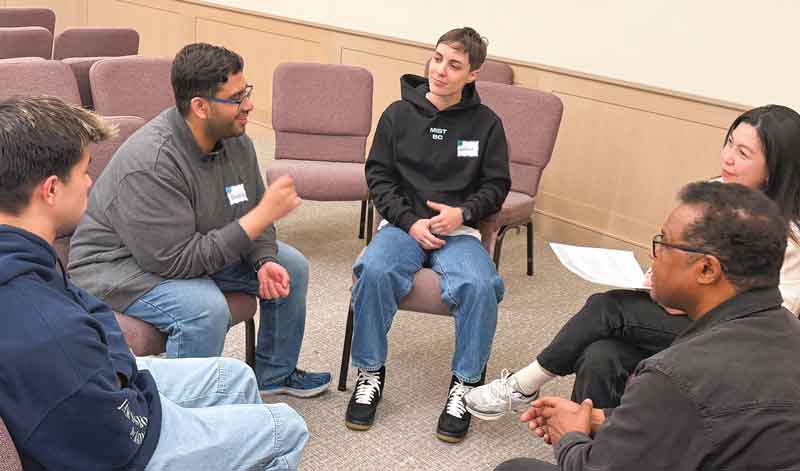
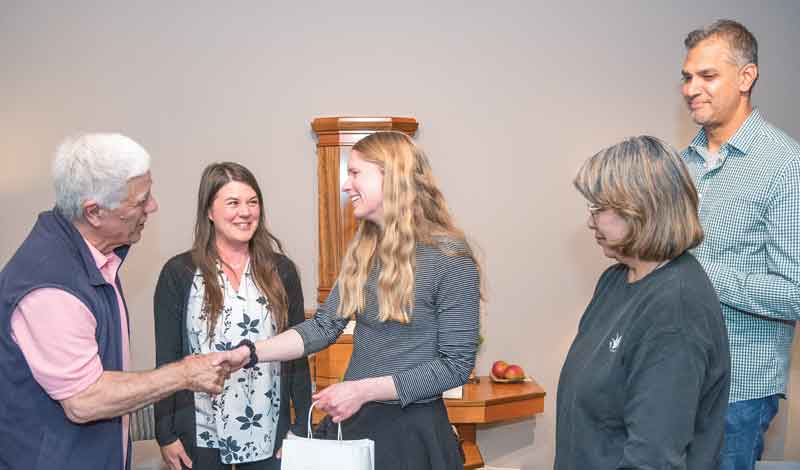
On a crisp fall night, the Brooklyn youth strung white lights along the walls of their local center’s rooftop terrace for their first “Dialogue Nights,” this one on fulfilling careers.
After hearing from three panelists, the participants, nearly half of whom were guests, broke out into small groups on the terrace. “When it was time to wind down, we almost couldn’t get people to leave because they were so engaged in dialogue,” said Cassidy Peña, the region young women’s leader. “Attendees said the topic was on point, and having space to open up about their lives was exactly what they needed.”[1]
This notion—of “wracking our brains and trying new things”—was the core focus of the Central Executive Committee’s final quarterly conference of the year, held virtually on Dec. 13.

SGI-USA General Director Adin Strauss in his opening words said the goal we made to introduce 10,000 young people to Buddhism by January 2028 remains unchanged. However, high-pressure campaigning can never succeed. In the spirit of “zuiho bini”—a Buddhist concept that adapts one’s approach to suit the time, place and people, while never abandoning the fundamental purpose or principles—Strauss emphasized that we have entered an era when our amazing front-line leaders can be free, spontaneous and creative, while staying true to the core principles of our faith and practice.
“Our fierce determination in front of the Gohonzon will give rise to the wisdom to do this,” he said.
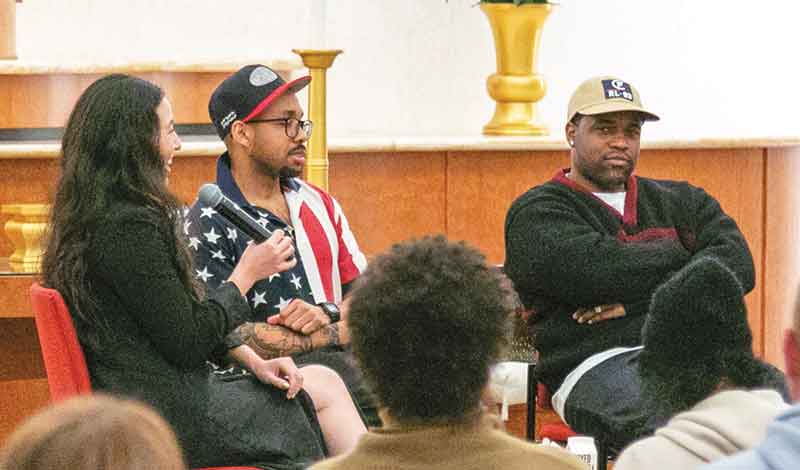
In New York Zone, the youth have launched guest-friendly topic-based meetings, such as “Hip-Hop and Buddhism” and “Therapy and Buddhism.”
“It’s been a way for us to draw out the Buddhist principles and perspectives and use them as a way to share Buddhism,” he said. “We can also highlight our amazing and diverse membership.”
Expanding Our Informal Youth Gatherings
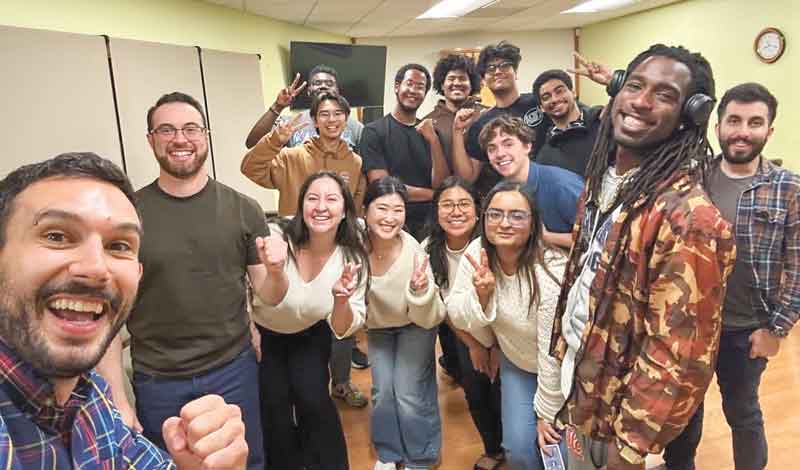
The CEC members voted to take initiative to greatly expand the informal youth gatherings that were held in pockets throughout the nation last year, encouraging local organizations to hold them more often.
The format and content are entirely up to the youth, but should be connected to faith. The men and women, meanwhile, would take full responsibility for all behind-the-scenes functions at their local Buddhist center (including opening and closing the centers, staffing the desk, parking and security). For gatherings held at homes, the same criteria set for discussion meeting venues would apply to ensure a safe and meaningful experience for all.
2026 Essential Activity Focus
The 2026 Essential Activity Focus remains the same: shakubuku rooted in friendship, strengthening our youth and strengthening our district community.
At the same time, the SGI-USA made adjustments to meetings in 2026 to provide more time to visit and encourage members and guests. These include:
• No Soka 2030 activity during discussion meeting week, with organizations having the flexibility to set their own morning start time for the Soka 2030 meetings being held on the second, fourth and fifth Sundays.
• In lieu of monthly region study meetings, introducing the 3-minute Gosho study at discussion meetings, led, wherever possible, by a youth or future division member.
A Commitment to Peace Petition
Starting at New Year’s Gongyo meetings, the youth will initiate a “Commitment to Peace” petition that calls for members to commit to introducing one young person to Buddhism in 2026 as the means to transform society and elevate the life condition of humanity. Ikeda Sensei writes:
Kosen-rufu is a comprehensive revolution based on the revolution of the individual. …
The effort to introduce Buddhism to a single individual and thereby transform [their] life is the most gradual and certain path of nonviolent revolution. Furthermore, to live dedicated to kosen-rufu is the best way of life for a genuine reformer.[2]
Those who sign the petition will receive a pledge card they can sign and place on their altar. “I think a lot of our members want to address what’s going on in the world,” said Jason Lions, the SoCal-Pacific Territory men’s leader. “I feel this message will help us—that the greatest way to change the world is to transform the life of one human being.”
A Streamlined Exam Rhythm
The SGI-USA also voted to streamline our study exam rhythm. The current three annual study exam periods— April, October and December—will be consolidated to two exam periods, during which all applicable exams can be taken:
• April: introductory and intermediate exams
• December: introductory, intermediate and advanced exams.
Both exam periods will run Friday through Monday to allow local organizations to have a weeknight offering.
The next two years represent the youth’s maiden battle with their mentor in this new era.
In closing encouragement, Monica Soto Ouchi, the SGI-USA women’s leader, recalled a time when her local organization set an ambitious propagation goal for the month of August, which the members fought all out to accomplish. She thought back to why they had striven so hard toward this goal.
It was because the local youth leaders were going to an SGI training course in Japan, and the members vowed together that the youth would report a victory to their mentor.
“And, as we stand on the precipice of the most important two years in this era, I realize my conviction should be the same,” she said. “The youth made a promise to Sensei—a goal that cannot be countermanded. There should be no way, as women and men, that we allow them to lose this maiden battle with their mentor. This is what our petition represents.”
—Prepared by the World Tribune staff
January 9, 2026 World Tribune, pp. 6–7
You are reading {{ meterCount }} of {{ meterMax }} free premium articles