

by Sarah Ni
San Francisco
I remember the surprise of my district women’s leader when I told her, on our way to my first discussion meeting in the states, that I hadn’t enshrined the Gohonzon.
“Sarah!” she cried. “The Gohonzon is a mirror of your life! Why hide yourself away?”
Hide, indeed—my newlywed husband knew nothing of my faith, only that I was Buddhist in some vague, philosophical sense. He did not know it entailed either community or practice, because I had given him no example.
Born and raised in Singapore to an SGI family, I remained actively engaged in SGI activities well into my college years. It was only when I graduated in 2017 and found work traveling the world that I began to drift from faith, staying only somewhat connected. Only now, newly arrived in the states, did I realize how much I missed my Buddhist practice. I came home from that first discussion meeting in Seattle feeling anxious but resolved to explain myself to my husband.
Nervously, I began: “You know how I’m Buddhist, right?” He did. “Well, there’s something Buddhists do, actually—like a daily practice?” He nodded. “We chant—to a mandala, which I have … actually boxed up in my backpack where it’s been the past 10 years.” He blinked. “And normally, we’d set it up, actually, somewhere in the house, in an altar. And that’s where I’d chant—as a Buddhist, I mean—morning and evening.”
All this came as a surprise to him, but it was the fact that I’d been, all these years, a closeted Buddhist that surprised him most. This was last year, in August, our first month in the states.
We’d made the move after careful planning: we’d live a short time on my husband’s income (he could work, I could not), until I gained my work authorization. Unexpectedly, however, my authorization was denied—mishandled, we later learned, by the law firm hired for the paperwork. Suddenly, doubts raced through my mind.
What was I doing here? How long until I’d work? Would I even be hirable with such a huge résumé gap? And the funds—we’d dug into our savings just to make the move. We could not live long in Seattle on one income alone. That month, I mentioned all this to my young women’s leader, expecting commiseration. Instead, she encouraged me right away to join the incoming class of Byakuren—a behind-the scenes training group for young women—as a cause to break through. I said I’d circle back.
At home with my husband, I listed all the overwhelming reasons I should dodge the challenge. Yet, deep down I knew retreat was not the answer. “I say give it a shot,” he said. In January, I did—carrying out my first-ever Byakuren shift, greeting the members brightly and ensuring the activity went smoothly. From then on, I doubled down, committing myself to a rhythm of daily practice. I began to feel more confident and appreciative—that it was within my power to take matters into my own hands.
In March, I reached out to a colleague—a fellow immigrant working in IT product management—for career advice. I was shaken by his response.
“It’s all luck,” he began. And then: “Not everyone is cut out for the work.” Vague, then dismissive and then suddenly annoyed, he burst into anger at the end. I excused myself and left.
I spoke with my young women’s leader, who suggested my colleague was suffering and encouraged me to not be swayed by that suffering. I took this to the Gohonzon and in a matter of days felt something I would not have felt otherwise—compassion for this person who’d belittled me.
Breakthroughs followed. That month, we received a rare, full refund from the law firm that mishandled my work authorization. We used the money to restart the process with a new lawyer. I was on the path to victory. But that did not mean everyone around me was.
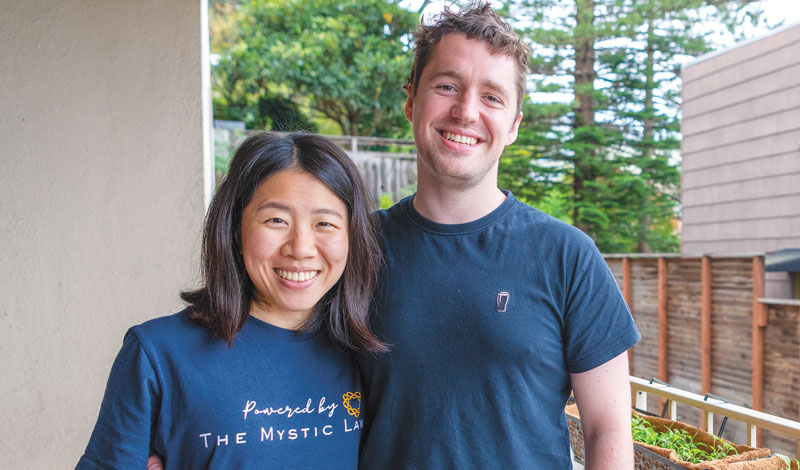
In May, a friend called on the worst day of her life, when her husband filed for divorce. A previous version of me would have merely sympathized. Now, I understood that true compassion entails belief and action. Over the course of a month, we got together, on walks or for coffee. Naturally, our discussions involved Buddhism. When she asked to come to a meeting, I invited her to kosen-rufu gongyo, apologizing ahead of time for being unable to give her a ride—I’d be arriving early to support behind the scenes. It wasn’t a problem, though—my husband had begun attending activities, intrigued by my own engagement. He agreed to drive her, which put her at ease and became a kind of running joke: They were both new—if she was confused at any point, chances were, he’d be confused right along with her.
As it happened, though, that meeting spoke directly to her life. A woman gave a faith experience, which had to do with rebuilding her life after her recent divorce. My friend was deeply moved, and I understood, watching her receive its message of hope, why Buddhism is a practice for self and others. Sensei says:
When we think only of ourselves, we become increasingly caught up in our small egos, or lesser selves. In contrast, when we work toward a great and all-encompassing objective—for the sake of the Law, the happiness of others and the welfare of society—we can develop big hearts and bring forth our greater selves through the “wonderful workings of one mind.”[1] With big hearts, we can savor truly immense happiness.[2]
That month, I received my work authorization and did away with all wishful thinking, focusing on making consistent causes for my life—prioritizing my health, refining my résumé and interviewing with increasing determination after every rejection. Through consistent effort, breakthroughs started to unfold.
Amicably, my husband navigated a separation from his business partner, preserving good investor and employee relationships in the process. Joyfully, I landed an ideal full-time role in San Francisco with warm, supportive colleagues, exceeding my salary expectations. After nearly a year of job hunting, I’m confident I found the best job for me.
Today, we’ve been three months in San Francisco, and enjoying every minute of it, saying yes to every opportunity. My husband just emceed his first discussion meeting, and I just took on my first leadership position. When asked to be the district young women’s leader, I said yes without hesitation. At first it was only me, but already others have begun to stand up and win. Others will, too, I’m sure—not because of some vague hope, but because I’m determined to do what is required to win.
You are reading {{ meterCount }} of {{ meterMax }} free premium articles